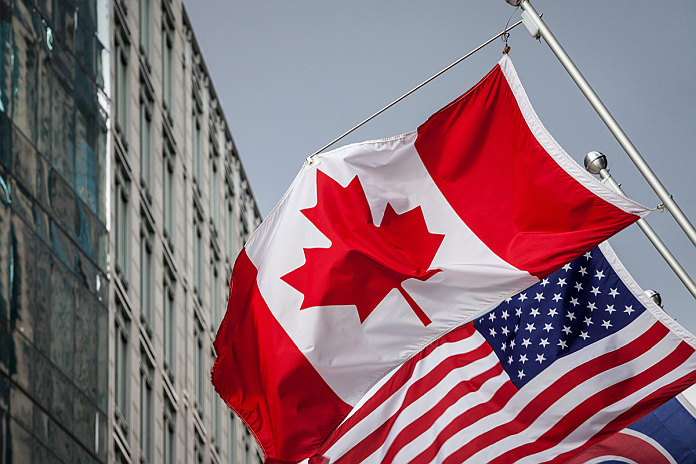
Canada blocks travellers from DR Congo, Uganda and South Sudan over Ebola fears ahead of World Cup 2026
Canada has moved to block thousands of travellers from three African countries as fears over a worsening Ebola outbreak trigger a fresh wave of global border restrictions ahead of the 2026 FIFA World Cup.
 Black News

Canada has moved to block thousands of travellers from three African countries as fears over a worsening Ebola outbreak trigger a fresh wave of global border restrictions ahead of the 2026 FIFA World Cup.
- Canada has suspended immigration documents for residents of DR Congo, Uganda and South Sudan over growing Ebola fears.
- The move follows similar restrictions by the United States and emergency measures introduced by the Bahamas.
- The WHO recently raised the outbreak risk in DR Congo to “very high”, fuelling fears of wider international spread.
- The restrictions could affect travel, trade, education, migration and investor confidence across parts of Africa already under pressure.
The Canadian government announced sweeping temporary immigration and quarantine measures targeting residents of the Democratic Republic of the Congo, Uganda and South Sudan, signalling growing international concern over the outbreak spreading beyond Africa.
The restrictions place the three African nations at the centre of another global health emergency that is already reshaping travel policies, migration access and cross-border movement.
Beginning May 27, Canada will suspend temporary resident visas, electronic travel authorisations and permanent resident visas for residents of the affected countries for 90 days.
Even travellers with previously approved documents will not be allowed to enter while the suspension remains in effect.
Canadian authorities also said they would temporarily stop processing new immigration applications from residents of the three countries.
The measures come just days after the United States introduced similar restrictions on non-citizens who recently travelled to DR Congo, Uganda or South Sudan.
DON'T MISS THIS: U.S. funnels all travellers from Congo, Uganda and South Sudan through one airport as Ebola fears escalate
The Bahamas has also announced emergency entry restrictions and enhanced health screening protocols.
The rapid response from Western governments highlights how quickly health crises in Africa can trigger global travel crackdowns, even before cases appear in North America.
Canada said the move was partly driven by the “evolving international situation”, including preparations for the FIFA World Cup 2026, one of the world’s biggest sporting events expected to attract millions of international visitors.
The World Health Organization recently raised the risk level of the Bundibugyo strain of Ebola in DR Congo to “very high” nationally and declared the outbreaks in DR Congo and Uganda a public health emergency of international concern.
No Ebola cases have been recorded in Canada, the United States or the Bahamas.
Still, Ottawa is tightening controls aggressively.
From May 30, Canadian citizens, permanent residents and certain foreign nationals who recently visited the affected countries will be required to quarantine for 21 days if they show no symptoms.
Travellers displaying symptoms will be isolated in hospitals for further assessment.
“The health and safety of people in Canada is our top priority,” Canadian Health Minister Marjorie Michel said.
Immigration Minister Lena Metlege Diab described the measures as necessary to protect Canada’s borders from “this threat to public health”.
For Africa, however, the implications stretch far beyond public health.
The restrictions could disrupt international travel for African students, migrants, business executives, aid workers and diplomats at a time when many African economies are trying to attract foreign investment and deepen global trade partnerships.
The latest measures also revive concerns about how disease outbreaks on the continent can rapidly lead to international isolation, economic anxiety and reputational damage.
That risk is particularly significant for DR Congo, one of Africa’s most resource-rich countries and a major supplier of cobalt and copper used in electric vehicles, batteries and global technology supply chains.
Any escalation in the outbreak, or broader international restrictions, could complicate logistics, mining operations, humanitarian movement and investor confidence across Central and East Africa.
Uganda and South Sudan also remain strategically important to regional trade and humanitarian operations, with both countries serving as critical transit corridors in East Africa.
The outbreak comes as several African governments continue battling fragile healthcare systems, economic strain and security challenges, increasing fears that prolonged travel restrictions could deepen pressure on already vulnerable economies.
Canadian officials stressed that travellers already inside Canada would not be affected by the new rules and could remain for their authorised stay period.
But authorities also warned that border measures could change rapidly depending on how the Ebola outbreak evolves internationally.