China showcases AI-powered media innovation to women leaders from Belt and Road countries
The seminar follows a week-long programme in Beijing, where delegates from 11 countries attended lectures and discussions on media development, digital transformation and women’s leadership. In Changsha, participants will visit newspapers, radio and television stations, as well as leading media convergence centres, to observe how AI and digital innovation are reshaping news production and communication. A key feature of the Changsha programme is exposing participants to China’s rapidly evolving AI-driven media landscape. Delegates will learn how Chinese media organisations use artificial intelligence to assist with news gathering, multilingual translation, video production, content distribution, audience engagement and data analysis, enabling journalists to deliver faster, more accurate and interactive news to millions of people. Speaking at the opening ceremony, Professor Yang Lanying, President of the Hunan Women’s Federation, warmly welcomed the international delegates and highlighted the importance of digital transformation in empowering women and strengthening public communication. “We are delighted to welcome you to beautiful Changsha, where we will share how women’s organisations can build digital platforms, harness technology and create communication channels that better serve women, families and society,” she said. Professor Yang, a respected historian and recipient of China’s State Council Special Government Allowance for her academic contributions, said technological innovation is transforming every aspect of society and creating unprecedented opportunities for women to participate in governance, entrepreneurship and public life. She noted that Hunan Province, with a population of more than 65 million people, including over 31 million women, has become one of China’s leading centres for media, publishing, broadcasting and e-commerce. “Hunan has what many people call a powerful ‘media army’ and ‘e-commerce army’,” she explained. “Countless women are actively participating in the digital economy, rural revitalisation, technological innovation and grassroots governance.” Professor Yang added that AI is fundamentally changing how people communicate, work and live, while creating new opportunities for women’s development. “A social media account, a short video or a live-streaming broadcast can connect markets, promote culture, expand businesses and even change a person’s life,” she said. “The digital era has opened new doors for women, and through this seminar we hope to share experiences, strengthen cooperation and amplify women’s voices across Belt and Road countries.” She further stressed that women leaders play an indispensable role in public governance, social services, cultural exchange and sustainable development, adding that closer cooperation among participating countries would contribute to stronger people-to-people ties and mutual learning between civilisations. During their stay in Changsha, delegates will explore how China’s integrated media system combines traditional journalism with digital platforms, artificial intelligence and big data to improve news production and audience engagement. They will also interact with media professionals and technology experts who are pioneering AI-powered journalism. For many participants, the seminar presents an opportunity to examine how emerging technologies can strengthen journalism in their respective countries while promoting responsible and ethical use of artificial intelligence. As AI continues to dominate China’s media landscape, the experience offers valuable lessons for developing countries such as The Gambia, where embracing digital innovation could improve newsroom efficiency, enhance fact-checking, expand online audiences and modernise news delivery without replacing the vital role of journalists. Instead, AI is increasingly being used as a tool to support human creativity, improve productivity and help media organisations adapt to the demands of the digital age.
 Black News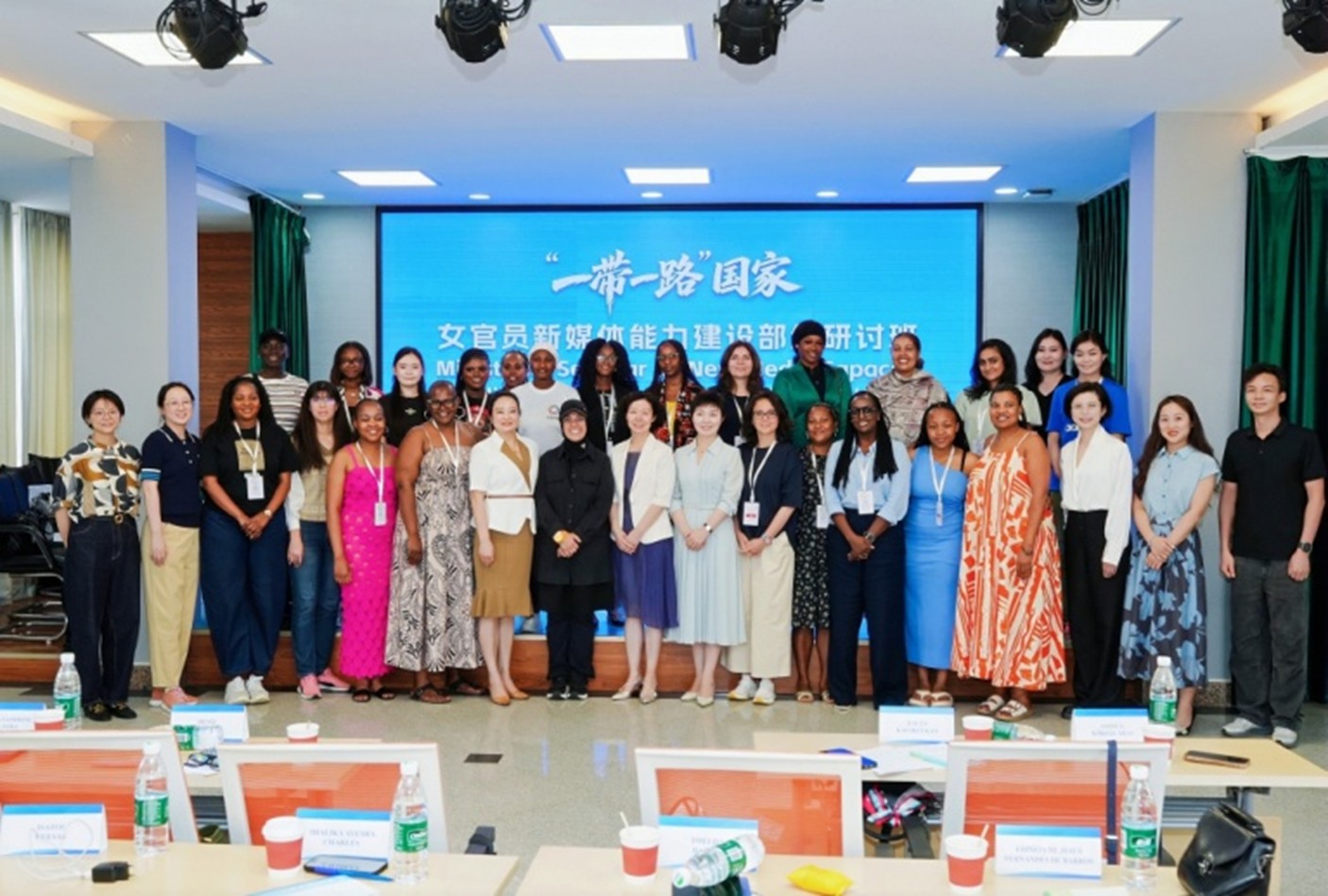
The seminar follows a week-long programme in Beijing, where delegates from 11 countries attended lectures and discussions on media development, digital transformation and women’s leadership. In Changsha, participants will visit newspapers, radio and television stations, as well as leading media convergence centres, to observe how AI and digital innovation are reshaping news production and communication.
A key feature of the Changsha programme is exposing participants to China’s rapidly evolving AI-driven media landscape. Delegates will learn how Chinese media organisations use artificial intelligence to assist with news gathering, multilingual translation, video production, content distribution, audience engagement and data analysis, enabling journalists to deliver faster, more accurate and interactive news to millions of people.
Speaking at the opening ceremony, Professor Yang Lanying, President of the Hunan Women’s Federation, warmly welcomed the international delegates and highlighted the importance of digital transformation in empowering women and strengthening public communication.
“We are delighted to welcome you to beautiful Changsha, where we will share how women’s organisations can build digital platforms, harness technology and create communication channels that better serve women, families and society,” she said.
Professor Yang, a respected historian and recipient of China’s State Council Special Government Allowance for her academic contributions, said technological innovation is transforming every aspect of society and creating unprecedented opportunities for women to participate in governance, entrepreneurship and public life.
She noted that Hunan Province, with a population of more than 65 million people, including over 31 million women, has become one of China’s leading centres for media, publishing, broadcasting and e-commerce.
“Hunan has what many people call a powerful ‘media army’ and ‘e-commerce army’,” she explained. “Countless women are actively participating in the digital economy, rural revitalisation, technological innovation and grassroots governance.”
Professor Yang added that AI is fundamentally changing how people communicate, work and live, while creating new opportunities for women’s development.
“A social media account, a short video or a live-streaming broadcast can connect markets, promote culture, expand businesses and even change a person’s life,” she said. “The digital era has opened new doors for women, and through this seminar we hope to share experiences, strengthen cooperation and amplify women’s voices across Belt and Road countries.”
She further stressed that women leaders play an indispensable role in public governance, social services, cultural exchange and sustainable development, adding that closer cooperation among participating countries would contribute to stronger people-to-people ties and mutual learning between civilisations.
During their stay in Changsha, delegates will explore how China’s integrated media system combines traditional journalism with digital platforms, artificial intelligence and big data to improve news production and audience engagement. They will also interact with media professionals and technology experts who are pioneering AI-powered journalism.
For many participants, the seminar presents an opportunity to examine how emerging technologies can strengthen journalism in their respective countries while promoting responsible and ethical use of artificial intelligence.
As AI continues to dominate China’s media landscape, the experience offers valuable lessons for developing countries such as The Gambia, where embracing digital innovation could improve newsroom efficiency, enhance fact-checking, expand online audiences and modernise news delivery without replacing the vital role of journalists. Instead, AI is increasingly being used as a tool to support human creativity, improve productivity and help media organisations adapt to the demands of the digital age.