China’s $6 billion investment turns Africa’s largest carmaking hub into EV battleground with Europe
China’s growing investment in Morocco is turning Africa’s largest carmaking hub into a key battleground with Europe in the global electric vehicle industry.
 Black News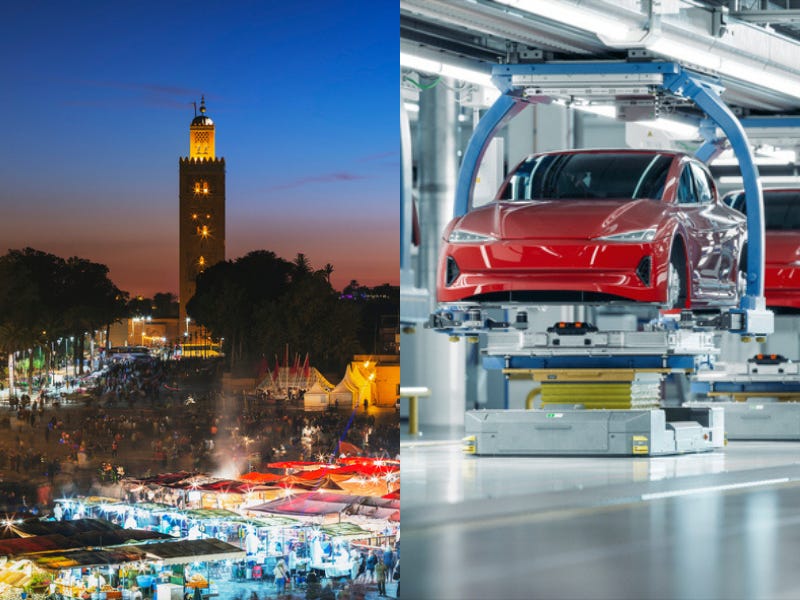
China’s growing investment in Morocco is turning Africa’s largest carmaking hub into a key battleground with Europe in the global electric vehicle industry.
- China is rapidly investing in Morocco, building a massive electric vehicle supply hub including industrial parks and a $1.3 billion battery gigafactory.
- European Union policymakers fear that China is using Morocco as a backdoor to bypass heavy EV tariffs by exporting minimally processed parts tariff-free to Europe.
- Moroccan officials deny the allegations, highlighting strong rules of origin and significant local value-add
- The situation creates a dilemma for EU regulators, as penalizing Moroccan exports could disrupt supply chains for major European carmakers that operate in Morocco.
As Chinese manufacturers pour billions of dollars into factories producing batteries, vehicle parts and other EV components, European policymakers are increasingly concerned that Morocco could become a gateway for Chinese products to enter the EU market while avoiding steep tariffs
Outside the port city of Tangier, a 500-hectare industrial park called Tanger Tech City is quickly replacing farmland with factories. Numerous Chinese companies are setting up operations to manufacture tires, brakes, and battery components.
DON'T MISS THIS: South Africa loses its spot as Africa’s top car maker to Morocco
Further down the Atlantic coast, a Chinese battery manufacturer is constructing a 1.3 billion dollar gigafactory. Morocco aims to establish a complete manufacturing supply chain capable of providing parts for half a million electric vehicles per year by the end of 2026.
Tariffs and the Backdoor Fear
This massive influx of Chinese capital, which has reached roughly $6 billion since the pandemic, is causing severe anxiety for European Union policymakers in Brussels.
The EU has introduced heavy tariffs of up to 45 percent on electric vehicles imported directly from China to protect its own domestic market.
European officials worry that Beijing is using Morocco as a backdoor launch pad to avoid these trade barriers. They fear that heavily subsidized Chinese parts will undergo only minor processing in North Africa before being shipped tariff-free into Europe, allowing China to export its domestic industrial overcapacity.

The EU has already started pushing back, previously penalizing aluminum wheel shipments from Morocco after finding they received unfair state subsidies.
Moroccan trade officials strongly reject the idea that their economic zones are just a corporate camouflage for China to bypass Western trade barriers. Instead, they pitch Morocco as a legitimate, highly competitive manufacturing partner.
The nation offers major incentives, including a five-year corporate tax holiday, a young workforce, and local renewable energy that helps companies avoid Europe's strict carbon taxes.
Most importantly, Morocco has free trade agreements with both the EU and the US. Local authorities emphasize that Chinese firms must follow strict rules of origin, meaning components must be significantly transformed within Moroccan borders to legally qualify for tariff-free export.
A Dilemma for European Regulators
This situation presents a major dilemma for European regulators. Launching aggressive trade penalties against Morocco is incredibly complicated because European automotive giants like Renault and Stellantis already run massive factories there and rely on the local supply chain.
Furthermore, strict Moroccan labor laws mean these new factories must hire local workers, which has boosted the local economy and created jobs.
DON'T MISS THIS: How Morocco became strategic hub in China’s race to dominate green economy
However, geopolitical experts warn that China has the financial muscle to dominate Morocco's entire vertical electric vehicle supply chain, from mining its massive phosphate reserves to building the transport infrastructure.
As the EU debates new laws to protect its eroding industrial base, Morocco is turning into a major economic battleground where Europe's defensive trade policies directly collide with China's manufacturing ambitions.
Victor Awogbemila