Corporate Media Again Manufacturing Consent For War
By Minnah Arshad and Andrew Perez Photos: Wikimedia Commons The people who suffer the most in US wars have generally been mentioned last and least by America’s so-called paper of record. With Trump’s illegal war on Iran, history is repeating itself. According to a Zeteo analysis, the New York Times underrepresented Iranian victims in its early coverage of the US-Israeli war on Iran. The Times published over 100 articles on the Iran war in its Middle East section in the first four days. Only 18 of the 103 stories Zeteo analyzed mentioned Iranian victims, compared to 29 that mentioned casualties for the US, Israel, or Gulf countries. Bear in mind that Iranians make up 97%of the victims in this war so far. And most of the Times’s initial coverage also avoided noting that Trump’s war is illegal to begin with. When the Times did report on Iranian victims in its early coverage of the war, the paper mostly used passive language – some of it mangled. In a March 3 article, the Times wrote: “The war has pressed forward, expanding across the Middle East and yielding hundreds of casualties, including among Iran’s top leadership.” Compare that with a Times report on Israeli victims: “One man stood crying in the ghastly aftermath of an Iranian missile strike that killed at least nine people in central Israel on Sunday afternoon, the worst casualty toll in the country after two days of conflict with Iran.” This is what manufacturing consent looks like. The paper did try to address readers’ criticisms of its war coverage in a Q&A with the editor who is reportedly helming war coverage, published Monday. The story acknowledged that “several readers argued that we initially underplayed” the Feb. 28 attack on the elementary school in Minab compared to Iran’s attacks on Israel. It is worth noting that the first story on the school massacre appeared not on the front page of the paper but on page 11. Yet Adrienne Carter, a senior editor on the Times’s International desk, said the school attack was a “priority” while arguing that the paper had less access to on-the-ground reporting in Iran compared to Israel. On another question about passive versus active voice, Carter said “language evolves” and “initial claims don’t always bear out.” The coverage of this war from the US media as a whole has been embarrassing in many ways. The Washington Post on Tuesday, for instance, published a piece asserting that it’s a pro-Iranian “conspiracy theory” to argue “that Trump attacked Iran to distract the public from the Epstein files.” The paper cited an executive from the Anti-Defamation League who expressed concern that social media users are calling Trump’s Iran war “Operation Epstein Fury,” rather than by the president’s preferred branding: “Operation Epic Fury.” “An ADL report found that the phrase ‘Epstein Fury’ was mentioned more than 90,000 times by some 60,000 different accounts on X within the conflict’s first three days,” the Post reported, somehow keeping a straight face. Of course, some mainstream journalists, including at the Times, are working to hold the Trump administration accountable. Times reporter Shawn McCreesh specifically pressed Trump on why he chose to claim Iran was responsible for the attack on the Iranian school. “You just suggested that Iran somehow got its hands on a Tomahawk and bombed its own elementary school on the first day of the war,” McCreesh said Monday. “But you’re the only person in your government saying this.” His questioning caused Trump to, for one moment, stop lying. “I just don’t know enough about it,” Trump responded, before saying he will “live with” the results of his administration’s investigation into the school attack. A spokesperson for the Times tells Zeteo that the paper “has written on the legality of President Trump’s attacks on Iran through a domestic and international lens, and asked questions of Trump directly, among reporting on many other topics.” The spokesperson noted the paper has published “multiple pieces of forensic reporting on the likely US strike on an Iranian school,” adding: “We have done all of this reporting fairly, thoroughly, and without bias.” Nevertheless, the Times may not have learned its lesson from the lead-up to the Iraq War, when its reporting helped sell the Bush administration’s lies about WMDs. Over the weekend, the paper helped justify Trump’s Iran war with blind quotes from “officials” who suggested that “Iran or potentially another group” may have been able to access the uranium at sites after Trump’s administration bombed them last year. The Times also still employs Gaza genocide apologist Bret Stephens, whose first column headline on the Iran war read: “Trump and Netanyahu Are Doing the Free World a Favor.” It’s the same paper that instructed reporters to avoid words like “genocide” and “ethnic cleansing” when reporting on Palestine, and to this day, fails to recognize what the world’
 Black News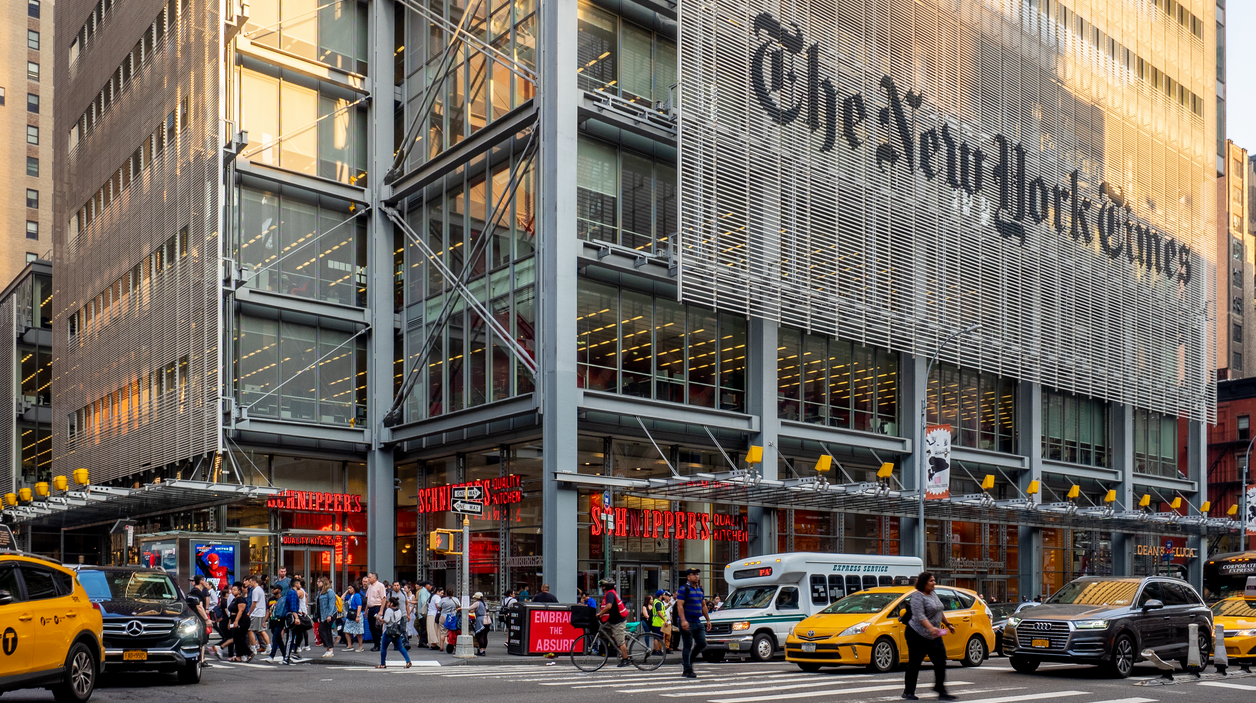
By Minnah Arshad and Andrew Perez
Photos: Wikimedia Commons
The people who suffer the most in US wars have generally been mentioned last and least by America’s so-called paper of record. With Trump’s illegal war on Iran, history is repeating itself.
According to a Zeteo analysis, the New York Times underrepresented Iranian victims in its early coverage of the US-Israeli war on Iran. The Times published over 100 articles on the Iran war in its Middle East section in the first four days. Only 18 of the 103 stories Zeteo analyzed mentioned Iranian victims, compared to 29 that mentioned casualties for the US, Israel, or Gulf countries.
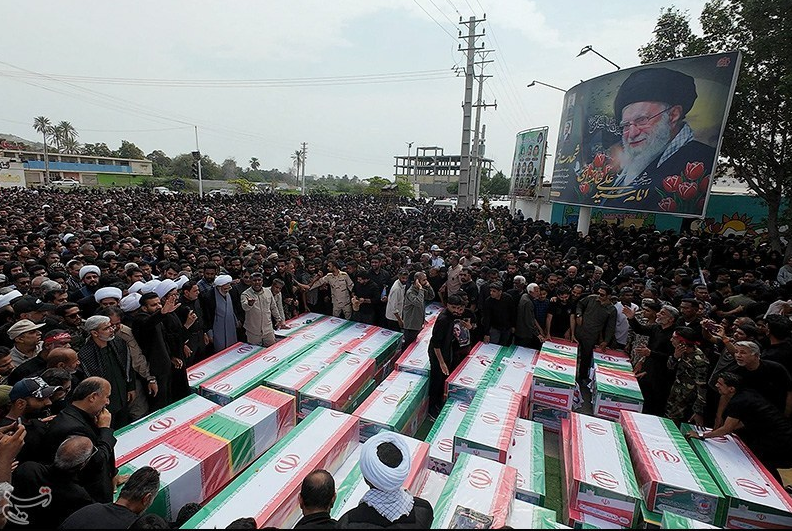
Bear in mind that Iranians make up 97%of the victims in this war so far.
And most of the Times’s initial coverage also avoided noting that Trump’s war is illegal to begin with.
When the Times did report on Iranian victims in its early coverage of the war, the paper mostly used passive language – some of it mangled. In a March 3 article, the Times wrote: “The war has pressed forward, expanding across the Middle East and yielding hundreds of casualties, including among Iran’s top leadership.”
Compare that with a Times report on Israeli victims: “One man stood crying in the ghastly aftermath of an Iranian missile strike that killed at least nine people in central Israel on Sunday afternoon, the worst casualty toll in the country after two days of conflict with Iran.”
This is what manufacturing consent looks like.
The paper did try to address readers’ criticisms of its war coverage in a Q&A with the editor who is reportedly helming war coverage, published Monday.
The story acknowledged that “several readers argued that we initially underplayed” the Feb. 28 attack on the elementary school in Minab compared to Iran’s attacks on Israel. It is worth noting that the first story on the school massacre appeared not on the front page of the paper but on page 11. Yet Adrienne Carter, a senior editor on the Times’s International desk, said the school attack was a “priority” while arguing that the paper had less access to on-the-ground reporting in Iran compared to Israel.
On another question about passive versus active voice, Carter said “language evolves” and “initial claims don’t always bear out.”
The coverage of this war from the US media as a whole has been embarrassing in many ways. The Washington Post on Tuesday, for instance, published a piece asserting that it’s a pro-Iranian “conspiracy theory” to argue “that Trump attacked Iran to distract the public from the Epstein files.”

The paper cited an executive from the Anti-Defamation League who expressed concern that social media users are calling Trump’s Iran war “Operation Epstein Fury,” rather than by the president’s preferred branding: “Operation Epic Fury.”
“An ADL report found that the phrase ‘Epstein Fury’ was mentioned more than 90,000 times by some 60,000 different accounts on X within the conflict’s first three days,” the Post reported, somehow keeping a straight face.
Of course, some mainstream journalists, including at the Times, are working to hold the Trump administration accountable. Times reporter Shawn McCreesh specifically pressed Trump on why he chose to claim Iran was responsible for the attack on the Iranian school.
“You just suggested that Iran somehow got its hands on a Tomahawk and bombed its own elementary school on the first day of the war,” McCreesh said Monday. “But you’re the only person in your government saying this.” His questioning caused Trump to, for one moment, stop lying. “I just don’t know enough about it,” Trump responded, before saying he will “live with” the results of his administration’s investigation into the school attack.
A spokesperson for the Times tells Zeteo that the paper “has written on the legality of President Trump’s attacks on Iran through a domestic and international lens, and asked questions of Trump directly, among reporting on many other topics.” The spokesperson noted the paper has published “multiple pieces of forensic reporting on the likely US strike on an Iranian school,” adding: “We have done all of this reporting fairly, thoroughly, and without bias.”
Nevertheless, the Times may not have learned its lesson from the lead-up to the Iraq War, when its reporting helped sell the Bush administration’s lies about WMDs. Over the weekend, the paper helped justify Trump’s Iran war with blind quotes from “officials” who suggested that “Iran or potentially another group” may have been able to access the uranium at sites after Trump’s administration bombed them last year.
The Times also still employs Gaza genocide apologist Bret Stephens, whose first column headline on the Iran war read: “Trump and Netanyahu Are Doing the Free World a Favor.”
It’s the same paper that instructed reporters to avoid words like “genocide” and “ethnic cleansing” when reporting on Palestine, and to this day, fails to recognize what the world’s leading genocide scholars have concluded: that Israel is indeed committing a genocide in Gaza.
The Times famously issued a half-hearted apology for its coverage of Iraq. In a May 2004 letter, Times editors wrote, “Looking back, we wish we had been more aggressive in re-examining the claims as new evidence emerged – or failed to emerge.”
More than two decades later, the paper is once again failing to be aggressive in covering another US president’s baseless war.