Dangote reduces Nigeria’s dependence on dollars despite resistance from the old system
According to the Economist Intelligence Unit (EIU), Nigeria's reliance on imported fuel has been significantly mitigated by the oil refinery owned by Africa’s richest man, Aliko Dangote.
 Black News

According to the Economist Intelligence Unit (EIU), Nigeria's reliance on imported fuel has been significantly mitigated by the oil refinery owned by Africa’s richest man, Aliko Dangote.
- The Dangote Petroleum Refinery has drastically reduced Nigeria's reliance on imported fuel, nearly meeting the country's entire fuel demand.
- Nigeria's domestic refining growth is relieving pressure on the foreign exchange market and improving energy independence.
- The transition to local refining faces resistance from stakeholders in the old import-dependent system, and recent regulatory changes have impacted gasoline importation.
- Nigeria's improved refining capacity contributed to its first sovereign credit rating upgrade in fourteen years, supporting economic growth and foreign exchange earnings.
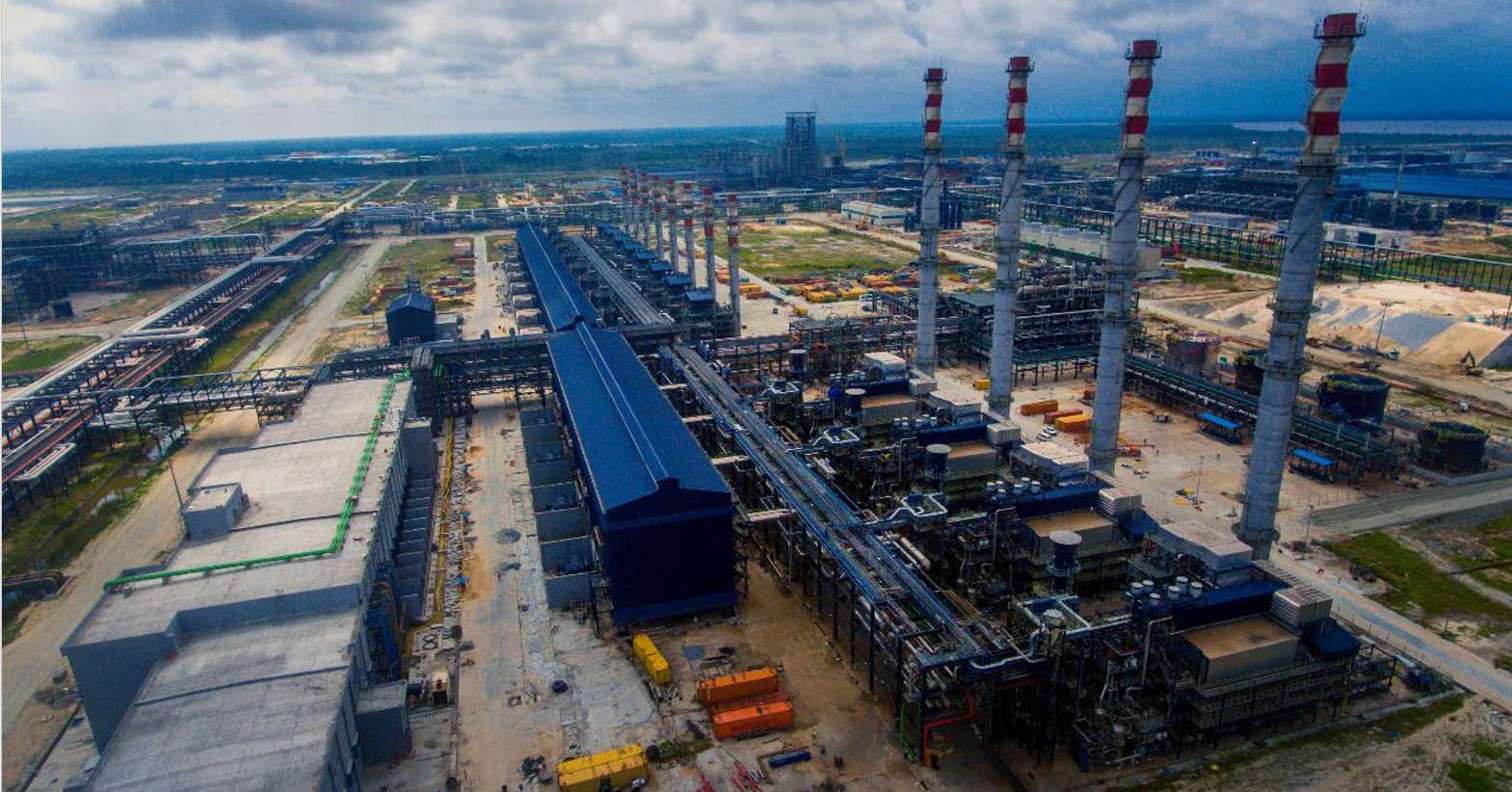
Nigeria’s growing energy independence is a result of the expanding production of the 650,000-barrel-per-day Dangote Petroleum Refinery, and this ramp-up is relieving pressure on the country's foreign exchange market.
The refinery has insisted that it has almost attained its 650,000-barrel-per-day capacity, with the intent to increase its production scope to 1.4 million barrels per day.
Currently, however, the Dangote Oil Refinery has revolutionized Nigeria's downstream oil sector, which for decades relied largely on imported refined products despite Nigeria being Africa's largest producer of crude oil, according to the EIU's latest analysis of the country's petroleum industry and regulatory environment.
According to the research, as seen in the Punch newspaper, the refinery provided about 80% of Nigeria's fuel needs in April.
As the plant approaches full operating capacity, output levels are getting close to the point where local demand can be fully met.
“The gradual ramp-up of the 650,000-barrel/day Dangote refinery since May 2023 has transformed Nigeria’s long, dysfunctional downstream sector.
The country’s main refineries, all state-owned, had been inoperative for years, and Nigeria was almost entirely reliant on costly imported fuel,” the report stated.
“Meanwhile, the attainment of full capacity at, and an increase in exports from, the Dangote refinery will support real GDP growth and foreign exchange earnings in 2026 and 2027 and beyond, as a planned doubling of the plant’s output comes on stream around the end of the decade,” it added.
Furthermore, the report showed that entities with vested interests in the old importation model have resisted the transition from a state-governed petroleum import structure to comprehensive domestic refining.
Notwithstanding the facility's growing capacity to meet internal requirements, recent complications arose after the Nigerian Midstream and Downstream Petroleum Regulatory Authority relaxed gasoline importation restrictions.
The growing importance of the refinery is further evidenced by broader macroeconomic indicators. Notably, Nigeria's sovereign credit rating received an upgrade this month for the first time in fourteen years; S&P Global Ratings identified the expansion of local refining capacity and the growth of hydrocarbon exports as primary factors underpinning this adjustment.