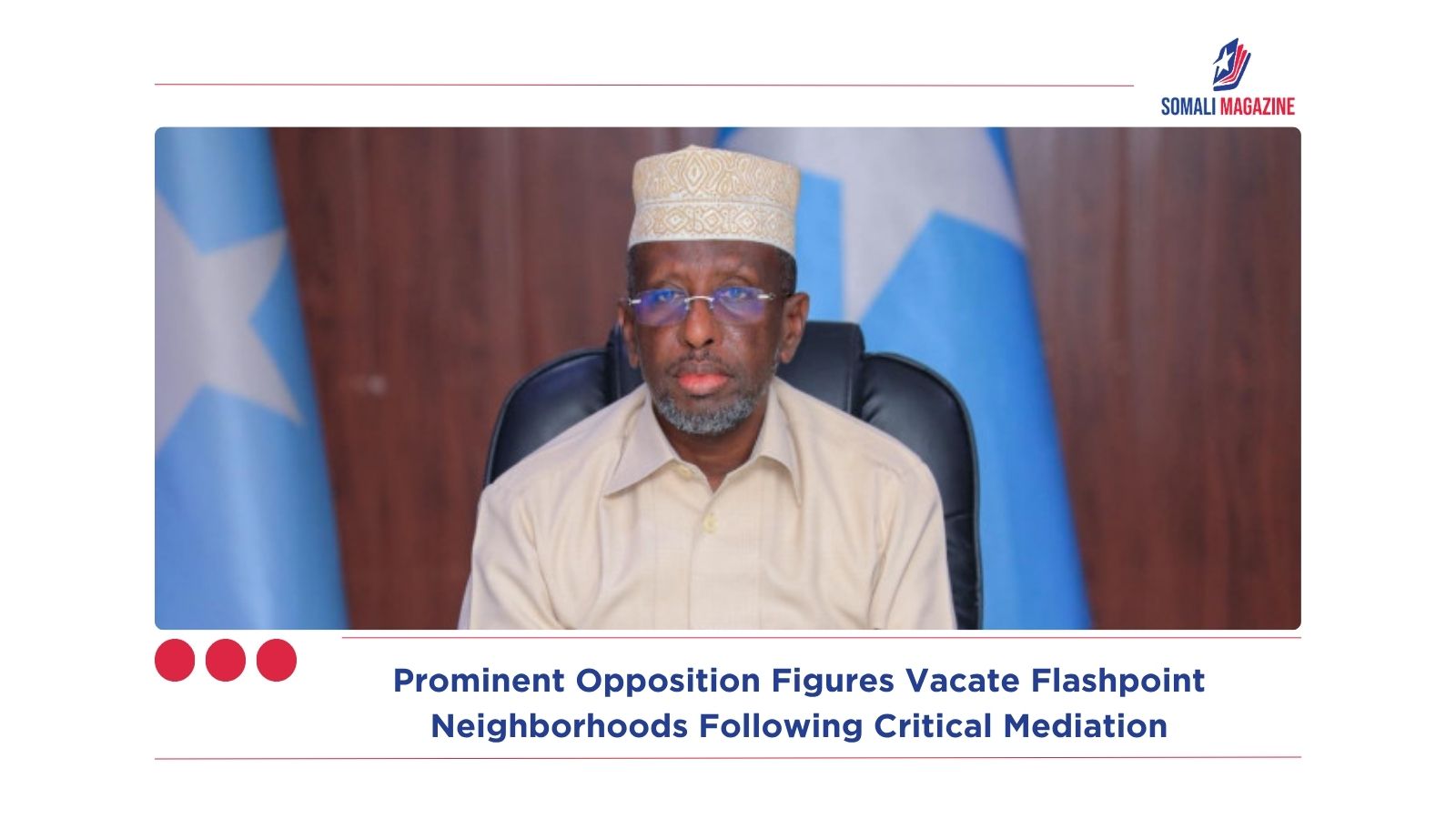
A delicate breakthrough has been achieved in the Horn of Africa as intensive diplomatic and domestic interventions successfully de-escalated a dangerous armed standoff. According to independent local sources and official accounts, former President Sharif Sheikh Ahmed and former Prime Minister Hassan Ali Khaire have officially vacated their temporary Mogadishu bases in the Abdiaziz and Howlwadaag districts. The coordinated relocation follows days of high-intensity urban warfare and political positioning that threatened to completely fracture the capital city along clan and factional lines. Observers note that the peaceful withdrawal has brought a sudden sense of calm to a population weary of systemic instability, providing a vital window to resolve the broader political impasse in Somalia.
The crisis originally erupted when opposition elements embedded themselves within local strongholds to mobilize demonstrations against the sitting administration, resulting in heavy kinetic clashes with federal government units. Reports indicate that state forces utilized heavy artillery in residential areas, causing structural damage and civilian displacements. However, a breakthrough materialized after a robust local mediation effort spearheaded by the commander of the Somali National Army, traditional clan elders, and senior national intelligence officials. These mediators engaged directly with the political opposition figures, ultimately providing assurances that future legislative disputes would be addressed through formal dialogue rather than military coercion.
Reports suggest that international partners, including the United Nations and the United States, played an influential role behind the scenes by urging the executive branch to halt offensive operations in exchange for the opposition’s withdrawal. Following these high-pressure talks, former Prime Minister Khaire was escorted from the Barmuudo neighborhood by intelligence personnel to his permanent residence near the international airport security perimeter. Simultaneously, sources close to former President Sharif confirmed that he voluntarily chose to dismantle his defensive positions in the northern Mirinaayo area, returning to his regular quarters to prevent further neighborhood casualties.
While the immediate threat of street-level conflict has subsided, political analysts warn that the underlying constitutional disputes remain entirely unresolved. The political impasse in Somalia centers on a profound disagreement regarding the expiration of the presidential mandate and recent structural alterations to the national electoral system. State authorities maintain that current security protocols are strictly designed to preserve public order, while opposition groups continue to accuse the government of suppressing democratic freedoms. Experts emphasize that while the successful local mediation has successfully averted an immediate humanitarian disaster in the capital, a durable peace will depend entirely on whether all major stakeholders commit to a transparent, consensus-driven security framework.

 Black News