Despite signing a defence pact with Pakistan and Türkiye, Saudi Arabia keeps rushing to the US for help against an Iran-backed enemy threatening its oil trade
Saudi Arabia has widened its security alliances with a new defence pact involving Pakistan and Türkiye, but the kingdom has turned to Washington for military support for at least the third time in a major security crisis as Iran-backed Houthis threaten a key oil shipping route off Africa.
 Black News
![Saudi Arabia, the Gulf’s strongest military, chooses condemnation over force after oil pipeline attack as Africa faces a fresh energy threat [ AFP/Getty ]](https://ocdn.eu/pulscms/MDA_/0a26fa1adec22bad66399008d8fab530.jpg)
Saudi Arabia has widened its security alliances with a new defence pact involving Pakistan and Türkiye, but the kingdom has turned to Washington for military support for at least the third time in a major security crisis as Iran-backed Houthis threaten a key oil shipping route off Africa.
- Saudi Arabia expanded security ties with Türkiye and Pakistan through a new defence pact, but has relied on US support amid Houthi threats to oil routes.
- Despite the Makkah Joint Defence Agreement, neither Türkiye nor Pakistan has committed direct military support for Saudi Arabia during the latest crisis.
- Houthi forces intensified attacks on Saudi territory and seized strategic ports, threatening vital maritime oil routes and global trade.
- The Houthis maintain a complex financial and weapons network, extending their influence into Africa and complicating regional security challenges for both Saudi Arabia and the US.
The move comes as the Houthis strengthen their position near the Bab el-Mandeb Strait, the narrow waterway separating Yemen from Djibouti and Eritrea and linking the Red Sea with the Gulf of Aden.
Under the Makkah Joint Defence Agreement signed on August 7, an armed attack against Saudi Arabia, Türkiye or Pakistan “shall be regarded as an attack against them all.”
Yet neither Ankara nor Islamabad has announced direct military action as Riyadh faces one of the pact’s first major security tests.
The confrontation intensified on September 8, when the Houthis launched dozens of drones and ballistic missiles towards Abha, Jizan, Najran and Khamis Mushait in one of their largest attacks on Saudi territory in years.
The strikes targeted a military airbase and energy infrastructure and wounded 73 people, according to Reuters. Saudi forces responded with intensified attacks on Houthi positions in Yemen.
At the same time, the Houthis seized the Red Sea port of Mocha and strengthened their position around Bab el-Mandeb, raising the risk of disruption along a route that carries roughly 7% of global oil output and serves as the southern gateway to the Suez Canal.
Further disruption would send more vessels around South Africa’s Cape of Good Hope, increasing journey times and transport costs while adding pressure to oil-producing countries already grappling with severe disruption in the Strait of Hormuz.
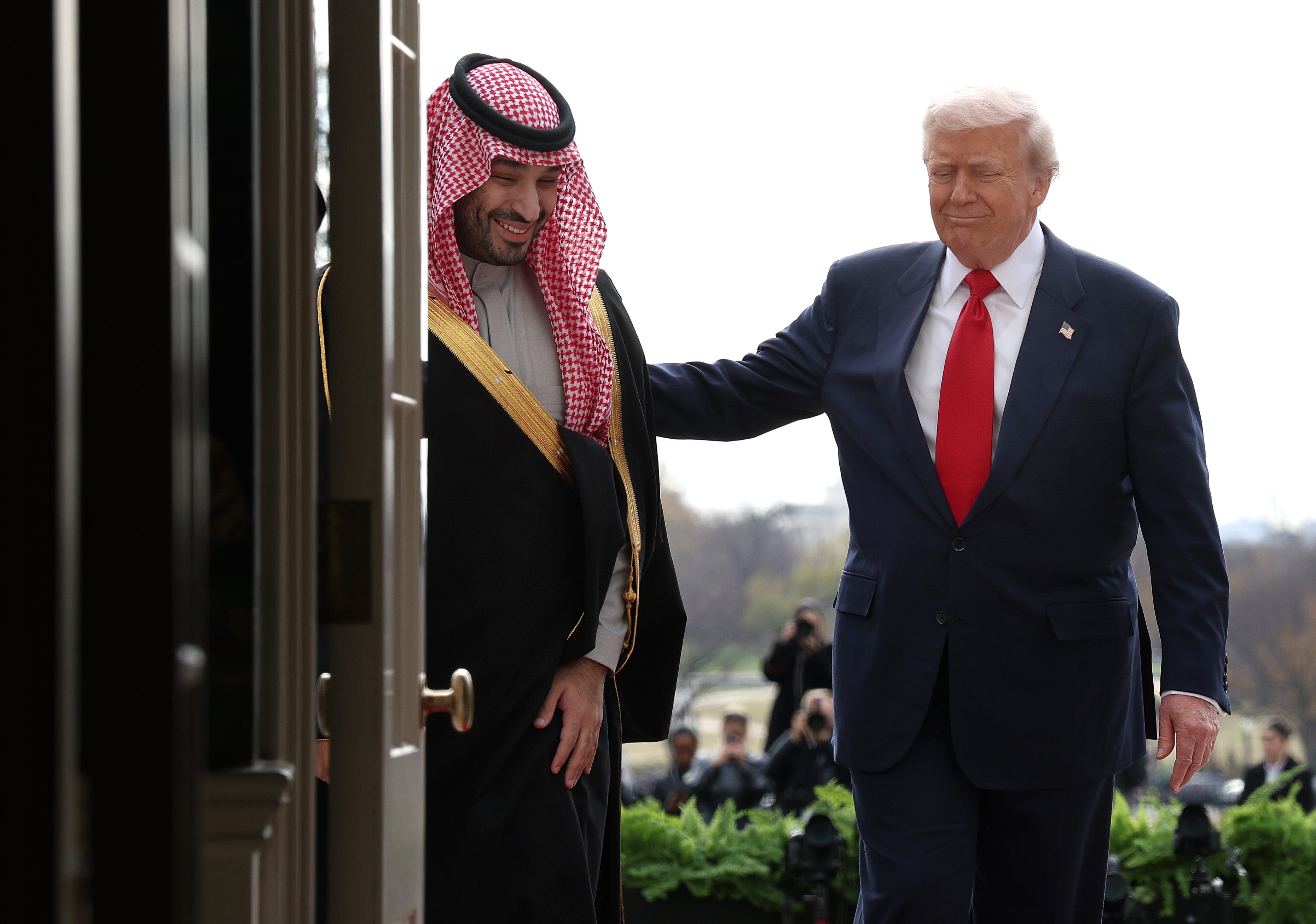
Saudi Arabia turns to its long-time US partner
The combined military and maritime threat has pushed Saudi Crown Prince Mohammed bin Salman to seek greater US involvement.
According to Fox News Digital, bin Salman spoke with President Donald Trump several times as the crisis escalated, while US Central Command chief Admiral Brad Cooper travelled to Saudi Arabia for coordination talks.
Washington has so far stopped short of direct military action, but Trump has offered Riyadh intelligence and targeting assistance.
The latest appeal follows two earlier major security crises in which Saudi Arabia turned to Washington: the 1990 Gulf crisis and the 2019 attacks on its oil facilities. The current Houthi escalation therefore marks at least the third major episode of this kind
The relationship is backed by deep economic and defence ties, including $600 billion in Saudi investment commitments and nearly $142 billion in defence purchases announced during Trump’s May 2025 visit.
“The United States is focused on protecting our core national security interests — such as ensuring freedom of navigation in the Red Sea — while empowering our regional partners to take the lead in managing and resolving regional security challenges,” a senior Trump administration official told Fox News Digital.
New Türkiye-Pakistan pact faces an early test
That long-standing reliance on Washington is now being tested alongside Saudi Arabia’s newer defence partnership with Türkiye and Pakistan.
Pakistan said on September 10 that no military response under the pact was being considered.
“There is no such thing under discussion right now ... When time comes (we) will act under the agreement,” Foreign Ministry spokesperson Sajjad Haider Khan said.
Türkiye has also stopped short of military involvement, saying it “condemn[s] in the strongest terms” the Houthi attacks while reaffirming support for Saudi Arabia’s sovereignty and territorial integrity.
For now, the pact has produced political support rather than direct military assistance. Pakistan has acknowledged that its operationalisation remains at an “early stage,” while the publicly disclosed agreement contains no financial or defence-purchase commitments comparable with Riyadh’s long-established relationship with Washington.
Africa becomes part of Washington’s Houthi problem
Meanwhile, the Houthis remain a wider challenge for Washington because their financial and weapons networks extend beyond Yemen and increasingly reach into Africa.
“We’re dealing with a very well-capitalized group,” Adam Rousselle, founder of Between the Lines Research, said in a report.
The group relies on oil sales, taxes, port revenues, hawala transfers, cryptocurrency and foreign intermediaries, with parts of that network reaching into Africa.
A UN Panel of Experts found that Somalia was being used as a transit point for weapons bound for Houthi-controlled Yemen and documented links with Al-Shabaab, including arms transfers and Somali recruits travelling to Yemen for training.
“The Houthis aren't sanctions-proof; they're sanctions-adapted,” Miad Maleki, senior fellow at the Foundation for Defense of Democracies, told Fox News Digital.