DR Congo battles former colonial ruler Belgium for millions of maps revealing where its copper, cobalt and mineral wealth are located
The Democratic Republic of Congo has intensified its push to recover millions of colonial-era geological maps and records held in Belgium, as it seeks greater control over data showing the location of its copper, cobalt and other mineral resources.
 Black News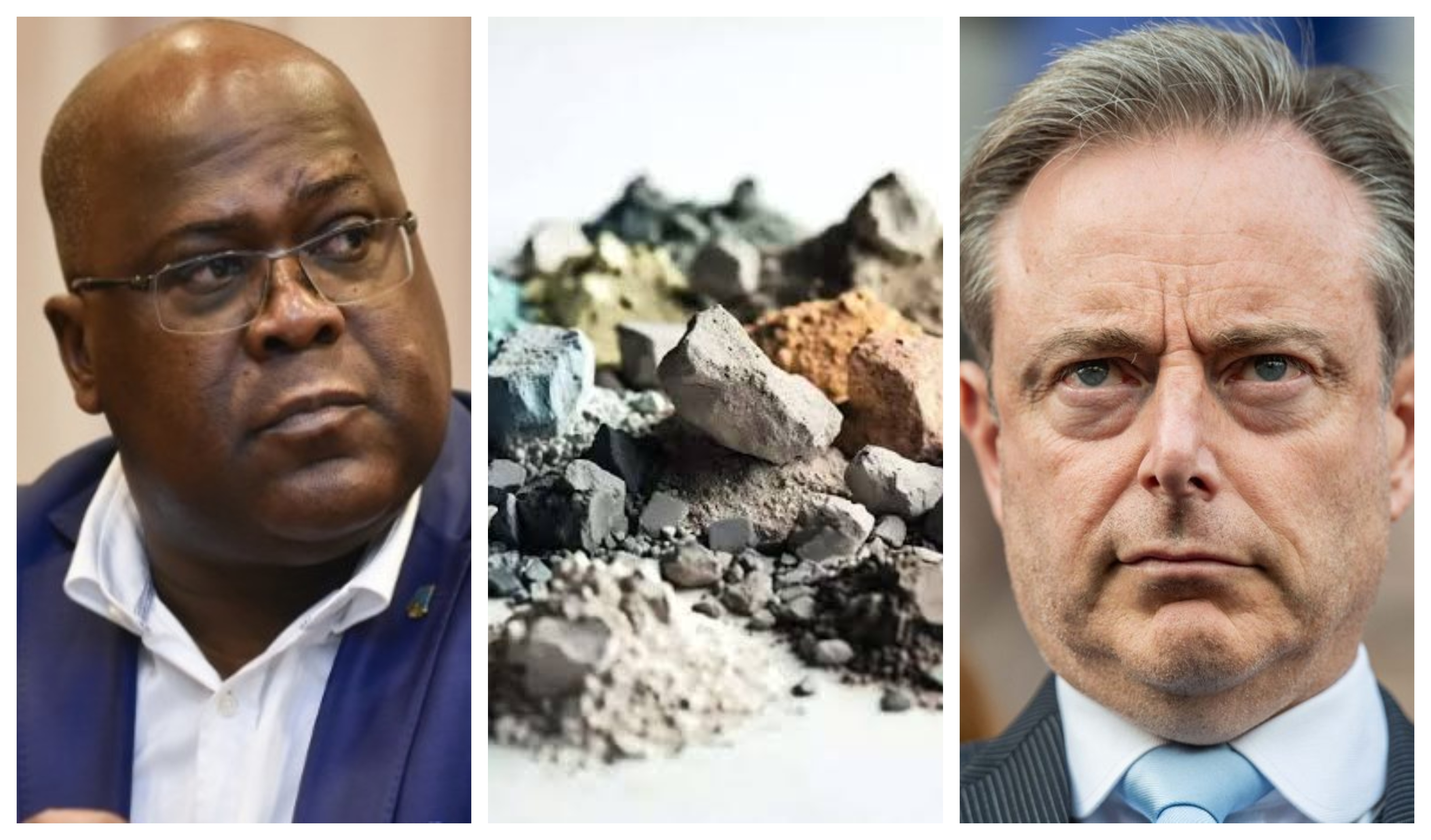

The Democratic Republic of Congo has intensified its push to recover millions of colonial-era geological maps and records held in Belgium, as it seeks greater control over data showing the location of its copper, cobalt and other mineral resources.
- The Democratic Republic of Congo is pushing for the digitisation and transfer of colonial-era geological records from Belgium to gain greater control over critical mineral data.
- The records, held in a Belgian museum, are historically and commercially valuable and could aid in identifying new deposits of vital minerals like cobalt and copper.
- While US company KoBold Metals aimed to help digitise the records, Belgian authorities insist digital copies be shared directly with Congolese authorities and not exclusively with private firms.
- These efforts are part of a wider African push to modernise geological data, attract investment, and reassert control over resource data previously held abroad.
Congolese Mines Minister Louis Watum Kabamba met Belgian and European Union officials to discuss the digitisation and transfer of records held at the Royal Museum for Central Africa near Brussels, the Luxembourg Times reported.
Compiled during decades of geological exploration under Belgian colonial rule from 1885 to 1960, the collection includes maps, field reports, aerial photographs, rock samples and other documents.
Importantly, the records could help identify new deposits of copper, cobalt, lithium and other minerals used in electric vehicles, renewable-energy systems and advanced technologies.
The archive also forms part of the broader debate over material retained by Belgium after colonial rule.
A spokesperson for the Congolese mining ministry said the government wanted to move into the implementation phase because “there is a need to accelerate the discovery of new mineral deposits”.
“A very large part of DR Congo has not yet been explored,” the spokesperson said.
Following the talks, officials agreed to draw up a joint roadmap for the digitisation and restitution of the records. They also agreed to establish a task force to oversee the process.
The ministry described the initiative as a major step towards strengthening DR Congo’s “geoscientific sovereignty” and making its mining industry more competitive and attractive to investors.
DR Congo tightens control over cobalt exports
The push for greater control over geological data comes as Kinshasa tightens its grip on the country’s mineral exports.
DR Congo suspended cobalt exports in February 2025 after oversupply depressed prices and weakened government revenue.
It replaced the ban with a quota system in October 2025, capping exports at 96,600 tonnes annually in 2026 and 2027.
The restrictions were designed to reduce the market glut, support prices and give DR Congo greater influence over a mineral for which it supplies about three-quarters of global output.
The measures helped lift cobalt prices, but they also tightened supplies for refiners, particularly in China, and accelerated demand for cobalt-free battery technologies.
![Copper And Cobalt Mining In Kolwezi, Democratic Republic Of The Congo. [Photo by Michel Lunanga/Getty Images]](https://ocdn.eu/pulscms/MDA_/105751d0ba0934eec3ce2bc134aad6e9.jpg)
KoBold deal stalls over access
Prior to Kinshasa’s renewed push for the records, KoBold Metals, a US exploration company backed by investors including Bill Gates, signed an agreement with DR Congo in 2025 to help digitise them.
However, the company has yet to gain access to the collection held in Belgium.
Belgian officials have argued that the museum cannot grant exclusive access to millions of documents about DR Congo’s geology to a foreign private company.
Instead, the museum plans to manage the process and gradually provide digital copies to Congolese authorities.
A Belgian government spokesperson said the project was already under way with European Union funding.
“Digital copies are being sent to the relevant Congolese authorities gradually,” the spokesperson said.
Africa moves to unlock geological data
DR Congo’s push reflects a wider effort by African countries to modernise geological records and attract mineral investment.
South Africa’s Council for Geoscience has partnered with mining group BHP to unlock legacy datasets and strengthen exploration capacity.
The European Union-backed PanAfGeo+ programme is helping African geological agencies improve mapping, data management and technical expertise.
DR Congo joined its PanAfGeo+ INVEST initiative in March 2026, strengthening cooperation on geological data and critical-mineral exploration.
Meanwhile, French miner Eramet has partnered with technology company Lithosquare and France’s national geological service, BRGM, to use artificial intelligence to accelerate the discovery of critical metals, with an initial focus on Africa.
The dispute has renewed attention on Belgium’s colonial relationship with DR Congo and the commercial value of historical geological records.
Congolese authorities say recovering the data would support efforts to strengthen control over mineral exploration and investment.