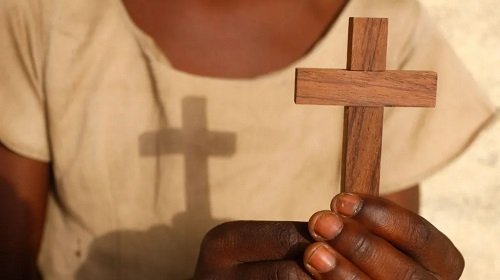
Fear shouldn’t become Uganda’s costliest barrier
Can a country become prosperous if its citizens are afraid to speak? That is the question Odrek Rwabwogo has placed before Uganda. It deserves attention not because of who asked it, but because it cuts to the heart of a dilemma facing many countries that aspire to rapid economic growth while narrowing the space for […] The post Fear shouldn’t become Uganda’s costliest barrier appeared first on The Observer Media Ltd.
 Black News

Can a country become prosperous if its citizens are afraid to speak?
That is the question Odrek Rwabwogo has placed before Uganda. It deserves attention not because of who asked it, but because it cuts to the heart of a dilemma facing many countries that aspire to rapid economic growth while narrowing the space for dissent.
Uganda’s ambition to build a $500 billion economy within 14 years is bold. It requires more electricity, more factories, more investment and more value added to the country’s agricultural and mineral wealth.
But economic transformation is not built on infrastructure alone. It rests on institutions that people trust. Rwabwogo’s central argument is that fear weakens those institutions. He is right.
Businesses invest where contracts are enforceable, regulators are predictable, and courts are seen as independent. Entrepreneurs innovate when they can question decisions without fearing retaliation.
Investors do not simply examine tax rates and transport networks; they also assess whether the rule of law protects their assets and whether political stability rests on strong institutions rather than the discretion of powerful individuals.
This is why freedom of expression is not merely a human rights issue. It is an economic one. Uganda already has laws governing speech. As human rights lawyer Sarah Bireete observes, the challenge is not the absence of legal provisions but ensuring that “the rule of law prevails.”
Citizens should not have to “speak in whispers” to express legitimate opinions about how they are governed. Yet Rwabwogo’s intervention also exposes an uncomfortable contradiction.
His critics ask why these concerns are only now being voiced from within the political establishment. David Kabanda argues that those calling for reform should first account for their own role in sustaining the current system, while Ann Mugisha dismisses the proposals as arriving “25 years late.”
Those criticisms cannot simply be brushed aside. They reflect a broader public frustration that reform is too often discussed only when political or institutional decline becomes impossible to ignore.
Still, Uganda should resist reducing this debate to personalities. Whether Rwabwogo is right or wrong about the National Resistance Movement’s future is less important than whether the country’s institutions can renew themselves.
Political parties are strongest when they encourage internal debate, tolerate criticism and regularly regenerate leadership. Governments are strongest when they welcome scrutiny because scrutiny exposes problems before they become crises.
The same principle applies beyond politics. Public institutions improve when whistle-blowers are protected. Businesses grow when regulators are accountable. Universities thrive when scholars can challenge prevailing ideas.
Even families function better when difficult conversations are not suppressed. The reforms required are neither mysterious nor revolutionary. Laws should be applied consistently regardless of political affiliation.
Courts must remain visibly independent. Parliament should exercise robust oversight rather than unquestioning loyalty. Security agencies must operate within the limits of the law. Political parties, including the NRM, should strengthen internal democracy instead of relying on personal influence or competing power centres.
Most importantly, leaders should recognise that criticism is not necessarily hostility. In healthy democracies, disagreement often serves as an early warning system. It reveals weaknesses while they can still be corrected. Rwabwogo argues that institutions, like living organisms, can recover if preventive action is taken early enough.
That is true. But recovery demands more than speeches, videos or good intentions. It requires consistent action that convinces citizens their voices matter even when those voices are uncomfortable to hear.
Uganda’s greatest economic asset is not its minerals, fertile land or youthful population. It is the confidence of its people that they can think freely, speak honestly and participate equally in shaping their country’s future.
Lose that confidence, and no economic target, however ambitious, will be enough to secure lasting prosperity.
The post Fear shouldn’t become Uganda’s costliest barrier appeared first on The Observer Media Ltd.







.jpeg?width=1200&auto=webp&crop=3:2#)