Fibre-optic-controlled weapon resistant to electronic jamming inaugurated by Nigerian start-up
Babasky Technologies, a Nigerian defense technology company, has successfully tested a domestically manufactured fiber-optic guided loitering munition, a feat that the company claims would boost the country's indigenous military capabilities in electronic warfare.
 Black News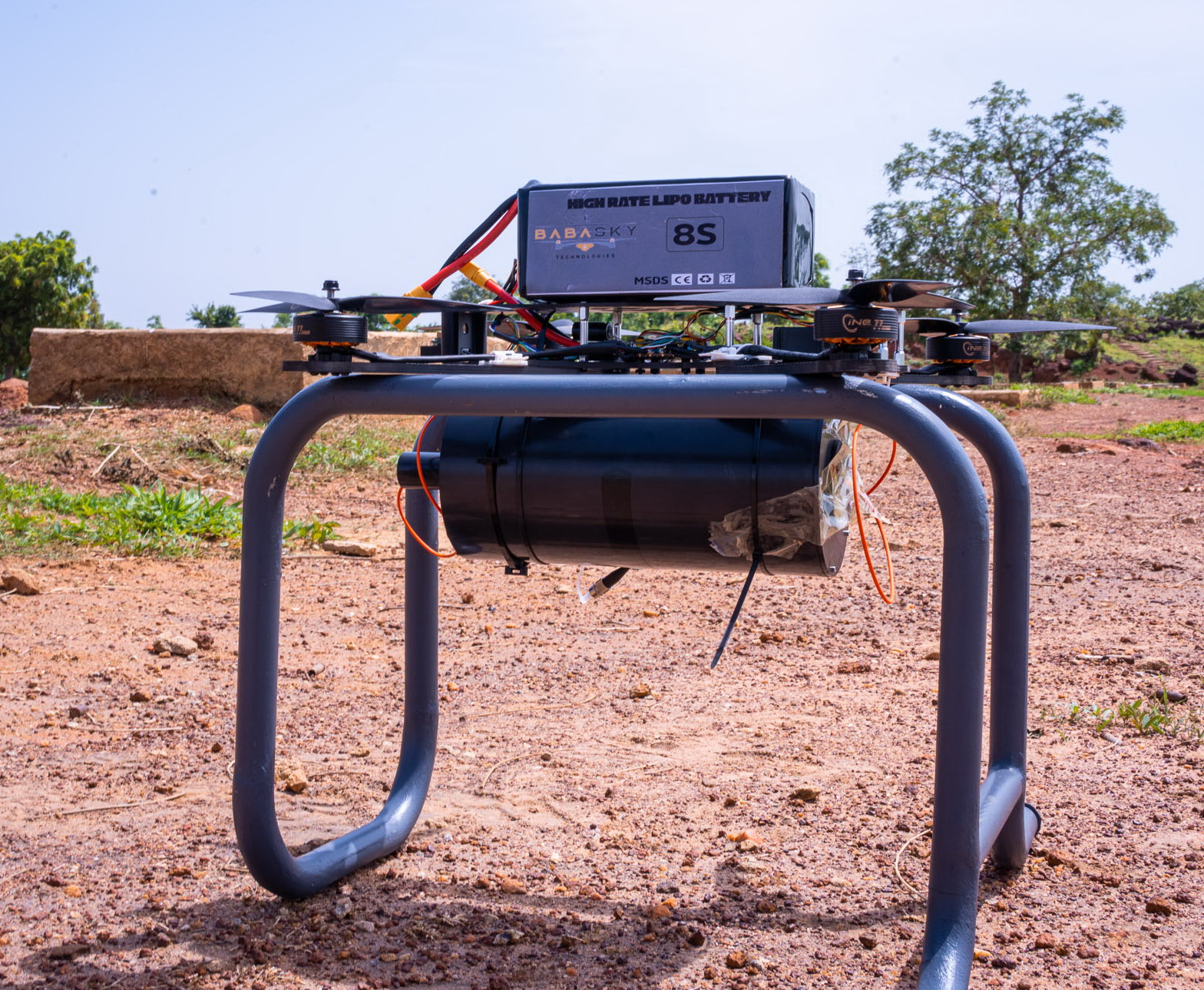
![Fibre-optic-controlled weapon resistant to electronic jamming inaugurated by Nigerian start-up [UNIKAM-FO1 fibre-optic drone launcher, BabaskyTechnologies]](https://ocdn.eu/pulscms/MDA_/6c916cca4ec6cd071ef1bc7beb85f9e3.jpg)
Babasky Technologies, a Nigerian defense technology company, has successfully tested a domestically manufactured fiber-optic guided loitering munition, a feat that the company claims would boost the country's indigenous military capabilities in electronic warfare.
- Babasky Technologies in Nigeria has successfully tested a domestically developed fiber-optic guided loitering munition named UNIKAM-FO1.
- The UNIKAM-FO1 drone uses a fiber-optic and Kevlar tether for operator control and live video, making it resistant to electronic jamming and signal spoofing.
- Standard FPV drones are vulnerable to electronic interference, but UNIKAM-FO1 is designed to operate in environments with heavy electronic countermeasures.
- Technical specs show the drone can carry a 2.5 kg warhead, reach speeds over 120 km/h, operate up to 15 km, and fly for up to 15 minutes.
The UNIKAM-FO1 drone was exhibited at the Nigerian Defense Testing Range in Jaji, Kaduna.
Unlike traditional unmanned aerial systems that rely on radio communications, the new system employs a fiber-optic and Kevlar micro-tether to ensure continuous operator control and live video transmission, making it highly resistant to electronic jamming and signal spoofing.
“This is a direct response to one of the biggest challenges in drone warfare today, electronic jamming,” the company said in a press statement.
“By eliminating dependence on vulnerable wireless communication, the UNIKAM-FO1 gives operators a decisive advantage in highly contested environments,” it added.
According to Babasky Technologies, as seen on the Vanguard, the technology was created to solve one of contemporary warfare's most significant challenges: the increasing efficacy of electronic countermeasures capable of disrupting or hijacking drone communications.
The company stated that standard First-Person View (FPV) drones are susceptible to signal interference, GPS denial, and communication outages.
The UNIKAM-FO1 is designed to operate even in highly disputed electronic settings by replacing wireless communications with a hardwired fiber-optic connection.
DON'T MISS THIS: Africa’s military spending hit new highs for the third time despite ongoing security problems
Technical specifications indicate that the loitering munition may carry a 2.5-kilogram indigenous high-energy composite warhead, attain speeds of more than 120 km/h, and function across distances ranging from 8 to 15 kilometers, depending on the fiber-optic spool utilized. It has a flying duration of up to 15 minutes and is flown via FPV.
During testing, the drone reportedly performed a successful high-speed attack with a 5-kilometer fiber-optic spool while retaining continuous telemetry throughout the trip.
“The terminal guidance precision was exceptional, and the data-link remained intact throughout the entire engagement,” Babasky stated.
In a different test, it successfully negotiated rough terrain before landing, confirming the resilience of its navigation system.
The successful trial of the UNIKAM-FO1 is another milestone in Nigeria's attempts to create indigenous defense solutions and lessen dependency on foreign military technology.