Ghana secures £215m UK investment deal to build West Africa maritime hub
Ghana’s latest £215 million investment agreement with the United Kingdom is about far more than headline investment figures.
 Black News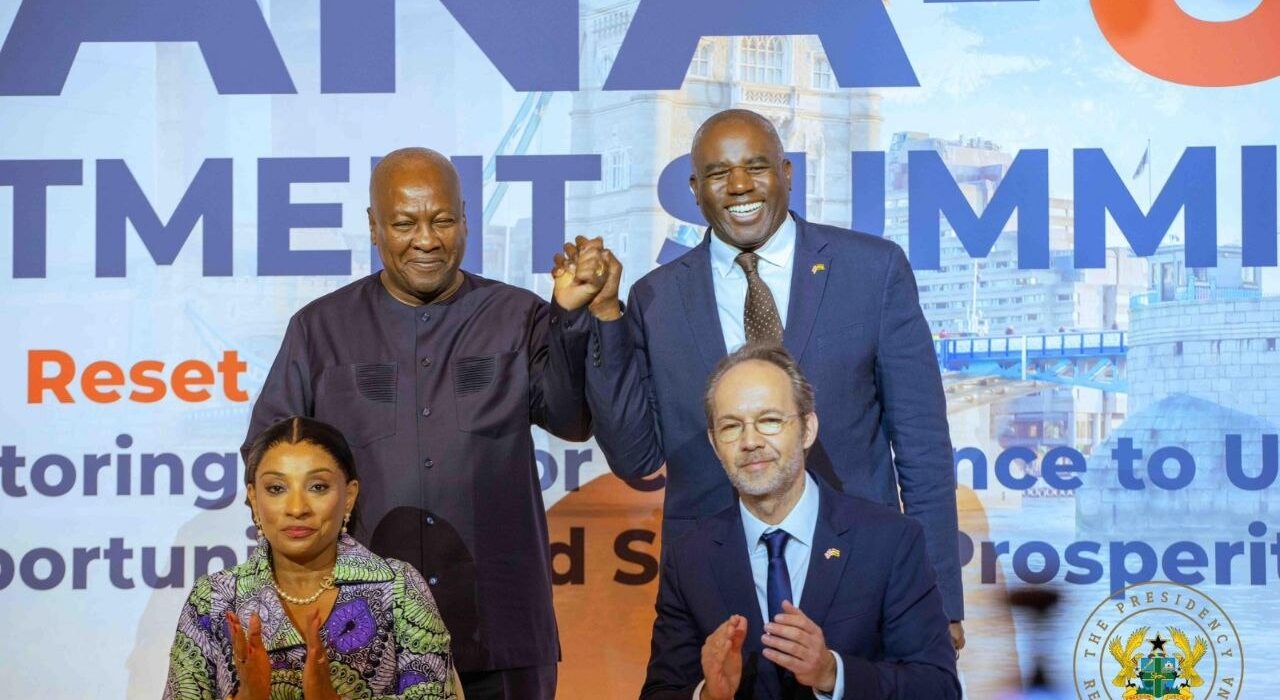

Ghana’s latest £215 million investment agreement with the United Kingdom is about far more than headline investment figures.
- Ghana has signed a new growth partnership with the UK worth up to £215 million.
- The centrepiece is a £101 million floating dock project in Takoradi.
- The facility could position Ghana as a major ship repair and maritime services hub in West Africa.
- The package also includes investments in AI, healthcare skills and reforestation.
At the centre of the deal is a strategic ambition that could reshape the country’s role in regional trade: turning the western port city of Takoradi into a major ship repair and maritime services hub for the Gulf of Guinea, one of Africa’s busiest shipping corridors.
The UK-Ghana Growth Partnership, signed in London during the Ghana-UK Investment Summit, brings together investments spanning maritime infrastructure, artificial intelligence, healthcare skills development and environmental restoration.
But the standout project is a £101 million floating dock and ship repair facility expected to become the Gulf of Guinea’s first commercial-scale dry-docking operation.
For Ghana, the project represents an opportunity to capture a larger share of maritime business that currently leaves the region.
The Gulf of Guinea handles a significant share of West Africa’s oil exports, container traffic, offshore energy activity and commercial shipping.
Yet vessels operating in the region often travel abroad for major maintenance and repair work, taking jobs, revenue and industrial opportunities with them.
If completed as planned, the Takoradi Floating Dock Project could allow Ghana to retain more of that value chain while supporting offshore oil and gas operations, commercial shipping fleets and maritime service providers across West Africa.
The project is expected to create up to 430 direct jobs, with around 30% of positions reserved for women.
The investment comes as Ghana seeks new engines of growth following its recent economic crisis and debt restructuring programme.
After defaulting on much of its external debt in 2022, the country has spent the past few years restoring investor confidence, stabilising public finances and attracting long-term capital into productive sectors of the economy.
President John Dramani Mahama said the partnership would serve as a roadmap for economic transformation, with a focus on infrastructure, private-sector development and skills training.
Beyond maritime infrastructure, the agreement reveals the sectors Ghana is betting on for future growth.
The package includes an £85 million reforestation fund and an additional £9 million commitment to forest restoration projects in the Oti Region.
These investments are expected to support job creation, land restoration and climate resilience while helping Ghana tap into growing global demand for carbon and nature-based investment projects.
The technology sector also features prominently. A £6 million partnership will support implementation of Ghana’s national Artificial Intelligence Strategy and strengthen collaboration between Ghanaian and British universities in research, innovation and digital skills development.
Healthcare is another beneficiary. A £4 million programme focused on specialist clinical engineering training aims to improve the maintenance and management of critical medical equipment, an area that has long challenged health systems across many African countries.
The broader significance of the agreement lies in what it signals about Ghana’s development strategy.
Rather than relying solely on traditional commodity exports such as gold, cocoa and crude oil, Ghana is increasingly trying to build growth around logistics infrastructure, digital innovation, industrial services and climate-related investment.
The approach mirrors a wider trend across Africa, where governments are seeking to move beyond raw material exports and position themselves as hubs for higher-value economic activity.
Trade between Ghana and the United Kingdom has grown steadily in recent years, reaching roughly £1.6 billion.
The new partnership suggests both countries are looking to deepen those commercial ties through targeted investments rather than traditional development assistance alone.
Ultimately, the success of the agreement will not be measured by the £215 million headline figure.
It will depend on whether projects such as the Takoradi floating dock are delivered on schedule, attract additional private investment and generate the jobs, industrial capacity and export opportunities Ghana hopes they will create.