Growth vs Corruption: Top bank CEO predicts South Africa's economic future
South Africa could raise its medium-term economic growth to between 3 and 4 per cent if it sustains the pace of ongoing structural reforms, according to Sim Tshabalala, chief executive of Standard Bank.
 Black News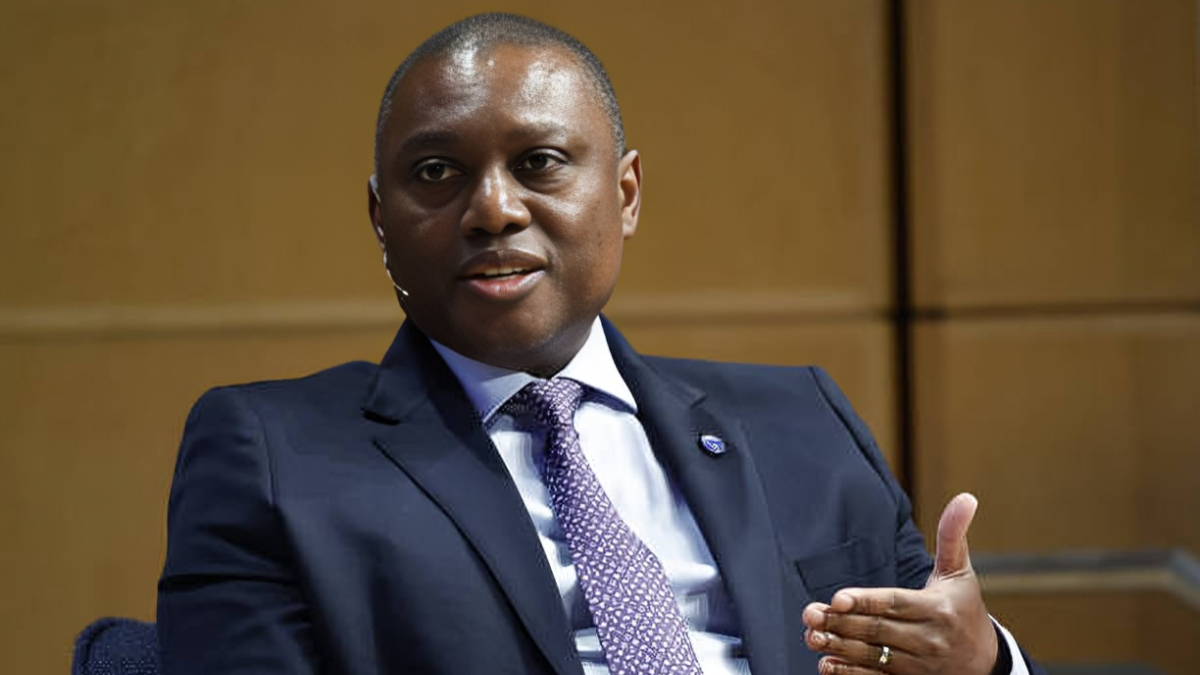
![Standard Bank CEO Sim Tshabalala. [Photo by Ting Shen/Bloomberg via Getty Images]](https://ocdn.eu/pulscms/MDA_/e90a799e2f6fd69dfb5916aa43f97ec8.jpg)
South Africa could raise its medium-term economic growth to between 3 and 4 per cent if it sustains the pace of ongoing structural reforms, according to Sim Tshabalala, chief executive of Standard Bank.
- South Africa could achieve medium-term growth of up to 4% if structural reforms continue at pace, according to Standard Bank CEO Sim Tshabalala.
- He said progress in energy, logistics, and water infrastructure is already visible, but warned that the weak rule of law remains a major constraint.
- Political instability and corruption probes are testing governance institutions, even as reform momentum builds under the country’s coalition government.
- Standard Bank maintains a cautious 1.5% growth forecast for the year amid global and domestic headwinds.
Speaking at the Semafor World Economy Summit in Washington, DC, Tshabalala said the country’s biggest remaining constraint is the restoration of the rule of law.
His remarks reinforce a growing consensus among investors and policymakers that South Africa’s reform cycle is beginning to translate into measurable gains, particularly in key sectors such as energy, logistics, and water infrastructure.
These reforms were initially designed under the African National Congress government in 2020 but have since gained momentum under the current coalition administration.
Tshabalala described the coalition, which includes the Democratic Alliance, Inkatha Freedom Party, and Freedom Front Plus, as broadly centrist and committed to policy continuity while accelerating implementation. “The faster reforms are executed, the faster the country will grow,” he said.
![Standard Bank CEO Sim Tshabalala speaks at the Semafor World Economy Summit in Washington, DC, where he highlighted South Africa’s reform momentum and its potential to lift medium-term growth to as high as 4%. [Tasos Katopodis/Getty Images for Semafor]](https://ocdn.eu/pulscms/MDA_/ad6ada518f9f5b4829ec465f6a7492a7.jpg)
However, he warned that economic progress is closely tied to governance. “There’s a direct correlation between the rule of law and GDP growth,” Tshabalala noted, pointing to persistent institutional weaknesses.
The issue has come into sharp focus following revelations from the Madlanga Commission, which is investigating procurement failures and corruption within the police. The inquiry has exposed systemic issues that have eroded public trust and weakened enforcement institutions.
The fallout has been significant. Police Minister Senzo Mchunu has been suspended, while National Police Commissioner Fannie Masemola faces criminal charges for allegedly obstructing investigations and enabling corrupt procurement practices.
At the same time, the Constitutional Court of South Africa is preparing to rule on whether lawmakers acted lawfully in dismissing an independent panel’s findings that President Cyril Ramaphosa may have a case to answer over the 2020 theft of foreign currency from his Phala Phala farm.
Despite these domestic challenges and rising geopolitical tensions linked to the Middle East conflict, Tshabalala said Standard Bank has maintained its baseline forecast of around 1.5 per cent growth for the current year.
Meanwhile, Finance Minister Enoch Godongwana has moved to cushion consumers by cutting fuel taxes, sacrificing millions of US dollars in revenue. He has also warned that fiscal assumptions are under strain due to higher global oil prices, underscoring the fragile balance between reform momentum and external shocks.










![Taylor Polidore Williams Says Indie Film ‘HPV: Her Pretty Vagina’ Is Bigger Than Entertainment: ‘I Knew It Was A Necessary Conversation’ [Exclusive]](https://bossip.com/wp-content/uploads/sites/28/2026/05/17794757122146.jpg?quality=80&strip=all&w=1024&crop=0,0,100,683px#)