Hits and misses in the FY 2026/27 national budget
Newly appointed Minister of Finance, Planning and Economic Development, Henry Musasizi recently read the budget speech for financial year 2026/27. The theme is the same as the previous budget, Full Monetisation of Uganda’s Economy through Commercial Agriculture, Industrialisation, Expanding and Broadening Services, Digital Transformation and Market Access. It is the second budget of the Fourth […] The post Hits and misses in the FY 2026/27 national budget appeared first on The Observer Media Ltd.
 Black News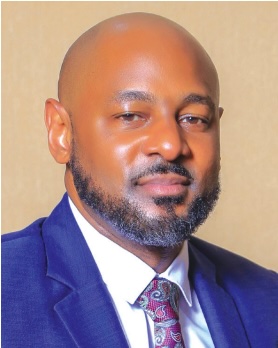


Newly appointed Minister of Finance, Planning and Economic Development, Henry Musasizi recently read the budget speech for financial year 2026/27.
The theme is the same as the previous budget, Full Monetisation of Uganda’s Economy through Commercial Agriculture, Industrialisation, Expanding and Broadening Services, Digital Transformation and Market Access.
It is the second budget of the Fourth National Development Plan (NDPIV); the first plan specifically designed to deliver government’s Tenfold Growth Strategy. The FY 2026/27 budget is sized at Shs 84.391 trillion.
It must be noted that just months ago, the Budget Framework Paper had projected it to be sized at Shs 69.399 trillion. The figure was later revised upwards to Shs 78.2 trillion in February before being increased further to its current size.
This budget is quite expansionary by anyone’s benchmark and begs to wonder how genuine government’s fiscal consolidation agenda really is. Nevertheless, the budget has both hits and misses. I will start by highlighting what I think are its positive aspects.
The recent economic performance and outlook are positive. The economy is doing well, growing at 6.4 percent and nominal GDP is estimated to increase to USD $69.3 billion. The projected GDP growth of 10.2 percent in FY 2026/27 is good, however, might be overly ambitious.
This is considering the conflict in the Middle East, which has resulted in significantly higher global oil prices, coupled with the recent Ebola outbreak, which has led to a public relations and communications crisis for the country, negatively impacting our tourism sector and economic activity in general.
This is irrespective of whether commercial oil production commences during this period, which will almost certainly strengthen economic growth. Under its FY 2026/27 financing strategy, government plans on expanding alternative sources of financing, including Public-Private Partnerships, venture capital, innovative instruments such as SUKUK, and listing of commercially viable public enterprises on the stock exchange.
If implemented, this will go a long way in reducing the pressure from government’s traditional funding sources such as government securities (treasury bills & treasury bonds), which could lead to lower interest rates in these instruments and have a knock-on effect on interest rates in the economy as a whole.
It could simultaneously deepen our financial and capital markets by expanding the fixed income instrument menu and diversifying the investor pool as well as increasing the counters on the Uganda Securities Exchange (USE), which hasn’t had an Initial Public Offering (IPO) in years.
Capital markets can provide a platform to raise large-scale, long-term capital, a necessity if government is to achieve its Tenfold Growth Strategy. I now want to highlight some of the misses in the FY 2026/27 budget.
On top of the list is the percentage of the budget that debt servicing is going to consume. At Shs 33.4 trillion, this is 39.6 percent of the total budget, a massive increase from Shs 27.5 trillion in the current fiscal year.
Of this total amount, interest payments alone equate to Shs 12.35 trillion. Interest payments as a percentage of government revenues are 26.87 percent, up from roughly 25 percent in the current fiscal year.
So, this means that for every Shs 1,000 that government earns, Shs 269 goes towards paying interest on loans. This is a worrying trend as these statistics present a more realistic picture about how sustainable our national debt is, rather than the more commonly referenced debt to GDP ratio, now at a reported 53 percent.
Under the new tax policy measures, government has introduced a 5 percent withholding tax on interest payments made by Ugandan companies to foreign financial institutions whom they have borrowed from.
This is a major “own goal” for several reasons. It will either discourage capital inflows or increase the cost of doing business, or both. Financial institutions such as commercial banks are the largest recipients of such foreign funding, most of which is used for on lending to Ugandan companies and individuals.
Financial institutions are likely to reduce such borrowings because of the additional costs or pass on these costs to these customers, making borrowing more expensive. It must be noted that these capital inflows have played a part in the stability of the Uganda Shilling, as they are typically disbursed in foreign currency.
When it comes to the budget allocations, the amounts provided for the tourism Sector and mineral development, mining, oil and gas, are relatively small, considering they are key pillars of government’s “ATMS” Tenfold Growth Strategy.
Tourism receipts increased to USD $1.86 billion in 2025, putting it in the top three net-foreign exchange earners for the country. However, it is only with a more intentional approach that the sector will grow, as it has the potential to be the top foreign exchange earner for the country.
Uganda is naturally endowed, but adequate funding, focus and promotion is what will help it realize its full tourism potential. This is over and above the “enablers” that government has put in place.
When you analyze the amount allocated to mineral development, mining, oil and gas, most of it goes towards oil and gas. And yet Uganda’s mineral potential far exceeds its oil and gas sector potential, being blessed with deposits of precious metals, iron ore, rare earth elements, uranium, base metals, 3Ts and industrial minerals.
Mining is capital-intensive, so it is imperative that government allocates enough funding for geo-data generation, exploration and development. Lastly, I want to highlight our general budget planning and the consistent use of supplementary budgets. Supplementary budgets are not merely financial adjustments.
They are a test of how credible the original budget was, how well government institutions planned for predictable obligations, and whether additional resources are resolving avoidable planning gaps.
History shows that they repeatedly cater for predictable expenditures such as wages and institutional arrears. Further to this, the associated additional funding requirements for supplementary budgets also contribute to the constant increase in domestic borrowing.
Which now raises the issue around the domestic borrowing target that is articulated in the budget, as it has always been exceeded in the past several years. As an example, the current fiscal year’s domestic borrowing target is Shs 11.38 trillion, but by the end of April 2026, government had already borrowed Shs 13.38 trillion.
It is estimated that by the end of this fiscal year the domestic borrowing outturn could potentially be upwards of Shs 15 trillion. Again, this speaks directly to budget planning.
The writer is the general manager financial markets, Centenary Bank. He is also the Chairperson Treasurers’ Forum, Uganda Bankers Association.
The post Hits and misses in the FY 2026/27 national budget appeared first on The Observer Media Ltd.