PAPER Made This Cover a Family Affair
John Waters has never wanted to be a gay filmmaker. He has always wanted to be John Waters, a singular filmmaking talent who has defined artistic sensibilities for straight and gay people alike for the last 60 years. For Waters, being gay is just one of a multitudinous things that fill out the suit he's chosen for this occasion. "They never say the great heterosexual," he says, laughing. We are on set, the culmination of a whirlwind month of planning and parties and interviews for this cover story. It's sticky out, and the team was jumpy prior to his arrival everyone snapping to attention as he pulled into the parking lot. He had just swanned in, primed with wisecracks about the lack of a visible clothing rack and just how anxious we all seemed. He sizes me up, and I break the ice with the information that Pride is an entire month now. "It's a month?" He's incredulous. "Just because it's gay doesn't mean I like it. When people say that they're gay filmmakers, I don't care who they fuck if the film's good. They could be a filmmaker who's gay, but if it's only that their identity is as a gay filmmaker, who cares who they fuck! I've seen some terrible gay movies. The music’s awful."This editor battles a grin. Later, I tell him that we have asked most of our cover stars about being misunderstood in a world that tries to stamp out the sense of individuality he champions. "I never felt misunderstood. From the very first time I ever showed a movie, people came," he says, wryly twitching his pencil 'stache. "I think we got arrested. No, I was never misunderstood. People understood. The right people understood exactly what I was doing."He sees it as the key to his longevity, and seemingly eternal relevance. "I always made fun of myself and knew my audiences’ values, and that's what I made fun of: hippie values. And so that's it. I think I've gotten away with it, and I have." Let it be a lesson then, to this magazine and to his fellow cover stars, amongst which he's been seated. The one and only Pope of Trash, a man who complex and fascinating and contradictory, at times, in spite of being gay, not because of it. If being gay helped at all, it was because he did it all in his own way, as he wanted and never for anyone else. "The new young ones making art, I recruit," he says, coy about which might inherit the mantle in a world as polarizing as the one he was born into. Below are a few of those young ones — either literally or in spirit — who PAPER brought together like a family at the dinner table (of culture) for our annual Pride cover. Included is the eternal queen of comedy Margaret Cho. There's drag icons Symone and Lushious Massacr. Symone is the star of RuPaul's new flick Stop! That! Train! and has been called a veritable successor to the empire, unique in her fashions and charisma. (Just like mother.) Lushious has experienced a whirlwind, groundbreaking year courtesy of her singular talent, her Jessica Simpson purse and her penchant for drag-vestigating in high and low places. Chrishell Stause has broken boundaries on television and beyond, fearlessly championing her community in the face of overwhelming odds, and looking damn good to boot. There are newer members to this family at the table, each individual in that specifically PAPER way. Grant Knoche has worked to transcend his child performer past, coming out as bisexual and going independent as an artist in the process. Madison Bailey made a name for herself with Outer Banks, and growing up in a family of many in a small town, she learned that what makes you feel misunderstood can also be a superpower. There is no one like Mad Tsai, not on TikTok or in the music business, a credit to the AAPI culture and art that has inspired him. Alicia Creti broke through with a cover of Summer Walker, but she it was living in her truth and embracing her neurodivergence that helped her find her voice. And then there's Eli, the internet's favorite breaking through pop princess, a firebrand online and in her music. (For good reason!)As Waters tells me: Let that be Pride, this year and all years. Pride in ourselves, pride in our singularity and individuality. Pride in all the parts of us that spark against the world around us, the winding paths and hidden crevices of our humanity. Pride in our values, and pride in the disagreements we feel amongst each other. God knows John Waters has them, and why shouldn't he? "Things are different. Nothing's the same. It's not going to last," he says, coming back again to the "new sexual revolution" championed by trans people. "I'm all off for it because it surprises me and sometimes makes me nervous, even."What else makes him nervous? The "really scary girls with knives" he'd meet at drag balls with Divine, or critics like Andrea Long Chu and John Simon, whip smart and "funny as shit." Across his many films, I'd like to think those extremes had an indelible effect on him for the better. Goddess bless the differences among us, unique an
 Black News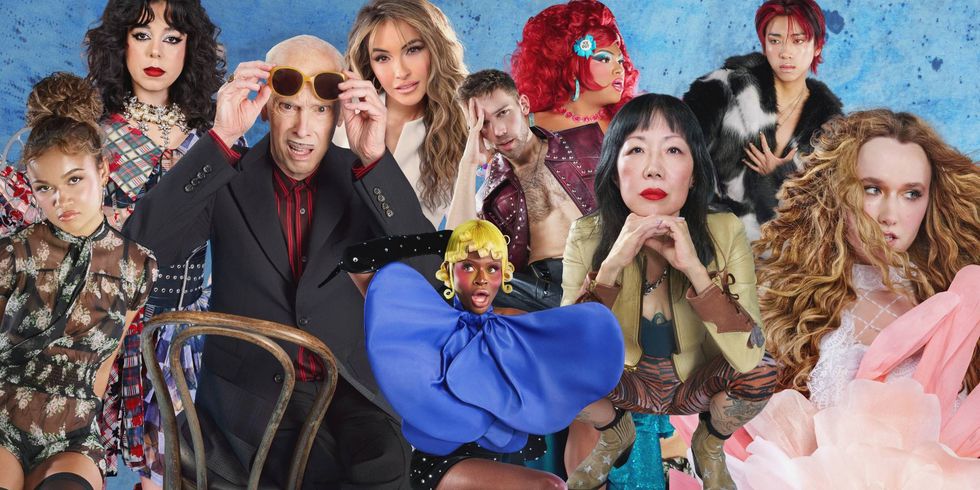
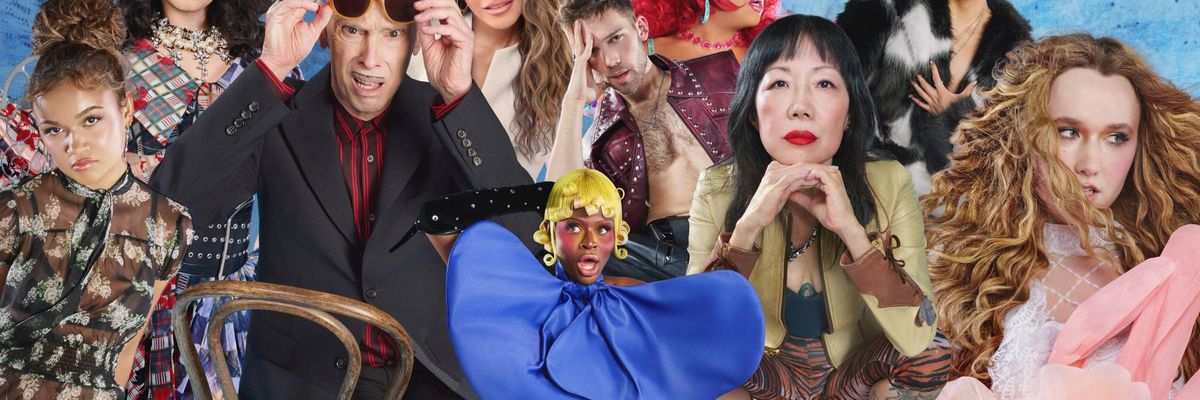
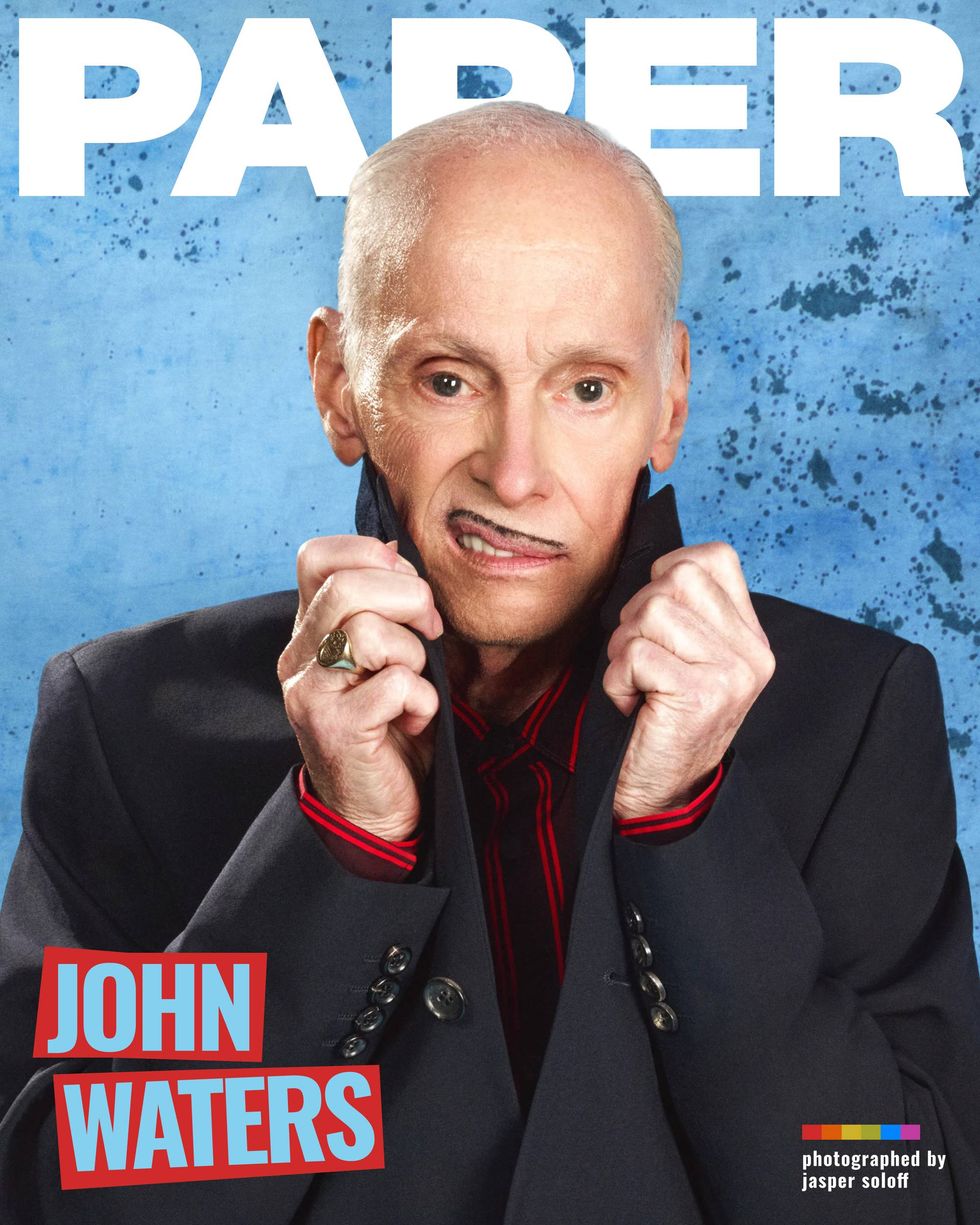
John Waters has never wanted to be a gay filmmaker. He has always wanted to be John Waters, a singular filmmaking talent who has defined artistic sensibilities for straight and gay people alike for the last 60 years. For Waters, being gay is just one of a multitudinous things that fill out the suit he's chosen for this occasion. "They never say the great heterosexual," he says, laughing.
We are on set, the culmination of a whirlwind month of planning and parties and interviews for this cover story. It's sticky out, and the team was jumpy prior to his arrival everyone snapping to attention as he pulled into the parking lot. He had just swanned in, primed with wisecracks about the lack of a visible clothing rack and just how anxious we all seemed.
He sizes me up, and I break the ice with the information that Pride is an entire month now. "It's a month?" He's incredulous. "Just because it's gay doesn't mean I like it. When people say that they're gay filmmakers, I don't care who they fuck if the film's good. They could be a filmmaker who's gay, but if it's only that their identity is as a gay filmmaker, who cares who they fuck! I've seen some terrible gay movies. The music’s awful."
This editor battles a grin. Later, I tell him that we have asked most of our cover stars about being misunderstood in a world that tries to stamp out the sense of individuality he champions. "I never felt misunderstood. From the very first time I ever showed a movie, people came," he says, wryly twitching his pencil 'stache. "I think we got arrested. No, I was never misunderstood. People understood. The right people understood exactly what I was doing."
He sees it as the key to his longevity, and seemingly eternal relevance. "I always made fun of myself and knew my audiences’ values, and that's what I made fun of: hippie values. And so that's it. I think I've gotten away with it, and I have." Let it be a lesson then, to this magazine and to his fellow cover stars, amongst which he's been seated. The one and only Pope of Trash, a man who complex and fascinating and contradictory, at times, in spite of being gay, not because of it. If being gay helped at all, it was because he did it all in his own way, as he wanted and never for anyone else.
"The new young ones making art, I recruit," he says, coy about which might inherit the mantle in a world as polarizing as the one he was born into.
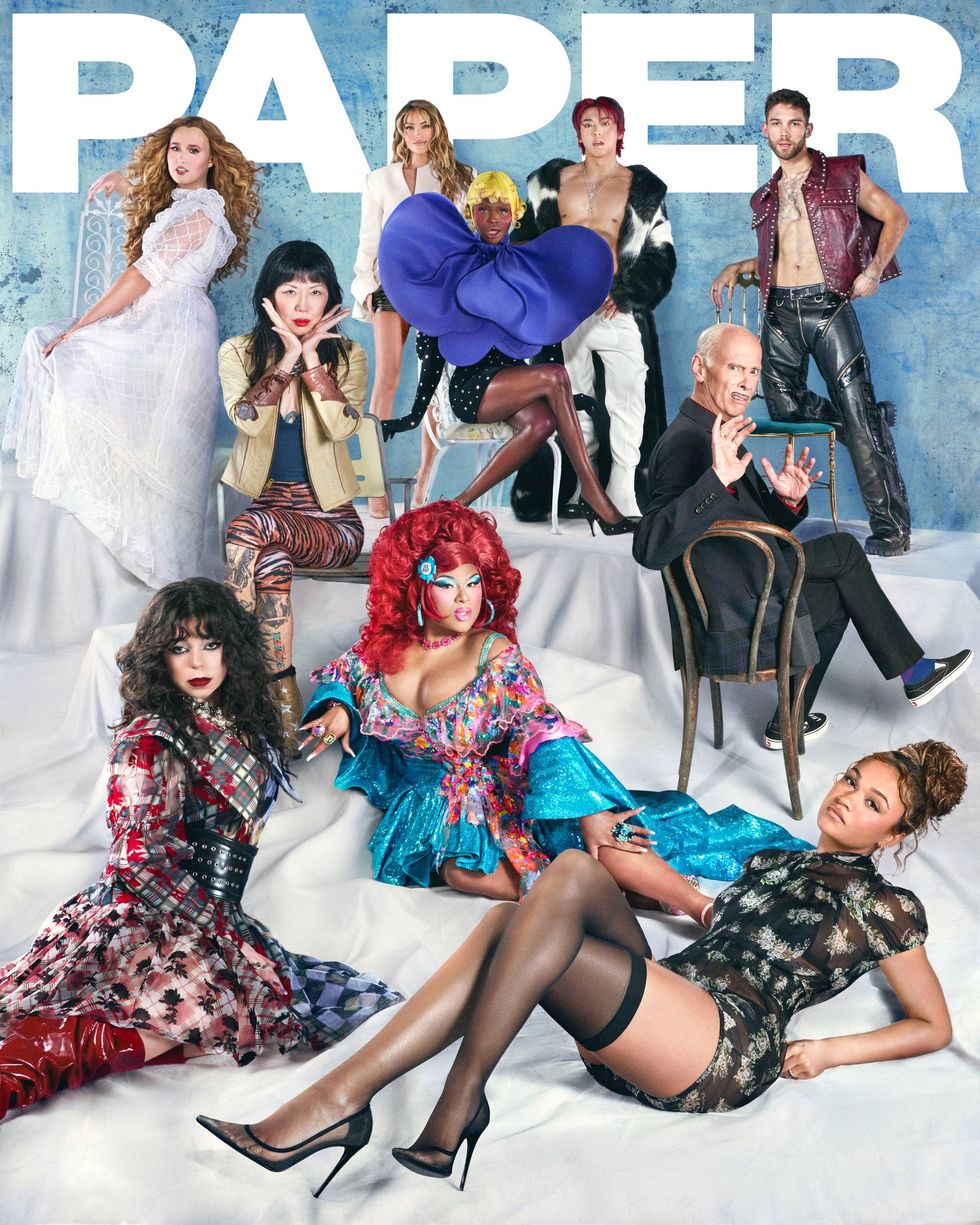
Below are a few of those young ones — either literally or in spirit — who PAPER brought together like a family at the dinner table (of culture) for our annual Pride cover. Included is the eternal queen of comedy Margaret Cho. There's drag icons Symone and Lushious Massacr. Symone is the star of RuPaul's new flick Stop! That! Train! and has been called a veritable successor to the empire, unique in her fashions and charisma. (Just like mother.) Lushious has experienced a whirlwind, groundbreaking year courtesy of her singular talent, her Jessica Simpson purse and her penchant for drag-vestigating in high and low places. Chrishell Stause has broken boundaries on television and beyond, fearlessly championing her community in the face of overwhelming odds, and looking damn good to boot.
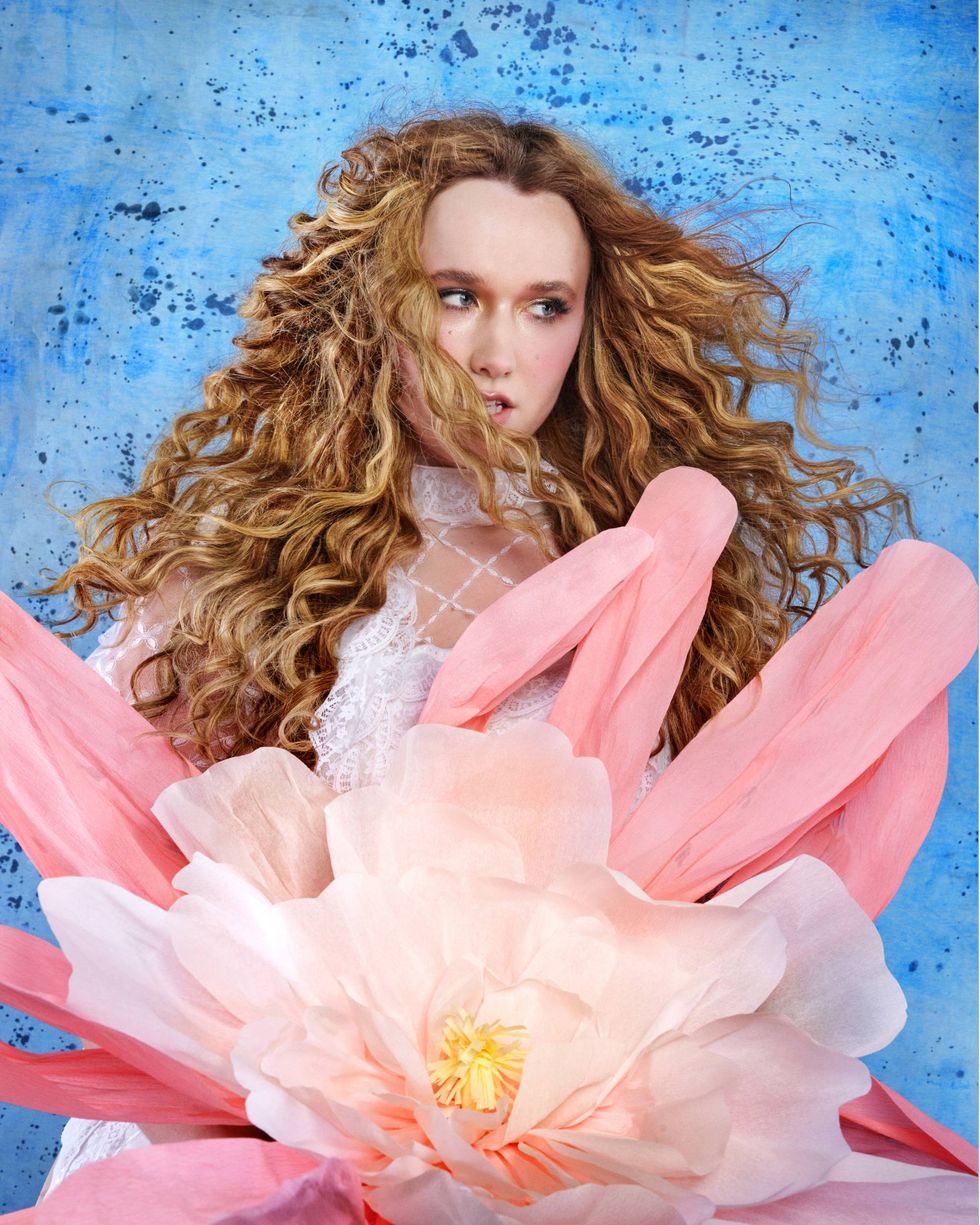
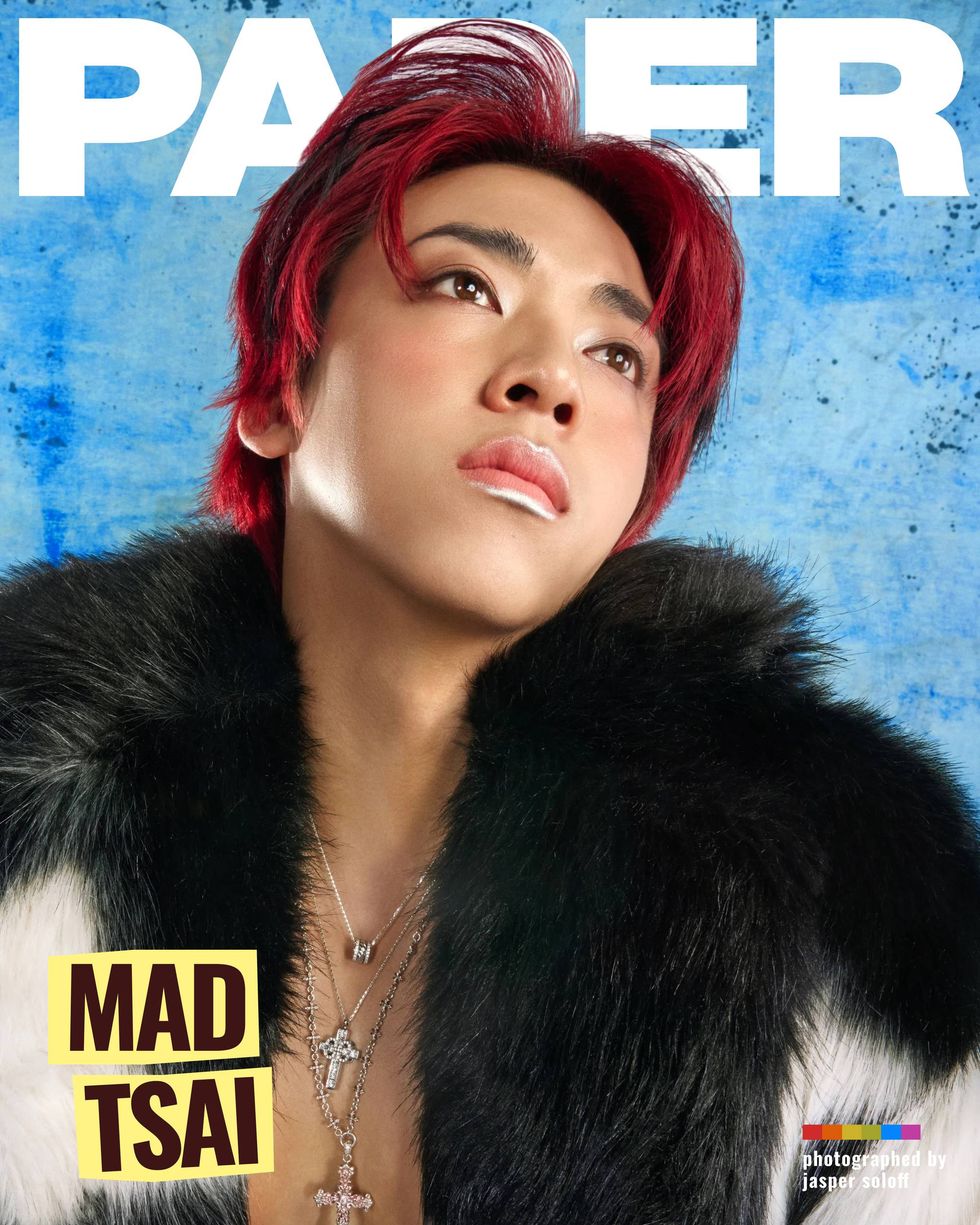
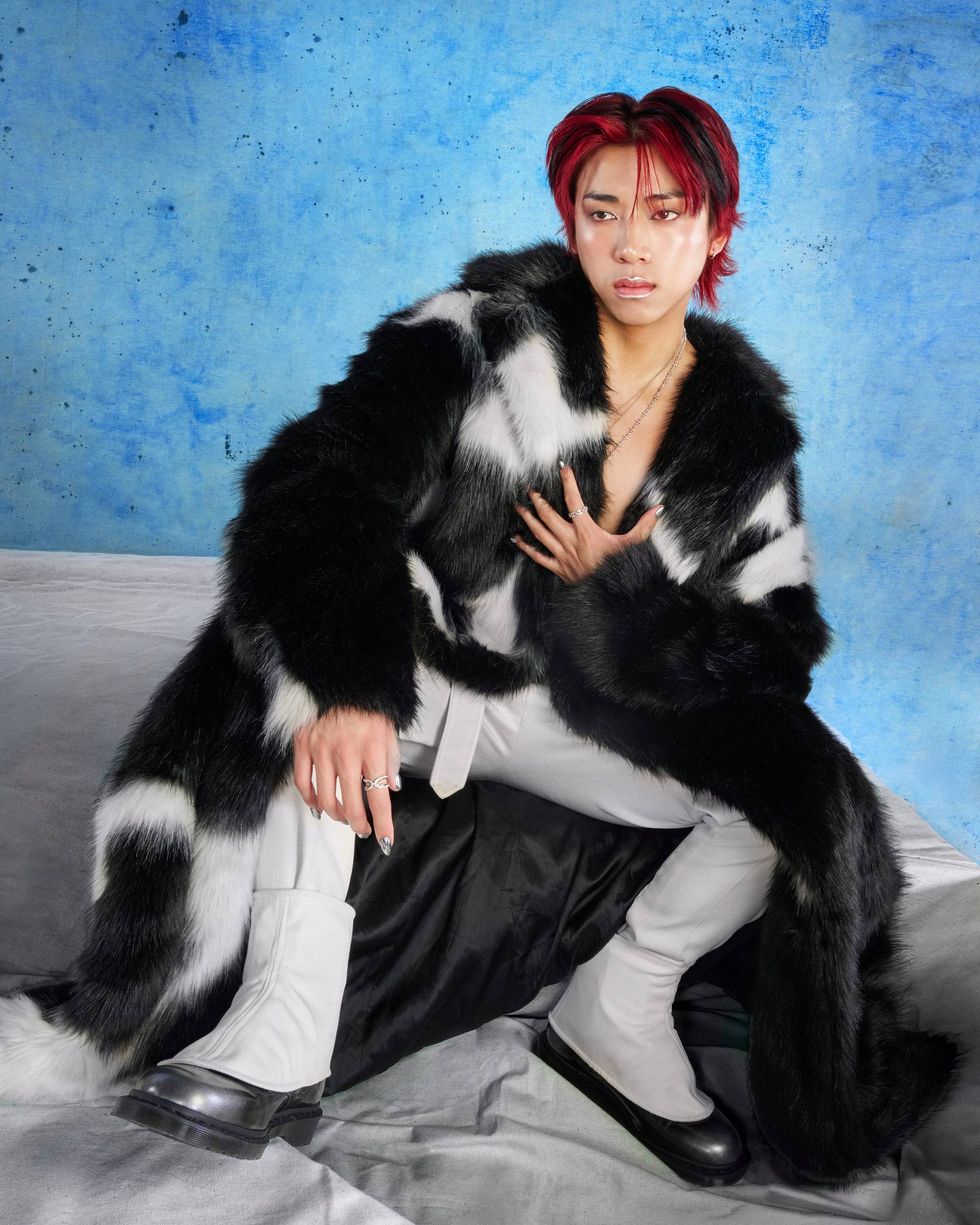
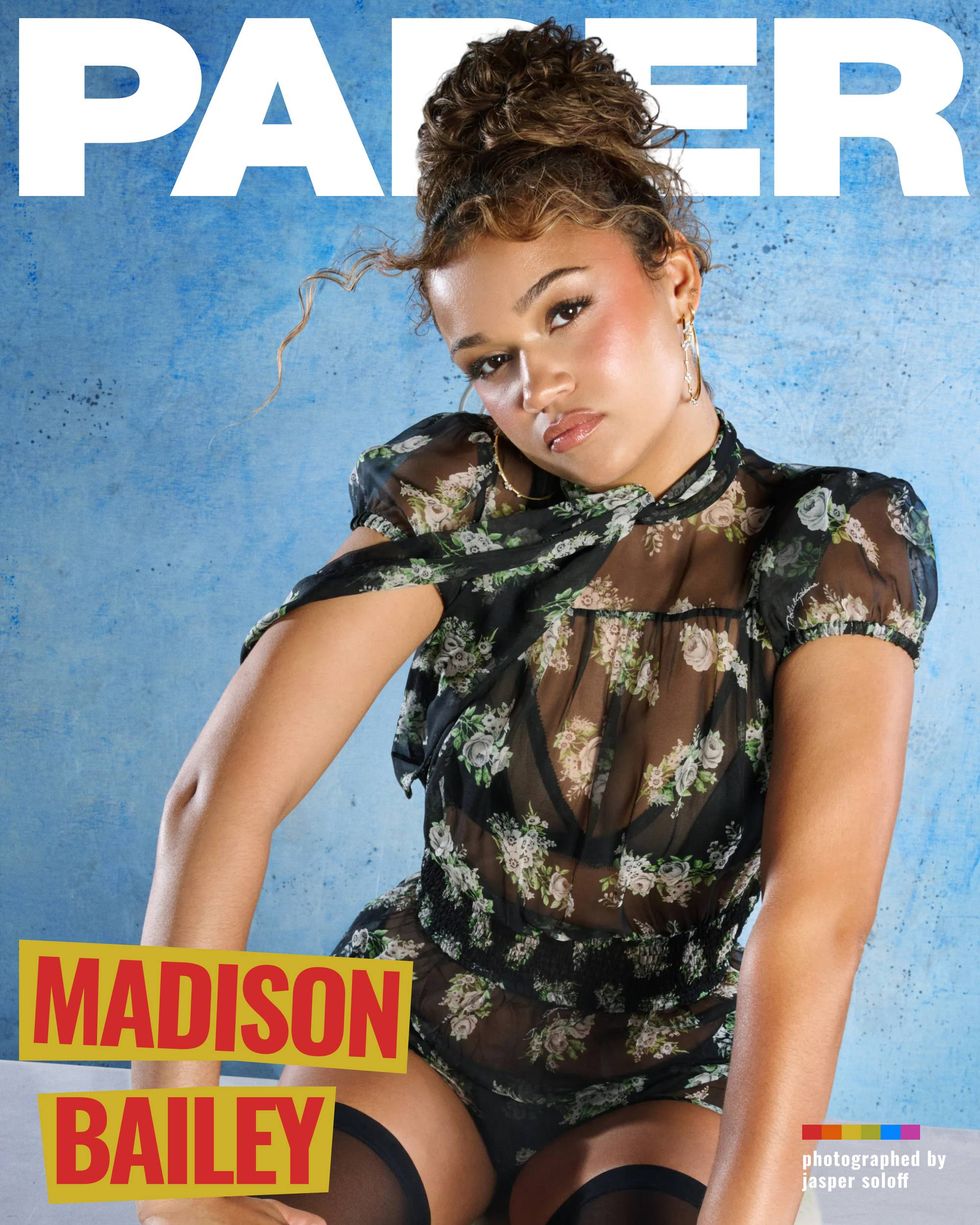
There are newer members to this family at the table, each individual in that specifically PAPER way. Grant Knoche has worked to transcend his child performer past, coming out as bisexual and going independent as an artist in the process. Madison Bailey made a name for herself with Outer Banks, and growing up in a family of many in a small town, she learned that what makes you feel misunderstood can also be a superpower. There is no one like Mad Tsai, not on TikTok or in the music business, a credit to the AAPI culture and art that has inspired him. Alicia Creti broke through with a cover of Summer Walker, but she it was living in her truth and embracing her neurodivergence that helped her find her voice. And then there's Eli, the internet's favorite breaking through pop princess, a firebrand online and in her music. (For good reason!)
As Waters tells me: Let that be Pride, this year and all years. Pride in ourselves, pride in our singularity and individuality. Pride in all the parts of us that spark against the world around us, the winding paths and hidden crevices of our humanity. Pride in our values, and pride in the disagreements we feel amongst each other. God knows John Waters has them, and why shouldn't he? "Things are different. Nothing's the same. It's not going to last," he says, coming back again to the "new sexual revolution" championed by trans people. "I'm all off for it because it surprises me and sometimes makes me nervous, even."
What else makes him nervous? The "really scary girls with knives" he'd meet at drag balls with Divine, or critics like Andrea Long Chu and John Simon, whip smart and "funny as shit." Across his many films, I'd like to think those extremes had an indelible effect on him for the better. Goddess bless the differences among us, unique and all the same.
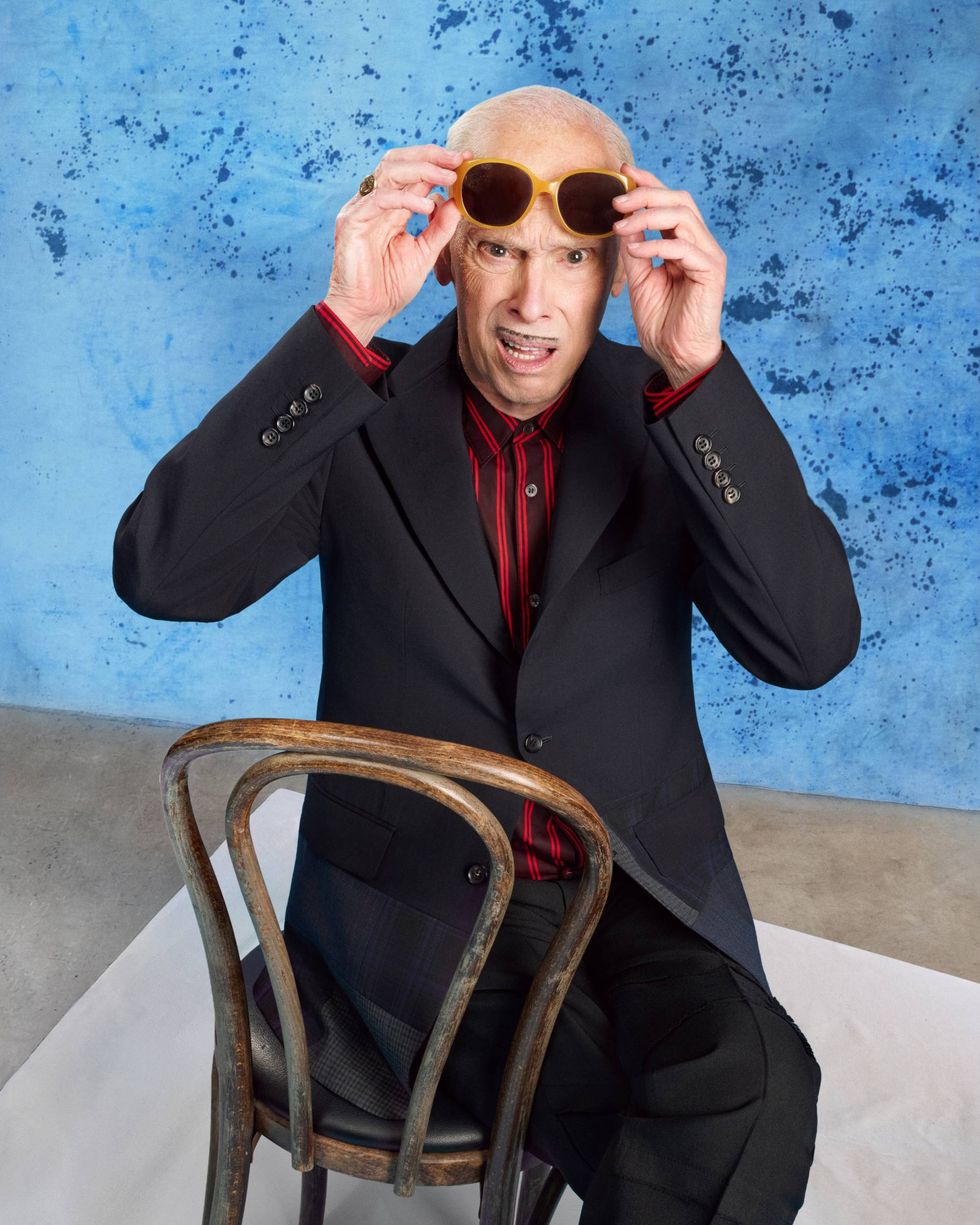
Well, happy pride.
John: Gay pride in Provincetown. It’s a little redundant, I'm sorry. [Laughs]
I know. Every time I have to say it to anyone, I'm like, “Oh geez, it's going to be a long month."
John: It’s a month?
Yeah, it's a month now. Didn't you know?
John: Gay Shame Day, when they had it, with bi, gay people in London, it was so funny. It was the coolest thing, and they mocked it.
I think we should be more shameful.
John: They couldn't even get away about that now.
Do you miss when we had a sense of humor about ourselves? Maybe we never did.
John: That's why I'm not left or right. They both are dreary now. They're both woke. I'm a radical middle.
It's pretty dismal these days. I was going to ask, what are you not proud of about the world, life, this community?
John: Just because it's gay doesn't mean I like it. When people say that they're gay filmmakers, I don't care who they fuck if the film's good. They could be a filmmaker who's gay, but if it's only that their identity is as a gay filmmaker, who cares who they fuck! I've seen some terrible gay movies. The music’s awful.
Also, calling John Waters’ movies just gay movies feels a little reductive.
John: They're never just gay art. They are for all minorities that don't fit in. They're for gay people who don't get along with a lot of people.
Did you feel like you were always pegged — I mean, you've been pegged a lot of things, but were you always the gay filmmaker? Or when did that start?
John: I was always understood, though. No, I lived with Mink Stole, and she thought I was straight, which we laugh about now. No, I was not always thought of as a gay filmmaker, but I did the cover of Gay Times and everything. I think I was one of the first ones. So I was never denied it or anything. But even my parents were afraid it was something worse. They never asked us. They thought it might be worse.
I’m curious. I have talked to a lot of filmmakers who are very young and very old and everywhere in between. Especially the new generation filmmakers, actors, or creatives of any type, they talk about, “I saw this person on TV. I saw some starlet, and I just knew I wanted to be this person. I knew that’s who I wanted to be.” But you came from a generation where there wasn't a John Waters.
John: I knew I was gay when I saw Elvis Presley.
That easy?
John: That easy. So it wasn't some relevant... My parents just knew that they were afraid I was worse. I was more things than gay. I did drugs. I hung around with straight people. I wanted to be Bohemian. I do. And all Bohemians hang around gay people, but they also hang around straight people. So for me, I think the new trans movement is great. It's the new sexual revolution, and it makes my generation nervous. We're not queer, we're here, and nobody's used to this.
All these years later, and they're still not used to us. This is our pride issue, and pride means something to everyone. It's a month of things happening, and there are events in your city, yada, yada. But obviously, Stonewall happens, and then what pride is now is not what it meant back then.
John: Jim Fouratt was the first person I remember at Yale in a Black Panther rally to speak for gay rights. And that was soon. I was there being a weatherman hag. I was a weatherman hag. I didn't stand in the front and get called out. I was 10 rows back looking at the cute guys. Riots were a really good place to get laid.
Oh yeah?
John: Yeah, in the '60s. We're just throwing tear gas together. It was always kind of exciting.
It got the juices going?
John: Yeah! And I remember I went to a gay liberation meet just to see what it was like, and it was really straight.
I find parades to be kind of square.
John: Oh, I don't do parades. I've never been in a parade.
You're not going to let them put you on a float and stuff you like a chicken?
John: They always ask me to be the lead one. I always say no. Not that I'm against it, I'll go watch, but I don’t do parades. I have some limits. That’s it.
I tell people parades are straight culture. It's not how we do things.
John: Not up here.
Not up here. No.
John: And I'm not against a gay parade. It's fine.
Yeah, of course.
John: Why am I watching them? Anyways, it is too far a walk. And people throw candies at you and stuff.
Are straight people the minority now?
John: Here in Provincetown? Oh my God, yeah. To me, what's amazing is that the trans movement has been accepted by young rich people more in two years, comparatively, when gay rights took two centuries. So I'm all for all. It is the new sexual revolution. I'm all off for it because it surprises me and sometimes makes me nervous, even. So I am all for anything that makes me nervous.
I will say, speaking of trans people, I was trans before all the hullabaloo. I loved your movies so much because it was like a real rogues’ gallery that reminded me of my real life — running around with a bunch of criminals and prostitutes and evil women. That was my life.
John: When I was young, when we would go to drag balls in Washington with Divine, there were pimps with really scary girls with knives. It was not friendly. They hated me.
I want Pride to feel like that again: girls with knives. We've been asking everyone this. A lot of people are in their early 20s or getting started in their careers, and we asked them about feeling misunderstood; you hear this with gay people all the time: “Oh, I felt misunderstood growing up. I felt different.”
John: I never felt misunderstood. From the very first time I ever showed a movie, people came. I think we got arrested. No, I was never misunderstood. People understood. The right people understood exactly what I was doing.
If you didn’t feel misunderstood, you must not have cared about that feeling.
John: In the right way. I mean, we used the bad reviews. Couldn't do that now. Your critics are too hip to give you that. But are there any critics that have power anymore — other than about three? What happened to that trans critic I love?
Andrea Long Chu?
John: Yeah, but where is she anymore? I don't see her stuff anymore.
I think they ran her off the internet because she's too smart.
John: Wasn't she working for a magazine? And that book was really good. I'd be scared. She probably would have hated me. But what happened to her?
Again, I think we live in a society where people aren't allowed to have strong opinions about anything.
John: She could be the new John Simon, a trans John Simon.
I wish! I'm going to send that message to her.
John: She was! And John Simon was a really good writer. He was mean as shit, but he was a good writer.
I tell people all the time, if you're mean as shit and good at it, people will give you a really big pass for it.
John: It's a good thing. But I learned a lot. I never really say anything bad about someone else's movie, because then I always get seated next to them at a dinner.
Yeah. At some Academy review.
John: I feel always misunderstood. I don’t have any complaints. I've been doing it for 60 years.
I've listened to you just recently on Las Culturistas, about how there was this culture around your movies, “Pope of Trash”, of course, all of it. And now you're getting retrospectives, and you're so celebrated. When did that change, and why do you think?
John: It changed because I was never mean, and I made fun of myself first. That's the main two reasons. I have been doing it for 60 years, and those movies somehow are more relevant today. But they're worse today. Some people are easily offended. You can't say fag anymore!
I wish we could!
John: I forgot the original question.
Oh, I just wonder why you think it changed.
John: It changed because I did it for so long, and I made fun of myself. I continued to reinvent myself. I wrote books. I did all the parts of the show. I did acting. I always did something — hopefully that you didn't expect. But I did retain one thing. I always made fun of myself and knew my audiences’ values, and that's what I made fun of: hippie values. And so that's it. I think I've gotten away with it, and I have. The new young ones making art, I recruit.
You don't want to be described as a gay filmmaker, which I understand.
John: I mean, I'm a filmmaker who's gay.
I wonder, do you ever think about what John Waters would be doing if you were straight?
John: They never say the great heterosexual. [Laughs]
No, they probably only say that about sexual predators.
John: Even for anybody, they don't say “the heterosexual.”
Do you ever wonder what you would have been doing if you'd been born into the straight world instead?
John: I’d probably be the same.
Maybe a bigger pervert?
John: If I was straight… I don't know! I always said, when I was 80, the one thing I was going to do was eat—
Do you want to break any news here in PAPER Magazine?
John: No, no, no. But what I'm saying is, that would be a good essay. I might steal that.
You should. This will be my last question for now. I want to know what your memory is of PAPER, because it's been around a while, and we've had a lot of people on it.
John: I think of Kim mostly, and my friend Dennis, who was the film critic for PAPER for years. Dennis, he was the film critic for really a long time there. Real good film critic. His knowledge about horror films was really good — of ones I'd never even known about. How do you know about the film? Really amazing. So I made a lot of friends with him.
Kim introduced me to so many great people. She would always say, "This is going to be the new restaurant.” Kim was always on the cutting edge. She always knew everybody, and she was really super for it. We were on the carpet for all our different movies and everything. So she was just a great friend and a great supporter of everything I liked in the arts. And I miss her. I miss her.
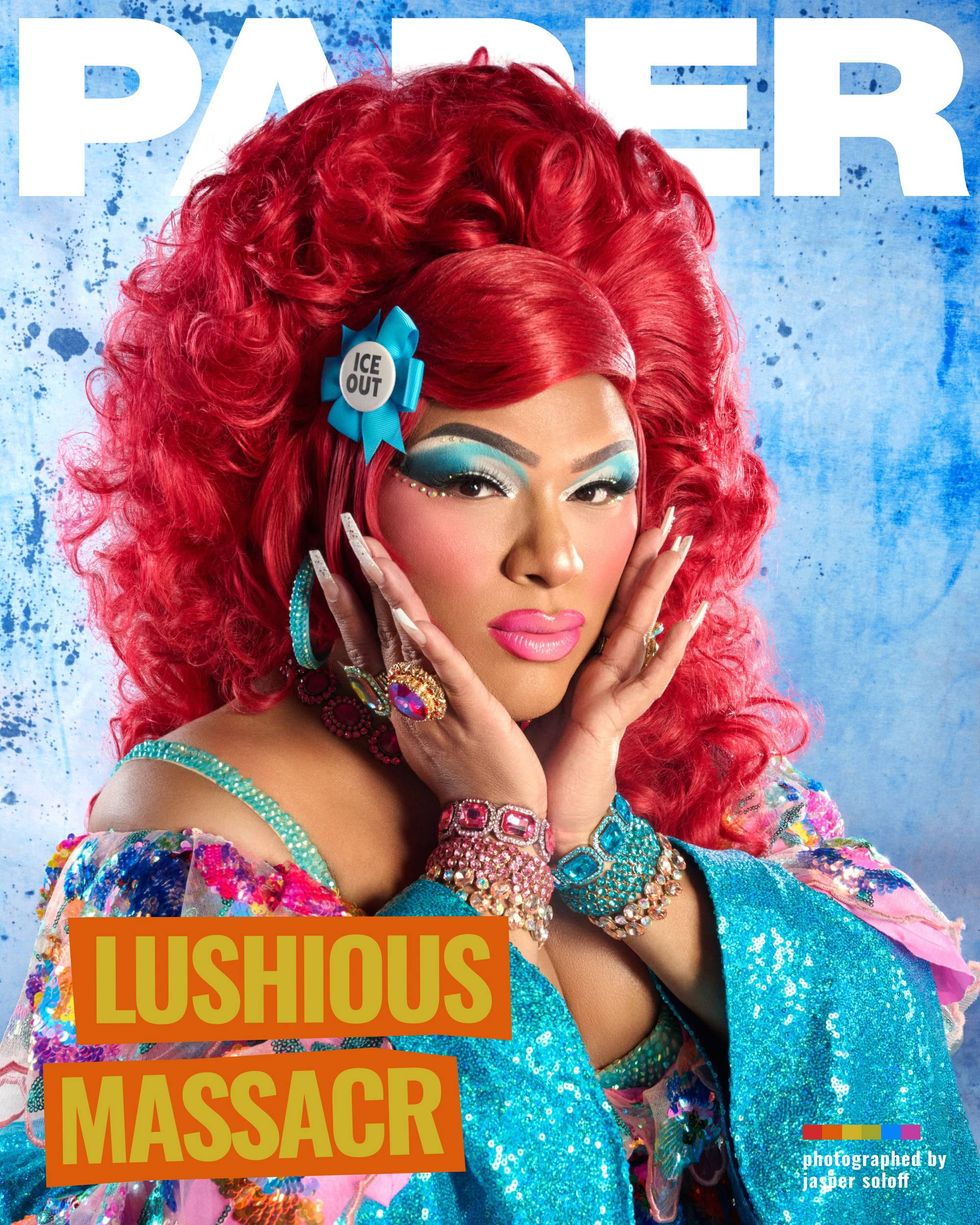
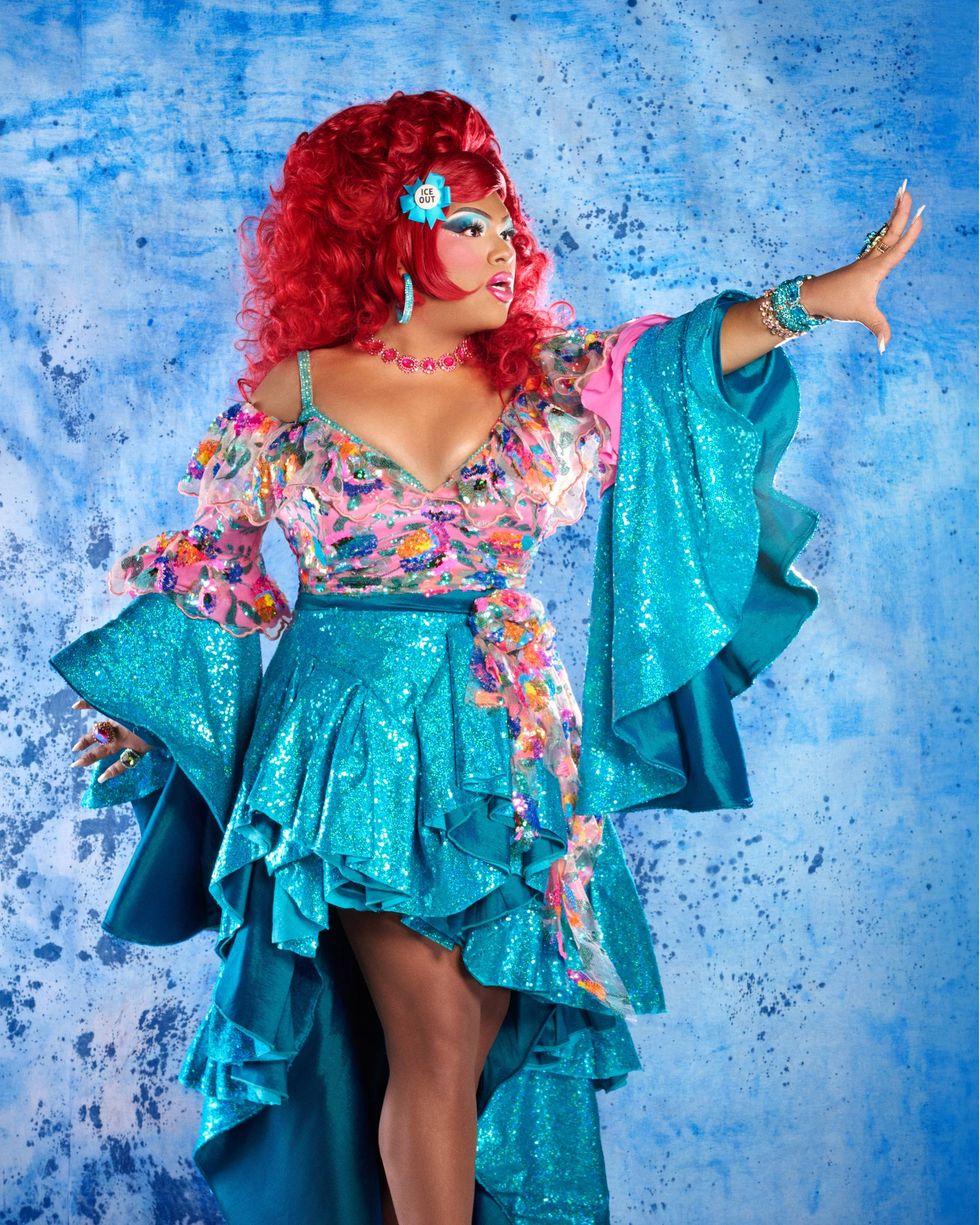
Lushious, who is someone in power that needs serious dragvestigating right now?
Lushious: I’m tired of people in positions of power. They’re so uninteresting and unintelligent. We need to give power to those who have never had it. In the name of fairness and balance I think it’s time to switch it up and give it to someone who’s actually kind and cares for others. Someone who has lived in poverty their entire life. Give the power to them.
Watching your early Dragvestigations, and still now, I was struck by the way you champion Texas and Brownsville and the people and places that are close to you. What do you feel people get wrong about queer life in the South?
Lushious: That we’re all just a bunch of bricks. We have cinder blocks, cement boulders, and even some pebbles too.
What is the distinction between a creature, a monstrosity and a brick? Likewise, all three walk into a bar, what are they doing next?
Lushious: It’s literally the same person. We’ve all been bricks & creatures at some point in our lives. I just realized one day that my power comes from loving the parts of myself I was told were ugly. I fell in love with the brick. I am the brick. You are the brick too.
What was the first time you felt totally yourself, totally embodied as who you wanted to be?
Lushious: Whenever I am in the presence of queer people, specially plus size queer people. They know what it’s like to not fit in, feel seen, or even be respected. Most people treat big people like dirt and I remember the first time I felt totally myself was around big plus size queer people. They were nice to me
What or when was a time in your life that you felt misunderstood? And do you ever feel misunderstood now?
Lushious: Whenever I speak about the state of this country. We are clearly living under an Authoritarian Regime that is leading a White Nationalist movement. What do they gotta do: pull out their white hoods? We are almost at that point and the gag is there will still be people too cowardly to call them for what they are even when they finally do decide to pull out their white hoods and clan moo moos.
Do you remember the first time, if ever, something you believed or who you were made others angry, or fearful? What did you learn from that experience?
Lushious: I’m a brown Drag Queen living in America. I believe in myself and my right to be free. I am Queer therefore I must be free. There is no other option. I’m not hurting anyone by living my Queer life. That makes a lot of people angry and fearful and it makes me feel sorry for them. I’m sorry you don’t see what I see. I’m sorry you don’t see my beauty or my value. I’m so sorry sweetie.
Who/what was the first person you remember telling you no, in your career, or in trying to be who you are? What would you say to them now?
Lushious: Everyone in this society, as I was growing up. I was queer, fat, not strikingly beautiful or attractive by their societal standards. I felt like I was unloveable with absolutely zero value. My society around me told me I do not see you, I do not care about you, I don’t like you, and I don’t like your kind either. But every step of the way I was not alone because I had myself. I told myself I loved myself, I believed in myself and I cared about myself. It saved me. It saved me. Queer people are born into very hostile environments but we find a way to save ourselves.
What is a question that you’ve never been asked about yourself? Can you answer that question?
Lushious: What is something about you that you do not like but you cannot change? My loneliness.
What was the last thing you saw or read that kept you up at night?
Lushious: I read that the entire world is basically run by like 5 people, all of them Billionaires and Trillionaires ofcourse, and that the rest of us are basically just their staff. They tell us to jump and in order to put food on the table we have to jump. I’m tired of jumping.
We’re always asked what we’re proud of for Pride Month—who or what is something in our community that you’re not proud of?
Lushious: Labels. I’m not proud to admit that all of these different labels separate us more than they unite us. I get we need labels to understand each other but at the same time I feel so excluded with all of them in place. It feels cliquey and mean most of the time. Our community can be very mean to each other, but the way I see it at the end of the day we are all QUEER. We all have the same origin story. Whether you were born a man or a woman before you even knew what your sexuality was you knew you were different. I knew I was different. We were born different and we see things differently and to me the only label that describes that is QUEER. It’s the most inclusive label too. Queerness is everything. Queerness is the future.
There's the common question about your dream dinner party. How about instead: who from our community's history would you love to party with for a night, if it could be anyone?
Lushious: Divine: I’d ask her how the trade was? Sylvia Rivera: I’d ask her if the girls were getting up in drag? Marsha P. Johnson: I’d ask her about her hopes and her dreams… and what was the trade giving? Juan Gabriel: I’d ask him if he ever did drag and what was his drag name?
What was the hardest lesson you’ve ever had to learn — about the world, about yourself?
Lushious: 2 things. Men lie so you can never fully trust a man you can only trust yourself. And the other? Drag Queens steal but they don’t lie.
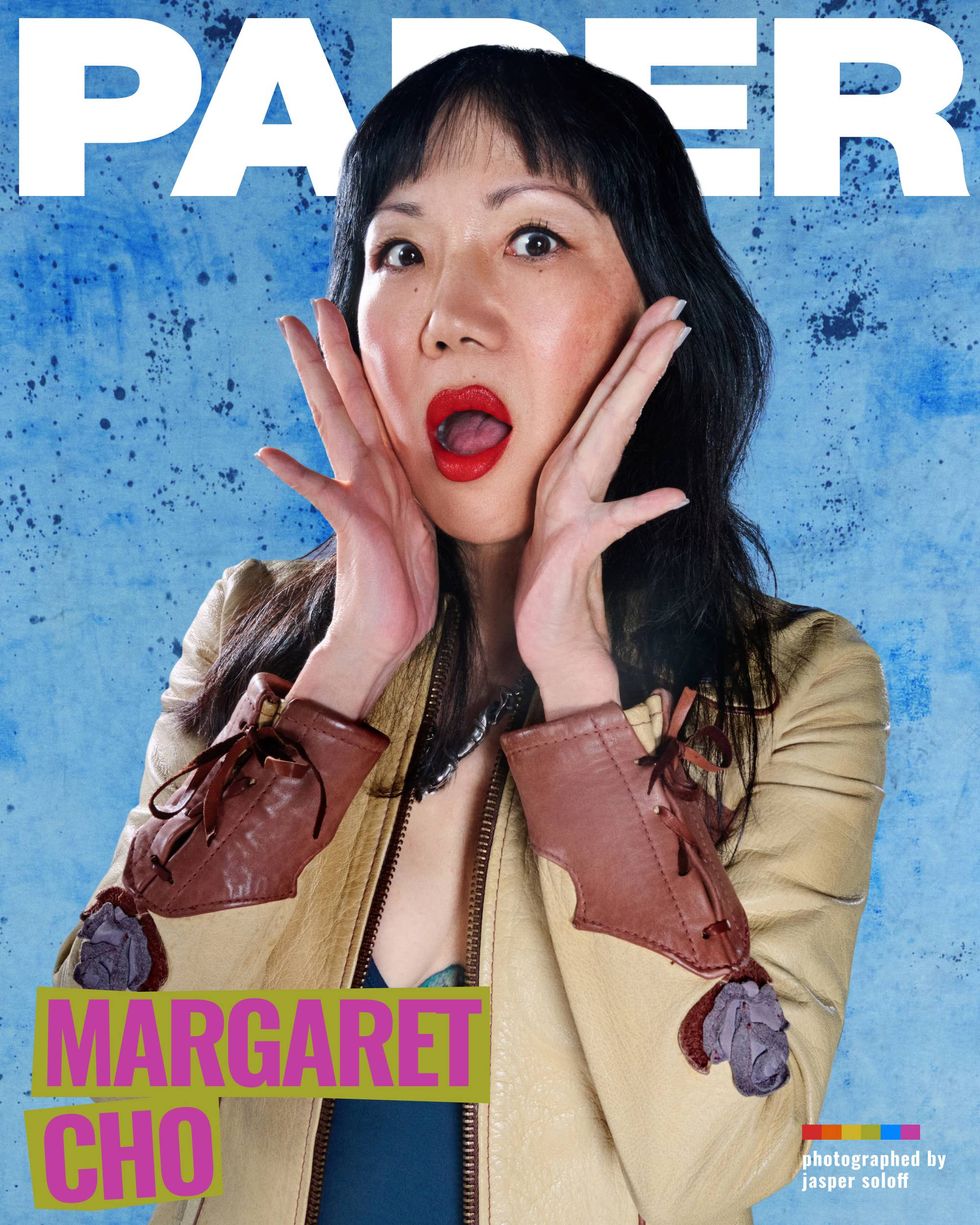
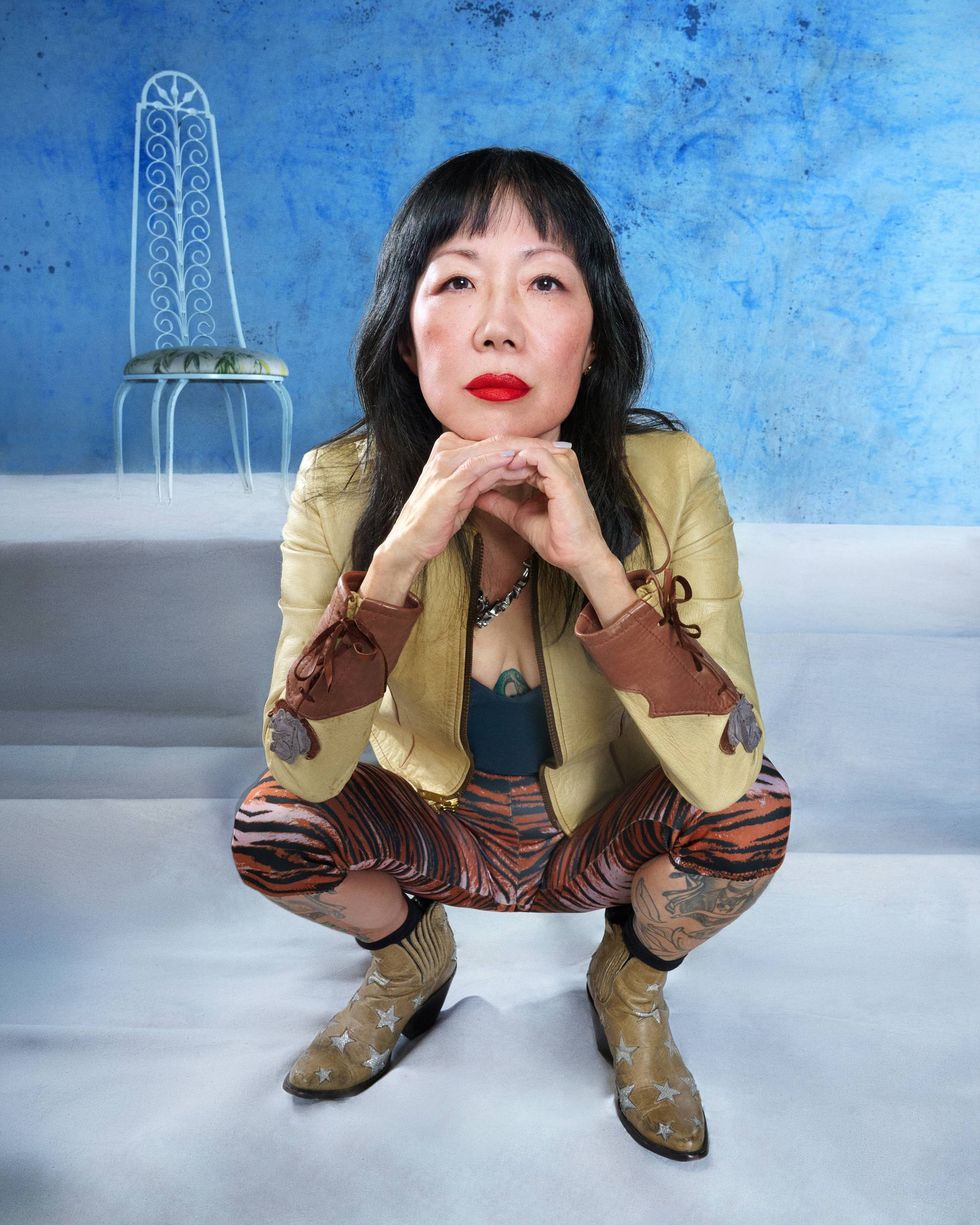
Margaret, you can go back and tell any joke that has gotten you in trouble again. How are you telling it now?
Margaret: I’m not sure — I think that I’ve changed so much I wouldn’t be able to even reimagine things - I want to start anew!
One of the first bits I saw of yours was your "topics to avoid at dinner parties" segment on A Pair of Jokers. It's on my mind now whenever I hear about gay people having to go back to their parents' houses during election season, or the holidays. What topics should we all not avoid at dinner parties these days?
Margaret: We should not avoid talking about our rights. Never stop!
What was the first time you felt totally yourself, totally embodied as who you wanted to be?
Margaret: I think it’s happening now. It’s taken a lifetime to understand the different parts of myself and I’m excited about what the next era of my life will be.
What or when was a time in your life that you felt misunderstood? And do you ever feel misunderstood now?
Margaret: I think I have always been misunderstood and that’s why I became a comedian. My observations had always been interpreted as rude or wrong but as a comic - we deal almost exclusively in the rude and wrong so now it fits.
Do you remember the first time, if ever, something you believed or who you were made others angry, or fearful? What did you learn from that experience?
Margaret: I grew up in a very gay world so I was extremely lucky. My parents owned a gay bookstore and so gay was normal. Straight was the aberration. Finding out later in life that I had an undeniable heterosexual side was extremely disturbing and disappointing to those around me who at that point did not believe bisexuality existed. I’m living proof it’s real!
Who/what was the first person you remember telling you no, in your career, or in trying to be who you are? What would you say to them now?
Margaret: I was sitting in a prominent lesbian’s lap at a comedy festival in the late 80s and the big manager I had at the time was incredibly distressed and told me — YOU ARE 100% STRAIGHT, DO YOU UNDERSTAND?! It was so crazy because he didn’t ask me, he told me! As if you can be told something like that. Anyway we didn’t work together for very long!
What is a question that you’ve never been asked about yourself? Can you answer that question?
Margaret: Nobody ever asked me if I was ok. I think I’m ok. Mostly! Or am I?
What was the last thing you saw or read that kept you up at night?
Margaret: I’m really freaked out that we have a Supreme Court that is going to reinstate conversion therapy. The way that trans rights are being destroyed by the courts and the Supreme Court being so compromised- it truly disgusts and disturbs me and keeps me up at night.
We’re always asked what we’re proud of for Pride Month—who or what is something in our community that you’re not proud of?
Margaret: The way some parts of our community want to separate from other parts. Like the ‘normal’ gays who think that the ‘T’ aren’t an essential part of who we are and long for ‘acceptance’ from conservatives. They really bother me. We are nothing without the trans community. We need to stick together.
There's the common question about your dream dinner party. How about instead: who from our community's history would you love to party with for a night, if it could be anyone?
Margaret: Martha P. Johnson and Silvia Rivera!
What was the hardest lesson you’ve ever had to learn — about the world, about yourself?
Margaret: That life is strangely fair. That everything is given in equal measure even though it doesn’t seem like it. It’s so wild how this presents itself as true time and time again.
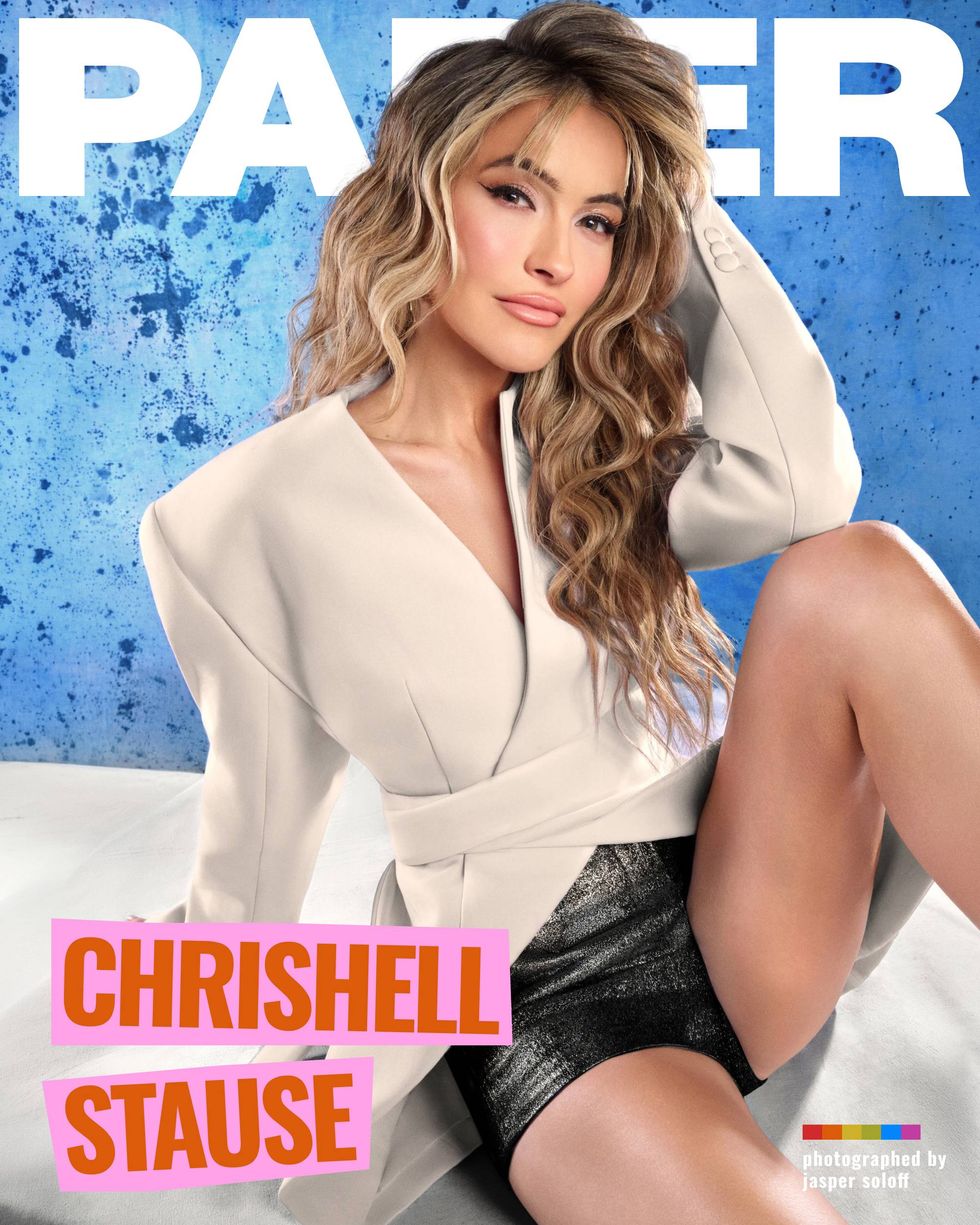
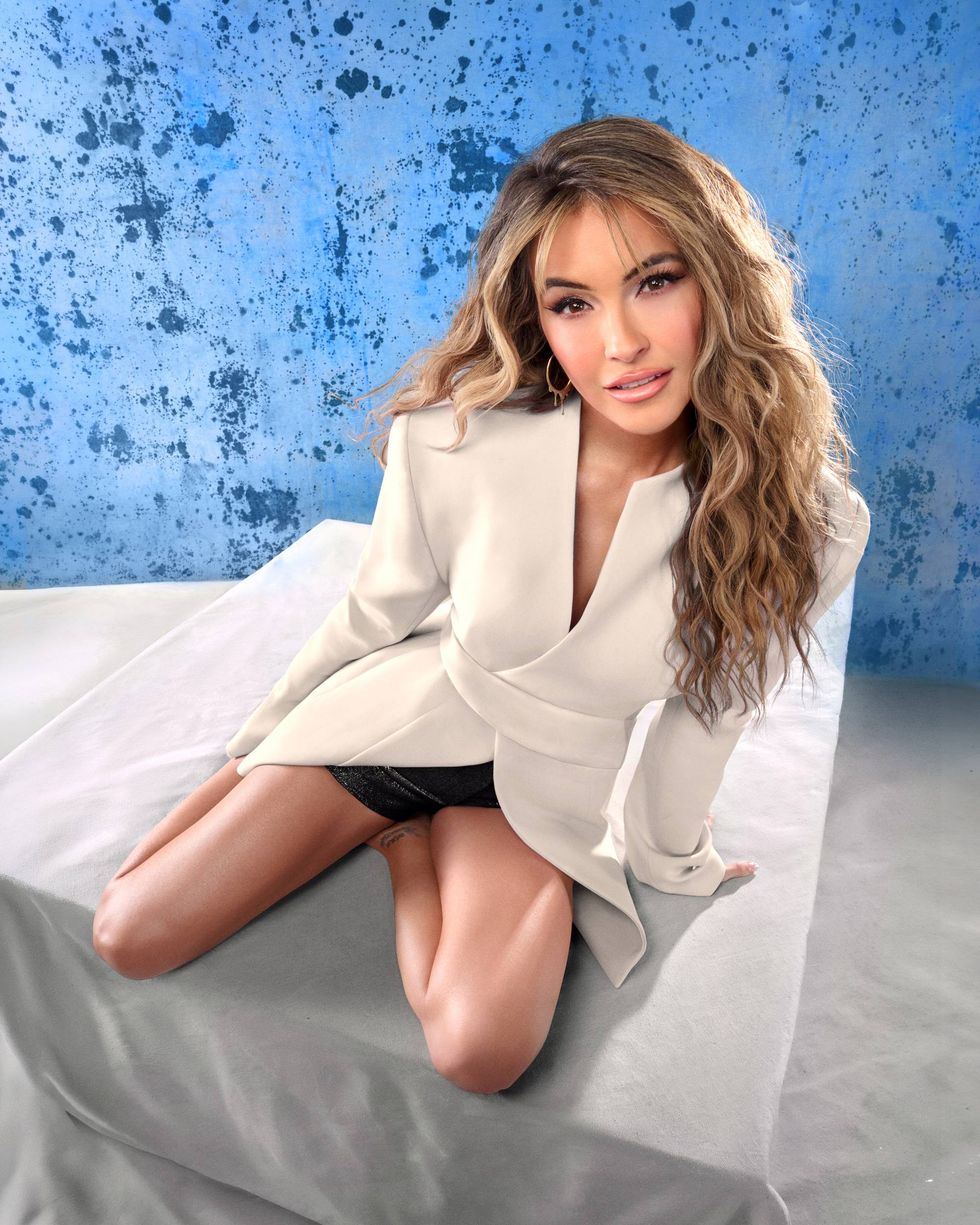
You’re a champion for yourself and your beliefs. Where do you find the strength to stand your ground?
Chrishell: I spent several years in a cult when I was younger, and from that experience I learned to question authority and value education and facts on things I care about. I think that’s fundamental in being able to stand strong in what you believe. The right thing or the truth isn’t always going to be the popular decision.
What is one battle you see that our community faces that our allies need to rally for? (And boy, does it feel like there are many these days!)
Chrishell: The trans community has been so targeted by hurtful propaganda lately. My friend Jac Toboni (The L Word: Generation Q) just had a doc hit Prime video called Just Kids and I hope everyone watches it. It puts faces to the families and children that are being villainized and lets them tell their story. It’s heartbreaking and beautiful.
We at PAPER have loved seeing you flourish in the last few years. As you move into the next phase of your career, what's something unexpected or surprising you'd like to manifest for yourself? (We just saw you pop up at the Stop! That! Train! premiere and would love to see you act alongside some queens, personally.)
Chrishell: That would be amazing — I met that team after the movie was shot or it would have happened! I have been working on something behind the scenes that would be my dream job. It’s too early to speak on it since we are currently pitching but I love hosting and I love love. So hopefully I will be manifesting this very soon!
What was the first time you felt totally yourself, totally embodied as who you wanted to be?
Chrishell: Oddly enough this didn’t come until I hit my 40s. I started making and enforcing boundaries, came out to the world, and chose myself and my happiness over anyone’s opinions. Better later than never!
What or when was a time in your life that you felt misunderstood? And do you ever feel misunderstood now?
Chrishell: Being on reality tv and having conversations completely piece-mealed together to change the intention can be so frustrating. If you are surrounded by people intent on misunderstanding you, you need to stop trying to explain yourself and leave. I also get click bait headlines here and there, but that’s just part of it at this point.
Do you remember the first time, if ever, something you believed or who you were made others angry, or fearful? What did you learn from that experience?
Chrishell: Coming out I felt like I was hit with a wall of anger from the public. I think people reacted so viscerally because they felt I had tricked them or was doing a PR stunt. That’s when I learned just how beautiful and supportive the LGBTQ+ community is. They don’t care when you join, and being embraced gave me the strength to tell the haters where to go.
Who/what was the first person you remember telling you no, in your career, or in trying to be who you are? What would you say to them now?
Chrishell: Everything I've done and been successful at, there was always someone there telling me it was cringy. Soap operas, real estate, reality tv, influencing etc. Never let people give you advice that aren’t paying your bills.
What is a question that you’ve never been asked about yourself? Can you answer that question?
Chrishell: I have the worst memory, so every question can be new again with me. [Laughs]
What was the last thing you saw or read that kept you up at night?
Chrishell: Currently I’m being kept up by the antics in the Love Island villa and reading The Gilda Stories, which includes queer vampires. Salacious escapism!
We’re always asked what we’re proud of for Pride Month—who or what is something in our community that you’re not proud of?
Chrishell: I think just any kind of infighting because we all have to unite now more than ever.
There's the common question about your dream dinner party. How about instead: who from our community's history would you love to party with for a night, if it could be anyone?
Chrishell: I have this dream that Freddy Mercury and I would have been best friends. So him for sure. I’ve always felt like our souls must be friends already in another timeline.
What was the hardest lesson you’ve ever had to learn — about the world, about yourself?
Chrishell: I had a year where I lost everything that I cared about to death and divorce. Ever since that year, nothing seems insurmountable. I have a built-in confidence that only comes from losing it all and knowing you’re still here and can get through anything.
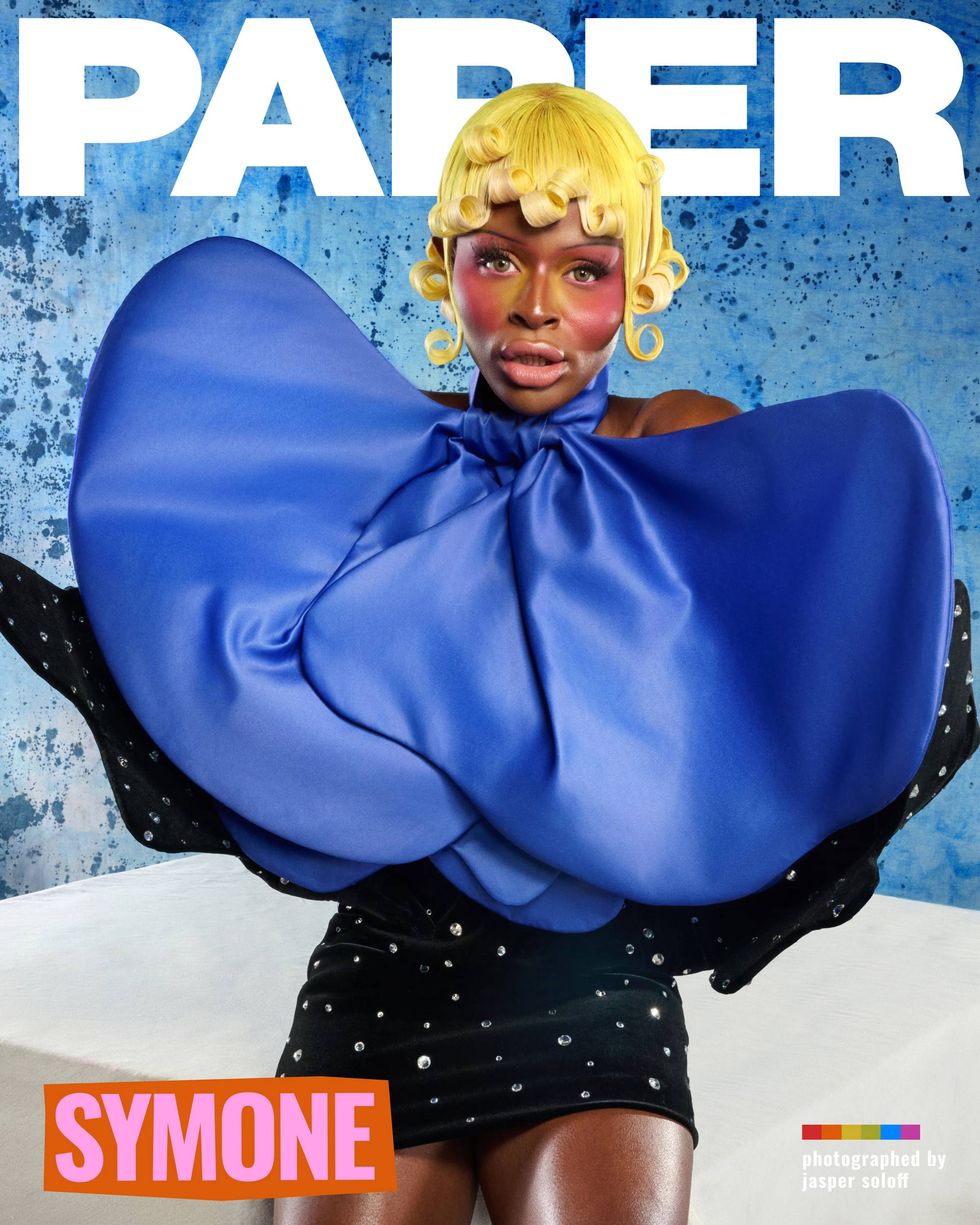
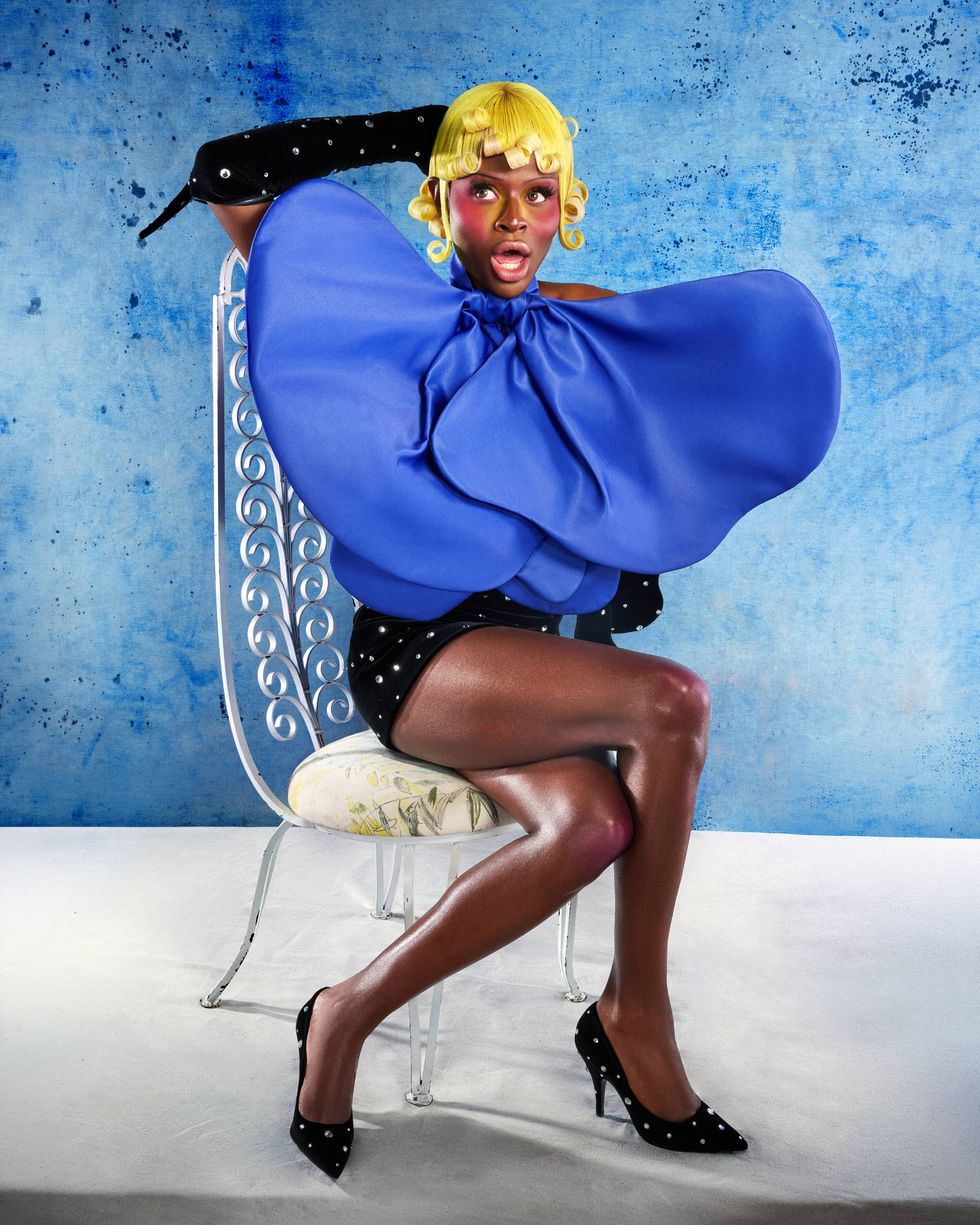
Symone, everyone calls you RuPaul's successor. What are you doing with your first day on the throne?
Symone: Oh, honey the girls would be filmed 24/7 and I’d put them in house together. I wanna see them literally untucked, darling!
Stop! That! Train! is a global phenomenon. For the sequel, what's the next vehicle we're stopping: a bus, a plane, a submarine, a spaceship, a Waymo?
Symone: The girls and I always said we would love a cruise, but drag queens in space would be VERY fierce too
What is a question that you've never been asked about yourself? Can you answer that question?
Symone: Got a condom? No!
What was the last thing you saw or read that kept you up at night?
Symone: You know what got me good? That movie Obsession! I’ve NEVER in my life watched a movie that gave me such anxiety. I just got chills right now actually.
We're always asked what we're proud of for Pride Month. Who or what is something in our community that you're proud of?
Symone: I’m really proud of Stop! That! Train! I’m proud of all the work we put into it. I’m proud of the fact that it was made especially with the times we’re in. I’m proud that it’s a fun and makes people laugh. I’m proud that it’s for us by us but invites everyone into the party. I’m just so proud!
There's the common question about your dream dinner party. How about instead: who from our community, past or present, would you love to party with for a night, if it could be anyone?
Symone: Divine, Octavia St. Laurent, Alex Consani, Patrick Kelly. Would never be a dull moment. I have plenty to ask them and kiki about!
What was the hardest lesson you've ever had to learn — about the world, about yourself?
Symone: It’s ok to ask for help.
What was the first time you felt totally yourself, totally embodied as who you wanted to be?
Symone: I’m going to be very honest with you. I still have a very hard time feeling totally myself. Drag has definitely helped me tremendously in this regard, but it’s still hard for me to move through this world being 100% me. It’s something I’m working through with ol’ girl (my therapist).
What or when was a time in your life that you felt misunderstood? And do you ever feel misunderstood now?
Symone: I feel misunderstood every day, all the time! They say there’s a pill for that but I hate a pill.
Do you remember the first time, if ever, something you believed or who you were made others angry, or fearful? What did you learn from that experience?
Symone: Oh, yeah for sure. I’m a queer, black, drag queen from Arkansas so anything out of the traditional norm is a fear trigger for a lot of people. I just never let it stop me from doing what I wanted. If I did, I’d never do anything ya know?
Who/what was the first person you remember telling you no, in your career, or in trying to be who you are? What would you say to them now?
Symone: When I first started doing drag back home, pageantry was a huge thing in the scene. Queens around me would be like: to be successful you have to do pageantry. Something in my spirit told me that wasn’t my path. Thank the universe I listened. Also, I went to college because I felt like I had to. My major was mass communications, which was lovely, but one day I was in bed and thought: I can literally do this in drag now. I quit the next semester. [Laughs]
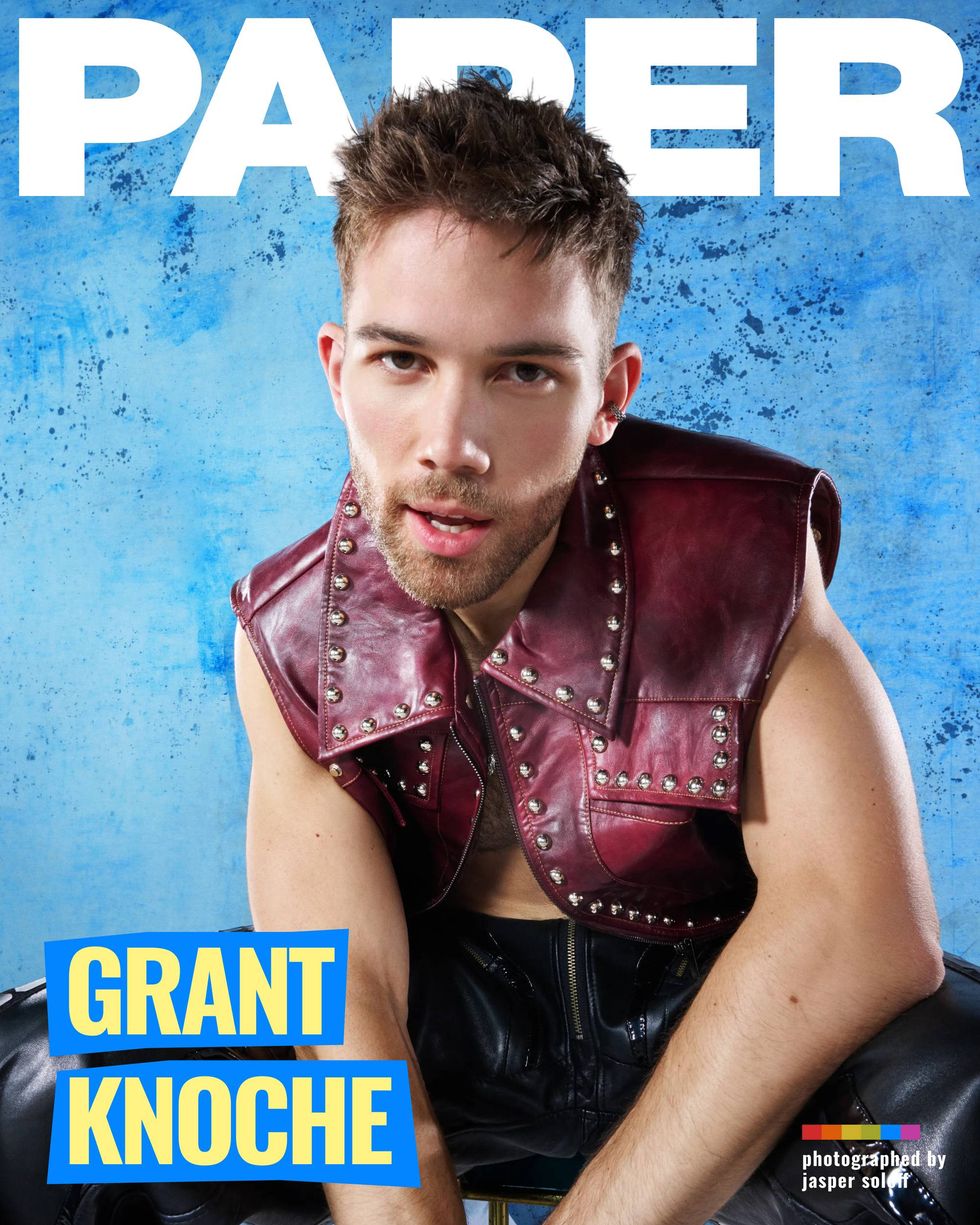
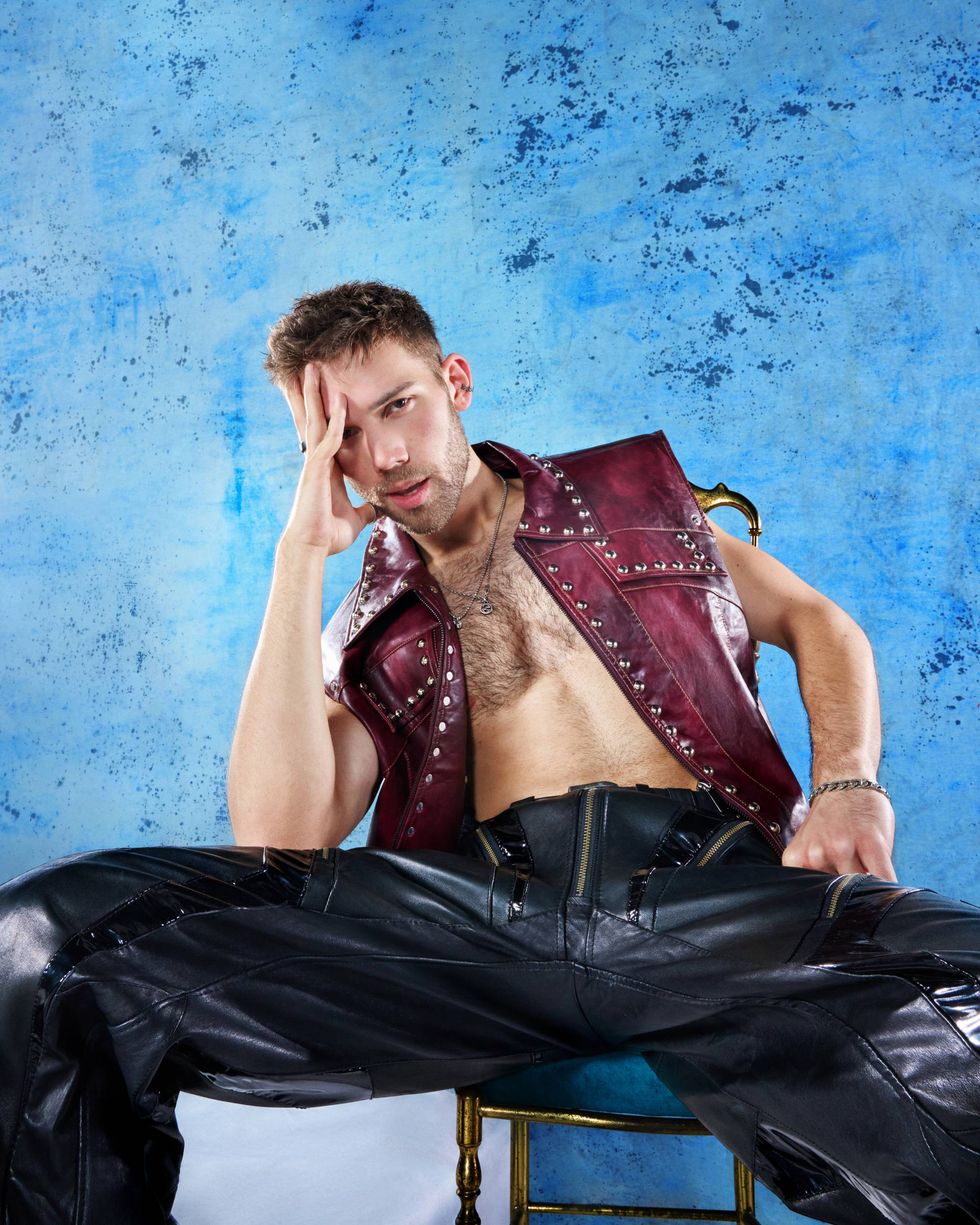
What is something about you that you feel is unique just to you?
Grant: Being trained and touring on a global scale from such a young age has shaped almost every part of who I am as an artist. A lot of the pop stars I looked up to growing up, like Britney Spears, Justin Timberlake, and Christina Aguilera, came from similar backgrounds where they were performing, singing, and dancing professionally from an early age. I feel incredibly lucky to have had that experience, and it’s something that feels increasingly rare among artists today.
I grew up in the kids music franchise KIDZ BOP and I’ve been recording albums, filming music videos, performing on stages around the world since I was 9 years old and have played over 250 shows. It was basically pop star boot camp! Since then, I’ve built my career as an independent artist and became deeply involved in every aspect of the creative process. I self produce, co write, and mix my music, creative direct my projects, design my tours, program lighting and sound, edit music videos, design the merch, and have even had the opportunity to write and produce for artists like Christina Aguilera, ADÉLA, TWICE, CHUU, and Victoria Justice!
I’ve quite literally trained my whole life for this, and I genuinely love every part of it.
Grant: What or when was a time in your life that you felt misunderstood?
When I came out as bisexual, I found that a lot of people wanted to put me into a box. I was constantly asked which gender I liked more or whether I was actually just gay. Growing up, I had crushes on girls, but I was also drawn to certain guys in ways I didn’t fully understand at the time. I thought maybe I just looked up to them or wanted to be like them. As I got older, I realized it was attraction.
Grant: Because I grew up Christian, there were years where I prayed every night for that part of me to go away. Eventually, I reached a point where I realized that after seven years of trying to change myself, I was still the same person. That was when I began to accept that this is simply who I am. I think there’s still not enough visibility for the “B” in LGBTQ+, and that lack of representation even made it harder for me to understand myself. Love is far more complex and beautiful than the boxes people try to put it in. My hope is that through my music and my story, I can help someone else feel a little more seen and understood.
When was a time in your life that you felt truly accepted?
Grant: The first Pride I ever attended completely changed my life. I remember walking around, seeing the performers, feeling the energy, the joy, and the love that everyone had for one another. For the first time, I felt completely comfortable being myself. I had never experienced that level of acceptance before. It ended up becoming the tipping point for me. I came out publicly just a few days later.
We just found your childhood iPod/iPhone/etc. What song is playing?
Grant: Definitely Adele! No question. Also, “Breath of Life” by Florence + The Machine. I used to dramatically dance around my living room to that song haha! Troye Sivan’s first EP was on repeat, and Blurryface by Twenty One Pilots practically lived in my headphones.
There is someone afraid to take the first step to being who they really want to be. What is the advice you wish you’d been given?
Grant: Love is always greater than fear. You can’t fail when you’re living truthfully and doing what genuinely makes you happy. Things may not unfold exactly the way you imagined. Some people may not understand you. Some people may not accept you. I say screw them. If you’re being honest about who you are and love yourself, that’s never a failure. The only real failure is abandoning yourself to make other people comfortable.
There's the common question about your dream dinner party. How about instead: who from our community, past or present, would you love to party with for a night, if it could be anyone?
Grant: I’ve always been obsessed with Greek mythology and ancient Rome. I actually just got back from Rome and spent a lot of time learning about the queer history that existed there. It would be absolutely surreal to travel back in time and experience that world firsthand. Their understanding of love, relationships and sexuality was very different from the labels we put on ourselves and use today. The art, the culture, the stories, and all the people who lived authentically in ways we’re still uncovering today, would be beautiful to see & experience… especially as a party!
What was the hardest lesson you’ve ever had to learn, about the world, or about yourself?
Grant: Because I’m involved in every part of my career, I can be a bit of a control freak sometimes! One of the hardest lessons I’ve had to learn is that you can’t control every outcome. No matter how hard you work or how carefully you plan, obstacles are going to show up. What you can control is how you respond. Sometimes the path you imagined isn’t available, and you have to figure out another way forward. Learning to adapt instead of forcing things has probably been one of the most valuable lessons of my life. And trust me, with the amount of rejection and “no’s” I’ve experienced in my life so far, I’ve definitely had to apply this mindset and keep pushing on.
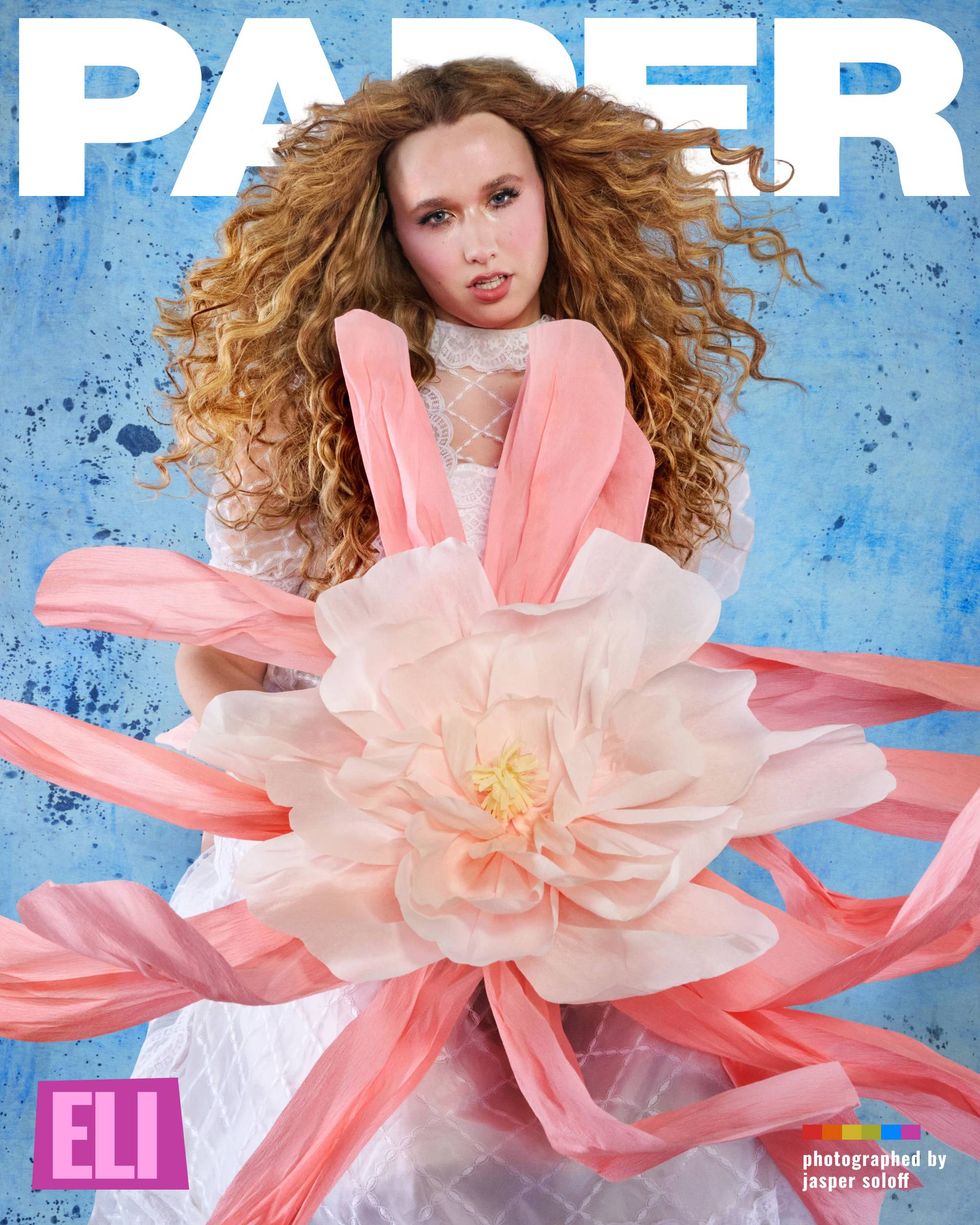
There's the common question about your dream dinner party. How about instead: who from our community, past or present, would you love to party with for a night, if it could be anyone?
Eli: Jim Obergefell and John Arthur and Rita Ora
What was the hardest lesson you’ve ever had to learn — about the world, about yourself?
Eli: The revolution will not be televised.
Eli, we have loved seeing you express yourself online and fiercely champion both your beliefs and your art. Where does the strength and energy to do so come from?
Eli: I have no other option. I love humanity and I love my community.
What was the first time you felt totally yourself, totally embodied as who you wanted to be?
Eli: I don’t think I can feel that totality. I don’t think that’s happens for anyone on Earth until we all collectively reach that as a species. Such an annoying answer! The closest I’ve been though is finally allowing myself to not know who I was and to just be okay with that confusion, versus banging my head against the wall for at least a decade screaming “Who am I, why can’t I decide who I am, how do I not know who I am?
What or when was a time in your life that you felt misunderstood? And do you ever feel misunderstood now?
Eli: I don’t know you like that, Miss PAPER. This kind of transparency takes about 4-5 sessions with a licensed therapist before I’m opening up like that.
I’ll give you a surface level answer though, high school sort of felt a lot like a one size fits all Brandy Melville top, meaning it really only fits a small minority of people and forces everyone else to suffocate in the overpriced and overhyped baby tee. Don’t get me wrong, I wanted to learn but there just isn’t much space for the complexities and individual needs of it within the system, and there was a lot of push for conformity.
Do you remember the first time, if ever, something you believed or who you were made others angry, or fearful? What did you learn from that experience?
Eli: To quote my favorite, Mimi, MC, Mariah Carey … I don’t know her.
Who or what was the first person you remember telling you no, in your career, or in trying to be who you are? What would you say to them now?
Eli: When I was 12, these random (relatively successful) men in the music industry found me online for my singing videos, they flew out to my parents house in Massachusetts and recorded some songs they wrote for me. I felt like they were telling me inadvertently that I couldn’t have a voice, and I was supposed to just sing what’s been given to me. On the more frank side, they told me outright that I needed to lose weight if I wanted to be a star.
What is a question that you’ve never been asked about yourself? Can you answer that question?
Eli: Damn, y’all are making me do homework. Um…. What’s it like being so awesome? It rocks!
What was the last thing you saw or read that kept you up at night?
Eli: The Pitchfork review of my album.
What is something about you that you feel is unique just to you?
Mad Tsai: I think my ability to observe has been my greatest gift. I never really felt like I fit into any particular group or archetype, and that always made me a bit of a loner. I remember being called a “wallflower” or “hermit” growing up, so I learned to hate that part of myself. However, I learned later in life that it’s actually been a blessing, and one of the main reasons I love being an artist.
Sometimes I like going quiet and talking to myself as I watch people go about their day. I’ve always been fascinated by how different people operate and interact with each other. I usually have a good read on people and that has helped me tremendously in navigating my life and trusting my gut.
We just found your childhood iPod/iPhone/etc, what song is playing?
Mad Tsai: Anything by Marina and the Diamonds or Lana Del Rey. I was unapologetically a tumblr kid growing up.
There is someone afraid to take the first step to being who they really want to be. What is the advice you wish you’d been given? (Or, what advice did you get?)
Mad Tsai: Don’t pay attention to what anyone else thinks. At the end of the day, the only person whose opinion matters is your own! There is only one thing in this life that will come easy to you, and that’s being more you.
There's the common question about your dream dinner party. How about instead: who from our community, past or present, would you love to party with for a night, if it could be anyone?
Mad Tsai: Freddie Mercury. I would love to queen out with him and pick his brain on his artistic process.
What was the hardest lesson you’ve ever had to learn — about the world, about yourself?
Mad Tsai: As they say, “no good deed goes unpunished” and that will always unfortunately reign true. People will always have an issue with anything you do, regardless of if you believe it’s the morally right thing. So do the best you can to make the world a better place, ignore the people who will try to burden you with hatred, and keep pushing on!
What or when was a time in your life that you feel misunderstood?
Mad Tsai: My whole life. Just kidding. But definitely high school. I was an angsty kid who didn’t understand myself and I was so scared and angry because of it. I wish I could’ve felt understood and loved during that time, but I’m also grateful for the hard lessons it forced me to learn for later on in life.
When was a time in your life that you felt truly accepted?
Mad Tsai: Every time I’m on stage. I think finding my people in LA and building out my community has always been a gift in my life that I am grateful for. I throw these annual concerts in my backyard during the Lunar New Year called “Mooncake” and my Asian artist friends come to perform.
Every concert is a celebration of AAPI culture and art and those are the moments I truly feel accepted and loved by my community. I’m also so thankful for my fans who have grown with me over these past few years and continue to support my music and shows. Everytime I’m on stage and get to perform my songs for the fans, I feel truly accepted.
There is someone afraid to take the first step to being who they really want to be. What is the advice you wish you’d been given? (Or, what advice did you get?)
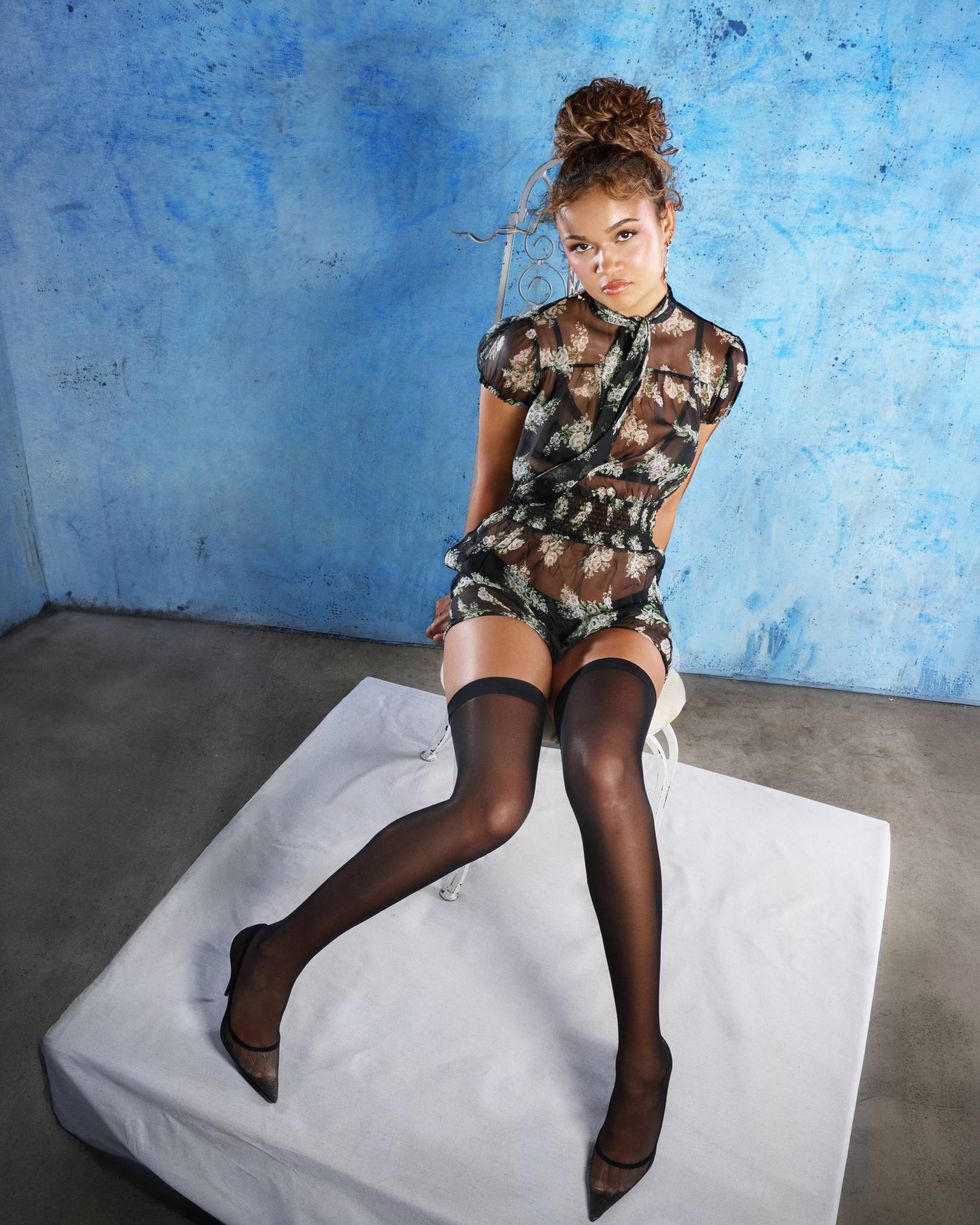
Madison: First of all, you're scared because it’s important, not because you can’t do it. Secondly, the only goal in this life is happiness and you can’t truly get there without accepting who you are. If it's other people’s opinions you’re afraid of, just know that that craving for acceptance is a part of being human but ultimately you have to redirect that feeling to yourself and truly stand 10 toes on who you are in your heart. At the end of the day the thing you’re actually holding back is the key to your soul and a deeper understanding of this life.
There's the common question about your dream dinner party. How about instead: who from our community, past or present, would you love to party with for a night, if it could be anyone?
Madison: I need a kiki with RuPaul.
What is something about you that you feel is unique just to you?
Madison: I think the way I was raised is so unique. Not only being the youngest in a big family of 7, but being in a dynamic where 6/7 of us are adopted has completely shaped who I am. The heart of our family is a true message of what it means to love, accept and celebrate people no matter where you come from.
What or when was a time in your life that you felt misunderstood?
Madison: I think growing up in a small town, when you have big dreams and an attitude, that won’t let anyone stop you from being who you are, and will leave you feeling misunderstood more times than not. I struggled a lot with not only the lack of like-minded people but the absence of open minded people in general.
When was a time in your life that you felt truly accepted?
Madison: Moving to LA was really the first time I was meeting people I didn’t feel I needed to over explain myself to; and that in and of itself is incredibly freeing and validating. I’ve met some truly amazing people out here that immediately felt safe and accepting.
We just found your childhood iPod/iPhone/etc, what song is playing?
Madison: Hannah Montana, Cheetah Girls, Camp Rock , honestly any Disney musical soundtrack
What was the hardest lesson you’ve ever had to learn — about the world, about yourself?
Madison: That no one’s coming to save you. This is your life and you have to treat it like it belongs to you. Like YOU belong to YOU. Believe in yourself, be kind, and your convictions will get you where you need to go.
What or when was a time in your life that you feel misunderstood?
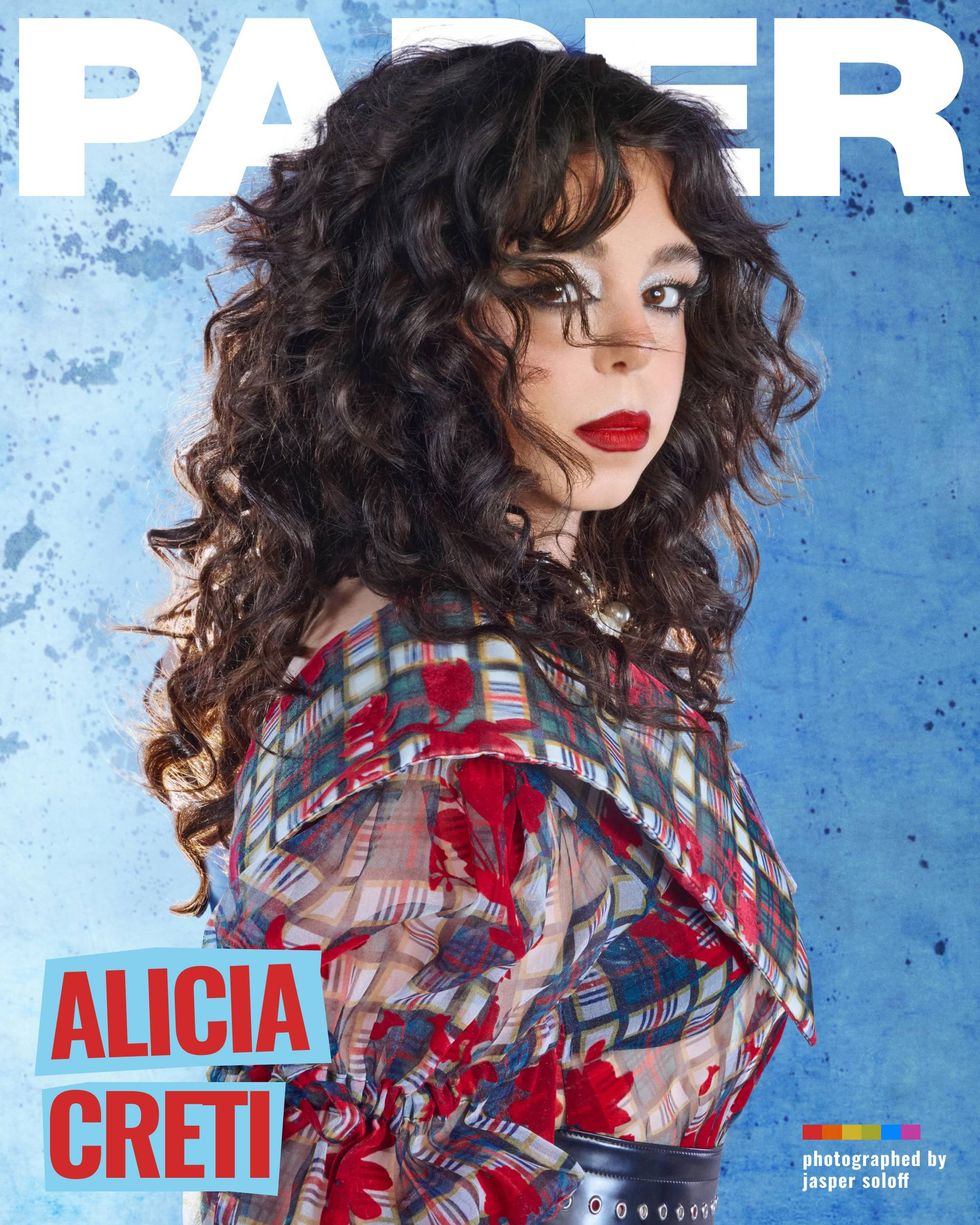
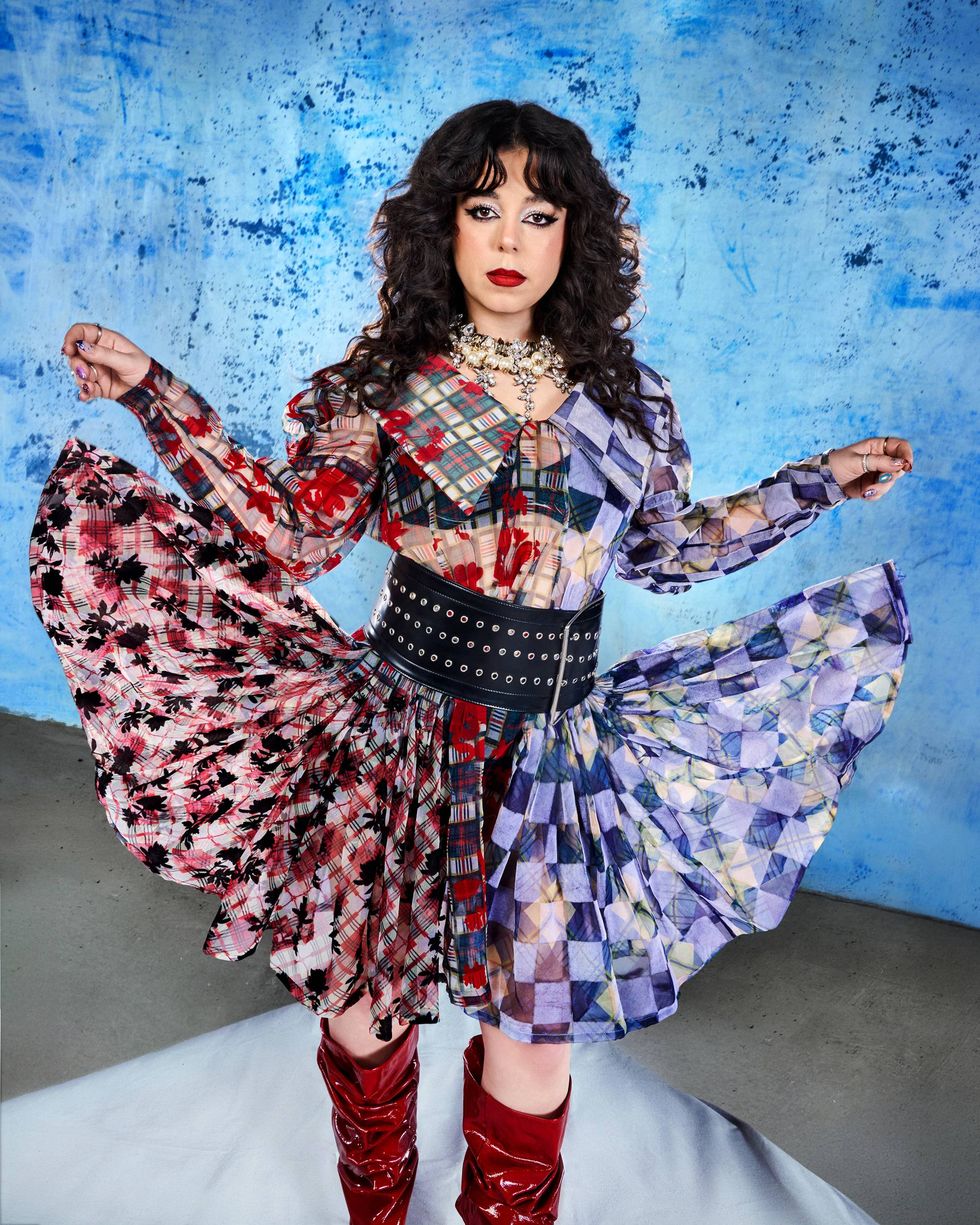
Alicia: To put it bluntly, I felt misunderstood all throughout school, from childhood to young adolescence because I spent a lot of time in my childhood feeling protective of my brother Luca, who’s autistic, and was preoccupied with him, the stresses of my parents, the ignorance of my classmates and peers, and fitting in; I was ready to put anyone coming for my brother in their place. I felt a lot of pressure growing up to be the perfect daughter, perfect student, friend, and eventually partner that unpacking and exploring my queerness took a huge step back. My internalized homophobia told me there was no way my Italian family would be accepting of this (not true! which I’m extremely grateful for as it isn’t everyone’s experience in the community) and that my parents had enough stress in their life. So I put it in a box until it eventually erupted out of me in my early twenties, when I couldn’t deny my feelings for a girl I wish I had been more open with many years prior. All the times I had explored my sexuality in my teenage years were in environments where it felt “more acceptable” to do so (the environment being heteronormative asf), like the club or a festival, and a moment between a girl and I that would begin with sparks and butterflies (and gay panic) would be quickly snatched away from us and clouded by shame and discomfort because the boys around us would point, yell and film us getting together. I had internalized these experiences as me being attention-seeking, which is what people would have to say, when in reality I was just following my heart. It took me some time to figure it out, and coming out was seriously the best thing I ever did, because I got to work through and let go of the shame I felt for forever, decenter men and center myself, have queer experiences which are magical experiences, and find queer community I feel totally seen by.
What is something about you that you feel is unique just to you?
Alicia: My voice.
When was a time in your life that you felt truly accepted?
Alicia: The first time I distinctively remember feeling truly accepted was when I worked at a summer camp that integrated disabled and neurodivergent kids with neurotypical kids as a facilitator. I grew up feeling extremely protective of my brother and was often met with pitiful reactions and expressions whenever I mentioned he is autistic which made my blood boil and always struck a nerve. In my experience working there, a camp that Luca also attended, I met so many people that genuinely loved my brother and could tease him (without being ignorant!) and crack jokes with him, similar to my relationship with him, and suddenly neither of us felt like a walking neon “autism” sign.
To be honest, being immersed in a neurodivergent world freed and healed a deep part of me, which allowed me to let go of a lot of stress I harbored. The kids I had the pleasure of spending my days with at the time inspired me to stop giving a fuck about what everyone thinks and to just be myself because being yourself is actually what makes you irreplaceable, full of life and leads you to finding your people. They inspired me to come out and mask less. I’d say that now, as an artist I feel most accepted on stage, truly because of the community that shows up; I can feel that people feel safe to be their quirky weird authentic selves and show so much love with their hearts on their sleeves for the night that it makes me feel safe to do the same.
We just found your childhood iPod/iPhone/etc, what song is playing?
Alicia: My childhood pink walkman had "Pon De Replay" by Rihanna on repeat.
There is someone afraid to take the first step to being who they really want to be. What is the advice you wish you’d been given? (Or, what advice did you get?)
Alicia: I wish someone had told me when I was young and impressionable that it is okay to shine. You don’t need permission. Your uniqueness is a gift that should be shared. It’s okay to be yourself. Being a weirdo is great. Dimming yourself for the comfort of those around you actually will not get you anywhere but disconnected to your soul. It will be a long but transformative journey back to it. It gets harder before it gets easier. People will not have the reactions you hope for, people may not understand you, people may put you down for it.
You may feel incredibly lonely. It’s because you are a mirror. A walking example of strength because you have the audacity. The audacity to take up space, to no longer conform to the ideal you believe is being projected onto you. You’ll begin to understand the value of time through experience, and every minute spent as anyone but yourself, is time spent in a prison you created for yourself. Being exactly who you are and living in your truth is real love, self-love, and the best way to tell who is really there for you and ultimately find community that loves you for you throughout all of your eras and all of your successes.
There's the common question about your dream dinner party. How about instead: who from our community's history would you love to party with for a night, if it could be anyone?
Alicia: Lady Gaga! She inspires me and definitely knows how to have an unforgettable night!
What was the hardest lesson you’ve ever had to learn — about the world, about yourself?
Alicia: I think the hardest lesson I’ve had to learn so far is that you can’t run from yourself forever; it’s not going to change who you are and the sooner you embrace it and love those unseen parts of yourself, the sooner you’ll feel relief and be able to receive real love.
Chief Creative Officer: Brian Calle
Executive Creative Director: Jordan Bradfield
Executive Producer: Aya Sloan
Producer: Ricardo Diaz
Senior Editor: Joan Summers
Photography by: Jasper Soloff
Story by: Joan Summers
On-set Hair Stylist: Tiger Bautista
On-set Makeup Artists: Mary Anderson, David Velasquez
Lighting: Morganne Boulden
Lighting Assistant: Layla Williams
Retouching: Nataliia Trach
Set Design: Paulius Barysas
Production Assistants: Randy Ramirez, Jordan Reid, Sophia Saint John
Groomer (John Waters): Ryann Carter
Lighting (John Waters): Carty Caruso
Graphic Design by Composite