India’s Cockroach Protests End As Modi Government Bows To Demands
By Biplob Kumar Das|Drop Site News Photos: Wikimedia Commons DELHI—Protesters occupying the central parts of Delhi, India were triumphant on Saturday evening after Prime Minister Narendra Modi’s government accepted all demands raised by the movement’s leaders, including the resignation of the country’s education minister Dharmendra Pradhan (shown below). The protest was spearheaded by the newly formed Cockroach Janta Party (CJP)—a wordplay on Indian Prime Minister Narendra Modi’s Bharatiya Janata Party (BJP). The word “cockroach” is attributed to the Chief Justice of India Surya Kant, who in May referred to the youth of the country as “cockroaches” during a court hearing. Ministers of the Modi government’s cabinet sat for talks with CJP representatives on Friday and Saturday. At the end of the talks on Saturday, the CJP announced that the government had agreed to all their demands. Accepting all the protesters’ demands was a rare surrender to popular dissent in Modi’s 12 years of being in power, during which the Hindu nationalist leader has built his image as a strongman that does not back down or take criticism kindly. “This is just the beginning of a larger movement that will restore basic governance and will work for the people of this country,” said Sauraav Das, a spokesperson for CJP. Hundreds of thousands of these cockroach protesters had been assembling for over a month at Jantar Mantar, which is less than half a mile south of Connaught Place, the central market in the heart of Delhi. They were demanding the resignation of Pradhan, who is also a senior leader in India’s ruling Bharatiya Janata Party, the party of Modi. The protesters at Jantar Mantar consider Pradhan to be responsible for failing to prevent “paper leaks”—the unauthorized release of highly competitive national college entrance examinations, often hours and sometimes minutes before the exam is due. The Jantar Mantar movement emerged in May in response to a leak of the National Eligibility cum Entrance Test (NEET), the countrywide medical entrance exam. Reports suggest at least a dozen students across the country died by suicide after the tests were canceled. Protesters claim the number is over 20. The protestor’s demand that the families of each of these students be paid ten million Indian rupees was accepted by the government on Saturday. After Delhi’s police and other armed forces cracked down heavily against protesters on Monday, the market became a pale shadow of its usual self. Traffic was redirected. And at least half a dozen metro stations around it were shut. Instead it was full with a young, Gen Z crowd who were there to register their dissent against the Modi government in growing numbers and spirit unseen in recent years. Betu Yadav, a 26-year-old post-graduate student from Uttar Pradesh was hit on the back of her head with batons by male police officers on Monday, leading to intense bleeding that required seven stitches. As news of the government agreeing to the demands emerged, Yadav, still wearing a bandage over her head, said that she can finally celebrate the fruit of her month-long struggle. “The fight that we fought has transformed into a big success. And today, on the 25th of July, Dharmendra Pradhan has resigned. Along with the resignation of Pradhan, the struggle to overthrow the BJP government will also be achieved by the same youth and the same crowd,” she said. Police Brutality Backfired Many of the Cockroach protesters had poured into Jantar Mantar from various parts of the country since Monday, when leaders of CJP called for a protest march to the Indian parliament demanding Pradhan’s resignation. As protesters began their march on parliament, the Delhi Police and other armed forces cracked down heavily, jamming the internet in central Delhi, using tear gas, beating students with batons, and in some instances shooting them with pellet guns. At least one person has been reportedly left with a permanent disability due to the use of pellet guns. Multiple students were detained, many of whom have been since released and charges were pressed against some. “I was shoved to the ground and pulled across,” said Sachin Rawat, a software engineer who came from Lucknow, Uttar Pradesh. Rawat incurred injuries on his forehead, shoulder, arm, and legs on Monday. “I consider this as the love of Delhi Police,” he said satirically, adding, “whenever there is a revolutionary struggle, there will be such signs of it being repressed.” Video evidence has since gone viral on social media showing a senior police officer slapping a young woman, and other male officers groping and attacking women. The brutalities witnessed on Monday pushed more students to join the movement, with lines to enter the central area of the protest site reaching several blocks at any point of the day in the past week. Since videos of police action against students went viral on social media, protests
 Black News
By Biplob Kumar Das|Drop Site News
Photos: Wikimedia Commons
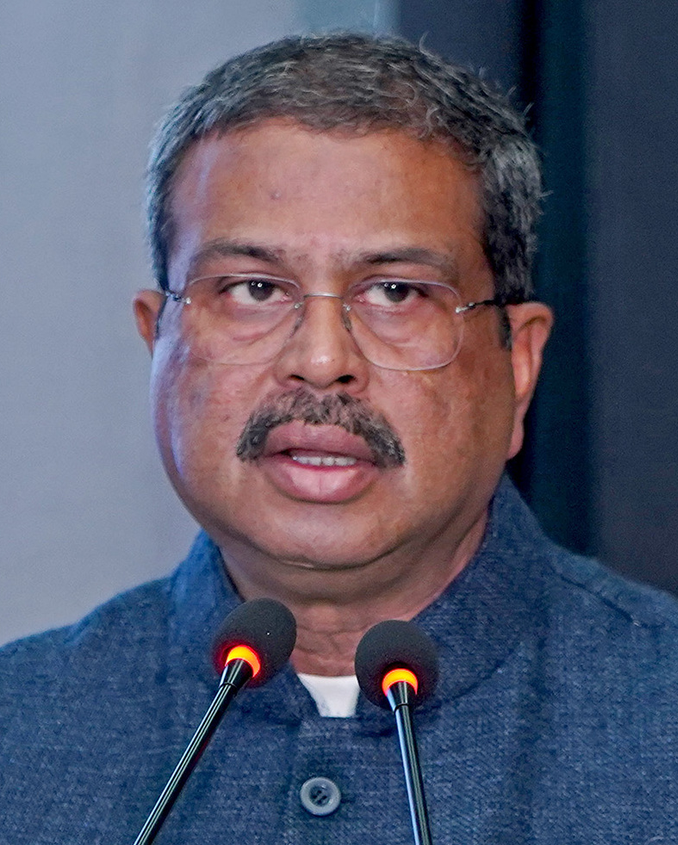
DELHI—Protesters occupying the central parts of Delhi, India were triumphant on Saturday evening after Prime Minister Narendra Modi’s government accepted all demands raised by the movement’s leaders, including the resignation of the country’s education minister Dharmendra Pradhan (shown below).
The protest was spearheaded by the newly formed Cockroach Janta Party (CJP)—a wordplay on Indian Prime Minister Narendra Modi’s Bharatiya Janata Party (BJP). The word “cockroach” is attributed to the Chief Justice of India Surya Kant, who in May referred to the youth of the country as “cockroaches” during a court hearing.
Ministers of the Modi government’s cabinet sat for talks with CJP representatives on Friday and Saturday. At the end of the talks on Saturday, the CJP announced that the government had agreed to all their demands.
Accepting all the protesters’ demands was a rare surrender to popular dissent in Modi’s 12 years of being in power, during which the Hindu nationalist leader has built his image as a strongman that does not back down or take criticism kindly.
“This is just the beginning of a larger movement that will restore basic governance and will work for the people of this country,” said Sauraav Das, a spokesperson for CJP.
Hundreds of thousands of these cockroach protesters had been assembling for over a month at Jantar Mantar, which is less than half a mile south of Connaught Place, the central market in the heart of Delhi. They were demanding the resignation of Pradhan, who is also a senior leader in India’s ruling Bharatiya Janata Party, the party of Modi. The protesters at Jantar Mantar consider Pradhan to be responsible for failing to prevent “paper leaks”—the unauthorized release of highly competitive national college entrance examinations, often hours and sometimes minutes before the exam is due.
The Jantar Mantar movement emerged in May in response to a leak of the National Eligibility cum Entrance Test (NEET), the countrywide medical entrance exam. Reports suggest at least a dozen students across the country died by suicide after the tests were canceled. Protesters claim the number is over 20. The protestor’s demand that the families of each of these students be paid ten million Indian rupees was accepted by the government on Saturday.
After Delhi’s police and other armed forces cracked down heavily against protesters on Monday, the market became a pale shadow of its usual self. Traffic was redirected. And at least half a dozen metro stations around it were shut. Instead it was full with a young, Gen Z crowd who were there to register their dissent against the Modi government in growing numbers and spirit unseen in recent years.
Betu Yadav, a 26-year-old post-graduate student from Uttar Pradesh was hit on the back of her head with batons by male police officers on Monday, leading to intense bleeding that required seven stitches. As news of the government agreeing to the demands emerged, Yadav, still wearing a bandage over her head, said that she can finally celebrate the fruit of her month-long struggle.
“The fight that we fought has transformed into a big success. And today, on the 25th of July, Dharmendra Pradhan has resigned. Along with the resignation of Pradhan, the struggle to overthrow the BJP government will also be achieved by the same youth and the same crowd,” she said.
Police Brutality Backfired
Many of the Cockroach protesters had poured into Jantar Mantar from various parts of the country since Monday, when leaders of CJP called for a protest march to the Indian parliament demanding Pradhan’s resignation.
As protesters began their march on parliament, the Delhi Police and other armed forces cracked down heavily, jamming the internet in central Delhi, using tear gas, beating students with batons, and in some instances shooting them with pellet guns. At least one person has been reportedly left with a permanent disability due to the use of pellet guns.
Multiple students were detained, many of whom have been since released and charges were pressed against some.
“I was shoved to the ground and pulled across,” said Sachin Rawat, a software engineer who came from Lucknow, Uttar Pradesh. Rawat incurred injuries on his forehead, shoulder, arm, and legs on Monday. “I consider this as the love of Delhi Police,” he said satirically, adding, “whenever there is a revolutionary struggle, there will be such signs of it being repressed.”
Video evidence has since gone viral on social media showing a senior police officer slapping a young woman, and other male officers groping and attacking women.
The brutalities witnessed on Monday pushed more students to join the movement, with lines to enter the central area of the protest site reaching several blocks at any point of the day in the past week. Since videos of police action against students went viral on social media, protests spread to a dozen other cities around the country.
Apart from Pradhan’s resignation, the leaders of the CJP also demanded that all charges pressed against peaceful protesters be withdrawn. A spokesperson for CJP who was present at talks said that the government has agreed to withdraw all charges against protesters across the country.
A Broken Education System
“I had to appear twice for the same exam. It was really stressful. I still don’t know which university I will be admitted to,” said 17-year-old Mohammad Kashan, whose dream is to study at the prestigious Jawaharlal Nehru University in Delhi. Earlier this year, Kashan had taken the Central University Examination Test (CUET), which admits students into federal government-owned colleges across the country. Each year, over ten million students appear for this exam.
Kashan came to Delhi with a friend on July 22, on a low-cost train ticket from Patna, the capital city of Bihar, a state in eastern India. Kashan said the police brutality against students he saw on social media for simply demanding accountability pushed him to join the protests. He has no friends or family in Delhi and was sleeping on the sidewalk since he arrived with a thin cloth for a bed and his back-pack as a pillow.
Twenty-one-year-old Shalu Yadav also took a train but traveled even further, from Hyderabad, in the southern Indian state of Telangana. She is studying law and said she fought with her parents to be present at the protest.
“Our education system is completely broken, it does not guarantee a seat in an institute nor does it guarantee a job. I saw the call for the protest and I decided I need to attend it,” Yadav said.
Since Modi took office in 2014, the budget of India’s Ministry of Education, as a share of the national budget, has dropped by nearly half, even as overall spending has increased, according to a recent investigation by The Indian Express.
Protesters pointed out that the government is instead privatizing education rapidly. “The entire exam system gets outsourced to private contractors. So there is no accountability for paper leaks. Funding for universities and research has been cut down. We are against this entire education policy,” said Priyam, a master’s student at Delhi University and a member of Collective, a progressive students group.
“This is bigger than a protest, it is a movement. There is no future in this country right now. I won’t leave till the government resolves our issues, including the resignation of the education minister,” Yadav said on Thursday.
Many like Yadav are now packing their bags to finally head home after a week, or in some cases after almost a month, of volunteering at the protest site.
Solidarity with Students of Gaza
For 21-year-old Tubassum, a Master’s student at Delhi University, the movement symbolizes solidarity with other struggles. Although she has two cousins who had to re-appear for the medical tests and were depressed through the entire ordeal, showing up for a protest means a lot more for Tubassum, who came sporting a keffiyeh over her burqa. She was in ninth grade when her mother and aunts joined the Muslim women’s protest at Shaheen Bagh, Delhi, in 2019-20, against a citizenship bill that discriminated against Muslims.
“I remember how people showed up for each other in 2019 at Shaheen Bagh against the Modi government. I want to extend the same solidarity to my peers. And while we raise our voice for our education, I also stand with the students of Gaza who suffered a genocide. Whose education has been ripped due to the genocide” she said.
The Modi government, which has systemically targeted Indian Muslims through immigration laws, regulating food habits, and revising voter rolls, is one of Israel’s staunchest allies.
Bhumi, an undergraduate student at Delhi’s Ambedkar University, and a member of Collective, a progressive student group, was also wearing a keffiyeh and has been attending the protest since last month. “No one is free until everyone is free. This struggle is not only about education but also about basic rights. Not only about paper leaks, but also about rights of workers, farmers, and transpeople. And this solidarity extends to Gaza,” she said.
Modi Loses the Narrative
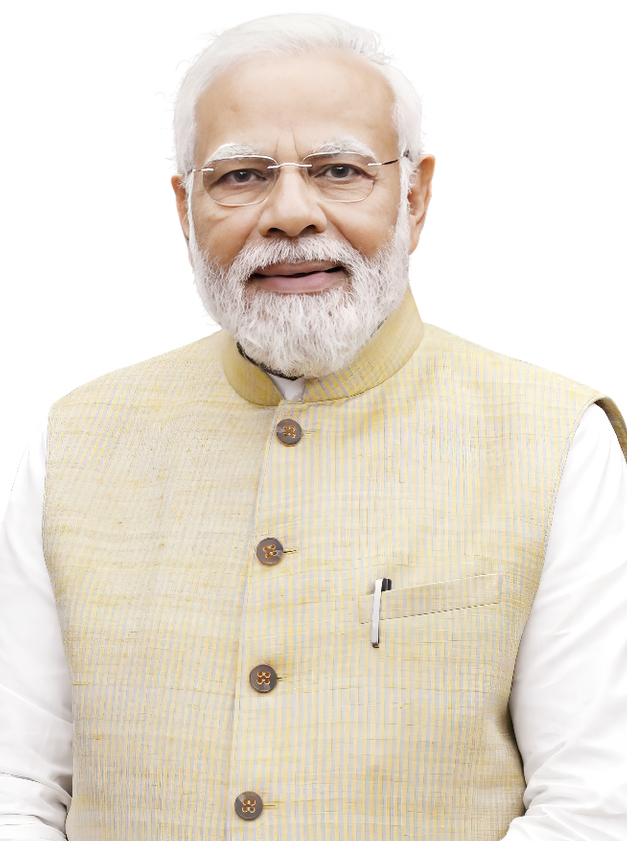
While the central demand of the Jantar Mantar movement was the resignation of the education minister, protesters did not hesitate to direct their attention at Modi.
Since Monday’s police action, the most popular slogan heard through the protest site chanted in Hindi translates to, “Whenever Modi gets scared, he sends the police in front.” Gen Z protesters speaking the language of viral Instagram reels and memes were also often heard chanting nasty slogans that ridicule Modi.
“We cannot forget that the ruling party BJP is responsible for this. We cannot forget that Home Minister Amit Shah is responsible for the brutalities. We cannot forget that this is ultimately Narendra Modi’s government that perpetrated the paper leaks and the police brutality,” said Neha Bora, national president of the leftist group All India Students Association, during a speech from the center stage of the protest site on Thursday night. Bora went on a hunger strike for 23 days, ending on July 20, demanding the resignation of the education minister.
In response, Modi has promised to set up fast track courts that address the paper leak issue. On Thursday night, he released a statement in a vertical video format on his social media—seen as a way to be more Gen Z friendly—promising that his government will take imminent action against paper leaks. On Friday night there was another video with a similar message. And on Saturday, his government bowed down to the demands.
Rahul Verma, an election analyst and a professor of politics at Shiv Nadar University, argues that many from within Modi’s Hindu nationalist base also appeared to support the movement, placing him on the defensive.
“Unlike many previous mobilizations against the BJP this movement draws hugely from groups that have constituted an important part of the party’s electoral coalition,” he wrote in a column. “A large number of these young, aspirational Indians and their parents on the protest site may have even voted for BJP in the recent past. They are protesting because the systems through which they hoped to advance appear increasingly unreliable.”
Biplob Kumar Das is an investigative reporter covering politics and business, with a focus on institutional accountability and immigrant communities. He’s based in New York City.