Junior H Goes from Corridos Tumbados to ‘México Canta’: ‘My Songs Didn’t Always Convey a Positive Message’
The regional Mexican star admits to being more conscious today of the meaning his lyrics hold for his listeners.
 Black News
For over a year now, the Mexican government has been promoting that songs by young artists — mainly from the corridos tumbados genre — be free of content that glorifies violence or drug culture through México Canta, a binational contest for artists in Mexico and the United States.
Related


On Monday (May 11), the second edition of the competition was officially announced during president Claudia Sheinbaum’s morning press conference at the National Palace in Mexico City. In a surprising turn of events, corridos superstar Junior H appeared to promote this government initiative, organized by Mexico’s Ministry of Culture.
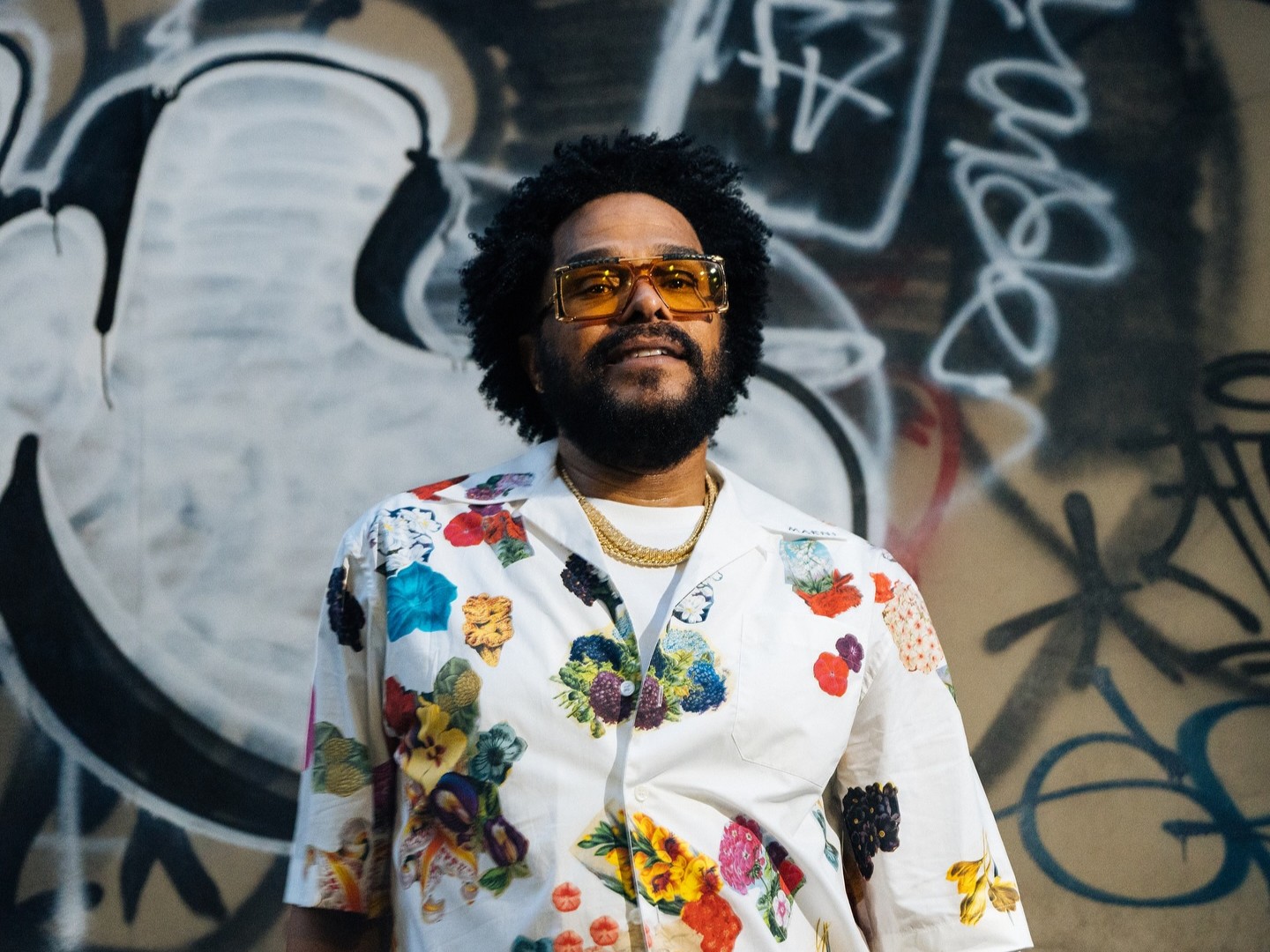
Dressed modestly in a black suit over a white T-shirt, without the extravagant jewelry that is often part of his stage attire, Junior H defended the evolution of corridos as a genre and acknowledged that he wasn’t initially aware of the impact his song lyrics had.
“I want to share that in the early days of my career, some of the stories I told in my songs didn’t contribute to the positive message that my current compositions reflect,” read the singer-songwriter while standing at the presidential podium. “As I grew, I came to understand that music, beyond being a form of expression, also comes with responsibility when millions of people around the world are listening.”
“When you become a role model for so many people, you realize that your lyrics influence how they feel, dream, and most importantly, how they shape their future,” he added during his appearance at the presidential headquarters, where he also performed his hit song “Y Lloro.”
Antonio Herrera (Junior H’s real name) rose to fame in part due to corridos tumbados and songs such as “El Azul,” a 2023 narcocorrido featuring Peso Pluma that is linked to Sinaloa cartel boss Juan José Esparragoza Moreno. Another controversial track of his is “El Hijo Mayor” (2022), which allegedly pays tribute to Édgar Guzmán López, the murdered son of infamous drug lord Joaquín “El Chapo” Guzmán.
The singer — originally from the Mexican state of Guanajuato and who emigrated to Utah — sparked a wave of criticism online for his participation in the presidential press conference. This comes after he performed “El Azul” on March 14 at SXSW during a Billboard-hosted event. “It’s the government against us, or us against the government,” Junior H told the audience, expressing his stance against what many perceive as censorship.
“El Azul” earned him a fine of 400,000 pesos (more than $23,000) in the municipality of Zapopan, in the state of Jalisco, according to reports. The city’s municipal president, Juan José Frangie Saade, banned him from performing there for the remainder of his term, which ends in September 2027. And the controversy has affected his ability to perform in that state.
At least ten out of Mexico’s 32 states — including Baja California, Guanajuato and Michoacán — have implemented bans or restrictions on the public performance of narcocorridos. In the absence of a federal law, local governments are imposing penalties ranging from fines to up to one year in prison for performing songs that promote drug-related violence or cartel activities.
In an unprecedented move, the U.S. State Department canceled the work and tourist visas of Mexican corridos group Los Alegres del Barranco in April 2025. This came after the group displayed images of Nemesio Oseguera Cervantes, also known as “El Mencho,” leader of the Jalisco New Generation Cartel (CJNG), during a concert in late March of that year at an auditorium at the University of Guadalajara.
“This is something that’s never happened before,” the singer told Billboard on November 30 in Mexico City, referring to the stricter measures against narcocorridos. “It’s a delicate subject, but we respect the authorities and the government. We’re not against anything; we’re singers, we sing, and that’s how we make a living.”
Billboard Español reached out to Junior H’s team in Mexico for comment but had not received a response at the time of publication.
President Claudia Sheinbaum reiterated that her government has not banned any musical genres, including those that glorify crime in public spaces, specifically narcocorridos. Instead, her proposal aims to support “the deeper narratives of Mexico’s values, from love and heartbreak to what drives us as Mexicans,” as she told Billboard in April 2025.
Sheinbaum stated that her proposal seeks to support “Mexico’s deepest narratives of values — from love and heartbreak to what moves us, as Mexican men and women.”