‘Lies of White Supremacy’: Trump Administration Fights to End Nation’s First Cash Reparations Program for Black Homeowners, Claims It’s Illegal
The federal government on Tuesday filed a motion to join an ongoing civil rights lawsuit to stop the nation’s first reparations program that offers Black […] ‘Lies of White Supremacy’: Trump Administration Fights to End Nation’s First Cash Reparations Program for Black Homeowners, Claims It’s Illegal
 Black News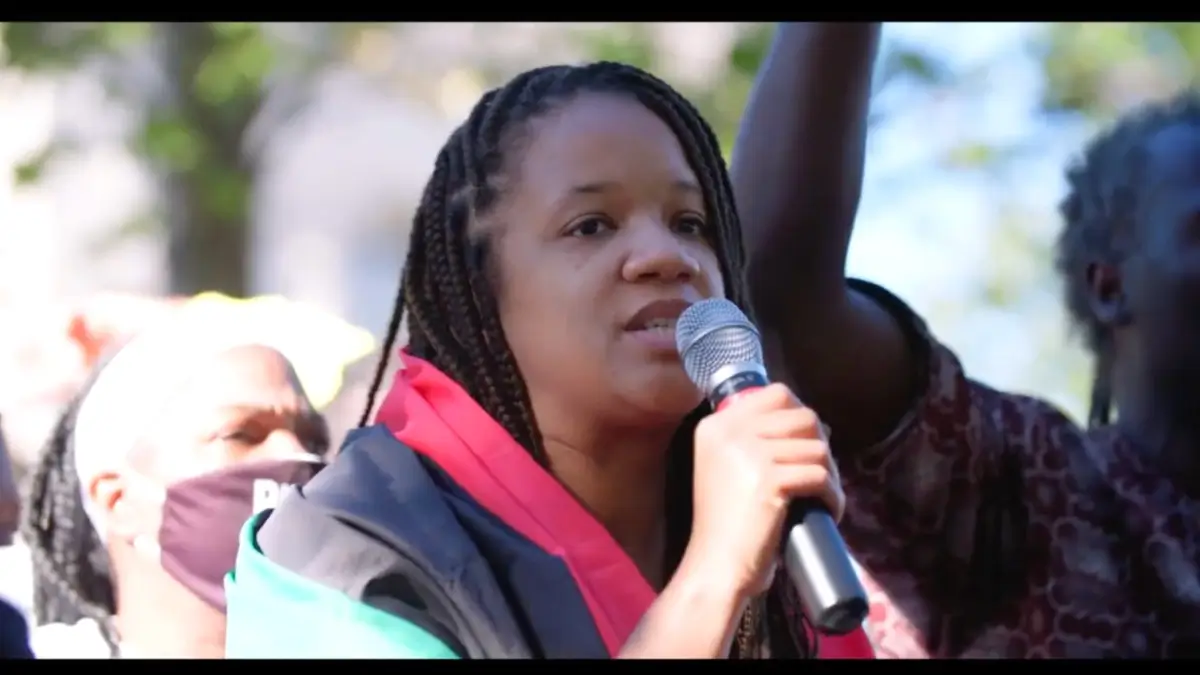
The federal government on Tuesday filed a motion to join an ongoing civil rights lawsuit to stop the nation’s first reparations program that offers Black residents of Evanston, Illinois, payments for past race-based housing discrimination.
The complaint in intervention filed on June 16 by the U.S. Department of Justice says Evanston’s housing reparations program, which distributes $25,000 in cash payments and financial assistance for buying, repairing or maintaining housing in Evanston “exclusively to current or former black residents who lived in the city as adults between 1919 and 1969, and to their children, grandchildren and great-grandchildren” is a “racially discriminatory program.
Justice Department Says Race-Based Housing Payments Violate Constitution
Like the six non-Black plaintiffs on whose behalf Judicial Watch filed a federal lawsuit against the city in 2024, the DOJ argues that the program violates the Equal Protection Clause of the 14th Amendment of the U.S. Constitution. That’s because “persons of other races” who lived in the city during that time period and may have suffered unlawful housing discrimination are not eligible for any payments or financial assistance, nor are their descendants, the department contends.
Citing the Supreme Court’s recent voting rights-related decision in Louisiana v. Callais, the feds’ complaint says the Constitution “almost never permits [a government] to discriminate on the basis of race. Such discrimination triggers scrutiny” and such “race-based government actions are ‘rare for a reason.’”
Federal Investigation Adds New Pressure to Evanston Reparations Case
The Justice Department asserts that the reparations program, which has so far distributed more than $7 million in cash and housing assistance to hundreds of Black families with primary residences in Evanston (relying on revenues from a local tax on legal marijuana sales), also violates the federal Fair Housing Act.
The plaintiffs contend that the reparations program fails to address specific instances of past discrimination that violated the Constitution or federal law.
DOJ attorneys also argue that the city resolutions creating the program in 2021 rely on boilerplate language that “acknowledge[s] the harm caused to Black/African American Evanston residents due to discriminatory housing policies and practices and inactions on the part of the City.” However, the program does not require applicants to show that they or their ancestors personally experienced discrimination.
“There are sound ways for a city to remedy past discrimination or direct resources to its most vulnerable citizens and neighborhoods,” said Assistant Attorney General Harmeet K. Dhillon of the DOJ’s Civil Rights Division in a statement. “Simply handing out money based on race, however, is not the answer. It is race discrimination, pure and simple. And it is illegal.”
U.S. Attorney Andrew S. Boutros said, “Distributing public funds based on an individual’s ancestry or race divides the citizenry and establishes the very hierarchy the Equal Protection Clause was designed to dismantle.”
City Vows to Defend First-in-the-Nation Reparations Program in Court
Robin Rue Simmons, a former Evanston alderperson who spearheaded the city’s reparations process and chairs its reparations committee, in an opinion piece in the Evanston RoundTable this week, called the Justice Department’s lawsuit “a legal maneuver” that is “not a challenge to one small city, but a direct attempt to reverse the broader and growing movement for reparative justice” and “to establish a chilling precedent. … It is an attempt to divide us through fear.”
Evanston’s program “was specifically designed to address municipal harms created by the City’s own exclusionary zoning that denied Black residents opportunities to build wealth and stability,” she wrote.
About 14 percent of the city’s roughly 76,000 residents are Black, according to the U.S. Census, with 11 percent identifying as more than one race, noted AP News. A majority of the city’s Black residents live in the city’s Fifth and Second Wards, which are historically low-income areas, according to a 2024 study on the reparations program.
Noting that five states and hundreds of other cities across the U.S. are now engaged in reparations work “through commissions, legislation, harm reports, direct benefits programs, and community-led processes,” Rue Simmons said, “When governments cause harm, governments have a responsibility to repair it.”
The U.S. District Court for the Northern District of Illinois denied the city’s motion to dismiss the original class action lawsuit in March 2026. That month, the Trump administration opened an investigation of the program, and now says the city has refused to cooperate in its investigation by supplying the requested documents and information, prompting its decision to intervene this week.
Evanston Says Reparations Program Is Legal and Constitutional
The six plaintiffs’ lawsuit filed in May 2024 seeks monetary compensation for all residents denied an opportunity to participate in the city housing program that has dedicated up to $20 million in funds to solely Black applicants. The six non-Black residents also ask the Court to either halt or change the eligibility requirements of the reparations program.
The city of Evanston’s answer to the original complaint, filed on May 8, said the reparations program adopted by the Evanston City Council “is a legal and narrow remedial measure designed to address historical housing discrimination” by providing $25,000 housing grants “to Evanston residents who either suffered the acknowledged discrimination directly,” were direct descendants of those who did, or were individuals who suffered from any other housing discrimination due to Evanston’s policies and practices after 1969.
The city also claimed that the plaintiffs’ lawsuit was filed too late, more than two years after the end of a two-year statute of limitations period that began when the Evanston Restorative Housing Program’s application period closed on November 5, 2021.
Evanston Mayor Daniel Bliss said the city was reviewing the DOJ’s filing and that “We stand behind our first-in-the-nation reparations program, are confident in its constitutionality, and look forward to defending it in court.”