More than a Million Mozambicans need Humanitarian Assistance
By Paul Fauvet Maputo (MOZTIMES) - More than a million people in Mozambique are in need of humanitarian assistance, according to Paulo Beirao, the permanent secretary in the Ministry of Labour, Gender and Social Welfare. Speaking in Maputo on Wednesday, at the opening of a Round Table on the government’s National Action Plan on Women, […]
 Black News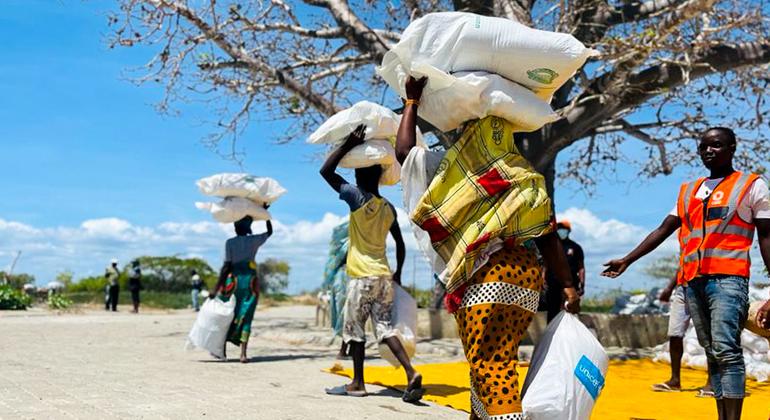
By Paul Fauvet
Maputo (MOZTIMES) - More than a million people in Mozambique are in need of humanitarian assistance, according to Paulo Beirao, the permanent secretary in the Ministry of Labour, Gender and Social Welfare.
Speaking in Maputo on Wednesday, at the opening of a Round Table on the government’s National Action Plan on Women, Peace and Security, Beirao said most of those in need are women and children affected by armed conflict in the northern provinces of Cabo Delgado, Niassa and Nampula.
About 80 per cent of those affected are women and children, who are the group most vulnerable to the impacts of terrorism, forced displacement and social instability, he added,
“Armed conflict, extremism and displacement have weakened the social fabric”, said Beirao.
He stressed the role of women in the preservation of community stability and regarded women’s leadership as “an important antidote” against the effects of violence and the lack of security.
Beira said the government intends to strengthen emergency responses and implement structural measures to reduce the vulnerability of the affected population groups.
He announced that Mozambique has completed its first National Plan of Action on Women, Peace and Security, covering the 2018-2022 period, and was now drawing up the second plan, for 2026 to 2035.
“The formulation of the new plan”, he added, “adopted an integrated approach, with broad consultation and a strategic gender orientation”.
The Executive Director of the Institute for Multi-party Democracy, Hermenegildo Munhovo, warned that women are the main victims of armed conflicts, but “in various communities affected by conflicts, it is the women who were able to stabilise dialogue, and prevent more victims”.
Mulhovo warned of the risks of delay in approving the new plan. “Delay could compromise institutional coordination and leave thousands of women without adequate instruments to protect themselves”, he said.
The United Nations’ resident coordinator in Mozambique, Catherine Sozi, praised the commitment shown by the Mozambican government in promoting the agenda of women, peace and security, stressing the importance of women’s leadership in mediating conflicts. (PF)