Morocco’s billionaire prime minister faces renewed pressure as fuel-price anger, refinery politics and conflict-of-interest claims collide
Morocco’s fuel-price debate has become bigger than petrol stations. It is now a test of power, privilege and who pays when an import-dependent economy is exposed to global energy shocks.
 Black News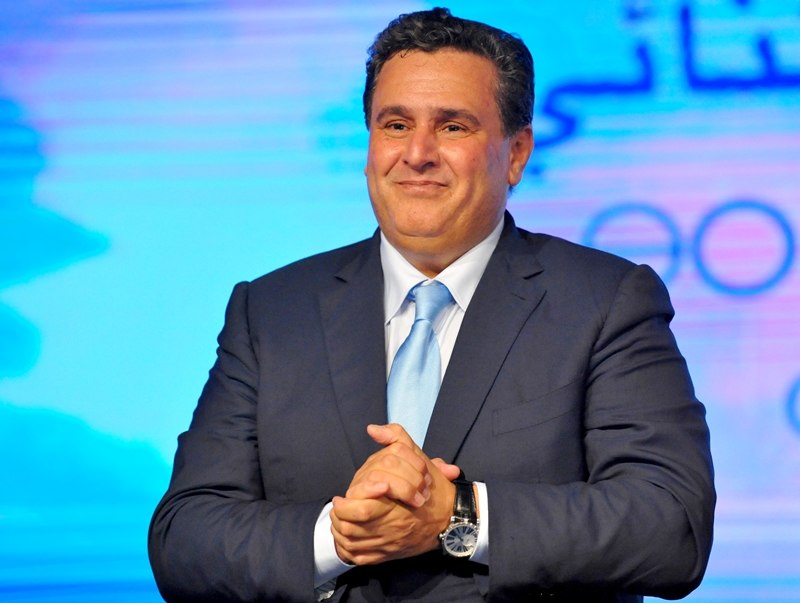

Morocco’s fuel-price debate has become bigger than petrol stations. It is now a test of power, privilege and who pays when an import-dependent economy is exposed to global energy shocks.
- Morocco’s parliament has rejected proposals to cap fuel prices and nationalise the Samir refinery.
- But the debate has revived scrutiny of Prime Minister Aziz Akhannouch, whose family controls Afriquia.
- Morocco has relied on imported petrol and diesel since its only refinery shut in 2015.
- The dispute shows how fuel prices, business power and energy security are becoming political risks across Africa.
At the centre of the storm is Prime Minister Aziz Akhannouch, one of Morocco’s richest men and the head of a government under pressure over the cost of fuel.
Akhannouch’s family controls Afriquia, Morocco’s largest fuel distribution network. That has made every debate over pump prices politically explosive, especially in a country where many households and small businesses are already squeezed by transport and energy costs.
The latest pressure came after opposition lawmakers and union representatives pushed proposals to cap fuel prices and bring the country’s only oil refinery, Samir, under state ownership.
The proposals were later rejected in Morocco’s upper chamber, but the damage had already been done. The debate reopened one of the most uncomfortable questions in Moroccan politics which asks if a billionaire fuel-sector shareholder lead a government trusted to regulate fuel prices?
They argue that Morocco’s fuel market has handed too much power to distributors since the country liberalised fuel prices and removed subsidies.
They also say the closure of Samir in 2015 weakened Morocco’s energy security and left consumers exposed to imported refined products.
The refinery, once Morocco’s only domestic refining facility, has been shut for nearly a decade after falling into financial distress.
Since then, Morocco has depended on imported petrol and diesel, leaving global oil markets, shipping costs and private distributors with greater influence over domestic prices.
Across Africa, governments are struggling with how to protect consumers from global fuel shocks without returning to expensive subsidies that can drain public finances.
Nigeria, Ghana, Kenya, Egypt and several other economies have all faced public anger over fuel prices, subsidy reforms and currency weakness.
Morocco’s case is different because the political pressure is tied directly to the business interests of the man leading the government.
Akhannouch has long rejected price caps and state control of Samir. His government argues that nationalising a broken industrial asset could expose public finances to heavy costs, while fuel-price controls could distort the market and discourage investment.
That argument may appeal to investors. It is less convincing to citizens who see fuel prices shaping everything from food transport to taxi fares and the survival of small businesses.
In 2022, when Russia’s invasion of Ukraine pushed global energy prices higher, Akhannouch faced a major online backlash. Critics accused him of benefiting from high fuel prices through Afriquia while refusing to intervene strongly as head of government.
The 2023 decision by Morocco’s competition regulator to fine fuel companies over competition concerns further deepened public suspicion about how the sector works.
For many critics, it strengthened the argument that Morocco’s fuel market needs tougher oversight, not more patience. The government now faces a difficult balancing act.
If it moves towards price controls or refinery nationalisation, it risks sending a negative signal to investors and adding pressure to state finances. If it does nothing, it risks feeding the perception that fuel companies are protected while citizens carry the burden.
Why this story matters
Morocco is one of Africa’s most closely watched economies. It is a major manufacturing and logistics hub, a growing renewable-energy player and a key partner for Europe.
But its fuel debate shows that even reform-minded economies can face political backlash when market liberalisation collides with living costs.
Akhannouch's wealth, business history and political authority are all tied to the same sector now under public scrutiny. That makes Morocco’s fuel-price battle not just an economic debate, but a test of public trust.
The rejected bills may not become law. But the pressure behind them is unlikely to disappear.
As long as Morocco remains without a working refinery, depends on imported fuel and faces high consumer costs, Akhannouch’s opponents may keep returning to the same argument of how the country’s fuel problem is also a power problem.