Mufumbiro denied mandatory bail after over 60 days on remand without trial
The Chief Magistrate’s court at Kawempe-Kanyanya has denied a mandatory bail application by National Unity Platform (NUP) deputy spokesperson Alex Waiswa Mufumbiro, who is facing charges of incitement to violence. In a ruling delivered on Friday, acting chief magistrate Doreen Ainembabazi held that although Mufumbiro had met the constitutional threshold for mandatory bail after spending […] The post Mufumbiro denied mandatory bail after over 60 days on remand without trial appeared first on The Observer.
 Black News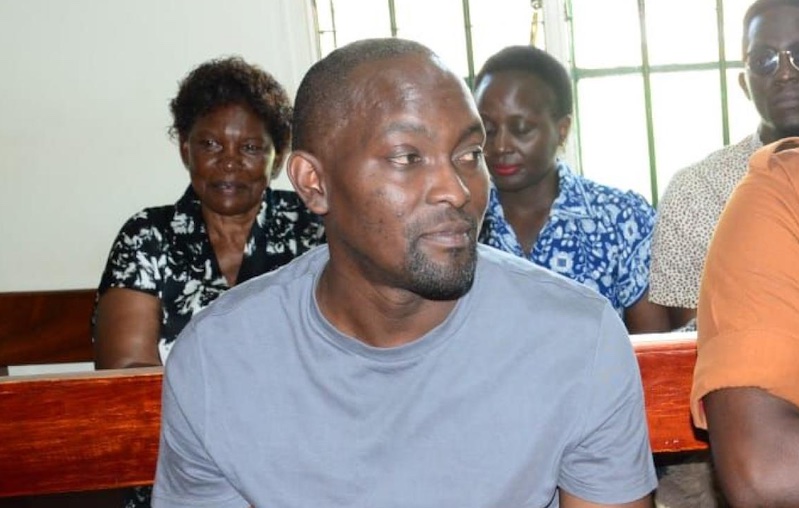

The Chief Magistrate’s court at Kawempe-Kanyanya has denied a mandatory bail application by National Unity Platform (NUP) deputy spokesperson Alex Waiswa Mufumbiro, who is facing charges of incitement to violence.
In a ruling delivered on Friday, acting chief magistrate Doreen Ainembabazi held that although Mufumbiro had met the constitutional threshold for mandatory bail after spending more than 60 days on remand without trial, public interest considerations warranted his continued detention.
Mufumbiro is charged with one count of incitement to violence contrary to Section 21(1) of the Penal Code Act. He was remanded on February 27, 2026, and had spent more than 60 days in custody by the time his application was heard.
The case was initially dismissed by the Nakawa Chief Magistrate’s court for lack of jurisdiction after it was filed in a court outside the area where the alleged offence was committed. Days later, the matter was refiled before the Kawempe-Kanyanya court.
Through a team of lawyers led by Samuel Muyizzi Mulindwa and Kato Tumusiime, Mufumbiro argued that Article 23 of the Constitution and Section 76 of the Magistrates Courts Act entitled him to mandatory bail because his trial had not commenced within the prescribed period.
The defence submitted that the law requires the release of an accused person who has remained on remand for more than 60 days in cases triable by subordinate courts unless exceptional circumstances are established.
Muyizzi told the court that Mufumbiro, a lawyer and political leader, understood his obligations under bail and could be trusted to return for trial whenever required.
The defence presented three sureties: Mufumbiro’s father, retired chief magistrate and advocate Moses Baligeya Mufumbiro; his brother, Kenneth Wilson Kato; and his in-law, Richard Kazibwe Semakula, an LC I chairperson.
Counsel further urged the court to consider Mufumbiro’s family circumstances, noting that he recently lost his wife and is the sole surviving parent of eight children.
Another defence lawyer, Alex Luganda, argued that the constitutional presumption of innocence and the right to personal liberty should guide the court’s decision. He submitted that courts have a duty to safeguard individual freedoms and should only deny bail on legally justifiable grounds.
However, the prosecution, represented by state attorneys Bruce Twongeirwe, Godfrey Mutawo and Ingrid Ogwang, opposed the application.
Twongeirwe acknowledged the personal circumstances facing the accused but argued that criminal proceedings must be determined on the basis of the law rather than sympathy. He maintained that while Mufumbiro had satisfied the 60-day remand requirement, the court retained discretion to deny bail where public interest considerations arise.
The prosecution informed the court that it was ready to commence trial, had already disclosed evidence to the defence and had produced a witness ready to testify. It further argued that the charges carried significant implications for public security and raised concerns regarding witness protection.
In her ruling, Ainembabazi observed that both the Constitution and the Magistrates Courts Act provide for mandatory bail after prolonged remand. However, she noted that the law also permits courts to deny release where it is necessary for the protection of the public and the proper administration of justice.
The magistrate found that Mufumbiro had demonstrated eligibility for mandatory bail and had presented substantial sureties capable of ensuring his attendance in court.
However, she held that the prosecution had advanced sufficient grounds to justify his continued detention.
“The prosecution demonstrated their readiness to commence the hearing of the case by producing a witness in court and making efforts to disclose to the accused,” Ainembabazi ruled.
She added that concerns relating to witness safety, public order and the broader public interest outweighed the accused’s claim for release at this stage of the proceedings.
“Taking into consideration the gravity of the offence, the need to preserve public order, protection of the witness and public interest concerns, I am inclined to deny the accused bail at this time,” the magistrate stated.
Consequently, the court dismissed the application and ordered that Mufumbiro remain on remand pending the commencement of his trial.
Mufumbiro also faces separate charges before the same court in another case in which he is accused of engaging in unlawful military drills alongside several NUP supporters and associates, including Edward Ssebuufu, commonly known as Eddie Mutwe, Calvin Taseera, Acleo Kivumbi, Olivia Lutaaya and Saudah Madada, among others.
As a result, even if he had secured bail in the incitement case, he would have remained in custody on the separate charges.
The post Mufumbiro denied mandatory bail after over 60 days on remand without trial appeared first on The Observer.