Nigeria calls on researchers and business folks to investigate why its food is being rejected
Authorities in Nigeria have established a panel intended to investigate an anomaly in its agricultural exports.
 Black News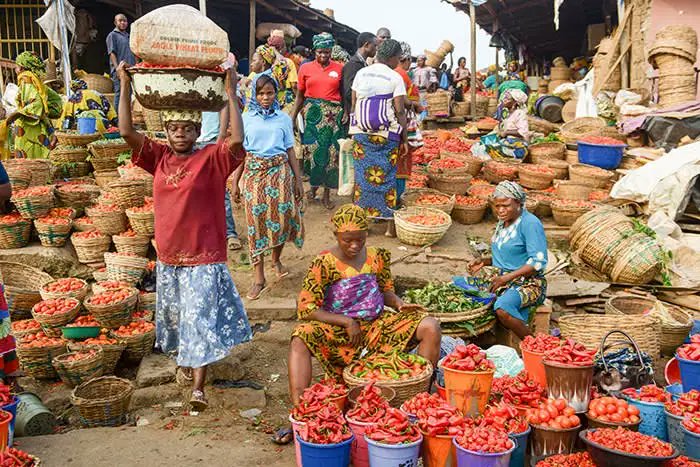

![Nigeria calls on researchers and business folks to investigate why its food is being rejected [Vanguard]](https://ocdn.eu/pulscms/MDA_/52937dbf7244db14a0d178603c25ea1c.jpg)
Authorities in Nigeria have established a panel intended to investigate an anomaly in its agricultural exports.
- Nigerian authorities have formed a panel to investigate issues causing frequent rejection of the country’s agricultural exports.
- The Technical Working Group on Agricultural Produce Residue Standards will focus on noncompliance with Maximum Residue Limits and other safety regulations.
- Repeated export rejections have led to economic losses and missed opportunities for farmers and agribusinesses.
- The group, including experts from various sectors, must submit its inaugural report within two months.
The group, dubbed a Technical Working Group on Agricultural Produce Residue Standards, will investigate the intricacies of Nigerian agricultural produce that are frequently rejected for export owing to noncompliance with Maximum Residue Limits and other phytosanitary and sanitary regulations.
DON’T MISS THIS: Nigeria to become world’s 5th richest country - Côte d’Ivoire to overtake France
Aliyu Abdullahi, the Minister of State for Agriculture and Food Security, disclosed that ultimately the group’s goal is to improve the nation’s food security and make its agricultural sector competitive globally.
“This is another significant milestone in the Federal Government’s commitment to ensuring food safety and strengthening Nigeria’s competitiveness in regional and international agricultural markets,” the minister stated.
“Over the years, Nigeria has recorded several cases of export rejections of agricultural commodities due to non-compliance with Maximum Residue Limits (MRLs) and other sanitary and phytosanitary requirements,” he added.
The minister noted that the exclusion has led to some economic complications for players within Nigeria’s agricultural value chain, the Punch reports.
“These rejections have resulted in economic losses, reduced market confidence, and missed opportunities for farmers, exporters, and agribusinesses,” he stated.
Further highlighting the problem, the minister added, “The growing concerns over pesticide residues, contaminants, and food safety issues demand a coordinated, science-based, and multi-sectoral response. This underscores the necessity for establishing this Technical Working Group.”
He explained that the newly inaugurated group would serve as “a strategic platform for bringing together experts from government institutions, regulatory agencies, academia, research institutions, the private sector, commodity associations, and development partners to address challenges relating to agricultural produce residue standards in Nigeria.”
Addressing the committee members, Abdullahi remarked that their appointment was a testament to their professional expertise and dedicated commitment to the progress of the industry.
The committee has been charged with delivering its inaugural report two months from now.