Nigeria moves to block Big Tech exploitation, orders immediate probe into Meta, Alphabet, and X over media content
Nigeria has ordered an investigation into Meta, Google, X and several generative artificial intelligence (AI) platforms over allegations of anti-competitive practices, unlawful exploitation of news content and other conduct that could undermine the country's media industry.
 Black News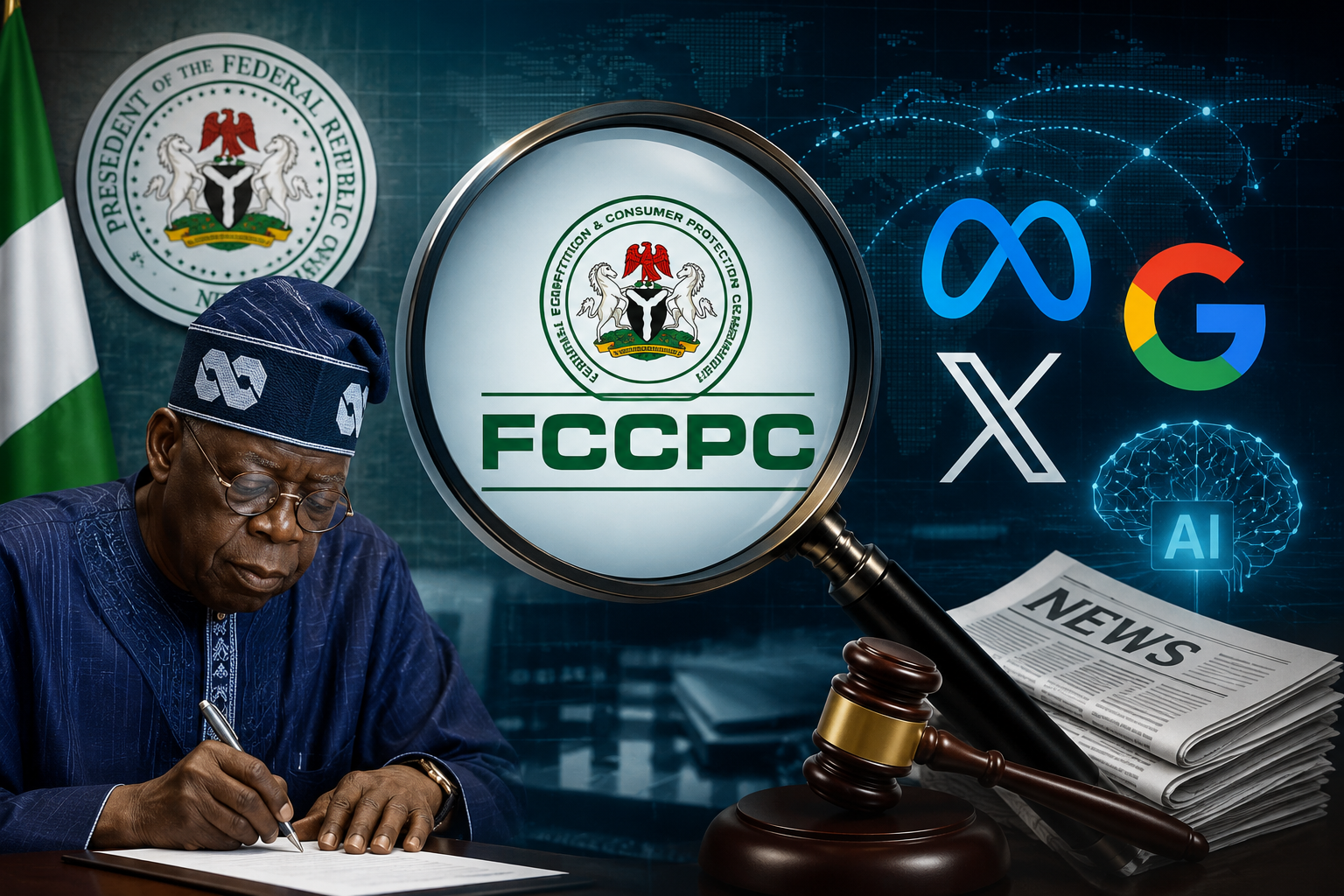

Nigeria has ordered an investigation into Meta, Google, X and several generative artificial intelligence (AI) platforms over allegations of anti-competitive practices, unlawful exploitation of news content and other conduct that could undermine the country's media industry.
- Nigeria has launched an investigation into Meta, Google, X, and several AI platforms over alleged anti-competitive practices.
- The investigation, ordered by President Bola Tinubu, follows a petition from the Nigerian Press Organisation representing various media stakeholders.
- Key allegations include market dominance and unauthorized use of copyrighted news content to train AI models.
- The FCCPC will independently review the case and determine if there have been violations of Nigerian competition or copyright laws.
The directive, issued by President Bola Tinubu, instructs the Federal Competition and Consumer Protection Commission (FCCPC) to investigate a joint petition submitted by the Nigerian Press Organisation (NPO), an umbrella body representing newspaper publishers, broadcasters, journalists and online publishers.
According to the FCCPC, the petition alleges that major technology companies, including Meta, Alphabet (Google's parent company), X and certain AI platforms, have engaged in practices capable of undermining fair competition, weakening the commercial viability of Nigerian media organisations and infringing the rights of content creators and publishers.
DON'T MISS THIS: Nigeria drops $32.8 million Meta fine for data privacy breach as debate over enforcement credibility erupts
FCCPC Executive Vice Chairman and Chief Executive Officer Tunji Bello said the investigation would be conducted independently and should not be interpreted as a finding of wrongdoing.
"This inquiry is not directed at any entity by presumption of wrongdoing. Rather, it is an opportunity to carefully examine the facts, hear from all affected parties, and determine whether any conduct has resulted in anti-competitive outcomes or unfair business practices," Bello said.
Probe to examine AI training, copyright and market dominance
The commission said it will determine whether the alleged conduct violates the Federal Competition and Consumer Protection Act (FCCPA) 2018 or other applicable laws.

Among the issues under review are allegations of market dominance and anti-competitive behaviour, as well as the unauthorised extraction, scraping, ingestion or commercial use of copyrighted Nigerian news articles, broadcast materials and other original journalistic content to develop and train generative AI models.
The FCCPC will also examine claims that Nigerian media organisations have been denied meaningful opportunities to negotiate fair compensation or commercial agreements for the use of their content by global technology companies.
Meta already under regulatory scrutiny
The latest probe adds to Meta's regulatory challenges in Nigeria. In 2025, the FCCPC secured a tribunal ruling upholding a $220 million penalty against Meta over alleged violations of Nigeria's consumer and data protection laws. The company has appealed the decision.
DON'T MISS THIS: Africa’s top 10 Facebook markets in 2025: user base and gender distribution
The commission noted that similar disputes have emerged elsewhere.
Following an investigation by South Africa's Competition Commission, Google agreed to compensate South African news media R688 million (about $40 million) annually for three to five years, a development Nigerian publishers are likely to watch closely.
If the FCCPC finds evidence of anti-competitive conduct or unfair business practices, the investigation could become one of Nigeria's most significant regulatory actions against Big Tech, potentially reshaping how global technology companies and AI developers source, use and compensate Nigerian news content.