‘Oil is a curse’: villages in Uganda face land ownership uncertainty
For as long as Moses K. Asaba can remember, his family has lived on the ancestral land they call home. A resident of Bugana village in Uganda’s Buliisa district, he speaks with a deep sense of uncertainty and frustration, no longer certain that he and his descendants will continue living there. “I say the discovery […] The post ‘Oil is a curse’: villages in Uganda face land ownership uncertainty appeared first on The Observer Media Ltd.
 Black News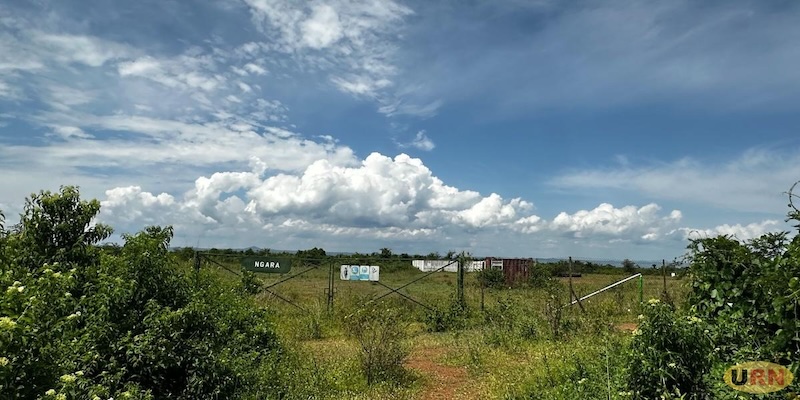

For as long as Moses K. Asaba can remember, his family has lived on the ancestral land they call home.
A resident of Bugana village in Uganda’s Buliisa district, he speaks with a deep sense of uncertainty and frustration, no longer certain that he and his descendants will continue living there.
“I say the discovery of oil within our district, it was a curse to me and to my parents, because the land-grabbers got interested in Buliisa,” Asaba says, referring to what happened after the discovery of oil in mid-western Uganda in 2006.
In a race to kick off oil production in Buliisa, French energy and petroleum giant TotalEnergies E&P has been setting up infrastructure. While Ugandan officials promise that the industry will transform the fortunes of the country, Asaba thinks otherwise.
A SYMBOL OF CONFLICT
Their homes are located about 2.5 kilometres from an oil well, a petroleum terminology that refers to the area where a rig will be installed for drilling, one of the several places designated for drilling in the community.
Our reporters waded through a small river, guided by children found bathing in the stream, in order to get to the Ngara oil well, less than 50 metres beyond the river.
Hidden from view by tall grass and wild trees, it is neatly demarcated and fenced, with no indication that the land it sits on has been under dispute for 15 years.
This well is a symbol of the complex land conflicts sparked by the discovery of oil and the construction of oil-related infrastructure in the Albertine region. The conflict pits the local community members against Francis Kahwa, a businessman in his 70s. The businessman acquired a title deed for the piece of land.
“It’s not only Kahwa. There are very many prominent names behind the land-grabbing,” Asaba says. This land dispute also reveals how land conflicts supposedly resolved by the locals evicting the Balaalo pastoralist community due to oil discovery were never resolved.
‘It’s not the government’s fault’ government officials don’t want to take any blame for this particular strife between the local community and Kahwa.
“That dispute is not with the government,” Ali Ssekatawa, director of legal and corporate affairs at the Petroleum Authority of Uganda (PAU), said.
The Ministry of Energy and Mineral Development said the land where TotalEnergies E&P company is operating, which includes the Ngara oil well, is where “compensation remains outstanding and is subject to court proceedings”.
Government officials also insist that this conflict won’t derail the start of oil production scheduled to begin before the end of 2026.
They indicate that the Ngara oil well is not among those that will be drilled first for oil production. Its drilling is not expected to begin for another seven to 10 years, officials said, adding that TotalEnergies can continue its operations while the ownership dispute is resolved in court. Any rent payments will be held in escrow and released to the legal owner once the case is settled.
THE SPAN OF THE CONFLICT
According to community leaders, Kahwa claims to have bought more than 500 acres from the local council chairman in the area around 2011 when the Balaalo pastoralists had been evicted.
“He has an agreement and a stamp. How is it possible?” Kamanda Kabagambe, Buliisa sub-county chairperson, said.
Repeated requests to Kahwa for an interview went unanswered. After the eviction of pastoralists, Uganda President Yoweri Museveni directed that the land should be placed under the Buliisa district land board for supervision.
Local leaders question how the land slipped through the hands of the district’s land board into the hands of a private businessman like Kahwa.
In 2011, Museveni also issued several directives – both verbal and written – that all land titles that had been issued in Buliisa district be revoked.
The Ministry of Lands announced in 2017 that it had cancelled all land titles issued in the district between 2010 and 2017.
In a subsequent interview, Uganda’s then-minister of lands Betty Amongi argued that one person couldn’t own the size of the land that Kahwa claimed to have purchased through the right channels.
Despite these directives and the cancellation of titles, Kahwa ultimately prevailed in court. In 2022, he won a ruling recognising him as the rightful owner of more than 500 acres of land.
The court issued orders directing the government to pay him rent for the oil well situated on the land. However, the community appealed to a higher court, extending the court battles. As a result, government payments for rent on the designated oil parcels stopped once again.
The money is “being held in an account until we see the winner because for us, we don’t know the winner”, Ssekatawa says.
Last year, the government’s anti-corruption unit arrested Kahwa and prosecuted him for allegedly using forged documents to claim ownership of land in the same oil district.
The case, however, concerned a different parcel from the one on which the Ngara oil well is located. Land ownership, a national challenge In interviews, Ugandan government officials credit themselves for doing excellent work.
Total Energies EP has said it has registered a 99% land compensation rate. Ssekatawa argues that the land conflicts seen in oil-producing areas are not unique to the sector or region of Uganda.
He explains that Uganda’s land tenure system is “fundamentally distorted”, with multiple ownership systems often overlapping on the same piece of land. Land disputes are a nationwide problem, with more than 70 per cent of High court cases relating to land or succession.
This, Ssekatawa adds, leads to disputes between private individuals or communities, or between individuals and the government, often regarding compensation.
“The oil and gas footprint is so small in the country,” he says, noting that the same challenges occur whether land is acquired for an oil rig or any other government project.
Collins Opio, Total Energies EP Uganda project manager for land acquisition and livelihood restoration, also says the absence of formal land titles, undocumented inheritance arrangements and unmapped land boundaries frequently lead to ownership disputes and delays in compensation.
“This resulted in recurring boundary disputes and required extensive community engagement, repeated surveys, and legal support to ensure compensation reached the rightful beneficiaries,” Opio said in a 2025 Total report.
To address land disputes, Ssekatawa says the government set up a multi-level system to verify land ownership, helping conflict parties mediate, which resulted in ensuring that compensation only went to the right people.
For the land needed for Total’s project, more than 5,500 total stakeholders were impacted by land acquisition, with 775 primary residences relocated.
“Over 99% of compensation agreements have been signed and paid, and 100% of the planned resettlement houses for physically displaced persons have been constructed and handed over, complete with land titles,” the ministry said in a written response.
In the 2025 Total report, the company says it held more than 10,000 engagements in project-affected areas of Buliisa district.
It also leveraged mass communication channels to broaden its outreach, broadcasting 1,445 radio engagements, including talk shows, advertisements and public announcements. However, it doesn’t detail if any of the engagements were related to land.
More oil-related conflicts Many other disputes in Uganda — especially land conflicts — have been sparked by oil discovery and the development of oil-related infrastructure, some of which have been in litigation for more than a decade and are still ongoing.
One such conflict involves a piece of land measuring more than 300 acres where TotalEnergies is building a central processing facility. Some of the affected landowners took the government to court, resisting attempts to resettle them in areas with poorer or no social services.
In 2023, 26 Ugandans, supported by local and international NGOs, filed a case in Paris, France, accusing TotalEnergies’ Tilenga and the East African Crude Oil Pipeline (EACOP) projects of causing serious human rights violations.
Juliette Renaud, senior campaigner at Friends of the Earth France, one of the organisations that sued TotalEnergies, said that under French law, the company has a responsibility to prevent human rights violations associated with its activities anywhere in the world.
“Part of prevention is identifying risks, and what we are saying is that they haven’t identified the human rights violations linked to the project,” she says.
Diana Nabiruma, manager for programmes and communication at the Africa Institute for Energy Governance (AFIEGO), says communities affected by the Tilenga oil project have repeatedly called on TotalEnergies to hold public meetings.
AFIEGO, a Ugandan non-profit, provides legal support to dozens of people involved in land disputes in the region. Residents want a forum to collectively discuss compensation and other concerns related to land conflicts.
Nabiruma says the company largely prefers engaging households individually rather than meeting communities as a group.
“Communities believe that when they are together, their negotiating power is much stronger,” Nabiruma says, explaining that individual meetings can leave vulnerable landowners feeling intimidated and less able to raise concerns.
Enos Babyenda, who was born in Bugana village, home to Total’s Buliisa District oil well, says whether individually or together, he feels deluded by the whole process.
“When we first heard of oil, we thought that oil had come as a blessing to us, but it has now become the opposite,” he said.
Jointly reported with Romain Gras
This article was made possible with funding from Journalism Fund Europe
The post ‘Oil is a curse’: villages in Uganda face land ownership uncertainty appeared first on The Observer Media Ltd.