Ooni of Ife Installs New Olomoni of Okuu-Omoni-Ife With Sacred Beaded Crown
The Ooni of Ife, Oba Adeyeye Enitan Ogunwusi, presented the traditional beaded crown to Oba Adewale Aderoju on September 11, 2026, formally installing him as the Olomoni of Okuu-Omoni-Ife Land in Osun State, Nigeria. The ceremony took place at the Ooni’s Palace in Ile-Ife. Oba Aderoju received the royal insignia directly from Ogunwusi as he [...]
 Black News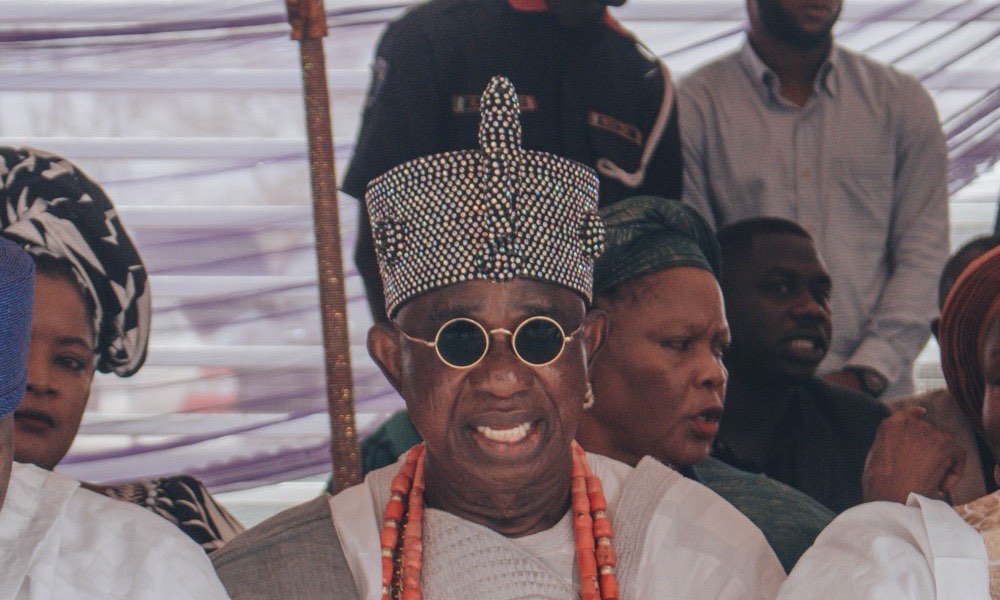
The Ooni of Ife, Oba Adeyeye Enitan Ogunwusi, presented the traditional beaded crown to Oba Adewale Aderoju on September 11, 2026, formally installing him as the Olomoni of Okuu-Omoni-Ife Land in Osun State, Nigeria.
The ceremony took place at the Ooni’s Palace in Ile-Ife. Oba Aderoju received the royal insignia directly from Ogunwusi as he began his reign over the community.
Addressing the new monarch, the Ooni urged him to make peace and unity central to his rule. He told Aderoju to use his new position to advance the welfare and development of his subjects. In response, Aderoju thanked the Ooni for the recognition and pledged to protect the cultural heritage of his people while promoting peace, unity and socio-economic development across Okuu-Omoni-Ife Land.
ALSO READ: Lagos Museum’s Tech Revolution Reclaiming Africa’s Story From Silicon to Savanna
Why the Beaded Crown Still Matters
Ile-Ife is regarded across Yorubaland as the first “crowned town,” the point from which every Yoruba oba traces the legitimacy of his throne back to the deity-king Oduduwa. A bead-embroidered crown, known as an Ade, is the highest mark of that lineage. It is not decoration. It is the physical proof that a ruler’s authority has been sanctioned by Ife.
Every Ade is topped with a royal bird, a symbol of the wearer’s role as go-between for his people and the divine, and carries a beaded veil across the face. According to Tribune Online’s reporting on Yoruba royal regalia, that veil depersonalizes the oba during ceremony, turning him into an abstraction of divine power rather than an ordinary man onlookers can look upon directly. Handing a new ruler his crown is therefore Ife’s way of certifying him, not just crowning him.
The Olomoni of Okuu-Omoni-Ife Takes On a New Role
Okuu-Omoni-Ife Land sits within Osun State, one of the core Yoruba-speaking states that make up the historical region of Yorubaland alongside Oyo, Ogun, Ondo, Ekiti, Kwara, Lagos and parts of Kogi. As Olomoni, Aderoju now holds the traditional leadership of the community, responsible for its customary governance and its standing within the wider network of obas who answer, ceremonially, to Ile-Ife.
The Ooni’s charge to him, peace, unity, and development, reflects the standard expectations placed on a newly installed traditional ruler in Yorubaland, where obas are expected to mediate local disputes and represent their community’s interests to state and federal government. Traditional rulers in Osun State, including the Olomoni, are formally recognized under the state’s chieftaincy law, which governs succession disputes and gives monarchs a defined, if largely ceremonial, role alongside elected local government.
Osun State is itself one of Yorubaland’s most recognized cultural landmarks. The Osun-Osogbo Sacred Grove, dedicated to the river goddess Osun and home to shrines dating back more than four centuries, was inscribed as a UNESCO World Heritage Site in 2005. Okuu-Omoni-Ife’s new Olomoni now leads a community within a state where traditional Yoruba religion and monarchy still draw international recognition alongside modern governance.
Part of a Broader Pattern
Ogunwusi, who reigns as Ojaja II, has held the Ife throne since 2015 as the 51st Ooni. His installation of Aderoju adds to a running record of appointments and installations he has presided over during his reign, ceremonies that have drawn dignitaries ranging from state governors to former President Olusegun Obasanjo.
Each of these events reinforces the same point: that Ile-Ife’s authority to crown, and to bless a crown given elsewhere, remains a functioning part of Yoruba civic life in 2026, not a ceremonial relic. For Okuu-Omoni-Ife, the installation of Oba Adewale Aderoju gives the community a new traditional ruler with the full backing of the throne that, by Yoruba tradition, outranks them all.