Phala Phala: Ramaphosa ignores opposition calls amid impeachment threat
President Cyril Ramaphosa has ignored calls from opposition parties to come clean and address the Phala Phala Farm saga.
 Black News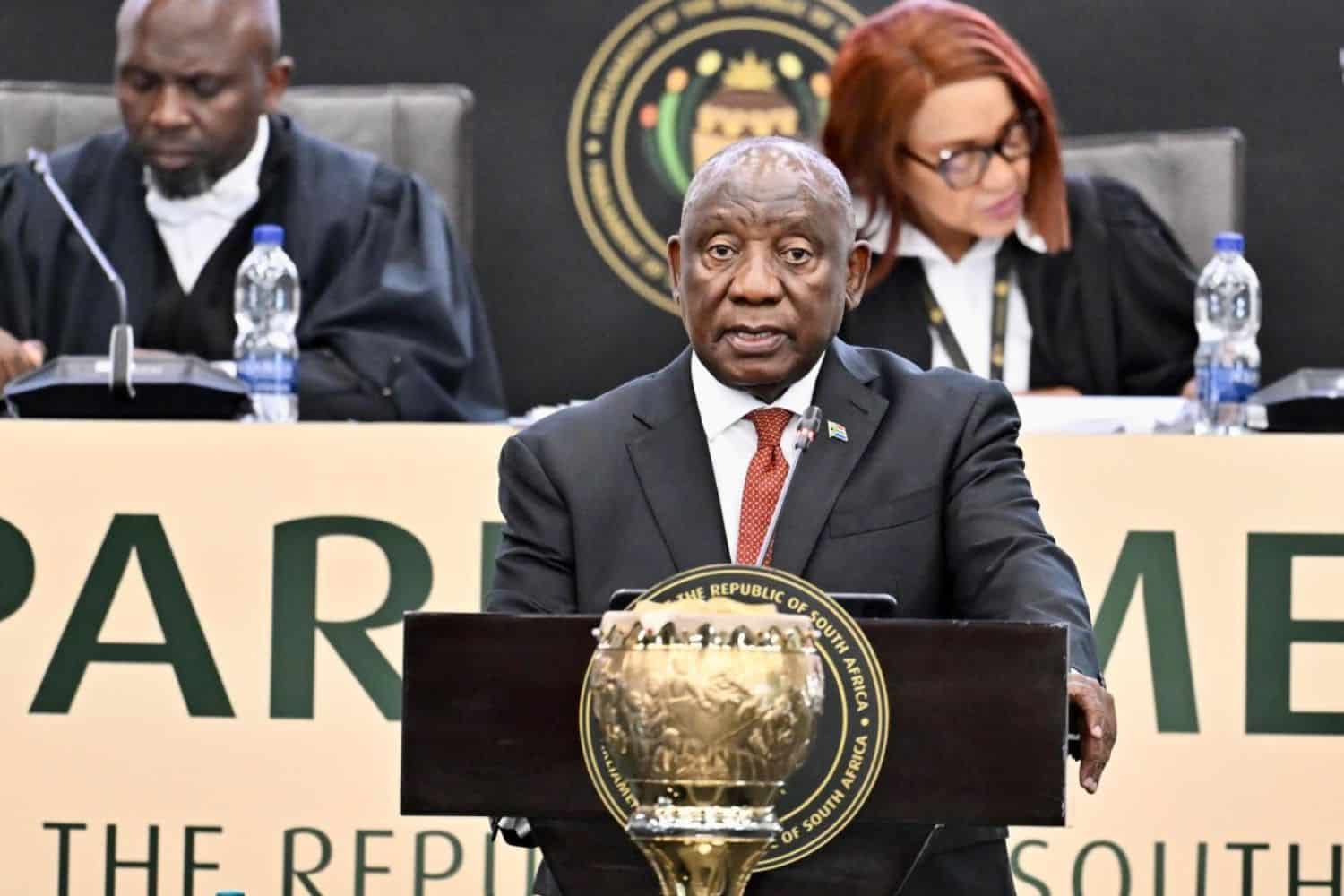
President Cyril Ramaphosa has ignored calls from opposition parties to come clean and address the Phala Phala Farm saga, despite facing the prospect of an impeachment inquiry.
Ramaphosa was on Wednesday responding to the Presidency’s budget vote debate in the National Assembly held earlier in the week.
The president had initially remained silent on the pending impeachment proceedings, even as several MPs questioned him about it.
Impeachment
Ramaphosa has revived a judicial review of the section 89 independent panel report that found he had a case to answer, after the Constitutional Court (ConCourt) ruled in favour of the EFF and theAfrican Transformation Movement (ATM).
The apex court sent the report on the Phala Phala scandal back to parliament, paving the way for an impeachment process against Ramaphosa to proceed.
Debate
During the debate, Ramaphosa ignored calls about the saga and focused on working together to bring solutions to the country’s many challenges.
Ramaphosa told the National Assembly that his ultimate goal is to grow the economy and won’t be distracted by what he labels political theatre.
“This debate has demonstrated that while we may differ on matters of policy and politics, there is broad agreement on the challenges confronting our nation and on the urgency with which they must be addressed.
“We are not distracted by the clamour of some political parties for attention,” Ramaphosa said.
ConCourt
However, Ramaphosa appeased some MPs by briefly mentioning the Constitutional Court judgment.
“Reference was made by a number of speakers to the section 89 process that Parliament has embarked upon following the Constitutional Court judgment.
“My approach to this matter is guided – as it has always been – by the supremacy of the constitution and the rule of law.
“The institutions of our democracy must be allowed to perform their work without interference and without intimidation,” Ramaphosa said.
Rule of law
The president added that he “respects” the rule of law.
“I will continue to uphold the principles and safeguard the integrity of my office. I will respect the work and authority of Parliament and abide by the rulings of our courts.
“I have every confidence in the constitutional processes of our country and will continue to respect and abide by them.
“We will not allow anything to slow the momentum of growth and transformation that, with each passing day, is gaining more and more pace.
“South Africans do not judge government by the speeches we make or the debates we have in this house,” Ramaphosa said.
Posturing
Ramaphosa also said political parties are just posturing in the run-up to the local government elections in November.
“We should state that this Presidency is resolutely focused on the task of growing an inclusive economy and creating jobs. We are not distracted by the clamour of some political parties for attention. We are not distracted by political theatre or electoral posturing.
“We will not be sidetracked by narrow agendas that have nothing to do with the needs, interests and concerns of the people of South Africa.
“As an institution and as the people who lead it, we are focused on the work that must be done to move with greater urgency and purpose to transform our economy,” Ramaphosa said.
Jacob Zuma
Ramaphosa also distinguished his presidency from that of former president Jacob Zuma, whose MK party was his staunchest critic during the debate.
“We can assert with confidence that we are building a Presidency capable of driving transformation across society.
“In many ways, we are having to rebuild the Presidency as an institution with the resources, capability, and intent to provide strategic direction and coordination,” Ramaphosa said.
State capture
Ramaphosa said that during the state capture era, power was centralised not to serve the public good but to entrench patronage and shield corruption.
The State Capture Commission found that institutions such as the National Prosecuting Authority and the South African Revenue Service were deliberately undermined and repurposed, Ramaphosa said.
“Across key departments and state‑owned enterprises, service delivery was sidelined in favour of adjudicating massive tenders to benefit vested interests. Safety, security, and intelligence agencies were politicised and weakened, leaving the state vulnerable.
“Understanding the Presidency’s current role requires recognising this history. Coordinating the repair of the damage caused by state capture has become a critical function of the centre of government” the president said.
Ramaphosa said strategic priorities such as structural reform, state security, and investment are now being driven from the Presidency, “a practice common in established democracies.”