Poetry has an enduring power
Romaine Washington writes about how a poem by poet-activist Claude McKay traveled decades to inspire the Black Panther Party.
 Black News
Leonardo DiCaprio, Teona Taylor, Sean Penn and Benicio Del Toro light up the screen in the Oscar-nominated, wildly unpredictable, “One Battle After Another.”
Lines from Gil Scott-Heron’s famous song “The Revolution Will Not Be Televised” were sprinkled throughout the movie. The film’s theme and Heron’s lyrics made me think about Assata Shakur, (July 16, 1947- Sept. 25, 2025). I had the pleasure of reading “Assata: An Autobiography” (1987) this past fall, to help prepare for a Beyond Baroque memorial program celebrating the life of this brilliant activist/poet who escaped to Cuba in 1979.
As a young, educated revolutionary, she believed deeply in the possible equality she was willing to fight and die for. I felt like I was right beside her as I read about the vicious torture she endured. Her resolve was strengthened by reciting Claude McKay’s poem, “If We Must Die.” McKay (1890-1948) was inspired to write this Shakespearean sonnet in 1919 during the Red Summer.
For those of us who may not remember history lessons from the previous century, this was a time period where many African American people were discharged from the military after World War I. These men returned home with the skills, discipline, and desire to work middle class jobs and be invited back home to the country they were willing to fight and die for.

Instead of equality, they were welcomed back into Jim Crow and second-class citizenship. That summer they were met with an increase in violence. According to the National World War Museum and Memorial lynchings rose from 64 in 1918 to 83 in 1919 and there were riots in 26 cities across the United States.
Poet-activist Claude McKay wrote a poem whose potency traveled five decades into the Black Panther Party. While the organization’s name is controversial, they started many socially beneficial programs, some of which were later adopted by school districts.
Local chapters of the Panthers, often led by women, focused attention on community “survival programs.” They organized a free breakfast program for 20,000 children each day as well as a free food program for families and the elderly. They sponsored schools, legal aid offices, clothing distribution, local transportation, health clinics, and sickle-cell testing centers in several cities. These activities provided concrete aid to low-income communities and drew support for the Panthers.
Black Panther Party leader Fred Hampton also knew “If We Must Die” by heart.
In the midst of this century’s pandemic, Daniel Kaluuya won an Academy Award for best supporting actor in the role of Hampton in “Judas and the Black Messiah.” My heart swelled as I watched the scene where the poem was recited. It is one thing to craft a poem to capture and express the emotions during a specific crisis. This poem has traveled a century from the Red Summer and Harlem Renaissance to the Black Arts Movement and Black Panther Party (1966 – 1982), to a movie script for Hollywood. As a high school language arts teacher I introduced the poem to my students every school year. It is a staple in anthologies, from high school to Poetry Out Loud competitions we learn McKay’s potent warrior poem. Yes, words endure and they have power.
This is important to remember as we see websites being taken down, and information and displays that accurately recount the history of our country being dismantled, and programs and institutions being threatened with extinction. “If We Must Die” let it be with integrity. This is the crux of McKay’s poem.
According to AP News:
Since 2005, more than 3,500 newspapers have closed in the United States, representing over a quarter of the nation’s total, with the pace accelerating to an average of two every week. This sustained decline has left roughly 50 million people living in “news deserts” — areas with limited or no local news access.
This past week The Washington Post downsized and eliminated their sports and book sections. Yes, I said, the book section! The irony is in their slogan, “Democracy Dies in Darkness.” This is assuredly a wake-up call.
In 2024, Small Press Distributors closed, which left a hardship for many small presses. Electric Lit. has a list of 23 independent presses to support. You can also inquire locally about small presses that serve your writing community, and see if they accept donations. Inlandia is one of many presses in the Inland Empire that would greatly appreciate your involvement, either through volunteering time or finances or both.
In the words of Dylan Thomas, “we must not go gentle into that good night.” We have a looming crisis according to sciencedirect.com; Big Data and algorithms and a lack of accountability with what we see, learn, and know, and how we are governed. It is crucial we are not devoured by memes, and we take time to sit and read, think, and create. We must have a deeply rooted understanding of the power of words. If a poem can help a woman endure sadistic torture, then words are indispensable and we must value them for the lives they preserve and encourage.
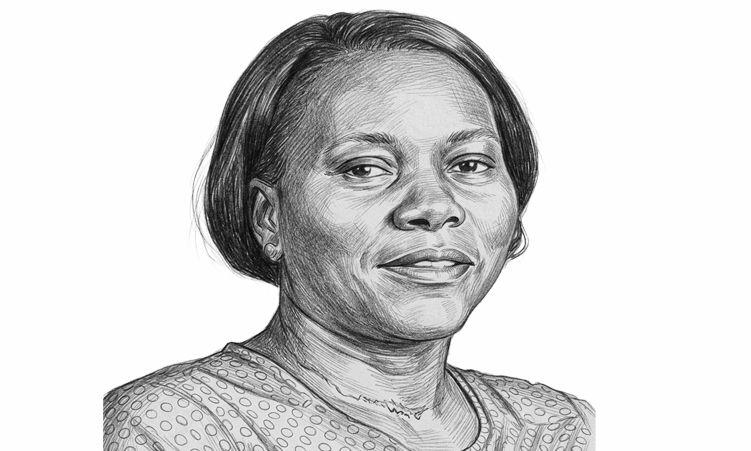
Romaine Washington is the editor of “These Black Bodies Are…A Blacklandia Anthology.”