Presidential advisor on economy says Namibia has investors’ attention
NEW YORK – Namibia has the attention of international investors, but the country must now turn that interest into actual projects, jobs and local economic activity, Economic Advisor to President Netumbo Nandi-Ndaitwah, Shali Shindume, has said. Shindume, who accompanied the President during her economic engagements on the sidelines of the United Nations General Assembly in... The post Presidential advisor on economy says Namibia has investors’ attention appeared first on New Era.
 Black News

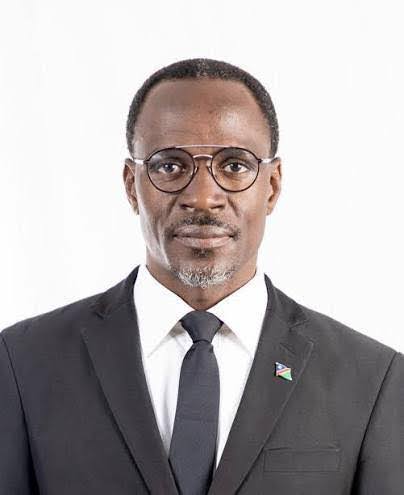
NEW YORK – Namibia has the attention of international investors, but the country must now turn that interest into actual projects, jobs and local economic activity, Economic Advisor to President Netumbo Nandi-Ndaitwah, Shali Shindume, has said.
Shindume, who accompanied the President during her economic engagements on the sidelines of the United Nations General Assembly in New York, said Namibia’s challenge was no longer simply attracting investor interest but converting that interest into projects that improve the lives of Namibians.
“Namibia is no longer struggling to get the attention of international investors. We have their attention. The challenge now is what we do with it,” he said.
Shindume said Namibia had a range of opportunities in critical minerals, renewable energy, oil and gas, agriculture, fisheries, tourism and logistics, supported by its strategic Atlantic coastline.
“We are a country of just over three million people, but we possess resources and strategic assets of global significance,” he said.
He said the country therefore needed to move from discussions about opportunities to productive economic activity.
Shindume was cautious about announcing a specific investment emerging from the president’s meetings in New York, saying commercial processes must first be completed.
“I would be reluctant to announce one investment before the necessary commercial processes have been concluded. Economic diplomacy should not become a competition about who announces the biggest number,” he said.
Instead, he said, the engagements had strengthened Namibia’s pipeline of opportunities in energy, critical minerals, infrastructure, agriculture and agro-processing, oil and gas, logistics and manufacturing.
“An investment announcement does not employ anybody. A project being implemented does,” he said.
He said Namibia should rather focus on having fewer announcements that result in projects reaching feasibility, financial close, construction and eventually production.
Challenges
His comments come as Namibia faces a major employment challenge. The International Monetary Fund’s 2026 assessment puts Namibia’s unemployment rate at 36.9% and youth unemployment at 44.4%, based on 2023 labour-force data. The IMF projects Namibia’s economy to grow by 2.1% in 2026.
“Those numbers tell us something very clearly: our economy must grow faster, but it must also grow differently,” he said.
He argued that Namibians should benefit from major investments even before large projects reach full production.
He pointed to opportunities during feasibility and construction phases for engineers, artisans, drivers, construction workers, accountants, caterers, accommodation providers, logistics companies, security companies and small businesses.
Shindume said every major investment should ultimately answer five questions: how many Namibians it will employ, how much it will procure locally, how many Namibian companies will participate, what skills will be transferred and how much value will remain in Namibia?
“We must ask what can be processed locally, what can be beneficiated locally and eventually what can be manufactured locally?” he said.
He said the same approach should apply to agriculture, where Namibia should develop processing, packaging, cold storage, logistics, branding and distribution around locally produced goods.
For the oil and gas sector, Shindume said Namibian companies should be positioned to participate in logistics, aviation, marine services, engineering, maintenance, accommodation, catering and professional services before production begins.
“A natural resource becomes truly transformative when an economy starts building industries around it,” he added. Shindume identified execution as one of the major challenges facing Namibia’s investment drive.
He said investors require certainty and speed in areas such as approvals, land, water, electricity, infrastructure, skills and regulation.
Namibia’s NDP6 records a maximum electricity demand of about 656 megawatts against a local production capacity of 347 MW in 2024, with electricity imports accounting for about 63% of total consumption.
Shindume said infrastructure must therefore grow alongside investment if Namibia is to attract new mines, factories, data centres and processing facilities.
He said investment promotion should be followed by investment facilitation, with government tracking projects after initial meetings with investors.
“After an investor meets the president, we must follow that project. Where is it after 30 days? Where is it after 90 days? What approval is outstanding? Which institution must act? What is preventing financial closure?” he asked.
Looking ahead, Shindume said he would measure the success of the president’s New York engagements by actual projects rather than the number of meetings held.
He said he wanted to see investors who met the president return to Namibia, complete due diligence, partner with Namibian companies, commit capital and begin implementation.
“Interest is not investment. Investment is not development. Development happens when capital creates productive capacity, businesses, skills and jobs.”
The IMF has similarly said Namibia needs to accelerate structural reforms, reduce regulatory bottlenecks, improve skills alignment and strengthen private-sector development to achieve more inclusive and job-rich growth. Shindume said the ultimate test of economic diplomacy is therefore what happens after the meetings end.
“I don’t want to remember how many meetings we attended or how many business cards we collected. I want to remember the projects that started because of those conversations and the Namibians whose economic circumstances changed because those projects became a reality,” he said.
The post Presidential advisor on economy says Namibia has investors’ attention appeared first on New Era.