Russia-led trade bloc eyes Tunisia as Africa becomes battleground for global influence
Tunisia could soon become the latest African country to be drawn deeper into a growing Eurasian trade network as the Eurasian Economic Union (EAEU) prepares to approve talks on a new free trade agreement with the North African nation.
 Black News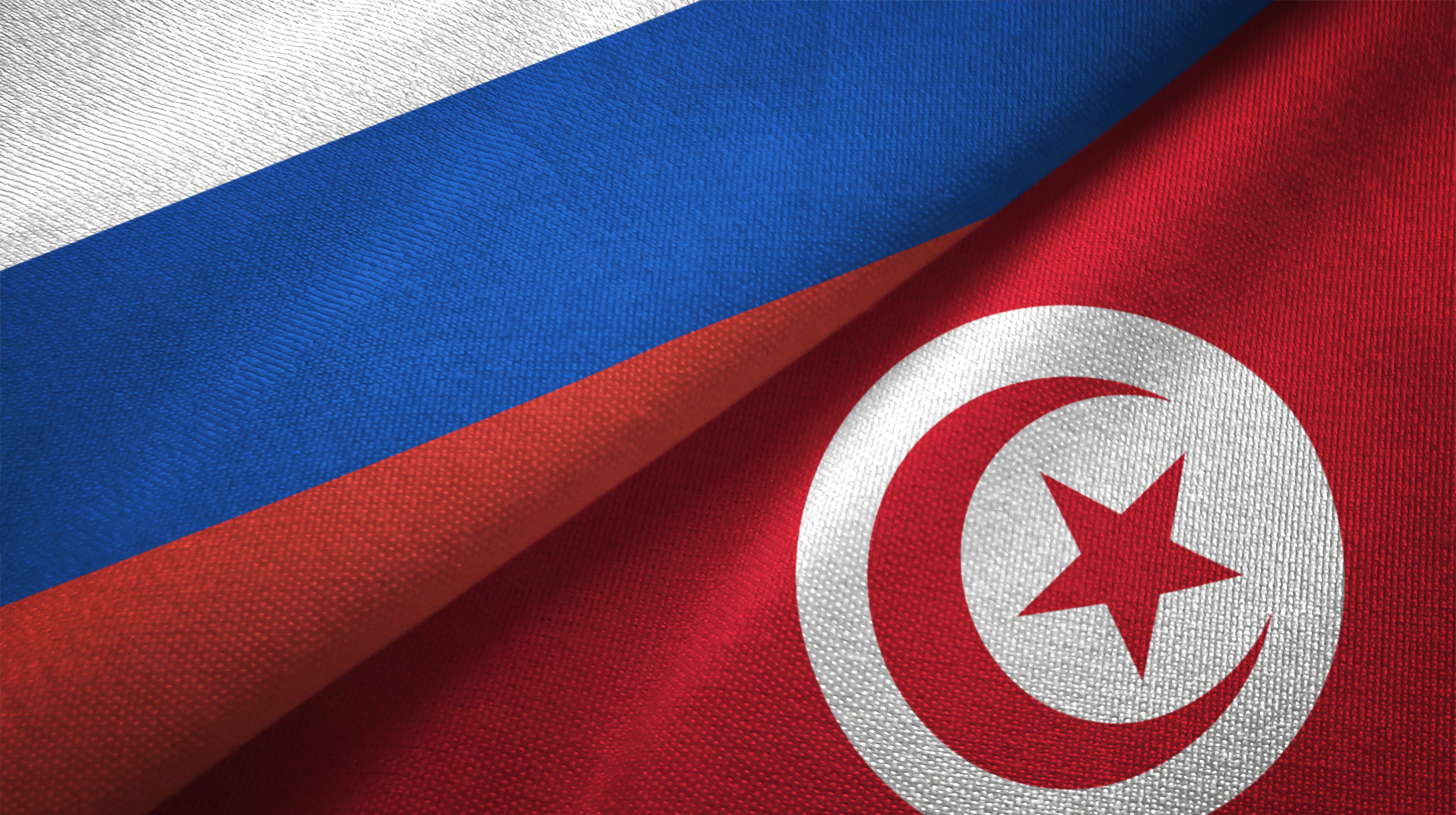
![Tunisia and Russia, two flags together, relations, textile, cloth, fabric, texture. [Stock Photo/Getty Images]](https://ocdn.eu/pulscms/MDA_/cd9b144d3dfa18cd7110e9199aa82424.jpg)
Tunisia could soon become the latest African country to be drawn deeper into a growing Eurasian trade network as the Eurasian Economic Union (EAEU) prepares to approve talks on a new free trade agreement with the North African nation.
- The Eurasian Economic Union is set to begin free trade agreement negotiations with Tunisia at a major leaders’ meeting this week.
- The move highlights growing competition among global powers seeking stronger economic influence across Africa.
- Trade between Tunisia and Russia reached $3.2 billion in 2025, driven by food exports, tourism, and expanding commercial ties.
- The EAEU is also pursuing trade discussions with Egypt, South Africa, Nigeria, Ethiopia, and other emerging markets.
The proposed negotiations, expected to receive backing at this week’s Supreme Eurasian Council meeting, signal the bloc’s accelerating push into Africa as global trade alliances rapidly shift.
“In regard to the international agenda, decisions are expected on starting talks with Tunisia about signing a free trade agreement,” Russian presidential aide Yury Ushakov said on Tuesday, May 27.
The move places Tunisia at the centre of a widening geopolitical and economic contest for influence across Africa, Europe, and the Mediterranean region.
Strategically located between the Mediterranean Sea and the Sahara Desert, Tunisia has increasingly become attractive to foreign trade partners seeking access to both European and Sub-Saharan African markets.
The country’s economy spans agriculture, manufacturing, tourism, mining, energy, and technology sectors, making it one of North Africa’s more diversified economies.
Russia-Tunisia trade ties deepen as tourism and food exports rise
But the growing relationship with Russia has become especially significant as trade between Tunisia and Russia climbed to about $3.2 billion in 2025, driven largely by rising Russian exports of wheat, barley, sunflower oil, meat products, and powdered milk. Tunisia, meanwhile, has expanded exports of olive oil, seafood, and dates to the Russian market.
Tourism is also strengthening ties between the two countries. According to the Russian Union of Travel Industry, demand for summer holidays in Tunisia tripled last year compared to 2024, making the country an increasingly popular destination for Russian travellers.
The EAEU, which includes Russia, Belarus, Kazakhstan, Armenia, and Kyrgyzstan, has been aggressively expanding its global trade footprint through free trade agreements with countries including Vietnam, Singapore, Serbia, Iran, Indonesia, Mongolia, and the United Arab Emirates.
Africa now appears to be a major focus of that strategy.
Beyond Tunisia, the bloc is advancing discussions with Egypt and exploring possible trade arrangements with South Africa, Zimbabwe, Jordan, Pakistan, Nigeria, and Ethiopia, underscoring growing competition among global powers seeking stronger economic influence across the continent.