Mozambique flood crisis threatens food security as FAO seeks $108m in aid
The Food and Agriculture Organisation (FAO) has appealed for about $108 million in funding to support nearly 1.8 million people in Mozambique expected to face prolonged food insecurity following devastating floods linked to climate change.
 Black News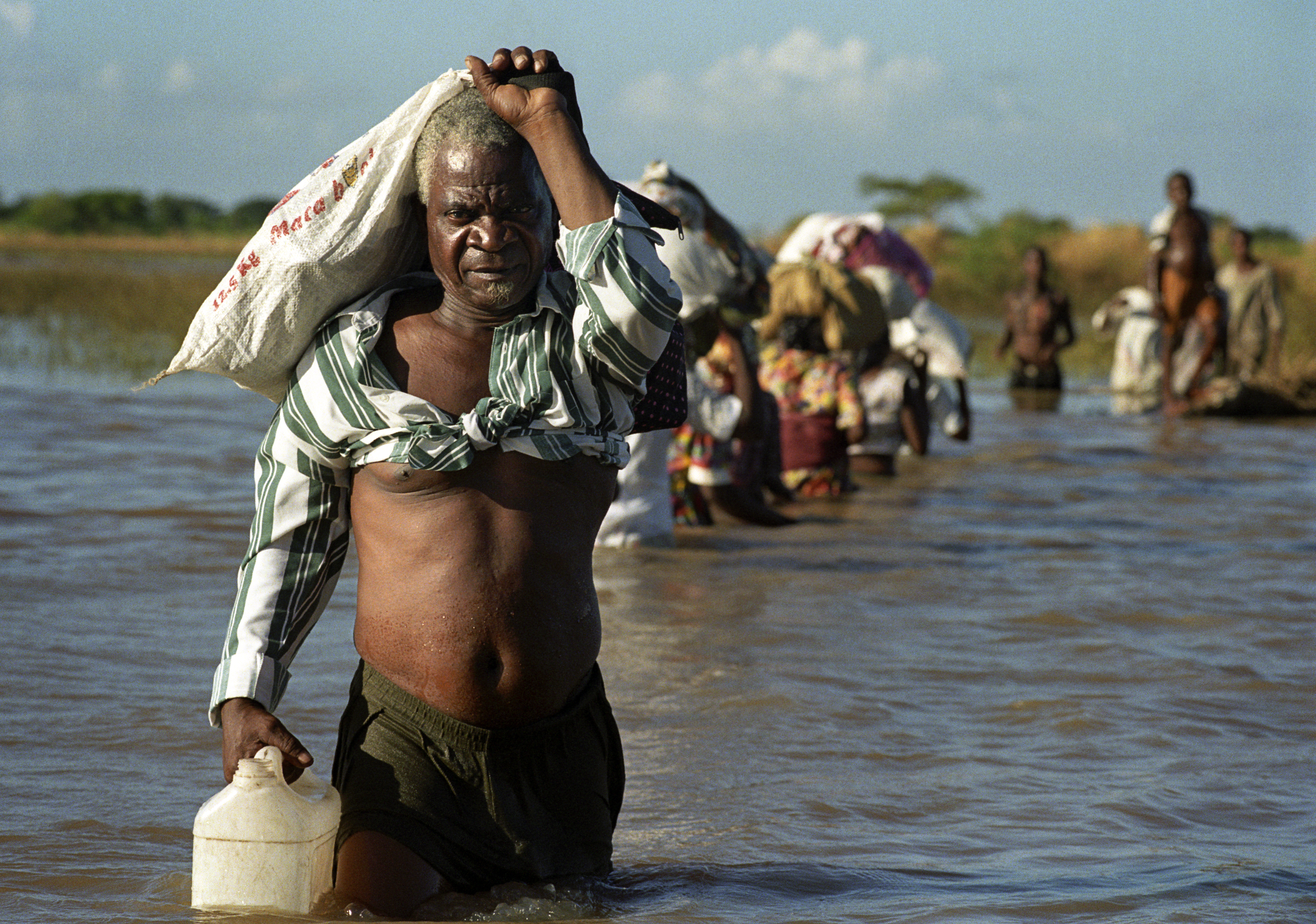
![An unidentified man carries his belongings to safety over a flooded highway on March 1, 2000, in Tres Febrero, about 100 km north of Maputo, Mozambique. The country was hit by severe floods in February-March 2000 that destroyed farmland, infrastructure and killed hundreds of people. [Getty images]](https://ocdn.eu/pulscms/MDA_/5bce5bf56b57d7f59cb3ece2e7c431c0.jpg)
The Food and Agriculture Organisation (FAO) has appealed for about $108 million in funding to support nearly 1.8 million people in Mozambique expected to face prolonged food insecurity following devastating floods linked to climate change.
- The FAO is seeking nearly $108 million to support 1.8 million Mozambicans affected by severe flooding.
- The disaster damaged about 440,000 hectares of farmland and caused an estimated $476 million in losses.
- Agriculture accounted for nearly three-quarters of the destruction, worsening food insecurity in rural communities.
- The UN agency warned that repeated climate-related floods could undermine Mozambique’s long-term recovery efforts through 2031.
In its “Mozambique: Floods Recovery Plan 2026–2031”, the UN agency warned that repeated flooding could continue to disrupt livelihoods and weaken recovery efforts over the next five years, particularly in rural communities dependent on agriculture.
According to the FAO, floods earlier this year affected more than 724,000 people and damaged around 440,000 hectares of farmland across some of Mozambique’s most productive agricultural regions.
The agency estimated total damages and economic losses at 30.4 billion meticais, equivalent to roughly $476 million at current exchange rates based on Forbes currency conversion data.
Agriculture accounted for nearly 73% of the losses, with crops, livestock, fisheries, and irrigation infrastructure among the sectors hardest hit.
“The crisis has severely disrupted agrifood systems,” the FAO said, adding that the destruction of productive assets could undermine food security and rural incomes well beyond the current planting season.
The provinces of Gaza and Maputo recorded the highest levels of destruction, while Sofala, Inhambane, Manica, Tete, and Nampula were also significantly affected.
As part of its response, the FAO is seeking $79 million under its Mozambique Emergency and Resilience Plan for 2026–2028, including $38 million earmarked for assistance in 2026 alone.
The organisation has also launched an urgent appeal for an additional $27.9 million to help about 620,000 people meet immediate post-disaster needs through June 2026.
FAO said the recovery framework was developed under Mozambique’s government-led Post-Disaster Needs Assessment programme aimed at aligning reconstruction with long-term resilience planning.