San Miguel de Allende, Mexico Is Having a Hotel Boom, With a $70 Million Newcomer, a New Marriott, and a 1 Hotel Debut
San Miguel de Allende’s hotel boom stretches from the newly-opened Pueblo Bonito Vantage and Marriott’s Cleviá to a coming 1 Hotel, building on a luxury scene led by Rosewood and a collection of distinctive independent boutiques. Pueblo Bonito Vantage San Miguel de Allende has opened after a $70 million investment. Cleviá, San Miguel de Allende, […] The post San Miguel de Allende, Mexico Is Having a Hotel Boom, With a $70 Million Newcomer, a New Marriott, and a 1 Hotel Debut appeared first on Caribbean Journal.
 Black News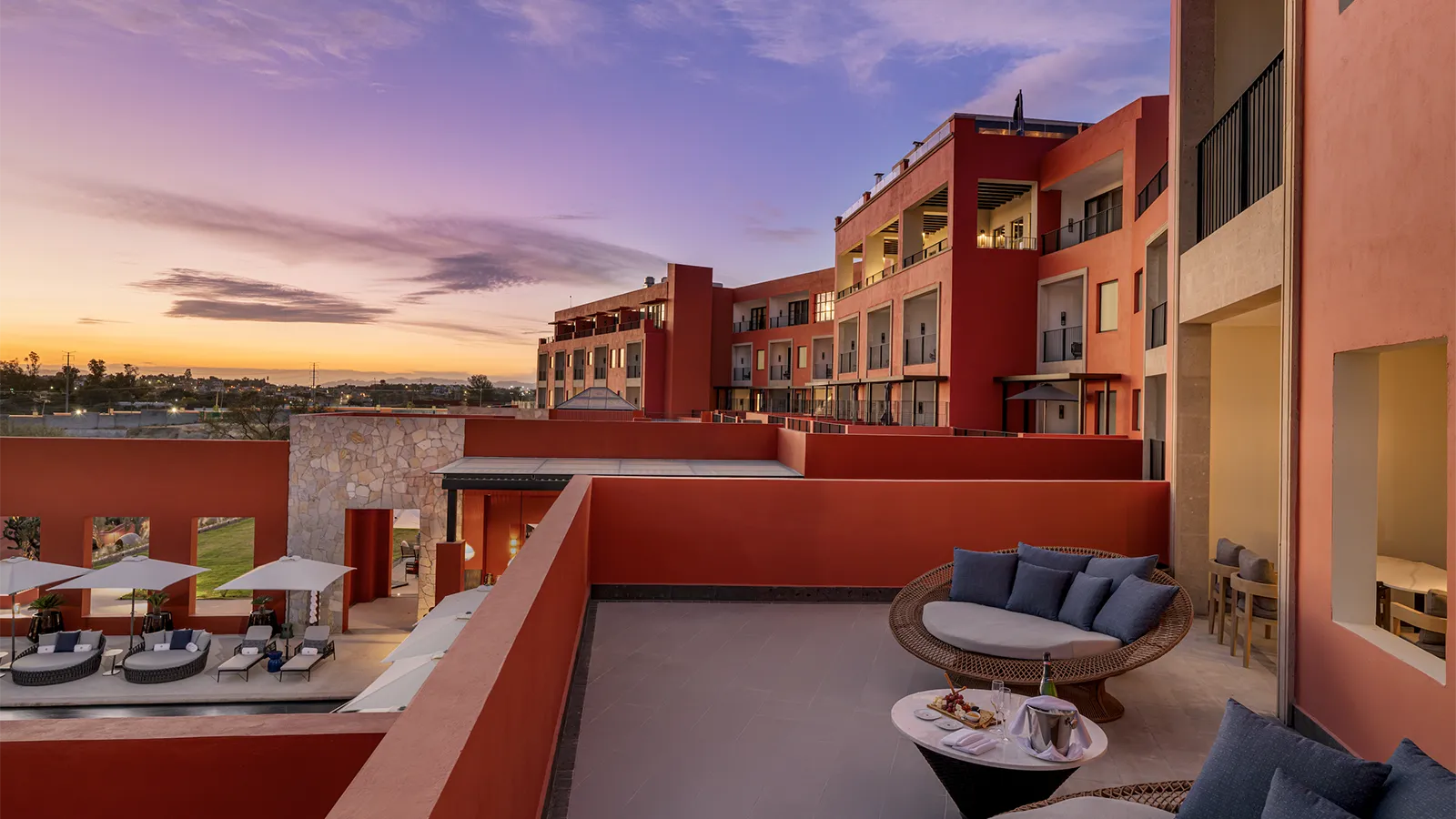

San Miguel de Allende’s hotel boom stretches from the newly-opened Pueblo Bonito Vantage and Marriott’s Cleviá to a coming 1 Hotel, building on a luxury scene led by Rosewood and a collection of distinctive independent boutiques.
Pueblo Bonito Vantage San Miguel de Allende has opened after a $70 million investment. Cleviá, San Miguel de Allende, Autograph Collection has brought Marriott to the city, while 1 Hotel & Homes San Miguel de Allende is advancing a major hotel and residential project.
Put those together with NUMU Boutique Hotel, the return of La Puertecita and the continuing strength of independents like Hotel Matilda and Casa Delphine, and a larger pattern emerges. Caribbean Journal’s review of the current hotel pipeline shows San Miguel de Allende in one of its most significant periods of hospitality investment.
But the story begins well before the current wave.
Rosewood San Miguel de Allende helped establish the modern luxury-hotel market here when it opened in 2011, giving the city a full-service international luxury resort that could stand alongside its celebrated smaller hotels. It remains the signature luxury hotel in San Miguel.
What’s happening now is the next chapter. International brands are putting more capital into San Miguel, loyalty programs are gaining a bigger presence, branded residences are joining the mix and independent boutiques continue to give the city a hotel identity unlike Mexico’s major resort destinations.
The clearest recent evidence arrived June 5, when Pueblo Bonito officially opened its new Vantage property following a $70 million investment.
And there is more coming.
Rosewood Set the Luxury Benchmark
You can’t understand the current San Miguel hotel boom without starting at Rosewood San Miguel de Allende.
The hotel opened in 2011, three years after the historic center of San Miguel de Allende and the Sanctuary of Jesús Nazareno de Atotonilco received UNESCO World Heritage status. San Miguel was already internationally known for its architecture, art, restaurants and longstanding expatriate community, but Rosewood gave the destination a different level of luxury resort.
More than a decade later, it remains the hotel that defines the top end of the San Miguel market.
Rosewood has 67 rooms, suites and private residences set across a property filled with courtyards and gardens, along with restaurants, a spa and one of the defining hotel experiences in the city: the rooftop Luna bar and its view toward the towers of the Parroquia de San Miguel Arcángel.
It also demonstrated something that helps explain the current development cycle. San Miguel did not need an oceanfront setting, a golf course or hundreds of rooms to support a major international luxury resort.
The city was enough.
The restaurants, architecture, galleries, weddings, second homes and international following created their own tourism economy. Rosewood gave the hotel industry an early indication of how far that economy could go.
Pueblo Bonito Just Put $70 Million Behind the Idea
The arrival of Pueblo Bonito Vantage San Miguel de Allende is one of the clearest recent signals of where the market is heading.
The hotel officially opened June 5 following a $70 million investment, bringing a company associated primarily with Mexican beach destinations into an inland cultural capital.
That is a notable departure for Pueblo Bonito.
Its portfolio has been built around resort markets including Los Cabos and Mazatlán. San Miguel asks the company to sell a completely different vacation, one organized around restaurants, architecture, art, shopping and exploring the historic center.
The investment also shows how San Miguel’s hotel audience has broadened.
The city is no longer dependent solely on independent boutiques and a handful of established luxury names. Companies with large existing customer bases increasingly see an opportunity to bring those guests with them to San Miguel.
Marriott Has Entered San Miguel
Cleviá, San Miguel de Allende, Autograph Collection brought another significant piece of the international hotel industry to the city.
The property became the first Marriott Bonvoy hotel in San Miguel de Allende, with 74 rooms and 42 residential-style units.
That adds something San Miguel historically had relatively little of: access to one of the world’s largest hotel loyalty ecosystems.
It also provides another example of how the city is absorbing international hotel brands without moving toward enormous hotels. Cleviá is still relatively compact, reflecting a destination where the historic streets and neighborhoods remain central to the experience.
A recent late-summer search showed Cleviá at about $276 for a one-night stay, including taxes and fees, although rates vary by date.
That puts a Marriott-affiliated luxury stay into a price range that can compete directly with the city’s established independent hotels.
Hyatt Saw the Opportunity Early
NUMU Boutique Hotel, The Unbound Collection by Hyatt was another early indication of where San Miguel was headed.
NUMU has 44 rooms, including four suites, giving Hyatt a presence in the city without trying to impose a large conventional hotel on it.
That size is important to the San Miguel formula.
Even as major brands arrive, many of the most compelling properties remain small enough to fit naturally into the city. The global reservation system and loyalty program may sit behind the hotel, but the experience can still feel closely connected to San Miguel.
NUMU also broadened the loyalty choices.
A Hyatt member and a Marriott member can now both find branded options in a city where independents once dominated almost every high-end hotel search.
Hotel Matilda Shows Why the Independents Aren’t Going Anywhere
The brand expansion is only part of the story.
Hotel Matilda remains one of the strongest examples of the independent San Miguel hotel: small, contemporary and closely associated with the city’s art and food scene.
The hotel has 32 rooms and suites, giving it an intimacy that would be difficult to reproduce at a large resort. Its contemporary art collection, spa and restaurant have helped establish an identity that is distinctly different from the historic-hacienda aesthetic often associated with San Miguel.
That diversity has long been one of the strengths of the destination.
You can stay at Rosewood and have a complete luxury resort experience, then return on another trip and choose a small independent hotel a few streets away and experience San Miguel differently.
New brands have to compete with that.
They aren’t entering a destination with an undeveloped luxury segment. They’re entering one where guests already have deeply established favorites.
Casa Delphine Takes Small to Another Level
Then there is Casa Delphine.
The five-room boutique hotel represents a completely different side of San Miguel’s hospitality scene. Its size alone puts it in another category from Rosewood, Pueblo Bonito, Cleviá or NUMU.
That is precisely why it belongs in the hotel-boom conversation.
San Miguel can support a $70 million hotel investment and a five-room independent boutique at the same time. Both draw from the same fundamental appeal of the city, but they offer radically different ways to experience it.
Casa Delphine gives you the intimacy that helped make San Miguel a boutique-hotel destination long before global loyalty brands began arriving.
The new development cycle hasn’t erased that part of the city. It has made the contrast more interesting.
La Puertecita Is Returning
The boom isn’t limited to new construction.
La Puertecita Boutique Hotel is preparing to reopen, bringing back a property whose history in San Miguel dates to 1990.
That return adds another layer to the current development story.
New capital is entering the city at the same time older hospitality properties are being reconsidered and repositioned. It means competition is growing not only between international brands but among new hotels, established independents and returning San Miguel names.
The result is a much deeper upper-end hotel market.
The Next Big Arrival Is 1 Hotels
The most significant project still ahead is 1 Hotel & Homes San Miguel de Allende.
The project is targeted for 2027 and was announced with approximately 97 hotel keys and 48 branded residences, including three- to five-bedroom homes.
The residences are an especially revealing piece of the project.
San Miguel has had a powerful second-home market for decades. Combining a luxury hotel with branded residences lets developers participate in both sides of that demand: visitors coming for several nights and buyers who want a permanent or part-time home in the city.
The residential component is expected to have its own entrance and owner amenities while retaining access to hotel services. Plans for the hotel include gardens, water features, wellness facilities and outdoor event areas.
“The enchanting San Miguel de Allende is a perfect place to plant roots,” CEO Raul Leal said when the project was announced.
The 48 residences reinforce what developers increasingly see in San Miguel.
This isn’t solely a hotel market. It is a lifestyle and residential destination with a tourism economy attached to an established second-home culture.
Why the Boom Is Happening Now
San Miguel already had most of the ingredients developers spend years trying to create.
It has international name recognition, a UNESCO-listed historic center, a major wedding business, celebrated restaurants, art galleries, architecture, a second-home community and visitors who return repeatedly.
Rosewood demonstrated the luxury proposition in 2011.
Hotel Matilda and San Miguel’s independent boutiques showed that the destination could support sophisticated small hotels with their own identities. Casa Delphine took that proposition down to just five rooms.
Now the branded hotel industry is filling in the gaps.
Marriott has arrived. Hyatt has established a foothold. Pueblo Bonito has invested $70 million. And 1 Hotels is preparing a hotel-and-residences development with 48 residences.
Access has improved, too.
A nonstop flight from Dallas to León/Guanajuato is scheduled at roughly 2 hours and 35 minutes, followed by a drive of about 90 minutes to San Miguel depending on traffic and routing. Caribbean Journal has also reported on new air service improving access to the San Miguel area.
The drive from the airport remains part of the journey, but San Miguel has spent years proving that visitors are willing to make it.
Now hotel developers are making the same calculation.
The Hotel You Choose Changes the Trip
Rosewood San Miguel de Allende remains our starting point if you want the signature full-service luxury experience.
It’s also the hotel that provides the clearest context for everything arriving now. The new development wave follows a luxury path Rosewood began establishing 15 years ago.
Pueblo Bonito Vantage is the newcomer to watch, particularly because of the size of the investment and the company’s decision to move beyond its traditional resort markets.
Cleviá gives Marriott Bonvoy members a direct entry into San Miguel, while NUMU does the same for Hyatt guests in a smaller 44-room setting.
Hotel Matilda is the choice when contemporary art, food and a smaller independent hotel are central to the trip.
Casa Delphine goes further in the boutique direction. With only five rooms, it represents the intimate side of San Miguel that no major international hotel company can easily replicate.
And 1 Hotel & Homes San Miguel de Allende is the one to watch next, both for its hotel component and the 48 residences that underline how closely hospitality and real estate are converging in the destination.
Opening schedules on development projects can change, so future stays should only be planned once individual hotels begin accepting confirmed reservations.
San Miguel’s Hotel Story Started Before the Boom
It would be easy to look at the latest announcements and conclude that San Miguel de Allende has suddenly been discovered by the hotel industry.
It hasn’t.
Rosewood helped establish the modern international luxury market here in 2011. Hotel Matilda built its own following, while smaller places like Casa Delphine reinforced the city’s reputation for hotels with strong individual identities.
What has changed is the volume of investment now following them.
A $70 million Pueblo Bonito has opened. Marriott has arrived. Hyatt is established. La Puertecita is returning. And 1 Hotels is preparing a significant hotel and residential project.
The result isn’t San Miguel turning into another Mexican resort destination.
It’s San Miguel becoming a deeper version of itself: a place where a five-room boutique, a 67-room Rosewood, global loyalty brands and a major residential hotel development can all exist within the same luxury market.
The city created the demand first. Fifteen years after Rosewood helped prove the modern luxury hotel case, San Miguel de Allende is seeing the next wave arrive.
The post San Miguel de Allende, Mexico Is Having a Hotel Boom, With a $70 Million Newcomer, a New Marriott, and a 1 Hotel Debut appeared first on Caribbean Journal.