SA’s Dr Emile Gouws Pens Impactful Message for Autism Awareness Month
Dr Emile Gouws knows the power of words. This Autism Awareness Month, he’s using them to say something that matters. Something we should all stick around to hear. South... The post SA’s Dr Emile Gouws Pens Impactful Message for Autism Awareness Month appeared first on Good Things Guy.
 Black News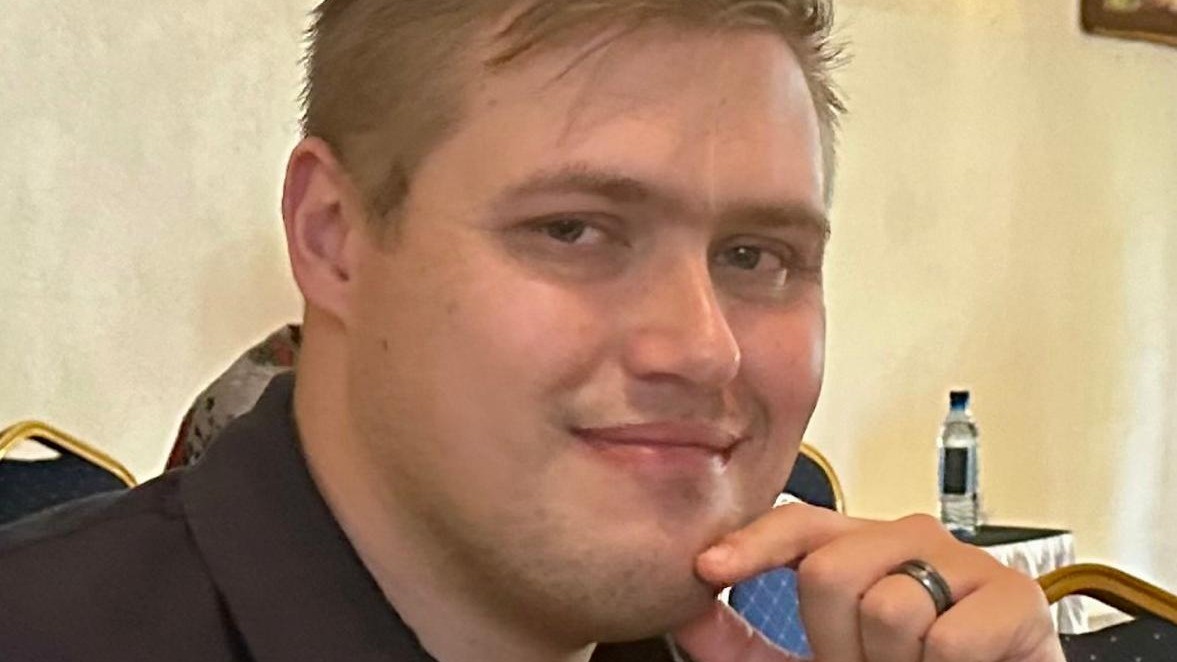
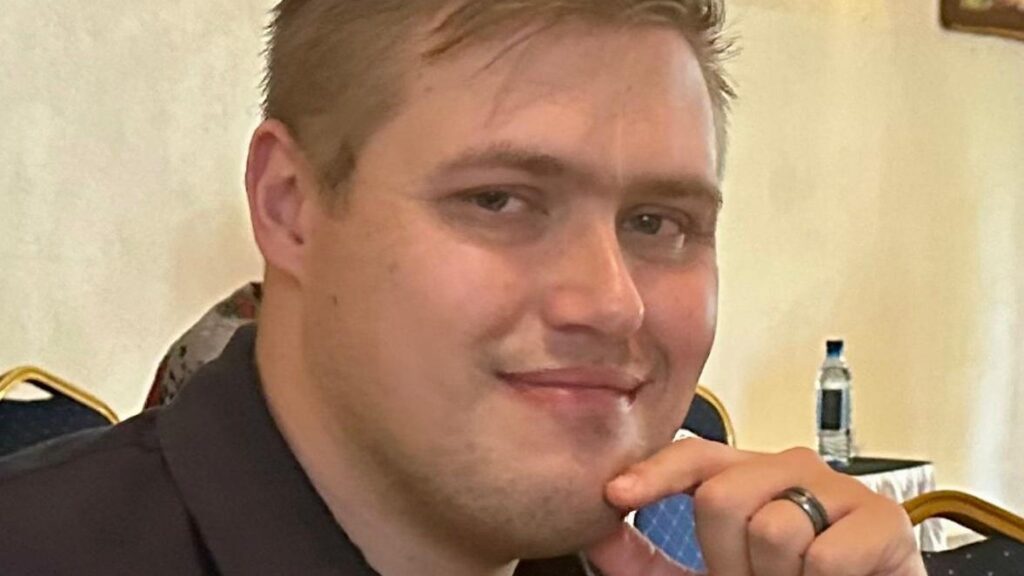
Dr Emile Gouws knows the power of words. This Autism Awareness Month, he’s using them to say something that matters. Something we should all stick around to hear.
South Africa (08 April 2026) – Around the world, April marks Autism Awareness Month.
This time of year is meant to open doors to discussions about autism and foster better understanding and acceptance of autistic people. It’s also a time to advocate for inclusion and better resources, services, and opportunities for autistic individuals and their families.
Many in the autistic community prefer the term ‘Autism Acceptance Month’ because it speaks to the greater need we all have to be understood, accepted and included. Autistic people, just as anyone else, deserve to be embraced and included in society, not just acknowledged.
South Africa’s Dr Emile Gouws recently spoke at World Autism Awareness Day 2026, hosted in collaboration with the United Nations (UN).
Dr Gouws is an international autism self-advocate, academic representative of South Africa to the UN, executive member of the Commonwealth, President of the Board of Directors of the International Council on Development and Learning, and Postdoctoral Fellow at the University of South Africa. In his work, he actively looks for new, relevant ways to create autism awareness.
Earlier this year, we shared the story about a short animation series created by Dr Gouws and his friend, Derek Logan. The show, Unpacking George, explores autism in everyday life, from a relatable South African perspective. With very few local narratives about autism that are easily accessible to everyone, George fills the gap in a way that could make anyone smile. Watch it if you haven’t already! The understanding it brings will spark greater actions that bring meaningful change.
Following his first global talk earlier this month, Emile opened up about his personal journey.
Non-verbal until the age of 15, and a victim of misunderstanding and exclusion, he now stands on international platforms and advocates for inclusive education, neuro-affirming approaches, and systemic change.
His lived experience inspires hope, and more importantly, change. We wanted to share his story – in his own words – with you. It’s poignant, and worth taking the time to read.
From Exclusion to the Global Stage: Why Education Is Personal by Dr Emile Gouws
Speaking at the World Autism Awareness Day (WAAD) 2026 hosted by the Institute Of Neurodiversity, hosted in collaboration with the United Nations, was one of the greatest honours that I ever experienced.
It was the first time I had the opportunity to contribute to this global platform, one that shapes conversations, policies, and perspectives on autism across the world. But for me, this was never just about standing on an international stage.
It was personal.
Because my journey into education, advocacy, and inclusion did not begin in lecture halls or policy spaces.
It began in exclusion.
I am an autistic person who was non-speaking from the time I entered primary school until the age of 15.
During those years, I experienced an education system that did not understand me and often did not try to.
Mainstream education excluded me.
Not always intentionally, but through a lack of understanding, rigid expectations, and approaches that prioritized compliance over connection.
One experience has stayed with me throughout my life.
In Grade 2, a teacher tied my hands.
The intention, as it was explained, was to stop behaviours that were seen as inappropriate to make me appear “less different” so that I would not scare the other children. It was also framed as a way to teach me what was considered acceptable behaviour.
But what it taught me was something else entirely.
It taught me what it feels like to be misunderstood, controlled, and excluded rather than supported.
There were also times when I spent breaks alone not because I chose to, but because I did not fit into environments that were never designed for someone like me.
These experiences are not easy to share.
But they are important to share.
Because they are not unique.
When I spoke at WAAD 2026, I did not speak only as an academic or an international advocate.
I spoke as someone who has lived through the consequences of educational systems that fail to recognize difference.
Education is not abstract.
It is deeply personal.
It shapes how we see ourselves, how others see us, and what opportunities we are given or denied.
My experiences also exposed me to very different approaches to autism.
On the one hand, I experienced approaches aligned with Applied Behavior Analysis (ABA), which often focused on changing behaviour to fit normative expectations.
On the other hand, I later encountered DIR/Floortime, which focuses on connection, emotional development, and meeting the individual where they are.
Having experienced both, I can say this:
Approaches that prioritise relationship, respect, and understanding have a far more meaningful and lasting impact than those focused solely on behaviour.
For many years, I was a child who could not express himself through speech.
Yet I understood far more than people realised.
Today, I stand in spaces connected to the United Nations, contributing to global discussions on inclusion, accessibility, and neurodivergence.
This journey from being non-speaking to speaking on international platforms is not just a personal achievement.
It is evidence of what becomes possible when individuals are given time, support, and the opportunity to develop in ways that respect who they are.
My experiences in education did not only shape my personal journey, they shaped my professional path.
I became a specialist teacher.
I worked with learners who, like me, were often misunderstood or underestimated.
I saw firsthand how small changes, patience, flexible communication, relational approaches could transform a child’s experience of learning.
Today, in my academic work at the University of South Africa and through my advocacy with the Commonwealth Disabled Peoples Forum, I continue to push for systems that are more inclusive, more humane, and more responsive to diversity.
Platforms like WAAD are important because they create visibility.
But awareness alone is not enough.
We must move towards acceptance that leads to action.
Action in how we design education systems. Action in how we train teachers. Action in how we understand communication and behaviour.
The principles of the United Nations Convention on the Rights of Persons with Disabilities remind us that inclusion is not optional. It is a matter of rights, dignity, and participation.
Standing at WAAD 2026 was an honor I will carry with me for the rest of my life. I’m so blessed to have the best support system in the world. I’m married to a beautiful autistic Alexic lady named Sammi and we are loved and supported by our mother and carer.
But more importantly, it was a reminder of why this work and advocating matters.
Because somewhere today, there is a child sitting in a classroom misunderstood and called ret*rd and cr*pple, excluded, or underestimated.
That child is not the problem.
The system is.
And systems can change.
I was once a child whose hands were tied in a classroom.
Today, I use my voice on global platforms connected to the United Nations.
That contrast should make us reflect.
Not on how far I have come but on how much further our systems still need to go.
Because inclusion is not about fixing individuals.
It is about transforming systems so that every individual has the opportunity to belong, to learn, and to thrive.
Sources: Emile Gouws.
Don’t ever miss the Good Things. Download the Good Things Guy App now on Apple or Google.
Do you have something to add to this story? Please share it in the comments or follow GoodThingsGuy on Facebook and Twitter to keep up to date with good news as it happens, or share your good news with us by clicking here or click the link below to listen to the Good Things Guy Podcast with Brent Lindeque – South Africa’s very own Good Things Guy. He’s on a mission to change what the world pays attention to, and he truly believes there’s good news around us. In the Good Things Guy podcast, you’ll meet these everyday heroes and hear their incredible stories:
Or catch an episode of Good Things with Brent Lindeque or our Weekly Top 5 below. The videos here are always changing, updated with the latest episodes from these two shows. Both are part of Good Things TV, created to bring South Africans balance at a time when the news can feel overwhelmingly negative. Our goal is simple: to remind you that there are still so many good things happening in our country – and to leave you feeling a little more proudly South African.
The post SA’s Dr Emile Gouws Pens Impactful Message for Autism Awareness Month appeared first on Good Things Guy.