Somalia: A State without Settlement
In early June, a warm evening in Mogadishu was punctuated once again by the staccato of gunfire and mortar shells. Not the result of an ambush by Al-Shabaab or a quarrel over a checkpoint, but rather deadly clashes emanating from a federal government seeking to secure its political grip on the capital. The violence had been coming for several months. Though some have brushed it off as ‘business as usual’ and an expression of the violence that undergirds Somalia’s political settlement, it might well be argued that we are entering a new era– a state without the settlement. With President […] The post Somalia: A State without Settlement appeared first on African Arguments.
 Black News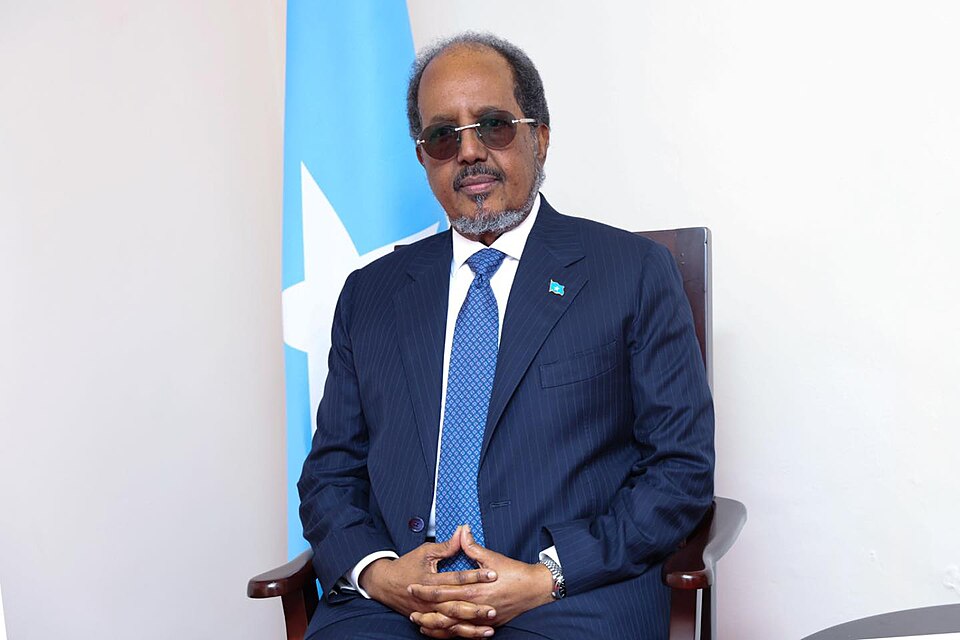
In early June, a warm evening in Mogadishu was punctuated once again by the staccato of gunfire and mortar shells. Not the result of an ambush by Al-Shabaab or a quarrel over a checkpoint, but rather deadly clashes emanating from a federal government seeking to secure its political grip on the capital. The violence had been coming for several months. Though some have brushed it off as ‘business as usual’ and an expression of the violence that undergirds Somalia’s political settlement, it might well be argued that we are entering a new era– a state without the settlement.
With President Hassan Sheikh Mohamud having barrelled past the scheduled May election date after overhauling the Provisional Constitution to extend his term, tensions had been rising in Mogadishu. So, ahead of major planned protests in Mogadishu on 4 June, considerable government forces were deployed to arrest former PM and opposition leader Hassan Ali Khaire, including Gorgor special forces, police, and the presidential guard. At the time, Khaire was meeting with dozens of clan elders and influential figures from his Hawiye sub-clan, the Murosade. The government’s assault was a shot across the bow not just to Khaire and his affiliated opposition politicians in the Somali Future Council (SFC) alliance, but to the Murosade themselves, an alarming prospect in a country pockmarked by internecine clan divisions.
President Hassan Sheikh Mohamud has barrelled past the scheduled May election date after overhauling the Provisional Constitution to extend his term
Fighting continued into the early hours of the morning as government forces tried– and failed– to detain Khaire, with mortar rounds landing on civilian houses and the famous Bakara market, one of the hearts of commerce in Mogadishu. That same evening, another house of a senior opposition figure, ex-President Sheikh Sherif Sheikh Ahmed, was surrounded, with his electricity and water cut. Both leaders had moved closer to the presidential palace into neighbourhoods populated by their respective sub-clans to bring further pressure to bear on the president. In the following days, though, following the withdrawal of Khaire and Sheikh Sherif from their positions amidst a raft of shuttle engagements by Turkish and Western diplomats, a fractious calm has now been restored to the capital.
Talks have been promised, though disagreements have already emerged over the nature, schedule, and participants. It would be a mistake to believe the danger has passed. For well over a year, the president has ducked, weaved, and obfuscated his way through successive rounds, painting his opposition as anti-democratic obstructionists. Though fears of broader clashes were averted, both sides are gearing up for another head-to-head– whatever that may look like. But despite its broad unpopularity, Villa Somalia is working to fragment any potential opposition coalition before it can cohere. The president’s calculus is not difficult to read– with a wearied and divided international community disinclined to expend political capital on yet another political crisis in Somalia, Hassan Sheikh is running down the clock. Villa Somalia is betting that time and attrition will render the president’s consolidation irreversible.
Indeed, for months, the government has been preparing for such conflict in the capital, shipping in weapons and loyal militias– often clad in military garb– into the capital. Fears of a return of ‘Badbaado Qaran’ (National Salvation) have almost permeated the air, with Villa Somalia desperate to stave off any large-scale mobilisation of Hawiye forces that could force it to the negotiating table, as happened in 2021 with ex-President Mohamed Abdullahi Farmaajo when he sought to unilaterally extend his term. Mahad Salad– the director of the intelligence service– had been partially brought back into the fold for this reason, though his own relationship with the president had deteriorated amid attempts to install another government proxy in the upcoming Galmudug presidential elections.
Meanwhile, the Ministry of Defence– led by the hawkish Ahmed Fiqi– has led the purging of the Somali National Army (SNA), introducing biometric registration to wean out ‘disloyal’ soldiers and reshuffling commanders involved in the first Badbaado Qaran from Mogadishu. And though cash and weapons have been dispersed to commanders from a range of clans, there has been a prioritisation of troops drawn from the Hawiye/Abgaal/Wa’eysle and the Darood/Ogaadeen/Reer Abdulle– the sub-clans of the president and prime minister.
Whilst Hassan Sheikh may have flirted with centralisation in his first term, it was during Mohamed Abdullahi Farmaajo’s term between 2017-2022 that authority was forcibly wrested into the presidency’s hands. Despite promises by the professorial Hassan Sheikh to return Somalia to a more even keel, the monopolisation of power has reached new heights since his return. Villa Somalia has steamed ahead with its centralising political agenda, overhauling the Provisional Constitution and introducing a heavily skewed ‘one-person, one-vote’ (OPOV) electoral system, calibrated to enfranchise pro-government constituencies. Rather than resolve the political cleavages and fraught issues of resource-sharing, Somaliland’s status or a federated security architecture, the country is more divided than ever. Jubaland and Puntland have withdrawn recognition from the federal government, whilst swathes of clan and communities have felt ever-more disenfranchised and disenchanted by Villa Somalia. Such divisions should be understood as more than a mere political quarrel of the past, but the fracturing and hardening of parallel architecture of authority in Somalia– and one undergirded by Emirati patronage.
And as the government’s political support has continued to dwindle, it has leant ever more heavily on foreign allies, predominantly Ankara, which has reaped immense rewards in the promise of oil, resources, and a military base on the Gulf of Aden. Whilst the implicit threat of violence had– for the most part– kept those at the centre on a leash, being at least nominally aware of how far to push before the diplomatic corps and the settlement’s own guardrails would pull them back. Such logic, though, has been upturned by foreign patronage, dramatically lowering the cost of escalation and the necessity of compromise in Somalia’s marketplace.
Villa Somalia’s monopolistic agenda, however, should be understood not merely as graft or an authoritarian consolidation under an electoral veneer, as in Djibouti or Uganda, where ‘victories’ have confirmed the incumbents’ hold on power in 2026. It is the culmination of another longer agenda– an Islamist opposition to the federated political structure, and the preference for a single strong-man type leader. At the same time, a small coterie of the president’s Muslim Brotherhood faction known as Damul Jadiid (New Blood), led by Education Minister Farah Abdulkadir, is spearheading a quieter, systematic capture of state institutions. Even if Hassan Sheikh is ousted in the coming months under an agreed electoral timetable, the perforation of Islamist socio-economic reach into Somalia— which well predates this administration and encompasses a broad spectrum of actors— will no doubt continue.
Today, there is a government without governance, an authority in Mogadishu wielding its diaphanous ‘sovereignty’ as a cudgel against its domestic opposition and against foreign scrutiny. Though the skeleton of a state has been fleshed out since 2012 and the ritual paraphernalia of diplomatic legitimacy along with it, there has been a conspicuous failure to generate its empirical counterpart. Indeed, the attempts to violently disarm opposition leaders in the capital are no better example than that the federal government continues to hold no monopoly of force in Somalia.
For two decades, external actors have supplied much of the architecture of statehood, assuming that once institutions were built, they would assume their own gravitational pull. Democracy would be realised for its normative benefit, not the correct alignment of the political marketplace. Evidently, what was generated was a focal point for elite capture, and beneath the noise of the political crisis is something that might be termed a shell state– a master in the performance of sovereignty without substance. The international community has broadly acquiesced to such a performance, absorbed by crises elsewhere, it has become reluctant to challenge Somalia’s cyclical dysfunction.
But that, too, may soon begin to crack. Somalia’s security and fiscal solvency remain in doubt, with its domestic revenue far outstripped by its external budget support. One might argue that the externalisation of Somalia’s security– particularly via the African Union peacekeeping mission– has allowed the Somali political elite to prevaricate and avoid the gritty task of tackling Al-Shabaab. The billions in foreign security assistance flooding into Somalia have propped up a swollen khaki economy, with weapons and foreign-trained soldiers routinely deployed against domestic opposition in Baidoa, Mogadishu, or Gedo rather than the Al-Qaeda-affiliated jihadists that control much of Somalia’s hinterlands. The principal beneficiary of this protracted dysfunction, as ever, is Al-Shabaab.
Attempts to scale up domestic revenue are teetering, and though Mogadishu has secured a continuation of preferential loans and grants from the IMF and World Bank, this, too, is expected to end at the next round of International Development Association (IDA) funding. The public-private vice of diminishing domestic rents and rising political budgets is set to squeeze Somalia even harder. Barre’s military state endured for two decades on the back of Soviet and then American patronage, but when that external subsidy was removed, the edifice collapsed.
But Somalia is not Djibouti or Uganda, where strong-man rule has been entrenched over decades, and the political opposition hollowed out accordingly. It is a far more complex environment of clan politics and foreign interference, with a plurality of armed actors that will inherently limit the extent to which any single president can impose. Hassan Sheikh may, with cash and coercion, organise heavily managed elections in South West, Galmudug, and Hirshabelle— but it is a house of cards. The gap between juridical and empirical sovereignty cannot be papered over indefinitely by constitutional rewrites and foreign patronage. At some point, the performance of statehood must give way either to its substance or to its abandonment. And at each cut, the former darling of the global state-building agenda constricts a little more.
The post Somalia: A State without Settlement appeared first on African Arguments.