South Africa joins Japan in crackdown on illegal fishing by Chinese vessels
South Africa has joined Japan in tightening enforcement against illegal fishing by foreign vessels after authorities intercepted and fined four Chinese fishing boats that entered the country’s waters without authorisation.
 Black News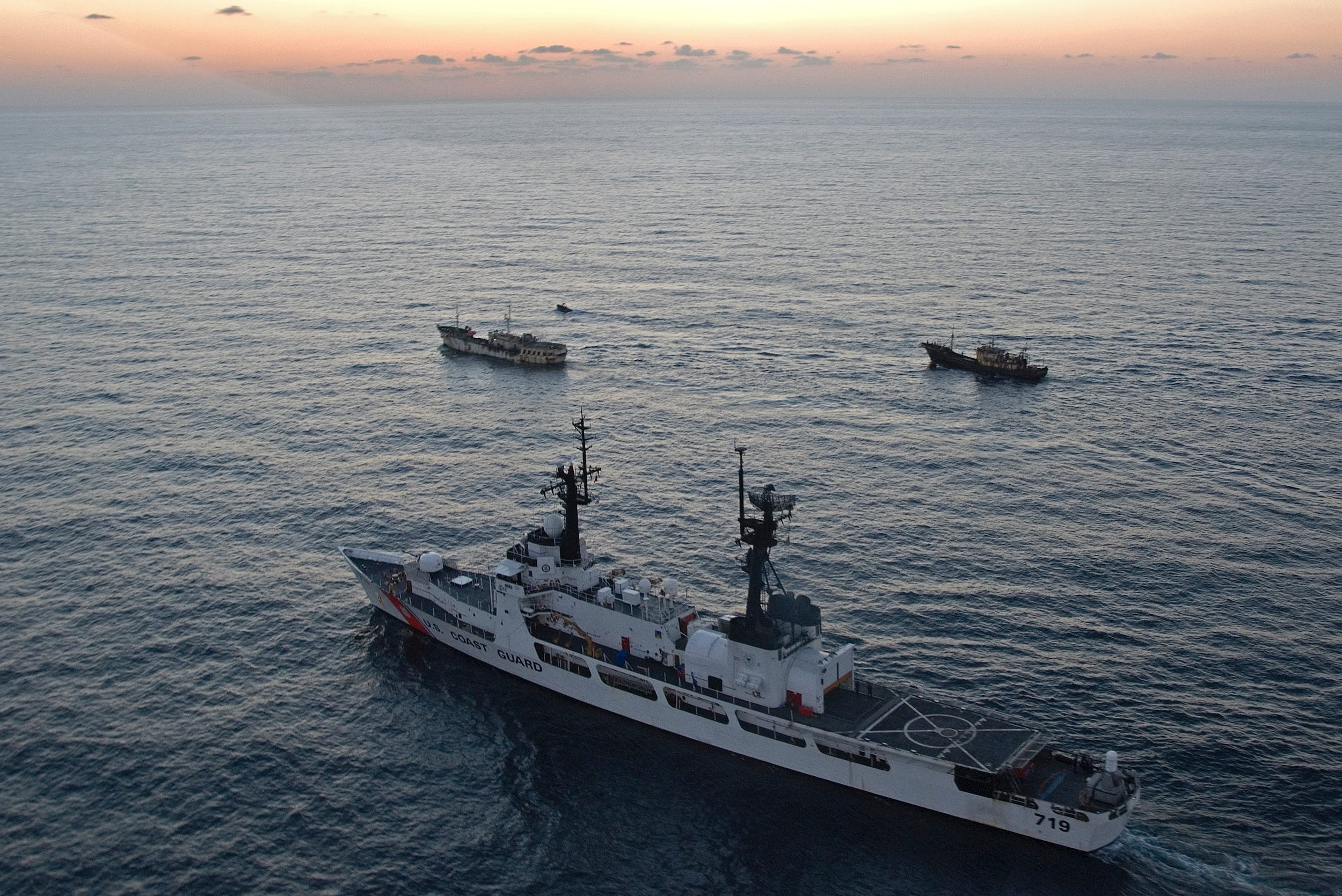
South Africa has joined Japan in tightening enforcement against illegal fishing by foreign vessels after authorities intercepted and fined four Chinese fishing boats that entered the country’s waters without authorisation.
- South Africa intercepted and fined four Chinese fishing vessels for operating illegally in its waters without authorization.
- The vessels, owned by Shenzhen Shuiwan Pelagic Fisheries, were detected in South Africa’s Exclusive Economic Zone and territorial waters.
- Authorities coordinated an operation, detained the ships, imposed a 400,000 rand penalty, and later released the vessels once the fine was paid.
- Japan also increased enforcement, recently seizing a Chinese vessel and arresting its captain after an illegal fishing incident in Japanese waters.
According to South Africa’s Department of Forestry, Fisheries and the Environment (DFFE), the vessels: Zhong Yang 231, Zhong Yang 232, Zhong Yang 233 and Zhong Yang 239, were detected operating inside South Africa’s Exclusive Economic Zone (EEZ) and territorial waters without the required permits.
The ships are owned by Shenzhen Shuiwan Pelagic Fisheries Co. Ltd.
In response, authorities launched a coordinated operation involving the DFFE’s Fisheries Branch and the South African Police Service (SAPS) Tactical Team to intercept the vessels.
The ships were placed under guard at the Port of Cape Town anchorage while officials conducted compliance checks.
Officials said the vessels had initially requested permission on February 23, 2026, to pass through South Africa’s EEZ under “innocent passage”, indicating they would exit the waters by March 3.
However, on February 27 the South African Maritime Safety Authority (SAMSA) reported that the vessels had also applied for Off-Port Limits (OPL) authorisation without the required documentation. The request was rejected.
Investigations later revealed that the vessels had already entered South African territorial waters while the OPL request was still under review.
Consequently, authorities charged the masters of the vessels and imposed an administrative penalty of 400,000 rand (about $24,118).
“South Africa will not tolerate the unlawful use of its maritime zones,” said South Africa’s Minister of Forestry, Fisheries and the Environment, Willie Aucamp. “We remain resolute in safeguarding our marine resources and ensuring that our ports are not perceived as ports of convenience. Compliance with our laws is non-negotiable.”
Japan steps up enforcement in its waters
South Africa’s action comes as Japan has also stepped up efforts to clamp down on illegal fishing by foreign vessels.
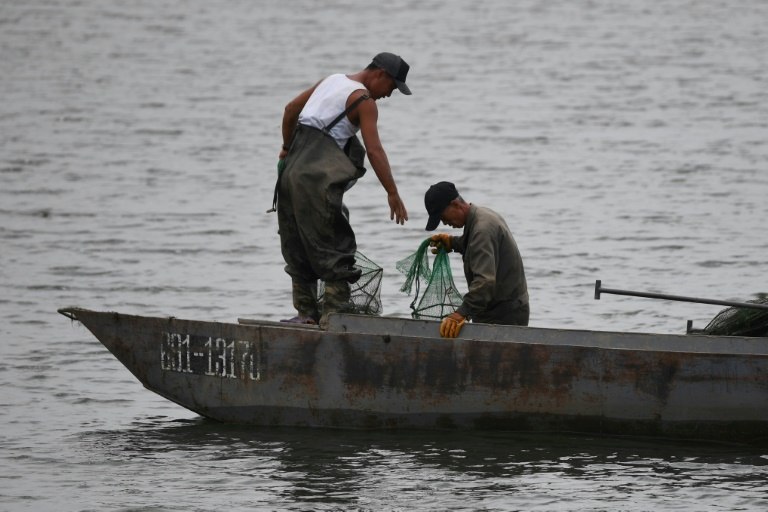
In February this year, Reuters reported that Japanese authorities seized a Chinese fishing boat and arrested its captain after he allegedly ignored orders to stop for an inspection inside Japan’s Exclusive Economic Zone.
The captain, a 47-year-old Chinese national, is accused of fleeing from fisheries officials in waters off southwest Nagasaki Prefecture, according to Japan’s fisheries agency.
The incident marked the first case involving a Chinese fishing vessel in Japanese waters since 2022 and occurred against the backdrop of broader diplomatic tensions between the two countries.
“We will continue to take resolute action in our enforcement activities to prevent and deter illegal fishing operations by foreign vessels,” Japan’s Chief Cabinet Secretary Minoru Kihara said during a press briefing.
Global scrutiny of distant-water fleets
China operates the world’s largest distant-water fishing fleet, with thousands of vessels operating across international waters.
As global demand for seafood rises, governments are tightening maritime patrols and enforcement measures to protect fish stocks and curb illegal fishing activities.
The actions taken by South Africa and Japan highlight a broader shift among coastal nations to assert stronger control over their maritime zones and safeguard valuable marine resources.