South Africa unveils new border control system targeting foreign-registered vehicles
South Africa has introduced a new digital border control system requiring all foreign-registered vehicles entering or leaving the country to be declared to customs authorities, as the government intensifies efforts to modernize border management and strengthen compliance at ports of entry.
 Black News
South Africa has introduced a new digital border control system requiring all foreign-registered vehicles entering or leaving the country to be declared to customs authorities, as the government intensifies efforts to modernize border management and strengthen compliance at ports of entry.
- South Africa implemented a new digital border system requiring all foreign-registered vehicles to be declared to customs from June 1, 2026.
- Travelers must submit vehicle information electronically before arrival or at the border, including passport and vehicle details.
- The rule applies to vehicles from all countries, including neighboring SACU members, but does not affect trade agreements within the union.
- The policy aims to modernize border management, strengthen customs oversight, and address security concerns amid rising undocumented migration.
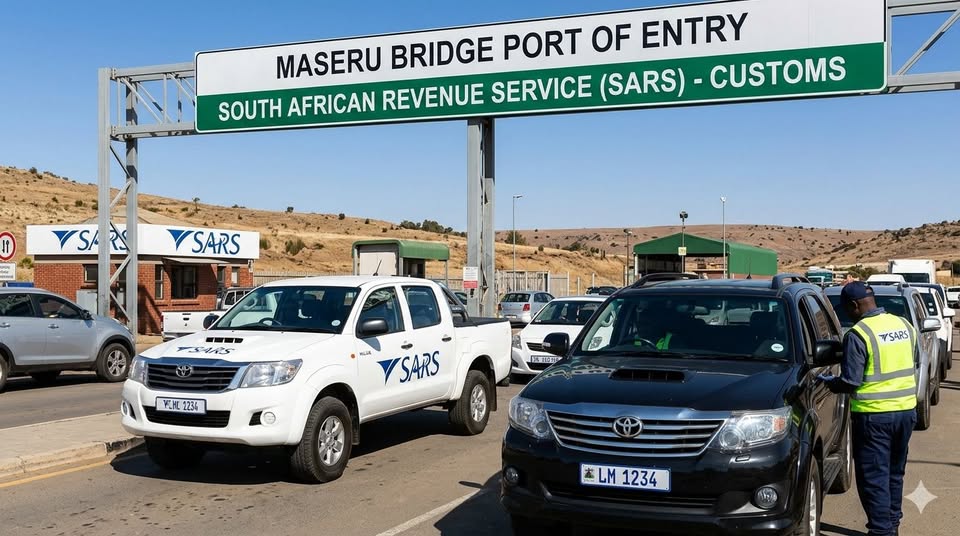
The new requirement, which takes effect from June 1, 2026, is being implemented by the South African Revenue Service (SARS) through its Traveller Management System (TMS).
Under the rules, travelers crossing South African borders in vehicles registered outside the country must submit vehicle details either electronically before arrival or at border posts.
The measure applies to all foreign-registered vehicles, including those from neighboring Botswana, Namibia, Lesotho and Eswatini, which are members of the Southern African Customs Union (SACU).
DON'T MISS THIS: South Africa targets $607 billion investment surge with biggest finance reform in decades
According to SARS, the policy is designed to improve customs oversight, strengthen risk detection capabilities and accelerate the digital transformation of South Africa's border management systems.
Travelers are required to provide passport details, vehicle registration information, the vehicle identification number (VIN), driver information and intended duration of stay. Foreign motorists entering South Africa will also receive a Temporary Import Permit valid for six months.
Failure to declare a foreign-registered vehicle could result in delays, inspections or enforcement action under South Africa's Customs and Excise Act.
Tougher border controls amid migration and security concerns
The new system comes at a time when border management has become an increasingly sensitive political issue in South Africa.
In recent years, the country has faced growing pressure to tighten immigration controls amid concerns over undocumented migration, cross-border crime, vehicle smuggling and pressure on public services.
Public debate around migration has intensified following repeated anti-migrant protests and calls for stricter enforcement of immigration laws.
While SARS has framed the vehicle declaration requirement primarily as a customs modernization initiative, the move also reflects a broader government effort to improve visibility over cross-border movements and strengthen oversight at some of Africa's busiest land borders.
South Africa shares land borders with six countries and serves as the region's largest economic hub, attracting millions of travelers, workers, traders and tourists each year. Border crossings such as Beitbridge, Lebombo and Maseru Bridge rank among the busiest on the continent.
DON'T MISS THIS: South Africa's tourism sector takes a hit as African travellers cancel trips over anti-migrant unrest
SARS emphasized that the new requirement does not affect SACU trade agreements, which govern the movement of commercial goods within the customs union. Instead, the measure focuses specifically on foreign-registered vehicles used by travelers.
As South Africa continues investing in digital border infrastructure, officials say the system will help improve compliance while reducing administrative bottlenecks for legitimate travelers crossing the country's borders.