South Africa’s president lauds $633m investment from Japan's largest car company as a show of strength by local workers
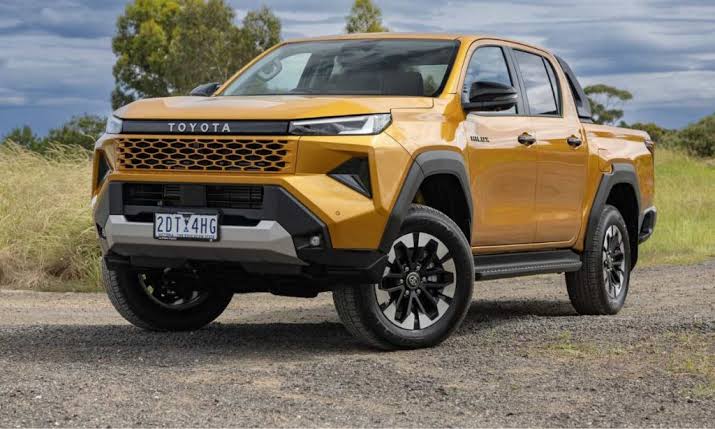
As recently reported, the South African subsidiary of Japan’s largest car manufacturer, Toyota South Africa Motors (TSAM), has completed more than 77% of its 10.4 billion rand ($634 million) investment programme to manufacture the next-generation Hilux pickup truck.
 Black News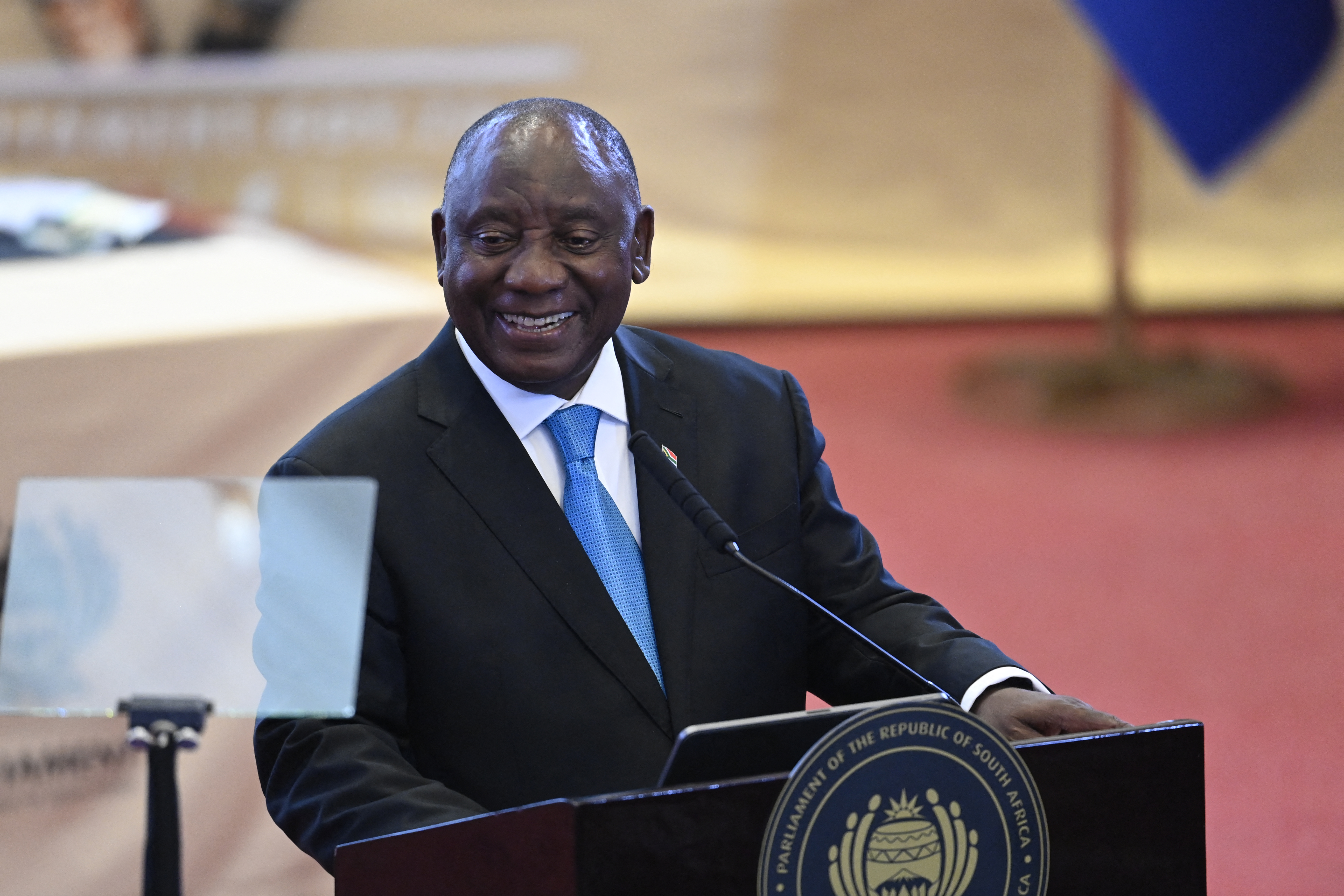
![South African President Cyril Ramaphosa smiles before commencing the State of the Nation (SONA) address in Cape Town on February 12, 2026. [Photo by Rodger Bosch / POOL / AFP via Getty Images]](https://ocdn.eu/pulscms/MDA_/10c24750e3afff443c1a853ce1e8b28c.jpg)
As recently reported, the South African subsidiary of Japan’s largest car manufacturer, Toyota South Africa Motors (TSAM), has completed more than 77% of its 10.4 billion rand ($634 million) investment programme to manufacture the next-generation Hilux pickup truck.
- Toyota South Africa Motors has completed over 77% of its R10.4 billion investment program to manufacture the new Hilux pickup, with full project completion expected by June 2027.
- Pilot production of the next-generation Hilux is starting soon in Durban, representing a major milestone for both Toyota and South Africa’s automotive sector.
- President Cyril Ramaphosa highlighted the investment as a showcase of South Africa's skilled workforce and attractiveness for long-term, job-creating investments.
- A third of Toyota's investment has gone toward local supplier development, and the automotive sector remains crucial, contributing 5% to GDP and employing over 600,000 people.
The car company announced that pilot production at its Durban manufacturing facility is scheduled to commence very soon, representing a significant milestone for the project, which is expected to reach full completion by June 2027.
For South Africa, this accomplishment is a testament to the country’s workforce as well as its investment appeal, according to the country’s president, Cyril Ramaphosa.
During the official line-off unveiling of the ninth-generation Toyota Hilux on Thursday at the company's Prospecton facility in eThekwini, the President delivered a virtual address in which he emphasized that the milestone extended significantly beyond the mere introduction of a new vehicle.
“Today is about much more than the launch of a new vehicle. It is about confidence in South Africa. It is about the enduring value of long-term investment.
“It is about the strength of South African workers, engineers, technicians, and entrepreneurs. And it is about our shared determination to build an economy that produces, innovates, exports, and creates jobs,” the President said.
As seen on the South African Government News Agency, the South African president noted that the Hilux has become a part of South Africa's story over the last five decades.
He noted that despite carrying one of the world's most respected automotive brands, it is proudly regarded as a South African vehicle because it is "designed for our conditions, built by South African hands, and exported from South African shores."
“The R10.4 billion investment in the new-generation Hilux programme demonstrates precisely the type of investment that South Africa seeks to attract,” he said.
“Its true value lies in the opportunities it creates. It lies in the thousands of South Africans whose livelihoods depend on this plant.
It lies in the workers whose skills continue to grow. It lies in the supplier companies that have expanded their production. It lies in the young people who will find employment because businesses such as Toyota continue to invest in our economy,” he added.
South Africa’s automotive industry
Ramaphosa pointed out that approximately one-third of Toyota's investment had gone into boosting local supplier capability and tooling, while suppliers had committed an extra R2 billion to enhance localisation.
The South African president further highlighted that the automotive industry remains central to the country’s industrial economy, constituting 5% of gross domestic product, 115,000 direct manufacturing jobs, and over half a million jobs across the value chain.
As a result, he noted that the country is committed to ensuring that this sector remains competitive on a global scale.
“We are strengthening incentives for component manufacturing. We are supporting battery value chain development. We are promoting research, innovation, and skills development in new-energy vehicles. Above all, we are providing policy certainty that encourages investment, localisation and long-term growth,” he said.
Additionally, Ramaphosa emphasized the strategic significance of South Africa's vital mineral resources in the global transition to future mobility, as well as improving logistics in the country.
“If we combine these natural resources with advanced manufacturing, local beneficiation, technological innovation, and world-class automotive production, South Africa can become a leading global hub for future mobility,” he said.
“In the ten months to February this year, Transnet's vehicle terminals in Durban, Gqeberha, and East London handled more than 792,000 fully built vehicles - the highest productivity levels achieved in recent years,” he added.
Toyota’s objectives in South Africa
Earlier this year, Toyota South Africa Motors (TSAM) set an ambitious target of selling 630,000 units of new Toyota vehicles in 2026 despite mounting structural and competitive pressures.
At its annual State of the Motor Industry briefing, titled "Driving through disruption", TSAM president and CEO Andrew Kirby stated that South Africa's market had recovered pre-pandemic growth, but that more changes would be necessary to realize its full potential.
In 2025, the domestic market reported 596,818 units, a 15.7 percent rise over the previous year and a return to activity levels observed before Covid-19.
Toyota finished the year with 148,124 units, its best performance since 2007, solidifying its position as market leader for the 46th straight year.
In South Africa, 81 percent of locally produced vehicles were exported to the United Kingdom and Europe.
While commendable, it left local manufacturers exposed to regulatory changes and shifting demand in those regions, an issue Toyota hopes to combat.