South Africa’s richest man Johann Rupert faces a $2.3bn problem and investors are questioning asset values
South Africa’s richest man, Johann Rupert, is grappling with a roughly R38 billion (about $2.3 billion) valuation gap at his investment firm Remgro, as investors grow wary of the company’s large exposure to unlisted assets and the widening discount between its market value and underlying holdings.
 Black News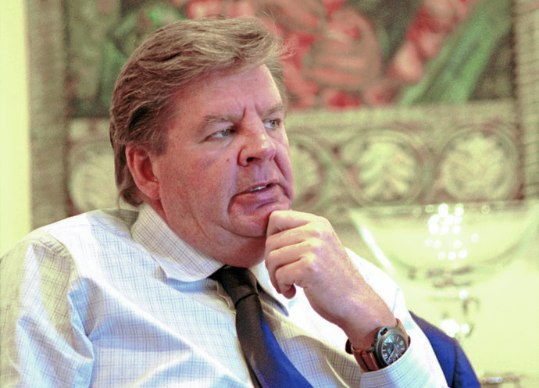


South Africa’s richest man, Johann Rupert, is grappling with a roughly R38 billion (about $2.3 billion) valuation gap at his investment firm Remgro, as investors grow wary of the company’s large exposure to unlisted assets and the widening discount between its market value and underlying holdings.
- Johann Rupert faces a R38 billion ($2.3 billion) valuation gap at his investment firm Remgro.
- The gap arises from a persistent discount between Remgro’s market value and the worth of its underlying assets.
- Investors are wary due to Remgro’s increased focus on unlisted assets, which are harder to value and less transparent.
- This situation doesn’t entail a real financial loss but lowers Rupert’s perceived wealth in wealth trackers.
At the centre of the concern is Remgro Limited, the investment firm chaired by Rupert, which continues to trade at a persistent and significant discount between its market value and the estimated worth of its underlying assets.
For South Africa’s richest man, this has raised investor scrutiny over how the group’s portfolio is being valued by the market.
According to Remgro Limited’s 2025 Annual Report, the company’s shares continue to trade at a significant discount to its intrinsic net asset value.
The report states: “The intrinsic net asset value per share increased by 16.5% from R251.01 at 30 June 2024 to R292.34 at 30 June 2025. The closing share price at 30 June 2025 was R158.20 (2024: R136.09), representing a discount of 45.9% (2024: 45.8%) to the intrinsic net asset value.”
This reflects a consistently wide gap between market valuation and underlying asset value.
Investor caution has been driven largely by the structure of Remgro’s portfolio, which has shifted heavily toward unlisted investments in recent years.
These assets are more difficult to value because they rely on model-based estimates rather than daily market pricing, increasing uncertainty around their fair value.
$2.3 billion valuation gap reflects market scepticism
The estimated R38 billion (about $2.3 billion) gap reflects the difference between Rupert’s implied wealth based on underlying asset values and the lower valuation assigned by the market.
While this does not represent an actual cash loss, it reduces the paper value of his holdings as measured by global wealth trackers.
The situation highlights a broader issue facing holding companies with complex portfolios, where a lack of transparency and limited liquidity often lead investors to apply a discount to valuations.
For Remgro and its leadership, the key challenge is not operational performance but restoring investor confidence in how its assets are valued and communicated to the market.
Until that gap narrows, the company is likely to continue trading below its intrinsic worth, keeping pressure on Rupert’s reported net wealth despite the scale of his underlying investments.