STRENGTHENING CLIMATE EDUCATION ACROSS FCT SCHOOLS
STRENGTHENING CLIMATE EDUCATION ACROSS FCT SCHOOLS The Federal Ministry of Environment, through its Department of Climate Change, in collaboration with the Society for Planet and Prosperity, has launched a major climate education initiative aimed at strengthening environmental awareness in secondary schools across the Federal Capital Territory (FCT). The initiative focuses on equipping teachers with the […]
 Black News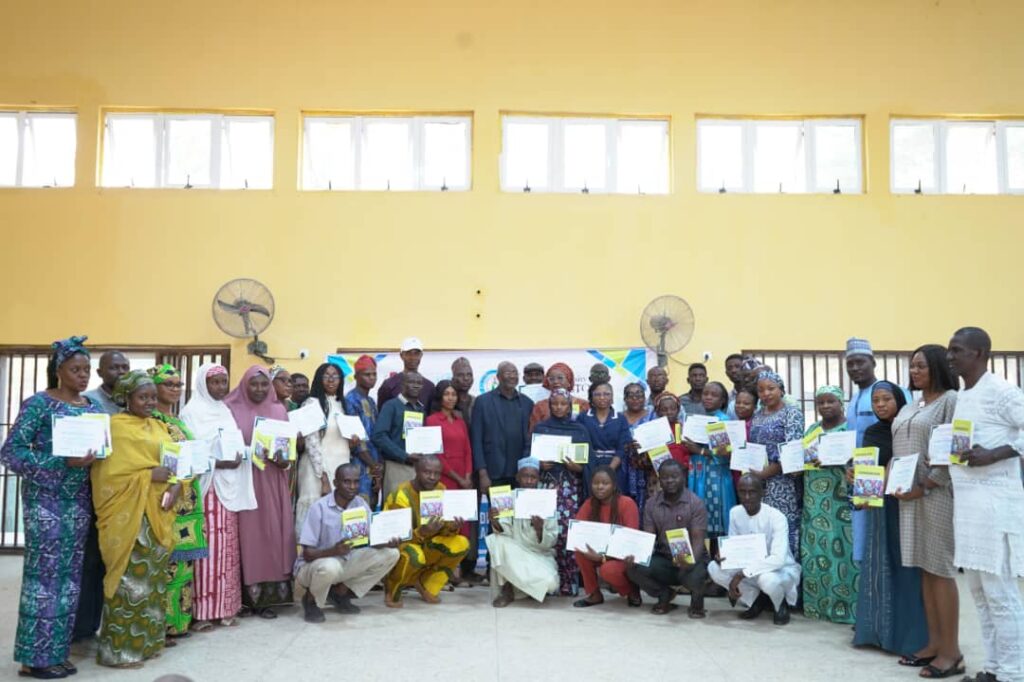
STRENGTHENING CLIMATE EDUCATION ACROSS FCT SCHOOLS
The Federal Ministry of Environment, through its Department of Climate Change, in collaboration with the Society for Planet and Prosperity, has launched a major climate education initiative aimed at strengthening environmental awareness in secondary schools across the Federal Capital Territory (FCT).
The initiative focuses on equipping teachers with the knowledge, skills, and practical tools needed to effectively educate students about climate change and environmental sustainability. Beyond raising awareness, the programme seeks to deepen climate literacy in schools and contribute meaningfully to building a more sustainable and resilient Nigeria.

Speaking during the kickoff workshop for FCT Secondary School Teachers held in Abuja, President of the Society for Planet and Prosperity, Professor Chukwumerije Okereke, explained that the programme will train teachers across Bwari, Gwagwalada, and the Abuja Municipal Area Council (AMAC).
He disclosed that the first phase of the training commenced with about 40 teachers from schools within AMAC. According to him, participants are being trained using a comprehensive Climate Education Manual developed by the Society last year. The manual covers key climate change concepts and practical approaches that educators can apply in classrooms and climate clubs.
“The idea is to ensure that teachers fully understand the topics in the manual so they can confidently pass this knowledge on to their students,” he said.
Professor Okereke further emphasised that the initiative goes beyond a one-off workshop. The team plans to conduct regular school visits to provide additional tutorials, capacity-building sessions, and guidance in establishing and strengthening climate clubs.
“We are not leaving them after this training. We will go from school to school, helping them form clubs and ensuring that climate change education becomes a living, active part of school life,” he assured.
Also speaking, Director of Science, Technology and Mathematics at the Secondary Education Board, Mr. Abdullahi Muse Zakir, noted that the goal is to make climate education practical, engaging, and solution-driven within classrooms.
He observed that rising temperatures, irregular rainfall, flooding, and environmental degradation are clear realities of climate change already affecting communities across Nigeria, particularly in the FCT.
“As teachers, you are not only teachers of curriculum but shapers of mindset and values. The knowledge and awareness you pass on to your students will influence how the next generation understands environmental responsibility, sustainability, and innovation. This workshop is therefore not just about training, but also empowerment,” he stated.
Vice Principal Academics of Government Secondary School Tudun-Wada Wuse, Mr. Eba Elima Williams, described the event as a significant starting point for what is expected to become a widespread initiative. According to him, about 40 schools participated in the pilot phase, with plans to extend the programme to other schools across the FCT, grouped by zones.
He stressed that environmental education is centred on understanding the environment as everything around us, including ourselves, and ensuring it is properly managed for the benefit of all. He added that sustainability is essential not only for students’ health but also for national prosperity.
Director of Operations of the Ebaidebheki Initiative, Ms. Faith Kaminus, urged teachers to go beyond the classroom in supporting students. She encouraged them to inspire learners to deepen their understanding of climate change and explore innovative solutions.
She emphasised that teachers play a critical role in shaping environmentally conscious minds and can serve as sustainability consultants and role models within their communities.
One of the participants, Dr. Isah Philp Abdulmalik of Government Secondary School Idu-Karimo, said the workshop broadened his perspective on climate-responsive architecture and environmental planning in the FCT.
“As an educator and climate ambassador, I am committed to extending this knowledge to my students and community. In my new school, where there is currently no climate club, I plan to establish one to raise awareness about climate action and environmental responsibility,” he said.
As climate change continues to pose significant challenges nationwide, stakeholders believe initiatives like this will deepen climate awareness among young people and empower the next generation to take informed and practical action toward environmental sustainability.
Ubong Usoro for Nigeria Magazine