THE DAILY OBSERVER’S OWNERSHIP TRANSITION
By Pappa Njie Managing Editor, Daily Observer Gambia The earliest newspaper bearing the exact name Daily Observer that historical records have enabled us to identify was published in Charlotte, North Carolina, United States, beginning on 10 July 1869. However, the name itself has enjoyed a remarkably long and distinguished international history. In England, the Yorkshire […] The post THE DAILY OBSERVER’S OWNERSHIP TRANSITION appeared first on Daily Observer Gambia .
 Black News
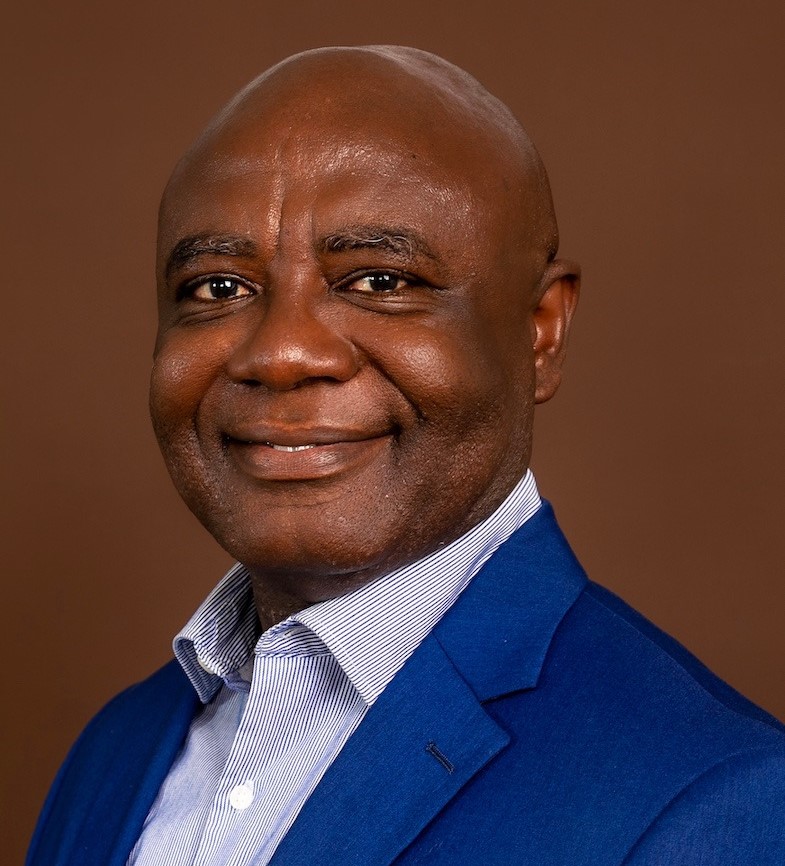
By Pappa Njie Managing Editor, Daily Observer Gambia

The earliest newspaper bearing the exact name Daily Observer that historical records have enabled us to identify was published in Charlotte, North Carolina, United States, beginning on 10 July 1869. However, the name itself has enjoyed a remarkably long and distinguished international history. In England, the Yorkshire Daily Observer began publishing under that title on 18 November 1901 in Bradford, Yorkshire.
Newspapers bearing the Daily Observer title have subsequently appeared in Liberia, Antigua and Barbuda, Bangladesh and The Gambia.
The significance of this historical background is important. Neither Liberia nor The Gambia invented the name Daily Observer, and no newspaper proprietor can reasonably claim to have originated a title that had already been used in international journalism for more than a century. Different newspapers bearing the same or similar titles have operated under separate proprietors, jurisdictions and editorial arrangements.
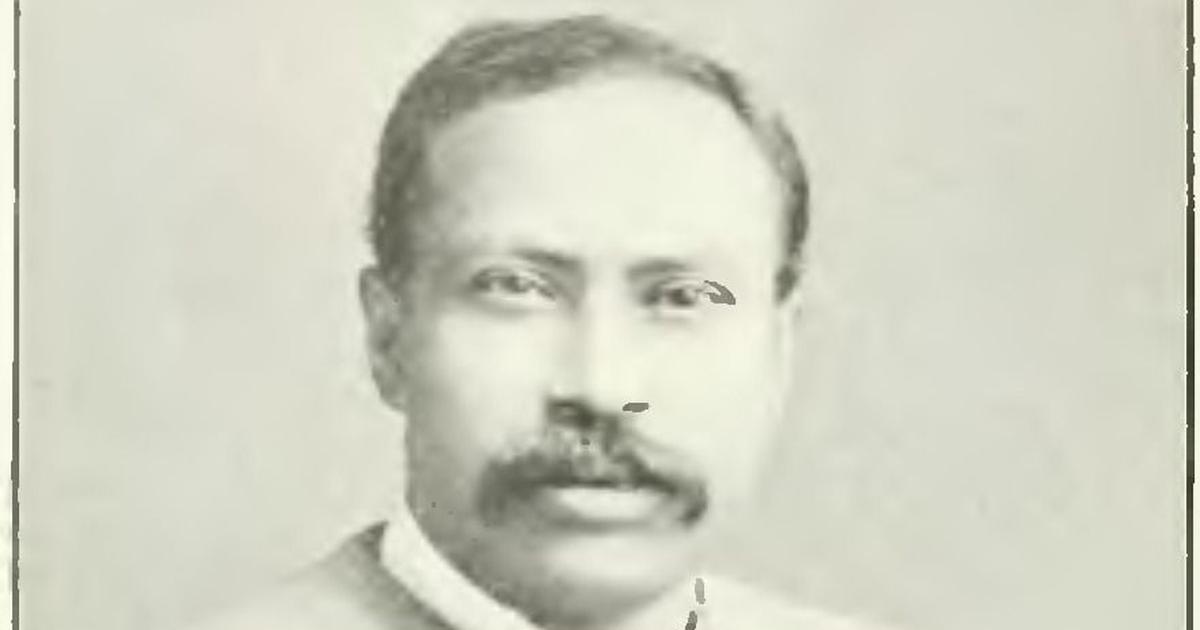
In Liberia, the name acquired fresh prominence on 16 February 1981 when Kenneth Y. Best and his wife, Mae Gene Best, established the Liberian Daily Observer. What followed was a turbulent chapter of African journalism, characterised by confrontation with the Samuel Doe regime, political intimidation and the increasingly destructive consequences of Liberia’s civil war.
Best eventually fled his homeland and sought refuge in The Gambia. He arrived not as a wealthy newspaper magnate looking for another commercial acquisition, but as a journalist whose professional enterprise had been devastated by political violence.
Yet adversity had apparently failed to extinguish his appetite for journalism.
On 11 May 1992, Kenneth Best launched the Gambian Daily Observer, introducing a newspaper that would eventually become the country’s first daily publication and one of the most influential media institutions in its history.
Unfortunately, the newspaper’s promising beginnings were soon overtaken by the political turbulence that followed the military coup of July 1994.
Kenneth Best’s relationship with the Armed Forces Provisional Ruling Council deteriorated, culminating in his detention and deportation in October 1994. The irony was almost too extraordinary for fiction. A journalist who had fled a civil war in Liberia found himself in serious difficulty with a military government in the country that had offered him refuge.
The Daily Observer, however, continued publishing.
In 1998 or 1999, Best sold the newspaper to prominent Gambian businessman Amadou Samba, who enjoyed close business relations with the Yahya Jammeh administration. Although the circumstances surrounding the newspaper’s political troubles generated considerable speculation, Best subsequently clarified that he was not forced to sell the company to Jammeh. He described the transaction with Samba as a voluntary commercial sale.
But the ownership story did not end there.
For years, Gambians were told that former President Yahya Jammeh had subsequently acquired the newspaper from Samba. The precise arrangements remained a matter of considerable public discussion, but there was little doubt that the Daily Observer had become closely associated with the former president’s political establishment.
Then came the political change of 2016 and 2017.
The defeat of Yahya Jammeh and the arrival of President Adama Barrow were accompanied by widespread expectations of democratic renewal, institutional reform and greater protection for civil liberties, including freedom of expression.
Yet, in June 2017, the Daily Observer was ordered to cease operations by the Gambia Revenue Authority over outstanding tax liabilities.
The authorities presented the closure as an administrative enforcement measure, maintaining that the newspaper owed substantial tax arrears and that the action was unrelated to politics. According to contemporary reports, the outstanding amount exceeded D17 million.
The question, however, was whether closing a major newspaper was the appropriate response to those liabilities, particularly when the country was emerging from more than two decades of authoritarian government.
Certainly, no newspaper should be exempt from legitimate taxation. Nor should a publication acquire immunity from financial obligations merely because it happens to produce news rather than manufacture cement.
But neither should the state’s legitimate authority to collect revenue be exercised without due consideration of the wider public interest.
Was the outright closure of the newspaper the only available remedy? Could arrangements have been negotiated to recover the outstanding taxes while preserving the institution and the jobs attached to it? Was sufficient consideration given to the newspaper’s historical importance and the public consequences of its disappearance?
These were legitimate questions then, and they remain legitimate questions today.
The official explanation was administrative. My objection concerned the proportionality and consequences of the decision.
As a young man who had cut his journalistic teeth at the Daily Observer, I found the closure particularly troubling. This was not merely another commercial enterprise being shut down. It was a newspaper that had contributed substantially to Gambian journalism, provided employment and professional training to generations of media practitioners, and become part of the country’s institutional history.
I could not simply watch its disappearance and pretend that nothing important had happened.
Consequently, I wrote a series of articles challenging the Barrow government’s decision. These commentaries appeared in LamToro News and other Gambian publications. My argument was not that the Daily Observer should enjoy special privileges, nor that its previous proprietors should be absolved of their financial obligations. Rather, I questioned whether the closure of such an institution served the broader public interest.
I went further.
Believing that the matter deserved judicial examination, I approached several Gambians and invited them to join me in pursuing legal action against the government. There was initial enthusiasm, considerable discussion and an apparent willingness to challenge the decision through the courts.
We began the process.
I eventually secured a lawyer, and the question of legal fees naturally arose.
It was at this point that I received one of the most instructive lessons of my professional life.
The moment the financial obligations were discussed, the enthusiasm began to evaporate. Those who had previously expressed their willingness to participate suddenly became remarkably difficult to contact. Telephone calls went unanswered, conversations ceased and the proposed collective effort collapsed before the legal battle could properly begin.
I found myself unable to reach virtually anyone who had initially joined the undertaking.
There is an old observation that nothing tests the sincerity of a commitment quite like the arrival of the bill. Our little campaign offered an excellent illustration.
I had no intention of pursuing a costly legal battle single-handedly when those who had pledged to stand alongside me had quietly disappeared.
But the experience taught me something far more valuable than the legal action itself might have achieved.
If my purpose was to preserve the journalistic legacy of the Daily Observer, I did not necessarily have to wait for a change of government or the reopening of the old printing establishment.
A newspaper, after all, is not merely a building, a printing machine or a collection of office furniture. Its value lies in the journalism it produces, the public it serves and the professional principles it upholds.
That realisation became the foundation of an entirely different undertaking.
I began compiling my previous articles, revisiting the arguments I had advanced concerning the relationship between the Gambian press and successive governments. The material gradually developed into a book entitled The Curtain Falls on the Press and Presidency Relations: Barrow Goes Berserk.
The book examines the often troubled relationship between the presidency and the press, including the changing political environment confronting Gambian journalism. Chapter Two addresses the fall of the once-mighty Daily Observer and the circumstances surrounding its disappearance.
Yet something unexpected occurred while I was working on the manuscript.
One evening, as I reflected upon the history of the newspaper and the arguments I had been making about its closure, a simple question occurred to me.
Why was I waiting for a change of government to revive the Daily Observer?
Why should the continuation of its journalistic legacy depend upon the reopening of the original printing establishment?
Why not establish a new digital publication carrying forward the name and the ideals that had inspired generations of Gambian journalists?
The more I considered the idea, the more compelling it became.
There was no need to wait for another election, another administration or another round of political promises. The internet had transformed newspaper publishing. A newsroom no longer required an industrial printing press, a fleet of delivery vehicles or an expensive office complex before it could reach its readers.
What it required was determination, editorial commitment, technological infrastructure and the willingness to work.
And so the digital revival of the Daily Observer began.
A Facebook page was launched.
In the beginning, the response was hardly overwhelming. Some critics openly mocked the project, questioning whether anyone would read the publication or follow its activities. Others dismissed the undertaking as an exercise in nostalgia, apparently convinced that the disappearance of the old newspaper had permanently extinguished its name.
I was neither surprised nor discouraged.
After all, Kenneth Best himself had encountered people who doubted whether The Gambia could sustain a daily newspaper in 1992.
History has an amusing habit of repeating the sceptics before embarrassing them.
I continued writing, editing, publishing and developing the platform. Gradually, readership increased. Articles began reaching wider audiences, engagement improved and the publication attracted growing attention.
Then came a milestone that convinced me the undertaking had developed into something much more substantial than an experimental social media page.
The platform recorded more than six million views in fewer than three months.
Those figures, drawn from our platform’s own performance records, represented an important moment in the newspaper’s digital development. They demonstrated that the publication was attracting substantial attention, even though social media views should not be confused with six million individual readers.
It was no longer a question of whether anybody would read the Daily Observer.
People were reading it, sharing its articles, discussing its reporting and responding to its editorial positions.
The next logical step was to establish a dedicated news website.
That decision led to the development of dailyobservergambia.com, a digital platform designed to provide readers with news, commentary, analysis and other editorial content.
Today, I regard the website as one of the more professionally presented Gambian news platforms. That is an editorial assessment, of course, and readers are perfectly entitled to make their own comparisons. But its development represents a considerable personal investment of time, resources and professional effort.
More importantly, the publication operates according to a financing policy that distinguishes it from many conventional commercial news organisations.
No paywall. No advertisement. No donation.
The Daily Observer Gambia is independently funded.
Readers are not required to purchase subscriptions before accessing our reporting. We do not solicit advertising revenue, and we do not appeal for public donations to sustain the publication.
This model is not necessarily suitable for every newspaper, nor does it represent the only legitimate way to finance journalism. Commercial advertising, subscriptions and reader-supported funding can all sustain responsible independent media.
Our decision is simply to pursue another approach, one intended to minimise financial dependencies and preserve editorial discretion.
The newspaper is not maintained through the generosity of political patrons or the commercial interests of advertisers. It is an editorial undertaking sustained through independent resources and personal commitment.
Of course, the larger the Daily Observer becomes, the more criticism it attracts.
That is entirely understandable. Journalism is a public profession, and anyone who publishes criticism of others must be prepared to receive criticism in return.
What I find rather more curious is the hostility displayed by certain individuals who themselves once worked for the old Daily Observer.
Instead of recognising the logic of reviving a newspaper name that played an important role in their own professional development, some have responded with an almost allergic aversion to the new publication and its editor.
They repeatedly describe it as the so-called Daily Observer, as though the addition of two dismissive words were sufficient to invalidate every article published beneath its masthead.
But what exactly is meant by so-called?
Is the objection to the name, the people running the publication, the editorial positions we take, or simply the uncomfortable fact that somebody has undertaken a project that others were unwilling to pursue?
These are questions worth asking.
If there is a genuine legal disagreement concerning ownership of a registered company, protected trademark or other intellectual property, that disagreement should be addressed through the proper legal mechanisms. Historical continuity, commercial ownership and the right to use a publication’s name are distinct questions, and no responsible editor should confuse them.
But if the criticism is simply that the present Daily Observer should not exist because particular former employees dislike its editor, that is an altogether different proposition.
One might have expected those who once earned their living under the Observer masthead to appreciate the value of preserving its journalistic heritage.
Instead, some appear more interested in questioning the legitimacy of the revival than examining the work being published.
It is a peculiar state of affairs when a journalist who has done nothing to resurrect an institution becomes indignant because another journalist has attempted to do so.
The newsroom, one might reasonably observe, is not a hereditary estate. Nor is journalism a family property to be passed from one generation of professional acquaintances to another.
No individual or group possesses a monopoly over ambition, enterprise or the determination to establish a newspaper.
I was raised by a mother who taught her children to strive for excellence in whatever they undertook. The lesson was never that success required the failure of another person, but that one should approach every responsibility with seriousness, discipline and the determination to do it well.
That principle has accompanied me throughout my professional and academic life, and it remains central to my approach to journalism.
If I undertake a project, I intend to give it my best efforts.
If I establish a newspaper, I want it to be professionally presented, intellectually engaging and editorially independent.
If I edit an article, I expect the writer’s arguments to be coherent, the grammar to be defensible and the claims to withstand reasonable scrutiny.
And if somebody publishes a demonstrably inaccurate statement, I reserve the right to challenge it.
This brings us to another source of irritation among certain critics: the Daily Observer’s willingness to examine poor grammar, questionable public claims and the intellectual shortcomings of published arguments.
Apparently, some individuals are perfectly comfortable writing for public consumption but become offended when their language, reasoning or assertions are subjected to editorial examination.
They seem to regard the publication of an article as the conclusion of intellectual debate rather than its beginning.
That is not how serious journalism works.
Our Mind Your Grammar column exists because language matters. It is not an instrument for humiliating writers, nor should it become one. Its purpose is to encourage grammatical accuracy, clearer expression and a stronger appreciation of the English language among those who write for the public.
No writer, including this editor, is immune from grammatical mistakes. Editing is a discipline requiring continuous learning, not a certificate of permanent linguistic perfection.
Similarly, exposing inaccurate public claims is not an act of personal hostility. It is part of the responsibility of journalism, provided that criticism is supported by evidence, expressed responsibly and open to correction.
Those who disagree with our reporting are welcome to challenge it. Those who identify factual errors are entitled to demand corrections. Those who object to our editorial positions may respond with arguments of their own.
But nobody should expect the newspaper to abandon legitimate scrutiny merely because that scrutiny causes discomfort.
The Daily Observer is not a babysitting institution.
It does not exist to protect public figures from difficult questions, shield writers from reasonable criticism or provide emotional reassurance to individuals who consider themselves beyond examination.
The newspaper will scrutinise government and opposition alike. It will examine public statements, challenge factual inaccuracies, encourage better writing and provide a platform for reasoned contributions on matters affecting Gambian society.
We do not claim perfection, and we make no pretence of possessing all the answers. We recognise that journalism requires humility, fairness and the willingness to correct mistakes.
But humility must not be confused with timidity, just as independence must not be mistaken for hostility.
There is also a broader institutional lesson in the story of the Daily Observer.
Kenneth Best established the Gambian newspaper in 1992 despite widespread doubts about the commercial viability of a daily publication. His experience demonstrated that determination, innovation and professional commitment could create an institution where sceptics saw only obstacles.
The subsequent ownership changes involving Amadou Samba and the Jammeh-era establishment demonstrated the vulnerabilities that arise when a newspaper becomes entangled with powerful political and commercial interests.
The 2017 closure illustrated how financial and administrative disputes can have consequences extending far beyond the balance sheets of a publishing company.
And the present digital revival demonstrates that technological change has opened new possibilities for individuals determined to participate in public journalism without the enormous capital expenditure once associated with newspaper publishing.
These chapters are not identical, and it would be historically dishonest to pretend that the new digital operation is automatically the same corporate entity established by Kenneth Best in 1992.
What connects them is the newspaper’s name, its place in Gambian journalistic memory and the determination to continue a tradition of public reporting.
The modern Daily Observer Gambia makes its own editorial decisions, develops its own publishing structures and accepts responsibility for the material it places before the public.
That is exactly how it should be.
As such, the question is not whether every former employee approves of the newspaper’s revival. It is whether the publication serves a useful public purpose, publishes responsibly and earns the confidence of its readers.
Those are the standards by which we should be judged.
The Daily Observer has already passed through the hands of a pioneering Liberian journalist, a prominent Gambian businessman and a political establishment associated with one of the most controversial periods in the country’s history.
Its original publishing operations were closed in 2017.
For several years, its absence from the newspaper stands appeared to mark the end of an important chapter in Gambian journalism.
But history rarely proceeds according to the wishes of those who believe the final chapter has already been written.
One evening, while working on a manuscript about the relationship between the Gambian press and the presidency, I asked myself why a newspaper with such a distinguished history should remain merely an object of nostalgia.
That question produced an idea. The idea became a Facebook page. The page attracted an audience. The audience encouraged the establishment of a news website. And the website became the foundation of an independently funded digital newspaper.
Nobody was obliged to believe in the project.
Nobody was required to finance it.
And nobody was compelled to join it.
Yet it happened.
Those who continue describing the publication as the so-called Daily Observer are welcome to their choice of adjectives. The English language contains an impressive assortment of them, and we would be the last people to deny anyone the opportunity to improve their vocabulary.
But adjectives do not publish newspapers. Sarcasm does not maintain websites. Professional resentment does not edit manuscripts, investigate stories or produce articles for public consumption.
That work requires commitment.
And commitment, unlike commentary from the sidelines, must eventually produce something tangible.
The Daily Observer is here, its website is operating, its articles are being published, and its readers are free to judge the quality of its journalism for themselves.
We intend to continue.
Not because we possess a monopoly over the newspaper’s history, nor because we consider ourselves beyond criticism, but because we believe the institution’s journalistic heritage is worth preserving and developing for a new generation.
Kenneth Best founded a newspaper. Others subsequently acquired and managed it. A government agency closed its original operations. Now a new digital initiative seeks to carry its name and journalistic tradition into another era.
The ownership structures have changed. The publishing technology has changed. The political environment has changed. Even the habits of newspaper readers have changed.
But one thing has not changed: the enduring public need for journalism that is prepared to examine those who exercise power, question published claims and contribute meaningfully to national debate.
The Daily Observer will not be everybody’s favourite newspaper, nor does it aspire to be.
It will sometimes irritate, sometimes challenge and occasionally offend the sensibilities of those accustomed to having their opinions accepted without examination.
That is an occupational hazard of journalism.
As for those who continue waiting for the revived Daily Observer to disappear, they may find themselves waiting rather longer than anticipated.
After all, a newspaper that has survived so many changes in its history is hardly likely to be frightened into silence by a few disgruntled commentators.
The curtain may have fallen on the old printing establishment, but it has not fallen on the Daily Observer.
The newspaper’s next chapter is already being written.
The post THE DAILY OBSERVER’S OWNERSHIP TRANSITION appeared first on Daily Observer Gambia .