The Dominican Republic Just Finished a Massive New Oceanfront Boulevard in Santo Domingo
The sea is constant along Avenida España. Fishing boats rock just offshore. Vendors line stretches of the waterfront with fried fish, yaniqueques and cold drinks. Cars pass with the windows down. And now, for more than 4 kilometers along the Caribbean coast in Santo Domingo Este, there’s a completely rebuilt oceanfront corridor connecting parks, bike […] The post The Dominican Republic Just Finished a Massive New Oceanfront Boulevard in Santo Domingo appeared first on Caribbean Journal.
 Black News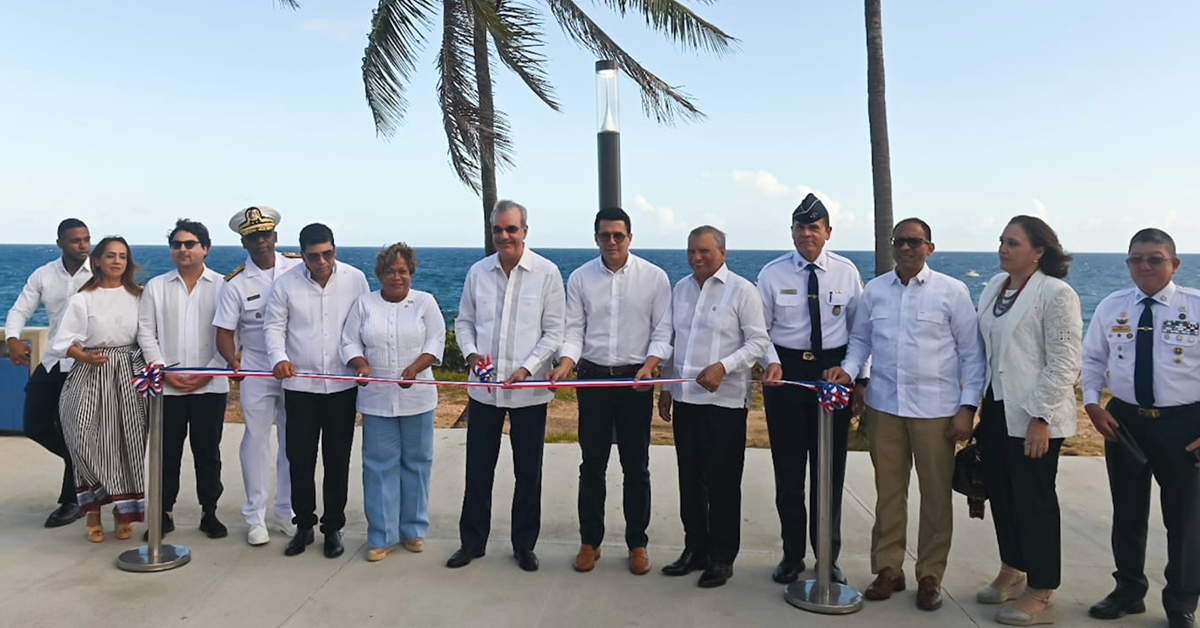
The sea is constant along Avenida España. Fishing boats rock just offshore. Vendors line stretches of the waterfront with fried fish, yaniqueques and cold drinks. Cars pass with the windows down. And now, for more than 4 kilometers along the Caribbean coast in Santo Domingo Este, there’s a completely rebuilt oceanfront corridor connecting parks, bike paths, plazas and wide pedestrian walkways beside the water.
This week, Dominican Republic President Luis Abinader and Tourism Minister David Collado officially inaugurated the second phase of the reconstruction of the Malecón de Santo Domingo Este, completing one of the biggest recent waterfront redevelopment projects in the capital region.
It’s part of a broader push to refashion similar boulevards around the Dominican Republic.
The finished project covers the coastline along Avenida España, from the Dominican Naval Base to Las Américas Highway, with a total investment of more than $11.6 million USD.
It’s another major piece of the Dominican Republic’s broader push to rebuild public waterfronts across the country, from urban boardwalks to tourism-focused seaside promenades.
The rebuilt malecón stretches across roughly 4.1 kilometers of coastline on the eastern side of the capital, an area that has become one of the fastest-growing parts of greater Santo Domingo over the last decade.
The second phase alone required an investment of more than $5.3 million USD, according to Dominican officials.
What travelers will notice immediately is how much of the project is designed for actual daily use. There are new pedestrian promenades beside the ocean, dedicated cycling paths, landscaped green zones, internal walking routes and a series of small public plazas facing the Caribbean.
The project also added 11 parking areas, upgraded drainage systems, new exterior lighting and expanded recreational gathering spaces along the waterfront.
The result is a much longer continuous stretch of accessible coastline in a city where the ocean has historically been difficult to experience on foot outside limited sections of the capital’s traditional malecón.
The Dominican Republic has spent the last several years aggressively rebuilding oceanfront public infrastructure across multiple destinations.
You see it in places like Samaná, Puerto Plata, Pedernales and sections of the capital region, where the government has increasingly focused on turning waterfronts into active public tourism corridors instead of underused roadways.
Collado said this week that the Santo Domingo Este project forms part of a national strategy centered on recovering the country’s malecones and maritime public spaces.
“It is time that we stop living with our backs to the sea,” Collado said during the inauguration ceremony.
That idea has increasingly shaped tourism development in the Dominican Republic, particularly in urban destinations where public shoreline projects now function both as tourism infrastructure and as local recreation space.
In Santo Domingo Este, the rebuilt waterfront creates a much more connected oceanfront district along Avenida España, an area already known among locals for seafood restaurants, nightlife spots and Caribbean views across the water toward the Colonial Zone skyline.
Avenida España has long been one of the capital’s most active waterfront roads, particularly at night and on weekends.
The coastline here curves beside the Caribbean with uninterrupted water views, fishing piers and open-air dining areas that become especially busy after sunset.
You’ll find seafood restaurants serving fried snapper, mofongo and lobster beside casual bars with live music and outdoor terraces facing the sea. The avenue is also home to some of the metro area’s most recognizable nightlife venues and entertainment complexes.
The rebuilt malecón adds broader pedestrian connectivity to that experience.
Instead of isolated stretches of sidewalk and disconnected roadside viewpoints, the project creates a more continuous waterfront route with landscaped public areas, bike lanes and recreational plazas integrated directly into the coastline.
The development also includes more than 237,000 square meters of natural park areas, giving the eastern side of Santo Domingo one of its largest oceanfront green corridors.
For years, the Dominican Republic’s tourism identity centered overwhelmingly on resort destinations like Punta Cana, La Romana and Puerto Plata.
That has gradually changed.
Santo Domingo has become a larger tourism focus for the country, particularly as airlift continues expanding at Las Américas International Airport and cruise tourism grows along the southern coast.
The capital region has also seen major hotel investment in recent years, including new urban hotels, branded luxury projects and redevelopment efforts across both the Colonial Zone and eastern districts of the city.
Public-space projects like the Santo Domingo Este malecón are part of that broader strategy.
Urban waterfronts increasingly function as tourism assets in Caribbean capitals, especially in destinations where travelers are extending resort stays into city experiences that include restaurants, nightlife, culture and sports.
The rebuilt coastline also arrives as Santo Domingo continues positioning itself as a year-round event destination, with concerts, festivals, baseball tourism and culinary travel all driving additional visitation.
If you visit Santo Domingo, the eastern side of the city now offers a far more developed waterfront experience than it did even a few years ago.
You can walk or cycle beside the Caribbean for extended stretches along Avenida España, stop at oceanfront restaurants, spend time in the new plazas and green areas, and stay within easy reach of both the Colonial Zone and the airport.
The corridor is particularly attractive for travelers staying near the eastern edge of the capital or arriving for short city stays before heading onward to beach destinations elsewhere in the Dominican Republic.
The rebuilt malecón also adds another public-facing Caribbean waterfront to a country that has increasingly prioritized open-air coastal infrastructure as part of its tourism identity.
And in Santo Domingo Este, one of the Dominican Republic’s busiest and fastest-growing municipalities now has a completely transformed front door facing the sea.
If you want to stay close to the capital’s urban energy while remaining near the waterfront, The Catalonia Santo Domingo remains one of the strongest options along the traditional malecón, with Caribbean-facing rooms and direct ocean views along George Washington Avenue.
In the Colonial Zone, The Kimpton Las Mercedes has quickly become one of the city’s most talked-about hotels, pairing restored historic architecture with rooftop dining and a location within walking distance of Santo Domingo’s major historic landmarks.
Travelers looking for quick airport access and proximity to Santo Domingo Este often choose The Hampton by Hilton Santo Domingo Airport, particularly for short overnight stays before continuing to beach destinations elsewhere in the country.
The post The Dominican Republic Just Finished a Massive New Oceanfront Boulevard in Santo Domingo appeared first on Caribbean Journal.