The Dream Of The United Nations Though Deferred Is Still Alive
By Dr. Lawrence Wittner Photos: Wikimedia Commons On March 1, 1945, only six weeks before his death, U.S. President Franklin D. Roosevelt delivered an address to Congress that pointed toward a sweeping transformation of international relations. With the Axis powers tottering toward defeat in World War II, Roosevelt reported that the recently concluded Yalta conference of Allied leaders had agreed upon “a common ground for peace.” It would “spell the end of the system of unilateral action, the exclusive alliances, the spheres of influence, the balances of power, and all the other expedients that have been tried for centuries―and have always failed.” These approaches would be replaced by “a universal organization,” a “permanent structure of peace upon which we can begin to build . . . that better world in which our children and grandchildren . . . must live, and can live.” As a follow-up, delegates from 50 nations met in San Francisco from April 25 to June 26, 1945 and drafted the United Nations Charter. Although the Charter affirmed “faith in fundamental human rights, in the dignity and worth of the human person, in the equal rights of men and women and of nations large and small” and promised to promote “justice,” “social progress,” and “better standards of life in larger freedom,” its first proclaimed goal (and top priority) was “to save succeeding generations from the scourge of war.” In subsequent decades, the United Nations did an effective job of encouraging human rights and social progress. The 1948 Universal Declaration of Human Rights, which Eleanor Roosevelt occupied a pivotal role in drafting and promoting, represented a substantial advance in social, cultural, and economic rights. In addition, the United Nations played an essential part in the widespread decolonization process in Africa, Asia, and the Caribbean, in promoting economic development and public health in impoverished nations, and in developing international agreements to address environmental issues. Ironically, however, when it came to preventing military aggression and war, the UN record was less impressive. Yes, the international organization successfully mediated more than 170 peace settlements, deployed over 70 peacekeeping missions to stabilize post-conflict zones, and fostered important measures for arms control and disarmament. Nevertheless, more than 285 military conflicts have erupted around the world in the years since 1945, taking a vast human and economic toll. Furthermore, the number of wars between nations has increased sharply over the past decade, reaching, in 2025, the highest level since World War II. If the United Nations has fallen short of its goal of ending war, this is largely due to the behavior of the “great powers.” The United States, the Soviet Union (and its successor, Russia), France, Britain, and China have employed their veto at least 320 times in the UN Security Council to frustrate UN action. They have also been leading participants in some of the world’s most disastrous wars fought since 1945―in Korea, Hungary, Indochina, Algeria, Afghanistan, Iraq, Syria, Ukraine, and numerous other nations. With the United Nations frequently hobbled by the most powerful nations, the defense of peace has often been left to citizen activism, especially the peace movement. And, indeed, that movement has managed to stir up popular opposition to militarism, occasionally succeeding in bringing wars to an end. Working with its natural allies among smaller nations and at the United Nations, the movement has been particularly successful at generating nuclear arms control and disarmament measures. Sometimes the movement even made converts among the leaders of the major powers. Soviet party leader Mikhail Gorbachev, the key government official who brought the Cold War to an end, credited much of his “New Thinking” to the nuclear disarmament activism of his time. In a remarkable address, delivered on December 7, 1988, Gorbachev told the United Nations that “the use or threat of force no longer can . . . be an instrument of foreign policy.” In their place, he said, the world needed the establishment of a strong international security system, under the direction of a revitalized United Nations. It was time “put an end to an era of wars, confrontation and regional conflicts,” he said. “This is our common goal, and we can only reach it together.” Although Gorbachev was swept from power thanks to the dissolution of the Soviet Union, another government official, Barack Obama, took up his role. Deeply influenced when still a student by the nuclear disarmament movement of the 1980s, Obama, during his 2008 presidential campaign, promised to seek “the peace of a world without nuclear weapons.” After his election as President of the United States, he followed through by chairing a dramatic meeting of the UN Security Council―only the fifth in the Council’s history held at the level of heads of state―that
 Black News
Photos: Wikimedia Commons
On March 1, 1945, only six weeks before his death, U.S. President Franklin D. Roosevelt delivered an address to Congress that pointed toward a sweeping transformation of international relations.
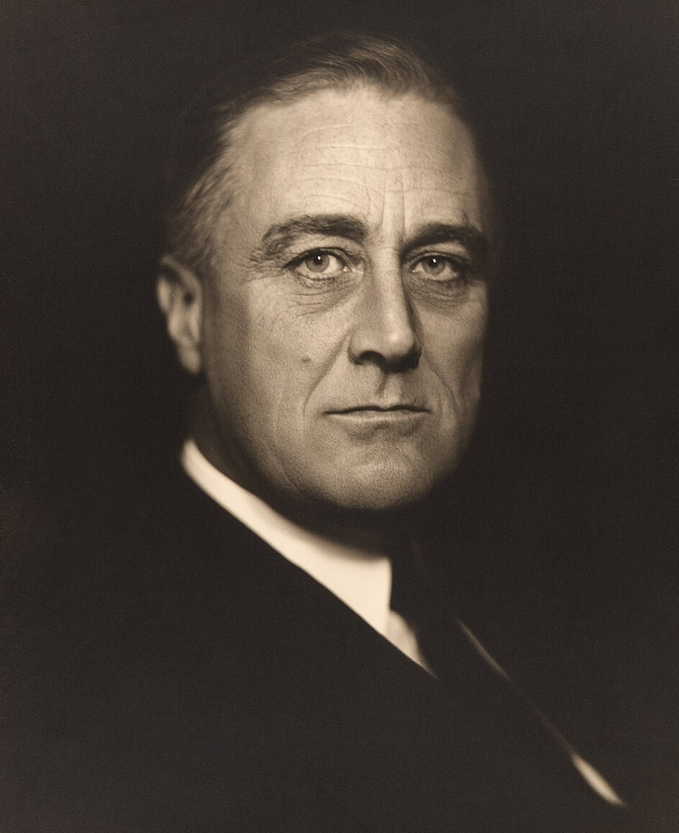
With the Axis powers tottering toward defeat in World War II, Roosevelt reported that the recently concluded Yalta conference of Allied leaders had agreed upon “a common ground for peace.” It would “spell the end of the system of unilateral action, the exclusive alliances, the spheres of influence, the balances of power, and all the other expedients that have been tried for centuries―and have always failed.” These approaches would be replaced by “a universal organization,” a “permanent structure of peace upon which we can begin to build . . . that better world in which our children and grandchildren . . . must live, and can live.”
As a follow-up, delegates from 50 nations met in San Francisco from April 25 to June 26, 1945 and drafted the United Nations Charter. Although the Charter affirmed “faith in fundamental human rights, in the dignity and worth of the human person, in the equal rights of men and women and of nations large and small” and promised to promote “justice,” “social progress,” and “better standards of life in larger freedom,” its first proclaimed goal (and top priority) was “to save succeeding generations from the scourge of war.”
In subsequent decades, the United Nations did an effective job of encouraging human rights and social progress. The 1948 Universal Declaration of Human Rights, which Eleanor Roosevelt occupied a pivotal role in drafting and promoting, represented a substantial advance in social, cultural, and economic rights. In addition, the United Nations played an essential part in the widespread decolonization process in Africa, Asia, and the Caribbean, in promoting economic development and public health in impoverished nations, and in developing international agreements to address environmental issues.
Ironically, however, when it came to preventing military aggression and war, the UN record was less impressive. Yes, the international organization successfully mediated more than 170 peace settlements, deployed over 70 peacekeeping missions to stabilize post-conflict zones, and fostered important measures for arms control and disarmament. Nevertheless, more than 285 military conflicts have erupted around the world in the years since 1945, taking a vast human and economic toll. Furthermore, the number of wars between nations has increased sharply over the past decade, reaching, in 2025, the highest level since World War II.
If the United Nations has fallen short of its goal of ending war, this is largely due to the behavior of the “great powers.” The United States, the Soviet Union (and its successor, Russia), France, Britain, and China have employed their veto at least 320 times in the UN Security Council to frustrate UN action. They have also been leading participants in some of the world’s most disastrous wars fought since 1945―in Korea, Hungary, Indochina, Algeria, Afghanistan, Iraq, Syria, Ukraine, and numerous other nations.
With the United Nations frequently hobbled by the most powerful nations, the defense of peace has often been left to citizen activism, especially the peace movement. And, indeed, that movement has managed to stir up popular opposition to militarism, occasionally succeeding in bringing wars to an end. Working with its natural allies among smaller nations and at the United Nations, the movement has been particularly successful at generating nuclear arms control and disarmament measures.
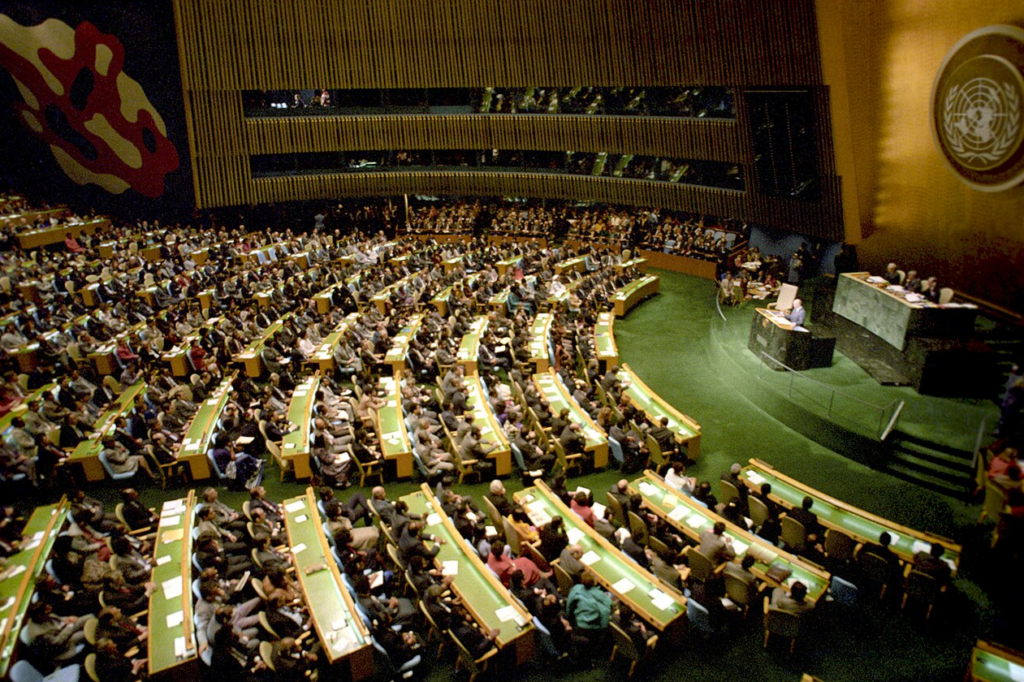
Sometimes the movement even made converts among the leaders of the major powers. Soviet party leader Mikhail Gorbachev, the key government official who brought the Cold War to an end, credited much of his “New Thinking” to the nuclear disarmament activism of his time. In a remarkable address, delivered on December 7, 1988, Gorbachev told the United Nations that “the use or threat of force no longer can . . . be an instrument of foreign policy.” In their place, he said, the world needed the establishment of a strong international security system, under the direction of a revitalized United Nations. It was time “put an end to an era of wars, confrontation and regional conflicts,” he said. “This is our common goal, and we can only reach it together.”
Although Gorbachev was swept from power thanks to the dissolution of the Soviet Union, another government official, Barack Obama, took up his role. Deeply influenced when still a student by the nuclear disarmament movement of the 1980s, Obama, during his 2008 presidential campaign, promised to seek “the peace of a world without nuclear weapons.” After his election as President of the United States, he followed through by chairing a dramatic meeting of the UN Security Council―only the fifth in the Council’s history held at the level of heads of state―that proclaimed a commitment to the goal of a world free of nuclear weapons. UN Secretary-General Ban Ki-moon termed it “an historic event.”
But the end of the Cold War provided the best opportunity for a decisive turn toward peace, and that opportunity had already passed. Neither Gorbachev’s successors nor Congressional Republicans could stomach Obama’s proposal, which sank amid a rising tide of right-wing nationalism. New government leaders like Donald Trump, Vladimir Putin, and Benjamin Netanyahu took power, assailing the United Nations and embarking on programs of weapons buildups, unilateral action, and wars.
Even so, the books have not been closed on the future. As opinion polls reveal, public support for heightened global cooperation is widespread, as is public disdain for military invasions and occupations of other lands. The smaller nations of the world are revolting against the major military powers, as revealed by overwhelming votes at the United Nations to condemn great power military aggression and to implement the UN Treaty on the Prohibition of Nuclear Weapons―now ratified by more than half the world’s countries. Recently, in fact, an international campaign has begun to strengthen the United Nations by amending its Charter.
The dream has been deferred, but it remains alive.
Dr. Lawrence Wittner, syndicated by PeaceVoice, is Professor of History emeritus at SUNY/Albany and the author of Confronting the Bomb (Stanford University Press).