The Gambia’s security dependence and the erosion of sovereignty: An analysis of the Bulock incident
Dr Malang Faye The 17 July 2026 incident at the Bulock Military Camp in Foni, The Gambia is not a routine border understanding between two neighbouring states. This is a manifestation of the security dilemma that small states face when they invite external powers into their domestic sphere. The Senegalese soldiers operating under the Ecowas […]
 Black News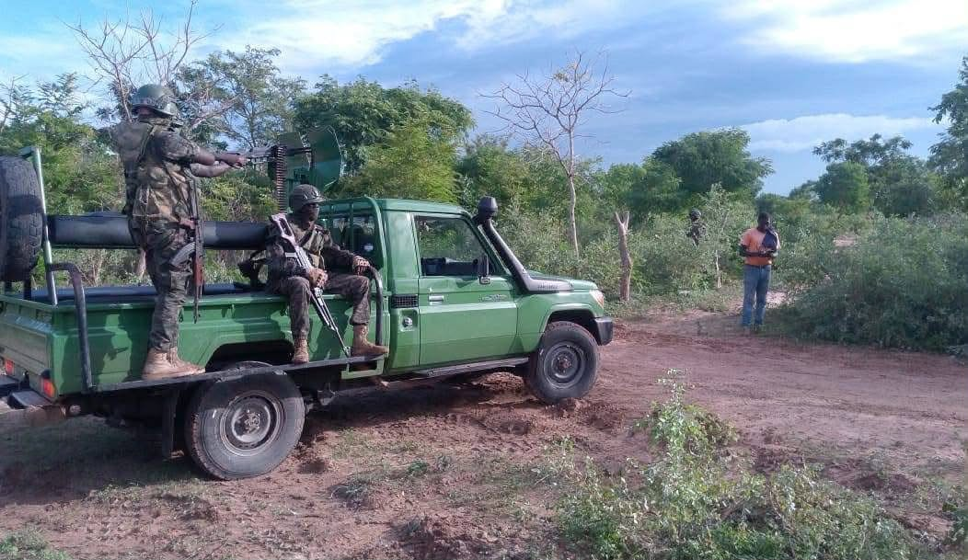
Dr Malang Faye
The 17 July 2026 incident at the Bulock Military Camp in Foni, The Gambia is not a routine border understanding between two neighbouring states. This is a manifestation of the security dilemma that small states face when they invite external powers into their domestic sphere. The Senegalese soldiers operating under the Ecowas Mission in The Gambia (ECOMIG) since 2017 has attracted debate at national level about security. However, crossing into a sovereign country’s military installation and demolishing approximately 200 metres of a perimeter fence with a bulldoser, is not merely removing a physical barrier. This has exposed the fundamental weaknesses of a state that has allowed its security architecture to become externally dependent.
The Gambian government called this action “profoundly provocative and totally unacceptable”. But words are not enough. The government also praised its troops for showing “exemplary professionalism and restraint”. That is diplomatic language for saying they did nothing. In reality the Gambian soldiers were demonstrating the practical reality of sovereignty deferred. This is not diplomacy. This is strategic subordination dressed in the language of statecraft. States, like individuals in a state of nature, exist in an anarchic international system where survival depends ultimately on self-help. When a state voluntarily outsources its security to external actors, it does not merely acquire protection, rather it also creates a patron-client relationship that systematically erodes its autonomy.
The decision in 2017 to host Ecomig forces was framed as a temporary stabilisation measure. These temporary measures have become permanent structures. Stabilisation has mutated into substitution. The evidence of this transformation is now visible in plain sight. Senegalese forces do not merely occupy a symbolic presence and this has prompted serious national conversation on SSR and the government on it’s own security apparatus. From the Senegalese soldiers checkpoints along the Bwiam Highway, positions near and within the State House in Banjul, to their freedom of movement, would be unthinkable in any state that retained full control over its own security apparatus. All of these did not arise without consequences. For example, the fatal accidents that have occurred at Senegalese checkpoints or the clashes that have resulted in Gambian civilian deaths etc. The repeated calls for their removal by local leaders including Foni Kansala lawmaker Almameh Gibba, are not isolated grievances. They are the predictable consequences of allowing a foreign military to embed itself in the domestic security architecture of a sovereign state. The argument that these forces operate under an Ecowas mandate is technically true but strategically irrelevant. We need to understand that mandates do not alter power dynamics. They legitimise them.
The demolition of the Bulock camp fence is analytically significant precisely because it was so brazen. This was not a covert operation. It was not conducted under the cover of darkness by special forces seeking plausible deniability. Senegalese soldiers arrived with heavy equipment at a Gambian military installation and destroyed state property in broad daylight, in full view of Gambian military personnel. The fact that the fence had stood uncontested for 25 years, and that its construction was funded by Gambian taxpayers, underscores the contempt with which Gambian territorial claims were treated. The timing is equally instructive. Why now? Why under the current administration? These are not questions that can be answered with reference to colonial-era border demarcations. The Gambian government’s hands are tight in this situation. Why? Because Senegalese troops are already inside the country. They are operating under an Ecowas mandate. If the Gambian military had resisted, we could have had a shooting war between two brotherly nations. The government is caught between protecting sovereignty and avoiding open conflict. That is a real constraint. But that constraint exists only because we allowed foreign troops to remain on our soil for nearly a decade. This is the trap of security dependence: the patron provides protection not merely against external threats, but against the client’s own capacity for autonomous action.
Let’s try to analysis and distinguish between the various contingents operating under Ecomig. Although Nigerian and Ghanaian forces have rotated out, the Senegalese forces remain and they remain in substantial numbers. If we relied on reports, a single Senegalese battalion alone comprised 745 personnel. These are not peacekeepers. These are troops from a neighbouring country with its own territorial ambitions. The argument for keeping them is that they provide security. But what security? A Gambian military camp was just demolished by the very forces that are supposed to be helping. Senegalese troops have been accused of overstepping their mandate repeatedly. They have been involved in clashes that killed Gambian citizens. The security they provide comes at the cost of Gambian sovereignty. That is too high a price. That is not a border dispute. That is a demonstration of effective control by an external power. The argument here is not for a rupture in Gambian-Senegalese relations. The “brotherly relationship” between these two states carries genuine historical and cultural weight. But brotherhood in international relations requires mutual respect. One brother does not build a fence and watch the other tear it down with a bulldozer. Mutual respect requires the recognition that The Gambia is a sovereign state with the inherent right to control its own territory.
As the Commander-in-Chief, President Barrow bears both the constitutional and moral responsibility to defend the territorial integrity of The Gambia. This responsibility cannot be discharged through rhetorical condemnation alone. It requires concrete strategic action. First, the Gambian government must formally demand the withdrawal of Senegalese military contingents operating under Ecomig. Second, this demand must be elevated through diplomatic channels to the Ecowas Secretariat and to the African Union. The principle at stake is not merely bilateral. It concerns the fundamental norms of state sovereignty and territorial integrity. This is what underpin the West African security architecture. Third, The Gambia must accelerate the development of autonomous security capacity. This is not a task that can be completed overnight. But the process must begin with the recognition that external security dependence is not a sustainable long-term strategy. It is a temporary expedient that becomes, if prolonged, it becomes a structural liability. The Gambian Armed Forces must be equipped, trained, and authorised to assume full responsibility for national security. The Bullock incident is a warning. If we do not act now, there will be more incidents. More fences will be torn down. More territory will be claimed. And one day, we will wake up and find that we have given away more than we can afford to lose. The time for restraint is over. The time for action is now.
The author is a public policy and political analyst. He lectures at the University of The Gambia Political Science Unit.