The Pacific as a Mirror
One evening in the early 1960s, physicist Chen Ning Yang took a train from New York City to Long Island. An elderly Chinese man sat next to him and the two struck up a conversation. Born in the central Chinese city of Hefei in 1922, Yang moved across the Pacific at the end of World […] The post The Pacific as a Mirror appeared first on Made in China Journal.
 Black News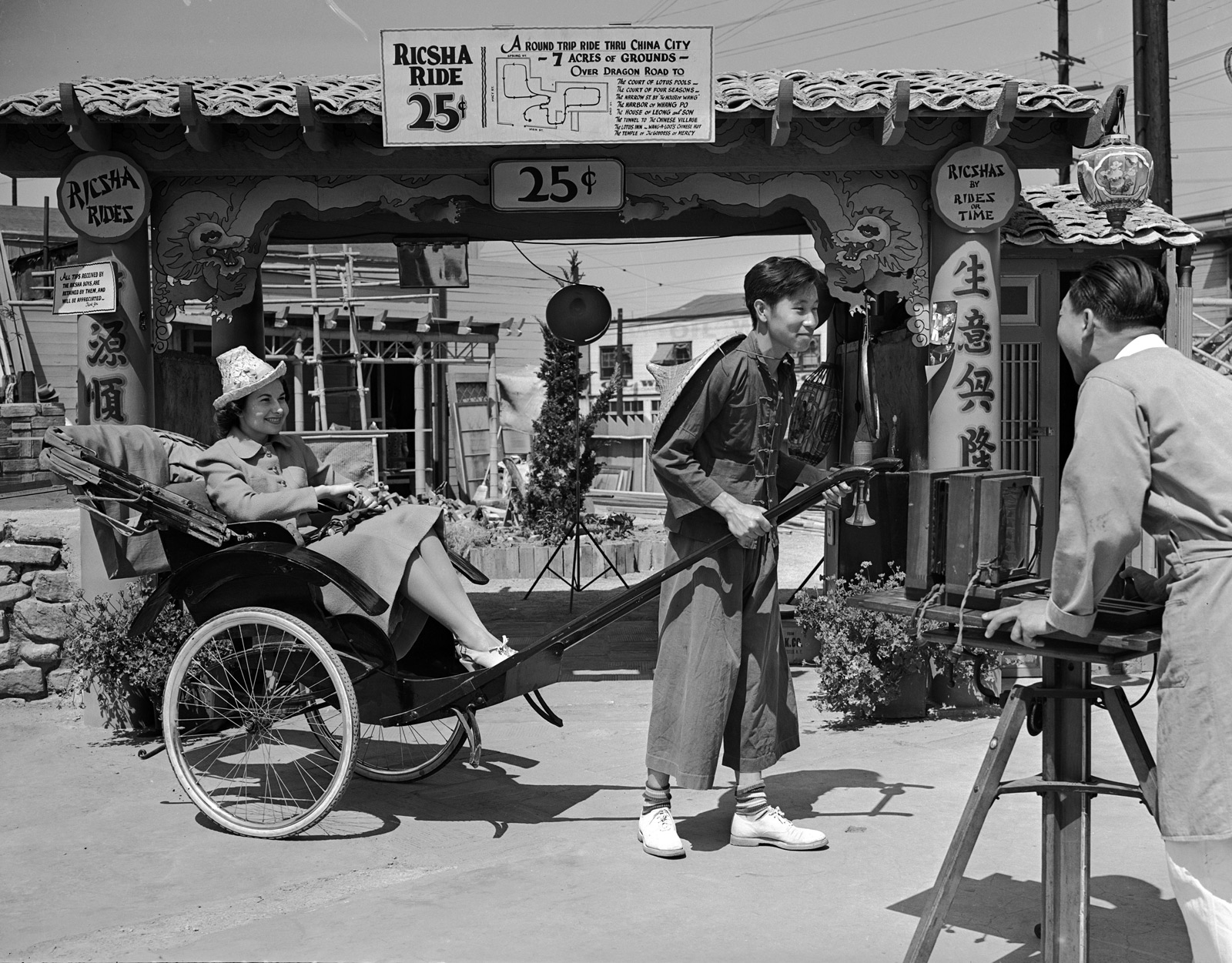
One evening in the early 1960s, physicist Chen Ning Yang took a train from New York City to Long Island. An elderly Chinese man sat next to him and the two struck up a conversation. Born in the central Chinese city of Hefei in 1922, Yang moved across the Pacific at the end of World War II on a Boxer Indemnity Scholarship to pursue doctoral studies at the University of Chicago. After graduation, he stayed on in the United States and, in 1957, he and his schoolmate Tsung-Dao Lee became the first two China-born Nobel laureates, their groundbreaking theory in elementary particle physics having been experimentally proven by a team led by fellow Chinese scientist Chien-Shiung Wu, a professor at Columbia University. During his Nobel banquet speech, Yang recounted his journey across the oceans and how his career had been shaped by China’s violent encounters with the West:
As I stand here today and tell you about these, I am heavy with an awareness of the fact that I am in more than one sense a product of both the Chinese and Western cultures, in harmony and in conflict. (Nobel Prize 2026)
At the time of the train ride, Yang was a professor at the Institute of Advanced Studies in Princeton. His seatmate was three decades his senior. The older man was born in the eastern Chinese province of Zhejiang and had lived in the United States for half a century. Never married, he lived by himself and scraped by doing laundry and washing dishes. ‘He had a ready, friendly smile,’ Yang wrote years later. ‘I kept wondering whether that meant he had no bitterness’ (Yang 2005: 56–57).
The Chinese in America are not a monolith. To apply a concept developed by sociologist Peter Kwong (1996), Yang and the old man belonged to two distinct classes: the ‘uptown’ and the ‘downtown’ Chinese. Their social stratification stemmed from their family backgrounds in China, where Yang’s father was a US-educated mathematician and professor at Tsinghua University. Contrary to the myth that America offers equal opportunities to all, the divisions between the uptown and the downtown Chinese have been aggravated by immigration policy and class politics in the United States (Hsu 2015). For instance, during the period of official Chinese exclusion from 1882 to 1943, merchants and students were exempt. In the decades since World War II, US immigration laws have continued to favour the business and technical elite, while discriminating against manual labourers.
Yet, no amount of class privilege can completely shield one from racial hostilities. In 1954, Yang and his wife tried to purchase a house near Princeton and were rejected because they were Chinese. Meeting the old man on the train a few years later evoked a deep bond rooted in their shared heritage and immigration experience; it also exposed the distance between people who might look and sound alike. As Yang watched the old man shuffle down the aisle to get off the train, his steps wobbly and his back bent with age, the Nobel laureate ‘was filled with a mixture of sadness and rage’ (2005: 56–57).
Since the first groups of Chinese people arrived on American shores in the nineteenth century, generations have braved the transpacific voyage. Four new books explore the complexities of Chinese lives in the United States and the lasting consequences of these cross-border exchanges. Their stories span from the mid-nineteenth century to the present day, from the impoverished margins to the upper echelons of wealth and status. Many of the sojourners sought a permanent home in their adopted country while contending with cultural differences and the cost of assimilation. Some returned to China and played an important role in its pursuit of modernity. A lucky few found success on both sides of the Pacific.
But, as the quartet of books shows, the impact of Chinese experiences with the United States is not just about what the Chinese people themselves have done; more importantly, the consequences are realised through how they are received and perceived in both their adopted country and their ancestral homeland. The US border hardened through the control of Chinese bodies and the American empire rose by projecting power across the Pacific. At the same time, the Chinese Communist Party (CCP) has charted its own course of national development by both demonising and emulating the United States, sometimes simultaneously.
As great-power rivalry exacerbates xenophobia and economic competition entrenches class hierarchy, the histories contained in these four volumes offer urgent lessons for our present juncture. The individuals depicted survived turbulent times, navigated treacherous political terrains, and made divergent choices that tested conventions. Their stories lay bare the shifting boundaries between the citizen and the alien, the criminal and the law, allegiance and betrayal, and progress and regression. The heart of the question, then, is not what it means to be Chinese or American, or whether one can be both, but what it means to be human and to be at home in the world.
John Doe Chinaman
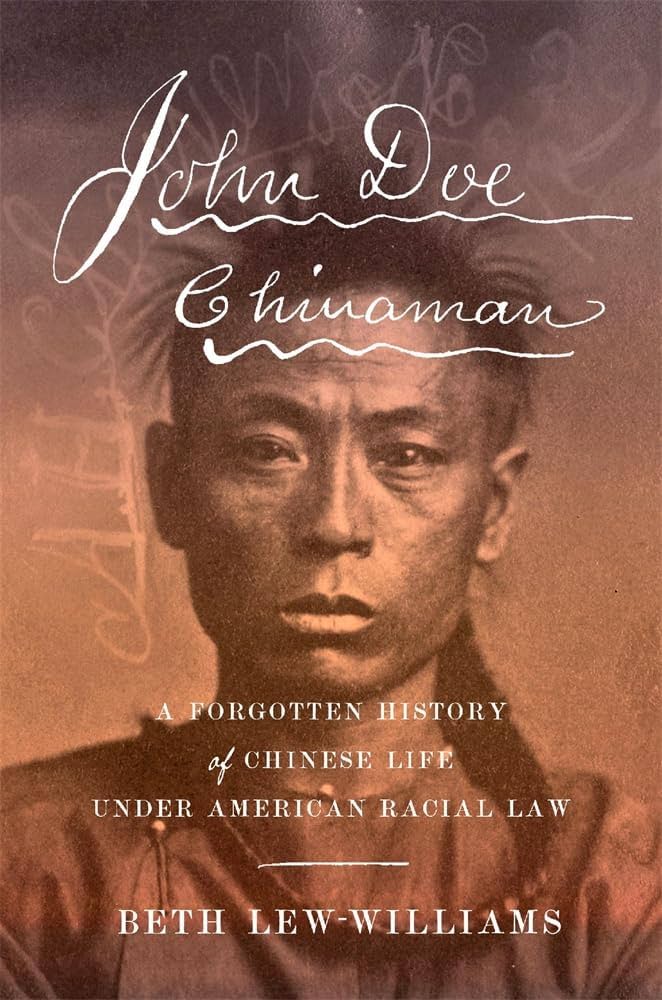
A page from the 1852 census schedule in Tuolumne County, California, contains 45 entries. The first name is ‘John Chinaman’, followed by 44 listings of people simply referred to as ‘Chinaman’. All are male. Their places of birth and last residences are listed uniformly as ‘China’. Their professions? ‘China’ (Lew-Williams 2025: 63).
The same census counted 2,581 Chinese residents in San Francisco, but only two dozen of them were listed by name. ‘The rest were simply anonymous, interchangeable, inscrutable “Chinamen” or, occasionally, “Chinawomen”’, Beth Lew-Williams (2025: 4) writes in her groundbreaking new book, John Doe Chinaman: A Forgotten History of Chinese Life Under American Racial Law, which has received the prestigious Bancroft Prize.
A Professor of History at Princeton University, Lew-Williams published her first book in 2018—The Chinese Must Go: Violence, Exclusion, and the Making of the Alien in America—in which she chronicled the debates among white American elites about the Chinese Exclusion Act and reactions from the Chinese community. In the acknowledgements, Lew-Williams thanked her grandfather, Lew Din Wing, who, as a nine-year-old in the early 1930s, had been held at an immigration detention centre on Angel Island for 34 days (Lew-Williams 2018: 339–40). Her new book shifts the focus from the point of entry to the great interior, painstakingly reconstructing the intricacies of Chinese life before and during the decades of federal exclusion. As she points out, ‘(e)xclusion and inclusion coexisted’ and the legal landscape for Chinese presence in the United States throughout this period should be understood not as blanket rejection but rather as ‘conditional inclusion’, in which the Chinese population was ‘granted access to a highly stratified society in carefully controlled ways’ (Lew-Williams 2025: 10).
Utilising digital tools and ‘big data’ methods, Lew-Williams (2025: 7) and her team identified more than 5,000 state and local laws and legal provisions that ‘regulated Chinese residents, directly or indirectly’, between 1850 and 1920. The statutes relied on and reinforced racist stereotypes. Their passage and uneven enforcement created a web of entrapment that curtailed Chinese movement and cultural expression and constrained Chinese livelihoods.
For a period in the second half of the nineteenth century, after the violent removal of Native Americans and before large-scale Black migration, the Chinese were the most visible non-white group in western US states such as California. Initially, the perceived threat from the Chinese population was mainly to white employment, not to public safety. An 1852 article in The Daily Alta California described Chinese migrants as ‘the most peaceable, unmolesting and inoffensive class of adventurers that come among us’, while acknowledging the potential impact on the white working class (Lew-Williams 2025: 66).
Despite their immense contributions to the American economy and industrial development—most notably, in the construction of the transcontinental railroad—Chinese workers were accorded few legal protections or civil rights. Castigated as forever alien and racially inferior, Chinese residents were barred from naturalising as US citizens or testifying against white defendants in court. Overexploited yet underprotected, the Chinese community turned inward and relied on self-policing. Starting in the 1850s, hometown merchant associations known as huiguan became the chief arbiters of informal, community-based laws. As Lew-Williams (2025: 75) explains, in the eyes of US officials, Chinese attempts at internal regulation became ‘evidence of their inherent criminality’. They were seen as operating outside the justice system and challenging US sovereignty.
Laws do not just respond to crime; they also invent the criminal. Politically disenfranchised and socially ostracised, Chinese residents were squeezed into ethnic enclaves by racially restrictive covenants and white vigilante violence, and many were forced to subsist in the shadow economy. As huiguan distanced themselves from ‘vice’ trades such as gambling and sex work, the tongs (sworn brotherhood societies) stepped in, presenting themselves as ‘a workingman’s alternative to the elitism of the merchant-run huiguan’, Lew-Williams (2025: 72) writes. Bloody turf wars between rival tongs solidified the image of the ruthless Chinese in the white imagination.
The racist logic that the Chinese were born criminals became self-fulfilling when state and local legislatures passed new rules targeting the Chinese population or Chinese customs. Businesses such as laundries and boarding houses were subject to a litany of bureaucratic hurdles. Among a long list of prohibited practices were ‘the use of firecrackers’, ‘the carrying of baskets upon poles while walking on the sidewalk’, and ‘the playing of gongs in theatrical productions’ (Lew-Williams 2025: 77).
Chinese people fought back. They sued to end discriminatory measures, including racial segregation in schools and theatres. Sometimes their responses splintered along class lines. Eager to present themselves as productive members of American society and gain economic citizenship, Chinese merchant leaders in San Francisco initially endorsed the Foreign Miners’ Tax in California, but they withdrew their support when the law was amended to add spiralling increments that would make it financially impossible for Chinese miners to work in the United States. The huiguan and white missionary sympathisers protested the change and several Chinese miners challenged the law in court. Seventeen years after it was introduced, the Foreign Miners’ Tax was finally struck down, in 1870, on the basis of racial discrimination.
Faced with fierce resistance from the Chinese community and new federal demands for equal protection in the Reconstruction era, officials in western US states shifted their strategy. Explicitly racial, identity-based laws were revised or replaced with statutes that adopted ostensibly race-neutral language but disproportionately affected the Chinese population by targeting aliens ineligible for citizenship, poor people, or behaviours mostly associated with Chinese customs. For instance, in the 1870s, the Lodging House Laws, also known as the Cubic Air Acts, criminalised Chinese living spaces for being overly crowded—hence, unsanitary and immoral. In response, the Chinese residents of San Francisco simply refused to pay the fines, correctly believing that the city did not have enough jail space to incarcerate them all. Overcrowding the jails proved to be an effective countermeasure, until the authorities passed a new ordinance that imposed haircuts on male prisoners in the name of hygiene, meaning the Chinese detainees would lose their queues.
In addition to mounting legal challenges and rallying public support, Chinese community leaders utilised diplomatic channels to voice their complaints. In 1878, Yung Wing, the first Chinese graduate of an American university (Yale College, Class of 1854) and an envoy of the Qing Court overseeing the Chinese Educational Mission, wrote to the US Secretary of State to protest the mistreatment of his countrymen, pointing out that statutes ‘such as “the law of cubic meter air” and “the law of cutting the pig tail”’ were in violation of the bilateral Burlingame Treaty of 1868, which granted Chinese migrants ‘the same privileges, immunities and exemptions in respect to travel and residence’ in the United States as citizens from ‘the most favored nation’, except for the path to naturalisation (Lew-Williams 2025: 116). The 1880 Angell Treaty reaffirmed this promise while acknowledging the abuses Chinese people had suffered in the United States.
As Lew-Williams (2018: 20) detailed in her first book, The Chinese Must Go, how the United States should treat Chinese arrivals ‘was not simply a question about race … More fundamentally, it was a question about the nature of the American empire’ and a debate about competing visions of settler colonialism versus overseas expansion. Proponents of the latter envisioned the United States not as a white colony but as a global empire, where China presented rich opportunities for commercial exploitation and political influence. Their vocal interventions delayed the passage of the Chinese Exclusion Act and complicated its enforcement. US authorities ‘lacked the power, capacity, and will to end Chinese migration’, Lew-Williams (2025: 241) writes in her new book, and deportations from the interior were rare. Yet, the very possibility of removal encased the Chinese residents in a state of constant fear and made them more vulnerable to exploitation. Rendered ‘perpetually precarious’, the Chinese in America faced a dilemma: asking the Chinese Government to apply diplomatic pressure could alleviate their plight, but it would also reinscribe their foreignness.
Lure of the Orient
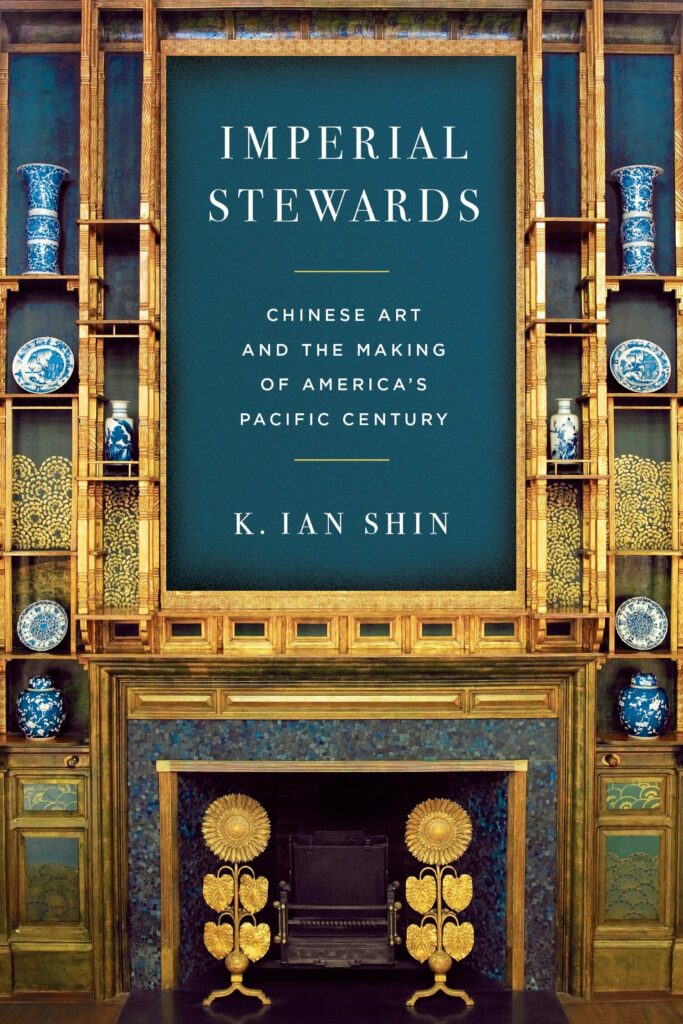
While the country was banishing its Chinese residents as criminal aliens, artworks from China became coveted treasures among American elites. The United States tried to distinguish itself from older European empires by pursuing friendlier ties with China, and possession of Chinese porcelain and paintings formed another battleground for imperial rivalry across the Atlantic. The politics of Chinese art collection and study in the United States is the subject of historian K. Ian Shin’s impressive debut book, Imperial Stewards: Chinese Art and the Making of America’s Pacific Century (2025). A first-generation American, Shin was born in Hong Kong, grew up in California, and now teaches at the University of Michigan. As he explains in his sharp, carefully researched volume, the paternalistic logic of US imperial stewardship deemed Chinese art and antiquities as belonging ‘not only to China but indeed to all of humanity’, while simultaneously casting Americans as ‘singularly qualified’ to comprehend and care for these works (Shin 2025: 2).
Collectors and dealers in the United States overrode Chinese claims to art from China. The self-appointed imperial stewards nevertheless relied on the knowledge, labour, and mobility of Chinese intermediaries to fulfil their acquisitions. ‘Chinese people played a role at every point in the long chain of events that transported art objects’ across the Pacific, Shin (2025: 118) writes. Local agents in China identified and evaluated the artworks. Workers packed and shipped the items. Translators rendered the Chinese-language inscriptions and related texts into English. Art dealers from China, whose merchant status exempted them from the Chinese Exclusion Act, also travelled to the United States, where some blended private interest with public causes. A highlight of the book is its vivid portrayal of several colourful Chinese figures, who were brazen, resourceful, and opportunistic. You Xiaoxi appealed to American national pride in his vocal opposition to a new art sales tax proposed by Congress, which he said would discourage imports and ‘retard’ US progress in the arts (Shin 2025: 137). Huang Zhonghui spoke passionately to the American press on the importance of honouring Chinese ownership and repatriating Chinese art, while he actively arranged sales to foreign buyers. A few years after the Qing Empire was overthrown in 1911 and warlords battled for control of China, Li Jichun sold scores of Chinese paintings without authorisation. When questioned by the police, he cited family hardship, but told his American client the proceeds were intended to fund revolutionary activities in China.
Most of the Chinese characters in Shin’s book enjoyed educational and social advantages that granted them access to the elite art world and, for the privileged few, transpacific mobility at a time of restriction and exclusion. Most Chinese residents in the United States did not have such luxury. Nevertheless, many also took advantage of white America’s fascination with the Orient and made a living by commodifying elements of their cultural heritage. Their stories form the basis of William Gow’s engrossing new book, Performing Chinatown: Hollywood, Tourism, and the Making of a Chinese American Community (2024). An Assistant Professor at California State University Sacramento and a community historian with the Chinese Historical Society of Southern California, Gow has deep family ties with the Chinese community in Los Angeles, on which the book is centred. Legally barred from full citizenship and unable to assimilate into whiteness, Chinese residents in America’s entertainment capital embraced their perceived racial difference and tried to ‘reframe it as a nonthreatening form from which certain Chinese Americans could profit’, Gow (2024: 4) writes. On the streets of Chinatowns and in Hollywood movies, these performers staged a version of Chineseness for mostly white audiences, while ‘shaping, challenging, and creating dominant ideas about Chinese Americans in the popular conscience’ (Gow 2024: 3).
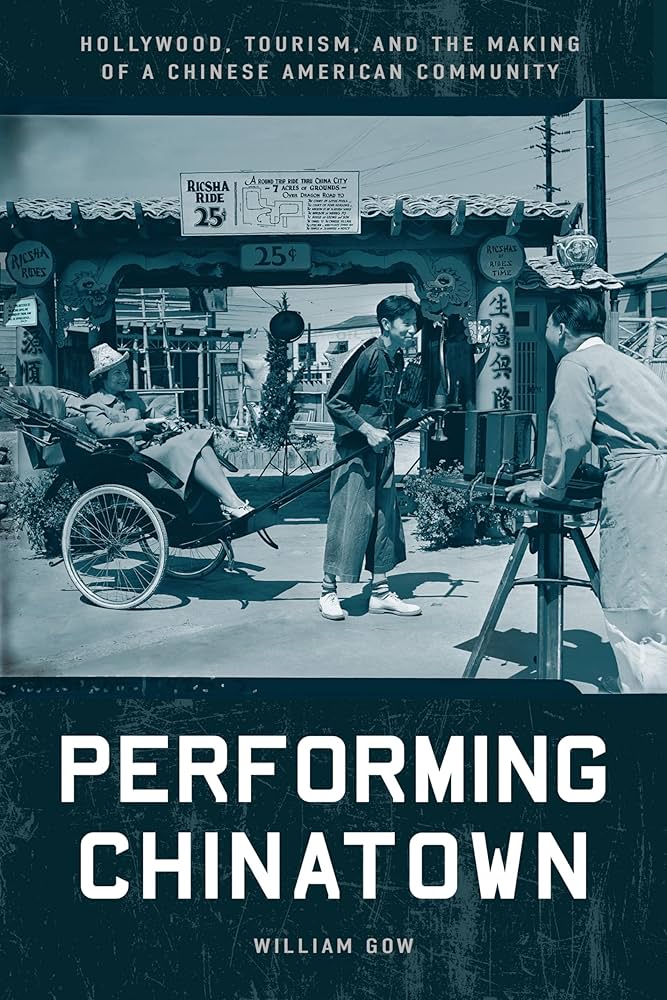
Most of the events in the book took place in Los Angeles in the 1930s and 1940s, but, as Gow points out, Chinatown performances have a much longer history and geographical reach. In the late nineteenth century, the image of San Francisco’s Chinatown as a den of danger and vice was part of its intrigue, and nighttime tours evolved into a lucrative and highly regulated business, in which most of the licensed guides were white men. Just as the residents were seen as anonymous ‘Chinamen’, the guidebooks rarely listed Chinatown establishments by name, identifying them only as ‘the Chinese restaurant’ and ‘the Chinese theater’. The opium den was the central attraction (Gow 2024: 21).
After the Qing Government boycotted the 1893 World’s Fair in Chicago to protest the continuation of Chinese exclusion, Chinese American merchants seized the opportunity to create their own attraction at the event. They hired white architects to design the space. Described by the Chicago Tribune as ‘one of the most picturesque ornaments’, the Chinese Village on the Midway featured a fortune teller, musicians playing traditional Chinese instruments, wickerwork dragons and pagodas, a restaurant and tea garden, and a large indoor bazaar selling silks and tableware (Gow 2024: 29–30).
The ambitious project was a financial failure, but it left a lasting cultural legacy. As Gow (2024: 28) puts it, the spectacle ‘replaced yellow peril stereotypes with the new Chinatown Pastiche’, transforming the imagined Orient into a nonthreatening commodity for the benefit of the Chinese American merchant class. Four decades after the Chinese Village debuted in Chicago, it served as an inspiration for the New Chinatown project in Los Angeles. In 1933, the coastal city approved a new Union Station, to be built on the grounds of its original Chinatown. The Chinese residents were in urgent need of a new home, and the effort to establish a new Chinatown was led by Peter SooHoo, a Los Angeles–born, University of Southern California–educated Chinese American.
A deft broker between his people and white society, SooHoo sought to make New Chinatown a model community showcasing Chinese American self-sufficiency and entrepreneurship. The commendable goal was dimmed as the pursuit of white acceptance and social uplift reproduced hierarchies and exclusion. Seeking a mostly white, middle-class clientele, restaurants in New Chinatown discriminated against Black patrons. Many residents of the original Chinatown were also priced out of the new neighbourhood. They nevertheless found a place in nearby China City—the brainchild of Christine Sterling, a white woman. Its affordability came at a cost. Defined ‘first and foremost by its theatrical elements’, from rickshaw rides to fortune telling, China City was not so much a neighbourhood but ‘a theme park’, Gow (2024: 66–67) writes. Its residents had to conform to a condescending white American fantasy of how Chinese people lived.
Sterling’s vision for China City was deeply influenced by Hollywood depictions of China. While Chinese Americans have appeared on the silver screen since the 1910s and stories about the Orient were a recurring theme in Hollywood features, the films routinely repeated racist tropes, in which the Chinese women were either delicate lotus flowers or menacing dragon ladies, and the men were either menial servants or inscrutable villains. Notable Chinese characters, such as the evil genius Dr Fu Manchu, were almost always played by white actors in yellowface. From cities in California to the international settlement in Shanghai, Chinese actors and viewers protested such derogatory portrayals.
Disturbed by Chinese representation in Hollywood films, the Nationalist government of China dispatched a military official to Los Angeles to oversee the production of The Good Earth in 1935. Based on Pearl S. Buck’s eponymous 1931 novel, the story about a family of hardworking Chinese farmers won praise for its sympathetic lens and captivated white audiences right as the outbreak of war in East Asia stirred American interest in the region. While the leads in The Good Earth were once again portrayed by white actors in dramatic makeup, the film featured more than a dozen Chinese Americans in speaking roles and the studio reportedly hired more than 1,000 Chinese extras, or about one-third of the entire Chinese population in Los Angeles.
A distinct strength of Performing Chinatown is Gow’s thoughtful, nuanced analysis. He does not shy away from critique, nor does he rush to judgement. He tries to understand the people in the book on their own terms and carefully untangles the moral complexities of their actions. While it might feel righteous to write off The Good Earth as just another white woman’s fantasy about the Orient, albeit inspired by Buck’s own experience living in rural China, doing so would also dismiss the contributions of the Chinese American actors in the film, as well as its positive reception among Chinese American viewers at the time. As Gow points out, working as extras in Hollywood productions such as The Good Earth was a vital source of income for Chinese Americans in Los Angeles during the Great Depression, who had been displaced by the demolition of the original Chinatown and were ineligible for many of the New Deal programs that required US citizenship. Chinese American actors and casting agents were able to leverage the increased demand for their labour to negotiate better working conditions; at times, they resorted to diplomatic channels and complained to the new Vice-Consul from the Nationalist government.
After years of toiling in bit roles and as background extras, Chinese Americans in Hollywood encountered an unexpected opening after the Japanese attack on Pearl Harbor: to play Japanese villains. Some, like Richard Loo, embraced the opportunity (New York Times 1983). As Gow explains, professional ambitions were not the sole motivation. Some older Chinese immigrants resented their Japanese American neighbours for Japan’s invasion of China. For Chinese American actors, working in US war propaganda films was also a way to ‘perform their American patriotism’ at a time of heightened anti-Asian hostilities, as white Americans could hardly tell the Chinese and the Japanese apart (Gow 2024: 130). Yet, by accepting these roles, the ethnic Chinese actors directly benefited from Japanese internment and inadvertently contributed to their own oppression, as American portrayals of the Japanese people in World War II drew on a long history of Orientalist stereotypes. One could glimpse similarities between Dr Fu Manchu and the Japanese generals played by Richard Loo. Similar characters would reappear in Hollywood movies a few years later, donning a different uniform and insignia as Chinese communist agents.
Serving the Motherland
After the Communists defeated the Nationalists in the Chinese Civil War in 1949, the former US ally became a Cold War adversary. Deemed perpetually alien and always loyal to their ancestral homeland, the Chinese in America were cast under a new cloud of suspicion. Tensions rose with China’s entry into the Korean War, and US authorities prohibited Chinese scientists and students with technical expertise from returning to China. Eager to help their birth country rebuild, patriotic Chinese students sought diplomatic pressure; some devised clever schemes to skirt US restrictions.
For Xie Xide, travelling to the United Kingdom to marry her longtime partner, Cao Tianqin, then a student at Cambridge, provided the perfect cover to leave the United States. Born in 1921 in the coastal city of Quanzhou, Xie spent part of her childhood in Beijing, where her family and Chen Ning Yang’s were close. Both Xie’s and Yang’s fathers had attended graduate school at the University of Chicago in the 1920s and returned to China to teach. In the 1950s and early 1960s, Yang’s father had tried to persuade his gifted son to move back to China, but to no avail (Yang 1997). Xie’s father, on the other hand, was adamant that his daughter must stay in the West after receiving her PhD in physics from MIT in 1951. The elder Xie had left China before the communist takeover for a professorship in the Philippines. He later retired to Taiwan and died there in 1986, a year before martial law was lifted on the island.
The once-dutiful daughter disobeyed her father. After their wedding in Cambridge, Xie and Cao boarded a ship to Hong Kong and crossed the border into China in 1952. She never saw or spoke to her father again. The severed bond became the greatest regret for the pioneering scientist, who helped lay the groundwork for semiconductor physics in China and was instrumental to the development of US–China academic exchange in the post-Mao era.
Xie is one of 12 individuals profiled in a fascinating new book, Chinese Encounters with America: Journeys that Shaped the Future of China (2025). Edited by Deborah Davis, Professor Emeritus of Sociology at Yale University, and Terry Lautz, a long-time China scholar and the author of Americans in China: Encounters with the People’s Republic (2022), this timely anthology comprises 12 chapters by different authors, each focusing on one Chinese person whose experiences with the United States have been foundational to their professional success in China—and, for a few of them, also led to political persecution and personal hardship.
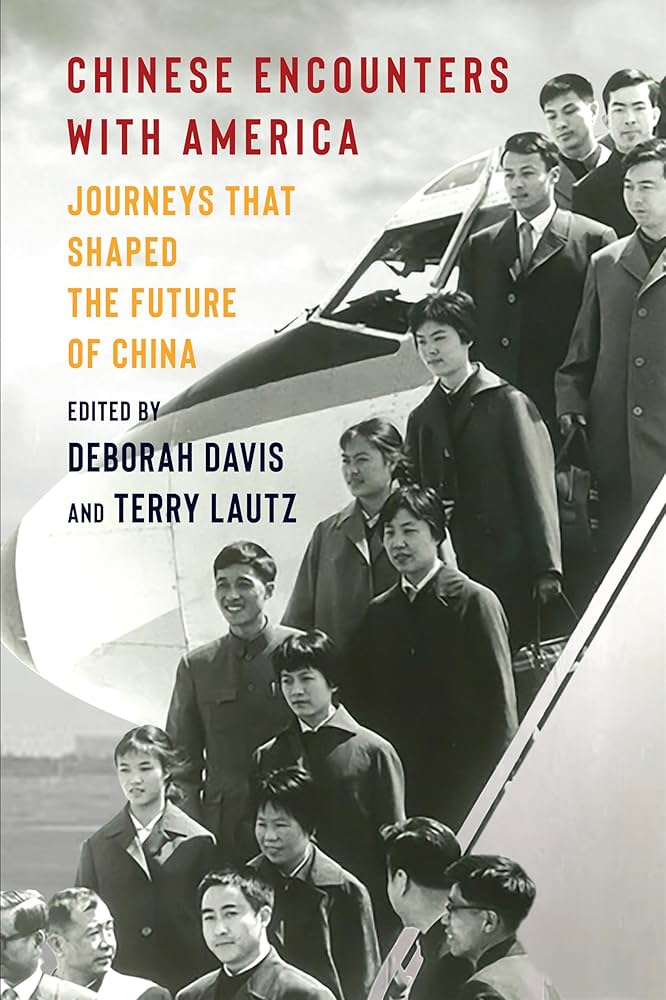
After returning to China, Xie—whose profile is by volume co-editor Davis and fellow sociologist Richard Madsen—taught at Fudan University in Shanghai and joined the CCP in 1956. Like most of her fellow intellectuals, she was swept up in Mao’s campaigns and brutalised during the Cultural Revolution. Accused of being a spy for the United States and the United Kingdom, she was locked up in a makeshift jail and assigned to manual labour after her release. When Chen Ning Yang visited China in 1971, shortly after US National Security Adviser Henry Kissinger’s ice-breaking trip that would pave the way for President Richard Nixon’s the following year, the Chinese American physicist was received like a foreign dignitary. He stopped by Fudan and Xie was relieved from factory duty as a courtesy to Yang. Years later, Xie recounted this episode and noted that she was not the only Chinese scientist who had benefited from Yang’s visit (Xie 1997).
It was not until after Mao’s death in 1976 that Xie was finally rehabilitated. ‘For the first time in nearly twenty years, the needs of the country and Xie’s extraordinary talents had realigned,’ Davis and Madsen write (2025: 54). In addition to her work in physics, Xie rose to a series of leadership roles, including vice-president and later president of Fudan, and became a member of the Central Committee of the CCP in 1982. She encouraged interdisciplinary research and international collaboration and led the efforts to acquire World Bank funding for Chinese universities. In 1984, Xie hosted Ronald Reagan at Fudan, where the US president commended the long history of transpacific exchange and the contributions of esteemed Chinese Americans, including the physicist Tsung-Dao Lee, Yang’s co-laureate and a Shanghai native (Reagan Library 2017). Two years later, the Fudan Centre for American Studies was established under Xie’s tutelage.
In the spring of 1989, as prodemocracy students gathered in Tiananmen Square and Chinese authorities declared martial law, Yang and 35 other Chinese American scientists wrote a joint letter to paramount leader Deng Xiaoping, imploring him to withdraw the troops (Beijing Spring 2004). After the massacre, many US-based academics and scientific organisations halted collaborations with China; some argued for a sustained boycott to pressure Beijing to release political prisoners (Goodwin 1989, 1990).
Xie sided with her party. In essays for American journals, she parroted Beijing’s talking points and assured international attendees of an upcoming physics conference in China that all would enjoy ‘free entry and exit’ (Xie 1991, 1992). Since her death in 2000, Xie’s actions in response to Tiananmen have been remembered in the Chinese press as principled and patriotic (Yang 2021). She is lauded for helping restore academic ties amid US-led attempts to isolate China, as though the sanctions and boycotts were a result only of Western belligerence. As the chapter authors put it, it seems ‘she never saw a contradiction between remaining loyal to a post-Tiananmen policy of political monopoly and repression, and promoting economic and scientific engagement with the world’ (Davis and Madsen 2025: 65).
The chapter on Xie stands out for its earnest effort to reckon with the immense personal cost and moral compromise that were inseparable from her professional accomplishments. I wish some of the other chapters were more forthright. The overall tendency to cast the figures as role models tilts the lens in this valuable anthology and weakens its thesis. As Lautz writes in the introduction, the people profiled in the book ‘are not tourists, refugees, exiles, or dissidents; nor do they belong to Chinese minorities’; their lives are ‘vastly different’ from nineteenth-century labourers and migrants who fled wars and upheavals in the first half of the twentieth century (Lautz 2025: 9). Xie is the oldest of the 12, while the youngest, born in 1992, is musician Gong Tianpeng. Their lives span more than a century, yet they occupy an astonishingly narrow social stratum. The biologist and entrepreneur Deng Xing Wang is the only one from a rural background, while most hail from the urban elite and middle class. Several, such as Xie, had parents who studied abroad. Their social privilege is magnified by fortuitous timing. The figures selected from Xie’s generation all survived Mao’s purges to enjoy long, fruitful careers in the reform era; the younger characters were able to leave the United States on their own terms without bearing the brunt of worsening bilateral relations. A few years after Deng Xing Wang resigned his professorship at Yale University and moved back to China, in 2014, many of his Chinese American colleagues saw their lives and livelihoods destroyed by the US Government’s crackdown on scientific collaborations with China (Mervis 2023).
The collection of individual achievers proves a possibility of professional success against trying circumstances. The question is what kind of broader lessons one should draw from these examples. ‘This book offers an alternative to the dominant narrative of competition and distrust between China and the United States,’ Lautz writes (2025: 3). Yet, as the other volumes in this review demonstrate, a similar cast of transpacific high achievers could also be found from the Chinese exclusion period. For Davis and Lautz’s elite group of diplomats, artists, scholars, and businesspeople, their cross-border mobility is either backed by sovereign power or treated as the flow of coveted human capital. Their positions at the pinnacles of their professions make their paths irreplicable for the masses; in fact, much of their success depends on maintaining hierarchies and exclusion. By focusing on singular individuals and mistaking luck for merit, the book’s intention to inspire limits its ability to inform and interrogate. A few chapters slip into hagiography, the most disturbing example of which is Harvard Business School historian William Kirby’s profile of Marjorie Yang Mun Tak (identified as Marjorie Yang for the rest of this essay; no relation to Chen Ning Yang).
Heiress to a textile empire, Marjorie Yang earned an MBA from Harvard and worked briefly on Wall Street, before moving back to Hong Kong to help her family business, Esquel. After her father retired in 1995, one of Marjorie Yang’s first moves as the new head of Esquel was to expand into Xinjiang, investing in cotton farms and setting up ginning mills. By 2016, the Uyghur homeland supplied 80 per cent of Esquel’s extra-long staple cotton, a type of high-grade cotton that is mostly grown in southern Xinjiang and often must be picked by hand to preserve the longest-possible threads (Murphy et al. 2021). Fabrics from Esquel supplied leading US brands such as Nike and Tommy Hilfiger. The Hong Kong–born businesswoman earned the nickname the ‘Cotton Princess from Xinjiang’ (Northrop 2021).
Given the Chinese Government’s intense repression of non-Han peoples in this region, which includes the widespread use of forced labour, Esquel has been subject to a series of sanctions by the US Government since 2020. While the chapter does mention the mass internment of Uyghurs and other minorities in Xinjiang—estimated to number one million or more—it repeats Beijing’s framing that the securitisation was in response to ‘separatist movements’ and ‘a series of terrorist attacks committed by Uyghurs’ (Kirby 2025). This claim elides the centuries-long history of Chinese military conquest, resource extraction, and settler colonialism in the region—acts that, for the past seven decades, have been carried out in large part by the Xinjiang Production and Construction Corps, also known as Bingtuan (Millward 2021a; Byler 2022). Shortly after making a foray into Xinjiang, Esquel entered a decades-long joint venture with Bingtuan, which lasted until April 2020, and has collaborated closely with local and provincial authorities as well (Millward 2021b). Despite the loss of Western clients due to US sanctions, Marjorie Yang has decided her firm will remain in Xinjiang.
Instead of confronting the reality in Xinjiang and Esquel’s complicity, the chapter portrays the textile giant as a spotless victim of Washington’s overreach and applauds Esquel for exemplifying ‘corporate social responsibility’ via efforts in Xinjiang to reduce pollution and invest in local education and public health. Yet, charitable acts cannot alter a colonial power dynamic. Fussing over whether Esquel has behaved more ‘ethically’ than its peers in an industry notorious for environmental degradation and labour exploitation misses the point. How could a company be ethical when it collaborates with the security state and profits from a region where the extent of ‘serious human rights violations’, according to a UN report (2022), ‘may constitute crimes against humanity’?
Transpacific Lessons
The plight of the Uyghurs is not a unique ill inflicted by the merciless Chinese or their nominally communist ruling party; rather, it is an indictment of colonialism and capitalism globally (Byler et al. 2022). Cotton fields in Xinjiang were connected to global commerce and empire long before Marjorie Yang spotted lucrative opportunities in the region (Beckert 2004; Hein 2024). Central Asia rose as a major cotton producer for the Russian Empire when exports from the Antebellum American South were disrupted by the US Civil War. Cotton growers in the United States briefly considered using Chinese labourers as a replacement for emancipated slaves.
History echoes in the present. Stripped of their high-tech exterior, the Chinese Government’s repressive methods in Xinjiang mirror the US authorities’ means of control over Chinese migrants in the late nineteenth century, as detailed in John Doe Chinaman. In both cases, a minority population is deemed biologically inferior and culturally backwards. An elaborate web of regulations is created to target the racial outcasts, restrict their movements, and increase their chances of hostile contact with law enforcement. Minor customs, such as keeping a queue for the Chinese then and growing a beard for the Uyghurs now, are outlawed and then used as proof of the group’s innate criminality. Like the Chinese residents of Los Angeles in Performing Chinatown, Uyghurs and other ethnic minorities in China are compelled to commodify their cultures and perform an exoticised version for the entertainment of Han-Chinese tourists. The internment of Japanese Americans during World War II was not only cited as necessary for national security but also presented as a way to assimilate and civilise the heathen Japanese (Chang 2025). Similar justifications have been adopted by the Chinese Government for the mass incarceration of Muslim populations in Xinjiang.
In the introduction to Chinese Encounters with America, Lautz (2025: 10) says the book ‘contests the idea that American and Chinese interests and values are fundamentally incompatible’. While both Washington and Beijing cite civilisational differences between the two countries to serve their own interests, the nationalistic rhetoric obscures the fact that, after decades of globalisation and mutual influence, the two countries are more similar than leaders on either side are willing to admit. The comparable desires for commercial expansion and geopolitical influence, not their divergent ways of governance, underlie the tensions between the two superpowers. As Lautz (2025: 3–4) puts it, the stories in the anthology illustrate ‘the value of shared interests and common goals amid the perpetual swings and shifts in Sino-American relations’. While Nike and Esquel might have ‘shared interests’, what about the interests of the Uyghurs or those of textile workers from Southeast Asia or New York’s Chinatown, who clothe the world yet live in squalor?
As a Chinese immigrant in Donald Trump’s America, I too yearn for calmer waters and closer ties between my birth country and my adopted home. Yet, as this quartet of books elucidates, racism is primarily about not personal sentiments but structural subjugation. However much I respect the ‘remarkably accomplished’ individuals in Chinese Encounters with America, I return to the pages of John Doe Chinaman for strength and solace. These Chinamen and Chinawomen, whose names were lost to bureaucratic callousness, stare down history through their mugshots. Their penetrating gaze torches the facade of ‘law and order’ and illuminates a genealogy of resistance. To better comprehend our present and struggle for the future, the most formidable barriers are not oceans or national borders, but the colour line and class divisions.
Featured Image: Ricsha [sic] ride concession, China City (1938). Source: Wikimedia Commons (CC).
References
Beckert, Sven. 2004. ‘Emancipation and Empire: Reconstructing the Worldwide Web of Cotton Production in the Age of the American Civil War.’ The American Historical Review 109(5): 1405–38.
Beijing Spring 北京之春. 2004. ‘八九民运大事记(4) [Chronology of Major Events in the 1989 Prodemocracy Movement (4)].’ Beijing Spring, [Bogota, NJ]. beijingspring.com/bj2/2004/150/2004530232356.htm.
Buck, Pearl S. 1931. The Good Earth. New York, NY: John Day Company.
Byler, Darren. 2022. Terror Capitalism: Uyghur Dispossession and Masculinity in a Chinese City. Durham, NC: Duke University Press.
Byler, Darren, Ivan Franceschini, and Nicholas Loubere. 2022. Xinjiang Year Zero. Canberra: ANU Press.
Chang, Gordon H. 2025. War, Race, and Culture: Journeys in Trans-Pacific and Asian American Histories. Redwood City, CA: Stanford University Press.
Davis, Deborah, and Terry Lautz, eds. 2025. Chinese Encounters with America: Journeys that Shaped the Future of China. New York, NY: Columbia University Press.
Davis, Deborah, and Richard Madsen. 2025. ‘Xie Xide: Scientist and Educator.’ In Chinese Encounters with America: Journeys that Shaped the Future of China, edited by Deborah Davis and Terry Lautz, 42–68. New York, NY: Columbia University Press.
Goodwin, Irwin. 1989. ‘Far from Beijing, Chinese Students in US Fear for Future of Science and Nation.’ Physics Today, 1 July.
Goodwin, Irwin. 1990. ‘A Year after Tiananmen Square, Scientists Propose China Boycott.’ Physics Today, 1 July.
Gow, William. 2024. Performing Chinatown: Hollywood, Tourism, and the Making of a Chinese American Community. Redwood City, CA: Stanford University Press.
Hein, Luke. 2024. ‘Teaching China in Alabama Prisons in Six Objects.’ Made in China Journal 9(1): 40–51.
Hsu, Madeline. Y. 2015. The Good Immigrants: How the Yellow Peril Became the Model Minority. Princeton, NJ: Princeton University Press.
Kirby, William C. 2025. ‘Marjorie Yang Mun Tak: Entrepreneur and Innovator.’ In Chinese Encounters with America: Journeys that Shaped the Future of China, edited by Deborah Davis and Terry Lautz, 128–56. New York, NY: Columbia University Press.
Kwong, Peter. 1996. The New Chinatown. New York, NY: Macmillan.
Lautz, Terry. 2022. Americans in China: Encounters with the People’s Republic. Oxford, UK: Oxford University Press.
Lautz, Terry. 2025. ‘Introduction: A Tale of Two Americas.’ In Chinese Encounters with America: Journeys that Shaped the Future of China, edited by Deborah Davis and Terry Lautz, 1–11. New York, NY: Columbia University Press.
Lew-Williams, Beth. 2018. The Chinese Must Go: Violence, Exclusion, and the Making of the Alien in America. Cambridge, MA: Harvard University Press.
Lew-Williams, Beth. 2025. John Doe Chinaman: A Forgotten History of Chinese Life Under American Racial Law. Cambridge, MA: Harvard University Press.
Mervis, Jeffrey. 2023. ‘Pall of Suspicion.’ Science 379(6638), 23 March. www.science.org/content/article/pall-suspicion-nihs-secretive-china-initiative-destroyed-scores-academic-careers.
Millward, James. 2021a. Eurasian Crossroads: A History of Xinjiang. Rev. edn. New York, NY: Columbia University Press.
Millward, James. 2021b. ‘Letter to the Editor.’ The Wire China, 1 September. www.thewirechina.com/2021/09/01/letter-to-the-editor-september-3-2021.
Murphy, Laura T. et al. 2021. Laundering Cotton: How Xinjiang Cotton is Obscured in International Supply Chains. Sheffield, UK: Helena Kennedy Centre for International Justice, Sheffield Hallam University.
New York Times. 1983. ‘Richard Loo, Actor 5 Decades.’ The New York Times, 22 November: 8.
Nobel Prize. 2026. ‘Chen Ning Yang’s Speech at the Nobel Banquet in Stockholm, December 10, 1957.’ Stockholm: Nobel Prize Outreach. www.nobelprize.org/prizes/physics/1957/yang/speech.
Northrop, Katrina. 2021. ‘Hemmed In.’ The Wire China, 27 June. www.thewirechina.com/2021/06/27/hemmed-in.
Reagan Library. 2017. ‘President Reagan Visit to Fudan University and Rainbow Bridge Township on April 30 and May 1, 1984.’ YouTube, 4 January. www.youtube.com/watch?v=CGhP78y8BM8.
Shin, K. Ian. 2025. Imperial Stewards: Chinese Art and the Making of America’s Pacific Century. Redwood City, CA: Stanford University Press.
United Nations (UN). 2022. ‘China Responsible for “Serious Human Rights Violations” in Xinjiang Province: UN Human Rights Report.’ UN News, 31 August. New York, NY: United Nations. news.un.org/en/story/2022/08/1125932.
Xie, Xide. 1991. ‘A Chinese Educator’s View of China–United States Relations.’ Proceedings of the Academy of Political Science 38(2): 175–81.
Xie, Xide. 1992. ‘Safety Assurances for Chinese Conference.’ Physics Today, 1 March.
Xie, Xide 谢希德. 1997. ‘序 [Foreword].’ In 杨振宁传 [A Biography of Chen Ning Yang], by Xu Shenglan 徐胜蓝 and Meng Dongming 孟东明, 1–3. Shanghai, China: Fudan University Press.
Yang, Chen Ning 杨振宁. 1997. ‘父亲和我 [My Father and I].’ 二十一世纪双月刊 [21st Century Bimonthly], December: 85–95.
Yang, Chen Ning. 2005. Selected Papers (1945–1980) of Chen Ning Yang with Commentary. Hackensack, NJ: World Scientific Publishing.
Yang, Guozhen 杨国桢. 2021. ‘谢希德先生与中国物理学会 [Dr Xie Xide and Chinese Physical Society].’ 物理 [Physics] 50(4).
The post The Pacific as a Mirror appeared first on Made in China Journal.