Ghana Slams Door on $109M US Health Deal
In a bold stand for sovereignty, Ghana’s government recently rejected $109 million in U.S. health aid—prioritizing citizen data over foreign dollars. As the April 24, 2026, deadline passed, the administration [...]
 Black News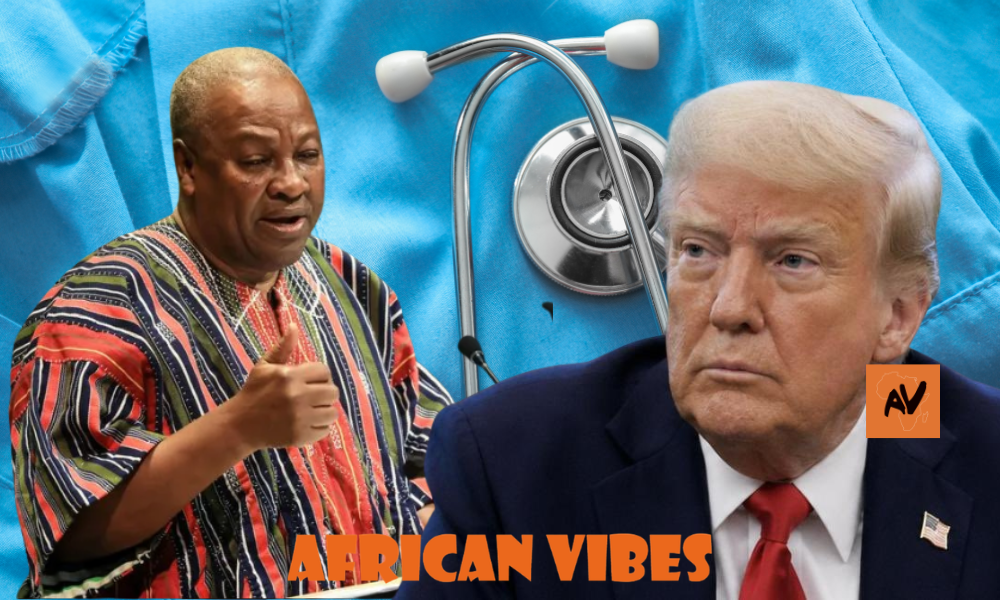
In a bold stand for sovereignty, Ghana’s government recently rejected $109 million in U.S. health aid—prioritizing citizen data over foreign dollars. As the April 24, 2026, deadline passed, the administration of President John Dramani Mahama made it clear: Ghana’s health data is not for sale.
This move poses a provocative question to the entire continent: Is this the dawn of Africa’s resistance to “aid with strings attached”?
The negotiations, which began in November 2025, collapsed after Ghana’s Data Protection Commission (DPC) flagged clauses that would have granted the U.S. unprecedented access to national health records, metadata, and backend dashboards. For a nation that has spent a decade building its digital infrastructure, the U.S. demands were seen not as cooperation, but as a “red line” threatening national security.
What Happened: The Breakdown of the Deal
The deal was part of a larger $300 million health framework, with the U.S. providing $109 million over five years and Ghana contributing the remainder. While the funds were intended to bolster public health systems, the fine print revealed a high cost.
Dr. Arnold Kavaarpuo, Executive Director of the DPC, noted that the proposal requested access that “exceeded what would normally be necessary.” Specifically:
- Lack of Consent: U.S. entities would have had access to data without prior approval from Ghanaian authorities for each specific use.
- Identification Risks: The agreement lacked sufficient safeguards to prevent the identification of individuals within sensitive datasets.
- Architecture Outsourcing: By demanding access to data dictionaries and reporting tools, the deal essentially sought to “outsource the health data architecture of the country to a foreign body,” according to Kavaarpuo.
ALSO READ: 10 African Construction Projects That Will Transform Cities by 2030
The Broader Context: “America First” and the African Resistance
This is not an isolated incident. Under the current U.S. administration’s “America First” overhaul of global health funding, the once-familiar USAID framework has been replaced by more transactional bilateral agreements. These new deals often tie health funding—including PEPFAR HIV/AIDS support—to strategic access to data or even critical minerals.
Ghana is the latest in a growing line of African nations standing their ground:
- Kenya: In late 2025, a High Court paused a $1.6 billion deal after consumer groups warned of privacy risks.
- Zimbabwe: Rejected a similar proposal in early 2026, citing “sovereignty over data.”
- Zambia: Negotiations stalled as recently as May 4, 2026, with officials calling the linkage between health aid and mineral access “unconscionable.”
Dr. Jean Kaseya, Director-General of the Africa CDC, has voiced “significant concerns” over these trends, emphasizing that pathogen and health data sharing must be equitable and respect African ownership.

Pan-African Implications: A Victory for Sovereignty
This rejection is a major blow to “digital colonialism”—the practice of using tech and data to maintain lopsided power dynamics. By saying no, Ghana is protecting its citizens from potential pharmaceutical exploitation, where African data is used to develop high-priced drugs that the continent later struggles to afford.
The economic angle is clear: short-term aid cannot justify long-term risks. Ghana is now looking inward, seeking to build local health-tech solutions and demanding new terms that treat African nations as equal partners, not data mines.
The Call to Action: The continent must unite. Through the African Union and the Africa CDC, nations need a unified front on data protection laws to ensure that “aid” never again becomes a backdoor for exploitation.
Summary of Regional Health Deal Status (May 2026)
| Country | Deal Value | Primary Rejection Reason | Status |
| Ghana | $109M (U.S. portion) | Data access without prior consent | Rejected (April 2026) |
| Kenya | $1.6B | Privacy & transparency concerns | Court-Paused |
| Zimbabwe | $300M+ | Sovereignty & mineral linkage | Stalled/Rejected |
| Zambia | PEPFAR-linked | Minerals-for-aid conditions | Negotiations Stalled |
Expert Voices & Reactions
The reaction across the continent has been electric. Human rights activists argue that these deals disproportionately favor U.S. firms and specific private interests, citing Nigeria’s recent pushback against aid that targeted only specific religious health providers.
On social media, #GhanaStandsTall and #DataSovereignty have been trending from Accra to Nairobi. For many young Africans, this is a moment of pride—a signal that the era of accepting any deal out of desperation is over.
Conclusion & Outlook
Ghana is now pivoting toward self-reliant health investments and exploring partnerships with other “Global South” nations that offer more equitable terms. The message to Washington and the world is clear: Africa’s data belongs to Africa.
The prediction for the rest of 2026? Expect more nations to follow Ghana’s lead. Equity is no longer a “nice-to-have”—it is a requirement.