The right to development: Why Uganda must close before it can open
Before any serious building rises in Uganda, the first thing to go up is the mabaati – corrugated iron sheets that seal off the site. Behind them, foundations are dug, concrete is poured, and steel is welded. There is noise, dust, and confusion. Trucks bring in materials and carry away rubble. It is normally round-the-clock […] The post The right to development: Why Uganda must close before it can open appeared first on The Observer Media Ltd.
 Black News


Before any serious building rises in Uganda, the first thing to go up is the mabaati – corrugated iron sheets that seal off the site.
Behind them, foundations are dug, concrete is poured, and steel is welded. There is noise, dust, and confusion. Trucks bring in materials and carry away rubble. It is normally round-the-clock work. The public sees almost nothing until the building is complete.
Then, one morning, the mabaati comes down. A factory. A shopping mall. An office block. A hotel. Finished. Functional. Ready for business. Nobody builds for commerce with the construction site wide open. Yet that is exactly how Uganda is trying to build a nation. We are renovating in public.
Every passer-by feels entitled to inspect the plans, to question the engineers, question the works, and even suggest alterations. It is hardly surprising that the project advances more slowly than its vision.
The China Lesson
In 1978, China faced poverty on a scale difficult to imagine today. Its economy accounted for barely 1.5 per cent of global output. Hundreds of millions lived in deprivation. Then came a decision. Not simply reform, but sequence.
China did not throw open every door at once. It first built institutional capacity. It experimented through a handful of Special Economic Zones. It controlled what entered, what left and on what terms. It welcomed capital but demanded technology. It welcomed trade but protected national priorities. It opened gradually, only after strengthening its foundations.
The results are well known. More than 800 million people lifted out of poverty. China became the world’s second-largest economy. It did not reject globalization. It entered it prepared. That is the lesson, not isolation, but preparation.
Uganda’s Real Problem
Uganda’s development challenge is not resources. Sometimes it feels like the real problem is indecision. We aspire to industrialize while remaining heavily dependent on imports. We celebrate science but underfund research. We seek investment but tolerate regulatory uncertainty.
We fight corruption, yet too often coexist with the incentives that sustain it. In other words, we are simultaneously pressing the accelerator and the brake. The result is movement without momentum. A nation cannot be a construction site and a showroom at the same time. Never!
Every Successful Renovation Requires Temporary Closure
Every renovation begins with disruption. For instance, hospitals close wings before they are rebuilt. Airports shut runways before expanding them. Roads are diverted before new highways emerge. Nobody complains that builders have hidden the foundation.
They understand that serious work requires protected space. Why should nation-building be any different?
Perhaps Uganda needs its own season behind the mabaati, creating the focus and discipline to build with consistency, while only welcoming materials such as knowledge, investment and genuine friendship.
A period where every institution works towards one blueprint – Vision 2040. Where education produces engineers before politicians. Where industrial policy rewards production rather than consumption. Where infrastructure, energy, agriculture, technology and skills receive uninterrupted national attention.
Where the question is no longer Who is winning the politics of the day? but Is Uganda winning at the development front?
Build First. Celebrate Later.
The world does not owe Uganda development. It owes us only opportunity. Whether we convert that opportunity into prosperity depends largely on our own discipline. Vision 2040 is an ambitious blueprint.
But blueprints do not build buildings. Builders do. No contractor removes the mabaati before the roof is complete merely to satisfy impatient neighbours. Nor should a country abandon long-term discipline simply to satisfy the daily appetite for public show.
Think about all the countries that transformed themselves most rapidly. A number were not necessarily richer than Uganda. They were simply more decisive. They knew when to debate. They knew when to build. And they knew when to reopen. Uganda must reach that moment of clarity.
The sealing off the site with mabaati should never be mistaken for the destination. It is merely the shield behind which serious projects are built, until the results can speak for themselves.
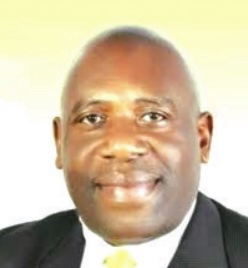
The writer is a member of the Uganda Human Rights Commission (UHRC)
The post The right to development: Why Uganda must close before it can open appeared first on The Observer Media Ltd.