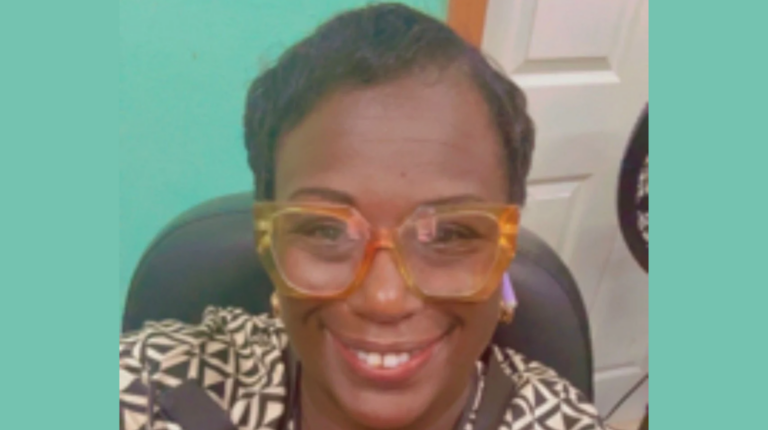
The Slain Sons of Belmopan
The capital city has buried three of its own this year. Each death was violent. Each life was whole. Not all were mourned the same way. On the morning of May 30, 2026, a masked gunman stepped out of a white vehicle on a quiet street in the Las Flores neighborhood of Belmopan and opened […] The post The Slain Sons of Belmopan appeared first on Belize News and Opinion on www.breakingbelizenews.com.
 Black News
The capital city has buried three of its own this year. Each death was violent. Each life was whole. Not all were mourned the same way.
On the morning of May 30, 2026, a masked gunman stepped out of a white vehicle on a quiet street in the Las Flores neighborhood of Belmopan and opened fire  on a white Toyota Highlander making its ordinary school-run. Thirteen shots erupted near the corner of Raccoon and Maravilles Avenue. When residents rushed toward the sound, they found the lifeless body of Dr. Naun Bonilla slumped over the steering wheel.
In the back seat, his five-year-old daughter was screaming.
Dr. Bonilla was an internist at the Belmopan Medical Imaging Center who specialized in diabetes, high blood pressure, and internal medicine. He was 36 years old. He had spent the prime years of his life in medicine, learning to save the people of this country. Beyond his work at the imaging center, he also served patients in the Valley of Peace community, and had aspirations to expand his practice further across Belize. 
His family remembered him as more than a physician, a devoted husband, father, son, and brother whose life was dedicated to serving others. Over 400 people answered the call to march through Belmopan’s streets in the days that followed. Doctors, nurses, pharmacists, family members and friends gathered outside the Medical Imaging Center, lit candles, and walked the ring road in his name.
The nation mourned loudly and openly. That outpouring was deserved.
But this story began long before that morning. And it does not end with him.
A Village Born of Flight
To understand Dr. Naun Bonilla, you must first understand where he came from, and why his parents came there at all.
Valley of Peace is a village in the Cayo District of Belize, founded on March 12, 1982. It was created as a refugee community for immigrants fleeing civil war, especially from El Salvador. The United Nations High Commissioner for Refugees implemented a project to help them find a safe place to live, with Prime Minister George Cadle Price taking the proposal to the Senate. The vote passed.
Belize did not establish refugee camps or restrict refugees’ movement. Instead, the government designated the Valley of Peace for settlement and provided access to farming land, an offer extended to Belizeans as well. Most of the refugees were peasant farmers. Each family was given one acre of land to live on and fifty acres to farm. The Mennonite Central Committee played a vital role in their survival, transporting food and water in the early years.
These were people who had lost everything. They came with nothing but the willingness to begin again. Decades later, the children of those first arrivals had become doctors, policemen, and engineers. One of those children was Dr. Naun Bonilla.
When Jose Sanchez heard Dr. Bonilla speak at the Refugees Department anniversary ceremony, he heard a man who had made peace with the fullness of his own story. “I stand before you today not as a refugee myself,” Dr. Bonilla said, “but as the son of refugees and as someone born from a community built through refuge. My parents arrived in Belize seeking safety. I was born into the opportunity that protection made possible. And I stand here today as living testimony of what can emerge when nations and institutions choose compassion.”
Those words are now an epitaph. But they are also a question, one this country has not yet answered honestly.
Valentine’s Eve, February 13
Three and a half months before Dr. Bonilla was killed, on the eve of Valentine’s Day, Belmopan was already on edge after a string of armed robberies and a bold daylight murder of a delivery driver.
That tension erupted into tragedy when two cousins, 21-year-old Zamar Alvarez and 20-year-old Calvert Webster, were gunned down as they walked along a neighborhood sidewalk. Both men had apparent gunshot wounds to the head. Webster also had a wound to the abdomen.
They were shot and killed in the Central Walkway area of Belmopan, near St Ann’s Anglican Church, after being ambushed by four to five men.  The bodies were found near the children’s home, a hundred yards from the police station, on a street where people walk every day.
Zamar was from Blue Creek Street, Belmopan. He was 21. He had just returned from a church trip to Guatemala. His mother, Alina Alvarez, rushed to the scene when a relative in the police department called her. Distraught and holding a photo of her son, she said: “I miss my child. I am his mother, I am his aunt, I am his uncle. I am the only child for my mom. I tried my best. I did my very best. Nobody in my family are gang members. I always told him: I am your gang.”
That is a mother. That is grief without performance. That is a human being asking the world to see her son.
Calvert Webster was 20, from Mahogany Heights. His sister, speaking from La Democracia, firmly rejected suggestions that he or his cousin were mixed up in criminal activity. She told reporters that Calvert had just passed the Coast Guard exam, applied for a welding program at the University of Belize, and was in Belmopan that day picking up his BDF application form. He was building a future. He was at the beginning of a life.
The acceptance letter was waiting at home. He never came back to read it.
The Two Responses
What happened after each killing tells us something about this country that should keep us up at night.
After Dr. Bonilla’s murder, over 400 people gathered at the Medical Imaging Center. His wife spoke. The Minister of Home Affairs appeared. The medical community marched. It made national news. It generated political pressure. Investigations were announced publicly and urgently. Police stated they had identified a vehicle and a person of interest.
After Zamar Alvarez and Calvert Webster were killed, the response from official Belmopan was different. Minister of Home Affairs Oscar Mira described the shooting as a “spillover” of violence from other communities. Former Ombudsman Lionel Aranda Swaso wrote formally that the public officials appeared to distance themselves from the deceased, noting: “The two individuals killed were Garifuna, Black residents of Belmopan.”
Alex Nolberto, National President of the National Garifuna Council and a relative of the deceased, said publicly: “As a Garifuna leader, we are concerned with the way Zamar has been dismissed. The interpretation may be that the statement may appear to be racial or profiling. I think it’s something that the leaders need to look at critically to ensure that they are a bit more sensitive in how they say what they say, and that they have the information accurate.”
Questions were raised about where Zamar was from, who he was, whether he belonged. He was a registered voter of Belmopan. He was born there. He was Belizean. Yet in the hours after his death, he was made to prove it.
No one asked Dr. Bonilla to prove he was Belizean. No one asked his parents’ names or their country of origin. His grief was welcomed as Belmopan’s grief. The grief of Alina Alvarez was made to fight for space.
Three Men, One City, One Question
There is a temptation – a comfortable one – to say these cases are different. That one was a doctor and two were young men with uncertain futures. That one had a profession and two did not yet have one. That the circumstances were different, the neighborhoods were different, the social circles were different.
None of that changes what each of them was.
Dr. Naun Bonilla was a son of refugees who became a healer of his people. Calvert Webster was a son of Mahogany Heights who passed his Coast Guard exam and was walking toward his future. Zamar Alvarez was a son of Belmopan who came home from a church trip and was murdered on a sidewalk near the police station while his mother waited for him.
Three young men. Three families broken. Three sets of dreams – not deferred, but destroyed.
One person who responded to news of Webster and Alvarez’s deaths online wrote: “RIP Cali, still can’t believe this. Such a humble young man.” Another wrote: “Man, with tears in my eyes – son, you did not deserve this, Calvert. You are a very humble, very mannerly young man.”
These were not faceless dangers to be managed. These were known young men. Loved young men. The kind of men their communities called humble.
A 19-year-old, Jahan Flores, was eventually charged with two counts of murder in the deaths of Alvarez and Webster. Police confirmed he was someone familiar with both of the deceased, they had been together earlier that day. A case is underway. Justice, perhaps, is approaching. But a case is not the same as recognition. An arrest is not the same as being mourned.
What Belize Owes All of Them
Dr. Bonilla said, near the end of his speech at the Refugees Department ceremony: “True refuge is more than safety. It is the presence of hope. It is the presence of opportunity. It is the possibility of contribution.”
He was describing Valley of Peace. He was describing his parents’ courage. He was describing what Belize can be at its best, a country that opens its arms and asks only that you build something with what you are given.
The UNHCR itself documented what happens when that offer is made honestly: refugees who arrived with nothing became farmers, professionals, contributors, and their children went to university. Dr. Bonilla was that story’s living proof. He was also its martyr.
But Zamar Alvarez and Calvert Webster were also that story, the story of sons of Belize simply trying to live. One had a church trip behind him and a mother who worked every day of her life to give him something better. One had an acceptance letter and three separate applications to serve his country, the Coast Guard, the BDF, and a welding program that would have put skilled hands to work.
They did not get speeches at their funerals from ministers. They did not get 400-person marches. Their mother had to stand before cameras and beg people to stop calling her son a gangster.
Belize cannot call itself a nation that honors its own if it does not honor all of its own. The same love that erupted for Dr. Bonilla – that beautiful, righteous, grief-driven love – belongs equally to Calvert Webster and Zamar Alvarez. Not because their stories were identical. Because their lives were equally real.
A Coast Guard acceptance letter is a promise this country made to a young man. An internist’s degree is a promise this country made to a refugee’s son. Both promises were cut short by the same gun violence. Both families are now living inside the same silence that follows a murder that nobody prevented.
If Belize is serious about unity, not the slogan, but the thing itself, then it must ask why some of its slain sons are embraced and others are first interrogated, even in death. It must ask what it means when a minister calls a Black Garifuna boy’s murder a “spillover” and calls a doctor’s murder an outrage to the entire nation. Both were outrages. Both deserved the nation.
Zamar Alvarez. Calvert Webster. Naun Bonilla. Three sons of Belmopan. Three families waiting for justice. Three lives that will not come back. Remember them the same way, or do not claim to believe what you say you believe.
The post The Slain Sons of Belmopan appeared first on Belize News and Opinion on www.breakingbelizenews.com.










.png?h=c12e0b96&itok=5DLPGmQb#)