Tinubu moves for Africa-first industrial strategy as Nigeria seeks billions in foreign capital
Nigeria’s President, Bola Ahmed Tinubu, has said the country is on track to attract nearly $20 billion in foreign direct investment (FDI) in 2026, as Africa’s largest economy seeks to position itself as a manufacturing and energy hub following a series of economic reforms.
 Black News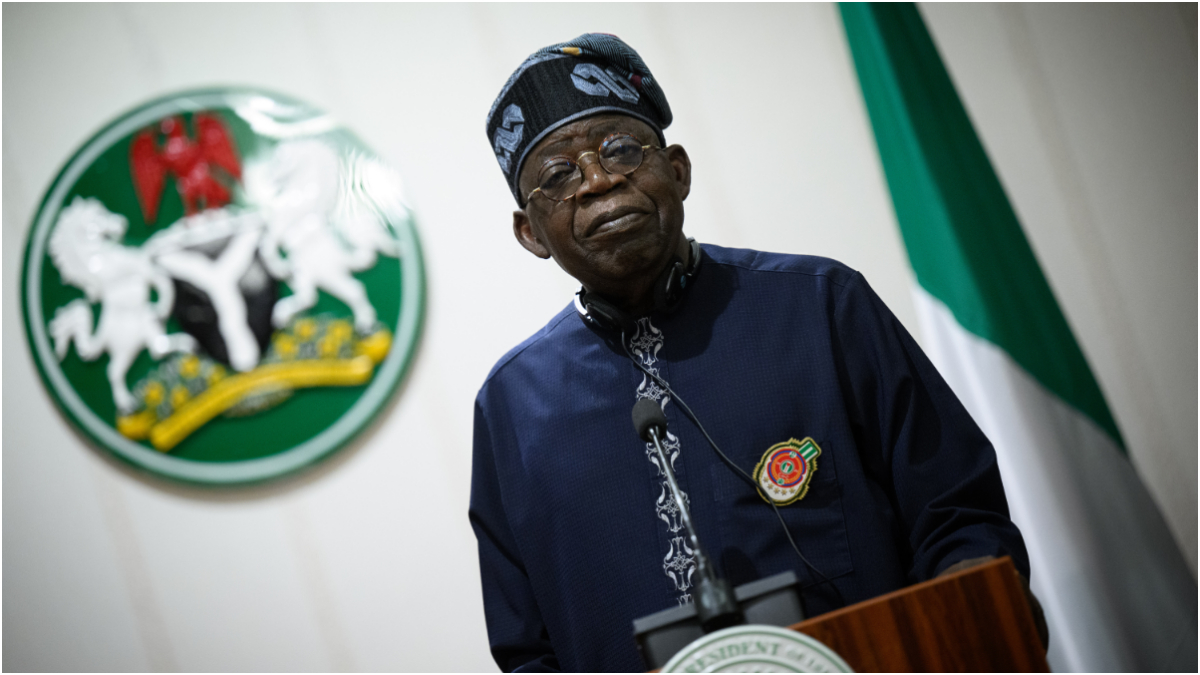
![President Bola Tinubu of Nigeria. [Photo by Bernd von Jutrczenka/picture alliance via Getty Images]](https://ocdn.eu/pulscms/MDA_/e7474afdcbc1f3d002b9bab0b5618ecd.jpg)
Nigeria’s President, Bola Ahmed Tinubu, has said the country is on track to attract nearly $20 billion in foreign direct investment (FDI) in 2026, as Africa’s largest economy seeks to position itself as a manufacturing and energy hub following a series of economic reforms.
- Nigeria says it is on track to attract nearly $20 billion in foreign direct investment in 2026 as President Bola Tinubu pushes economic reforms aimed at stabilising Africa’s largest economy.
- Speaking at the Africa CEO Forum in Rwanda, Tinubu highlighted regulatory changes, industrialisation and infrastructure upgrades as key drivers of investor confidence.
- The Nigerian leader defended support for the Dangote refinery, describing it as a model for public-private cooperation in Africa’s energy sector.
- Tinubu also called on Africa to stop exporting raw materials without local processing, while criticising Western credit-rating agencies for undervaluing African economies.
Speaking at the Africa CEO Forum in Kigali, Rwanda, Tinubu said his administration’s removal of foreign exchange controls, subsidy reforms and regulatory changes were helping to restore investor confidence in Nigeria after years of economic instability.
“This year alone, I can beat my chest that Nigeria is attracting close to $20 billion in foreign direct investments,” Tinubu said during a presidential panel moderated by British journalist Zainab Badawi.
Nigeria has spent the past two years attempting to stabilise its economy after a sharp currency devaluation and record inflation, which have triggered concerns among investors.
Tinubu used the forum to argue for greater industrialisation across Africa, saying the continent should stop exporting raw materials without processing them locally.
“No one can take metal out of Nigeria without adding value,” he said, adding that Nigeria intended to develop industries around battery production and mineral processing rather than exporting raw commodities.
The president also highlighted the growing role of the privately owned Dangote Petroleum Refinery, which has become central to Nigeria’s efforts to reduce fuel imports. Tinubu said the 650,000-barrel-per-day refinery was an example of what could be achieved through cooperation between government and the private sector.
“A risk-taker like Dangote must be encouraged by the government. Today he is a net exporter of petroleum motor spirit, aviation fuel and other commodities,” he said.
The refinery, developed by Nigerian billionaire Aliko Dangote, has been viewed by analysts as a potential turning point for Nigeria’s energy sector, which has historically relied heavily on imported refined fuel despite being one of Africa’s largest crude oil producers.
Tinubu also criticised major Western credit rating agencies, accusing them of undervaluing African economies and overlooking growth opportunities on the continent.
“Investment is very cowardly, unless you are transparent, accountable and forthright,” he said, while calling for stronger African financial institutions and deeper regional economic integration through the African Continental Free Trade Area.
The Nigerian leader pointed to infrastructure and technology investments as part of the country’s broader economic strategy. He said Nigeria had laid more than 90,000 kilometres of fibre optic cable nationwide to improve digital connectivity and support e-commerce, education and agricultural supply chains.
Tinubu also cited government-backed agricultural initiatives, including mechanised farming zones and storage programmes aimed at reducing post-harvest losses, as part of efforts to improve food production and rural incomes.
“Africa needs to put its money where its mouth is,” Tinubu said. “The African Continental Free Trade Area should not be left on the drawing board.”