Trump administration expands Africa deportation deals with Sierra Leone agreement
The United States is expanding its controversial deportation arrangements in Africa, with Sierra Leone agreeing to receive hundreds of West African migrants removed from the U.S. under a new deal between the two countries.
 Black News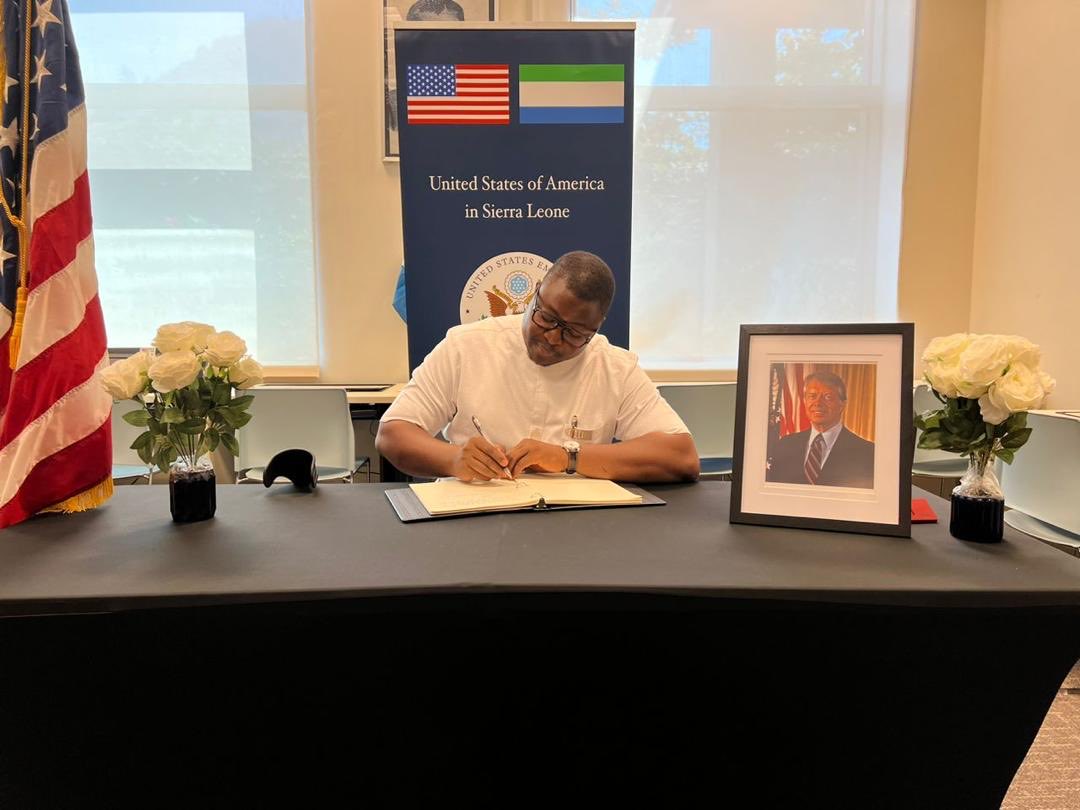
![Sierra Leone’s Foreign Minister, Timothy Kabba disclosed that Sierra Leone will begin receiving West African migrants deported from the United States under a new agreement with Washington. [@TimKabba]](https://ocdn.eu/pulscms/MDA_/9f7f0320dfdf9cf8ddaf14ca4b4c7134.jpg)
The United States is expanding its controversial deportation arrangements in Africa, with Sierra Leone agreeing to receive hundreds of West African migrants removed from the U.S. under a new deal between the two countries.
- Sierra Leone has agreed to accept up to 300 West African migrants deported from the United States each year under a new deal with Washington.
- The first group, expected on May 20, will include deportees from Senegal, Ghana, Guinea and Nigeria.
- The agreement is part of the Trump administration’s broader push to speed up deportations through deals with African countries.
- Critics say the policy raises concerns over legal protections, human rights and how deportees will be treated after arrival.
Sierra Leone’s Foreign Minister, Timothy Kabba, told Reuters that the agreement allows the country to accept up to 300 deportees a year from member states of the Economic Community of West African States (ECOWAS), with a maximum of 25 arrivals each month.
The first group is expected to arrive in Freetown on May 20 and will include migrants from Senegal, Ghana, Guinea and Nigeria, according to Kabba.
“Sierra Leone signed a Third Country National Agreement with the U.S. to accept 300 ECOWAS citizens from the U.S. per year with a maximum of 25 a month,” Kabba said.
The arrangement marks the latest effort by the administration of Donald Trump to speed up deportations by sending migrants to countries where they are not citizens.
Washington has already pursued similar arrangements with several African states, including Democratic Republic of the Congo, Cameroon, Equatorial Guinea, Eswatini and Ghana.
The policy has triggered growing criticism from immigration lawyers and rights groups, who argue that deportees are sometimes transferred to countries with weak legal protections and limited support systems.
Human rights advocates have also questioned whether some removals violate U.S. court protections designed to stop deportations to unsafe destinations.
Ssome migrants deported from the U.S. to African countries were later pressured or forced to return to their home countries despite holding legal protections in America.
It remains unclear whether migrants sent to Sierra Leone will be allowed to permanently remain in the country or eventually be returned to their nations of origin.
Sierra Leone’s government has not publicly outlined how the arrangement will work in practice, including whether deportees will receive residency rights, temporary shelter or travel support.
Kabba described the agreement as part of broader cooperation between Washington and Freetown.
“It’s part of our bilateral relationship with the U.S. to assist with its immigration policy,” he said.
DON'T MISS THIS: After three failed negotiations, U.S. finally secures African destination for deported migrant
The financial terms of the agreement have not been disclosed. However, a report released earlier this year by Democrats on the U.S. Senate Foreign Relations Committee said Washington had already transferred more than $32 million to countries participating in similar deportation programmes, including Rwanda, El Salvador, Eswatini and Palau.
Migration cooperation has previously strained ties between the U.S. and Sierra Leone. During Trump’s first term in 2017, Washington imposed visa restrictions on some Sierra Leonean officials after accusing the government of refusing to accept deported citizens.
The latest agreement comes as the U.S. faces mounting political pressure over illegal immigration ahead of the 2026 midterm election cycle, with deportations again becoming a major part of Trump’s immigration strategy.
For several African governments, the deals also present a diplomatic balancing act: maintaining relations with Washington while avoiding domestic backlash over accepting deportees from outside their borders.