Understanding China and its government through the eyes of a Sinologist
Hunan Normal University's Dr Ole Döring gave The Citizen an assessment of China, its recent history and outward worldview.
 Black News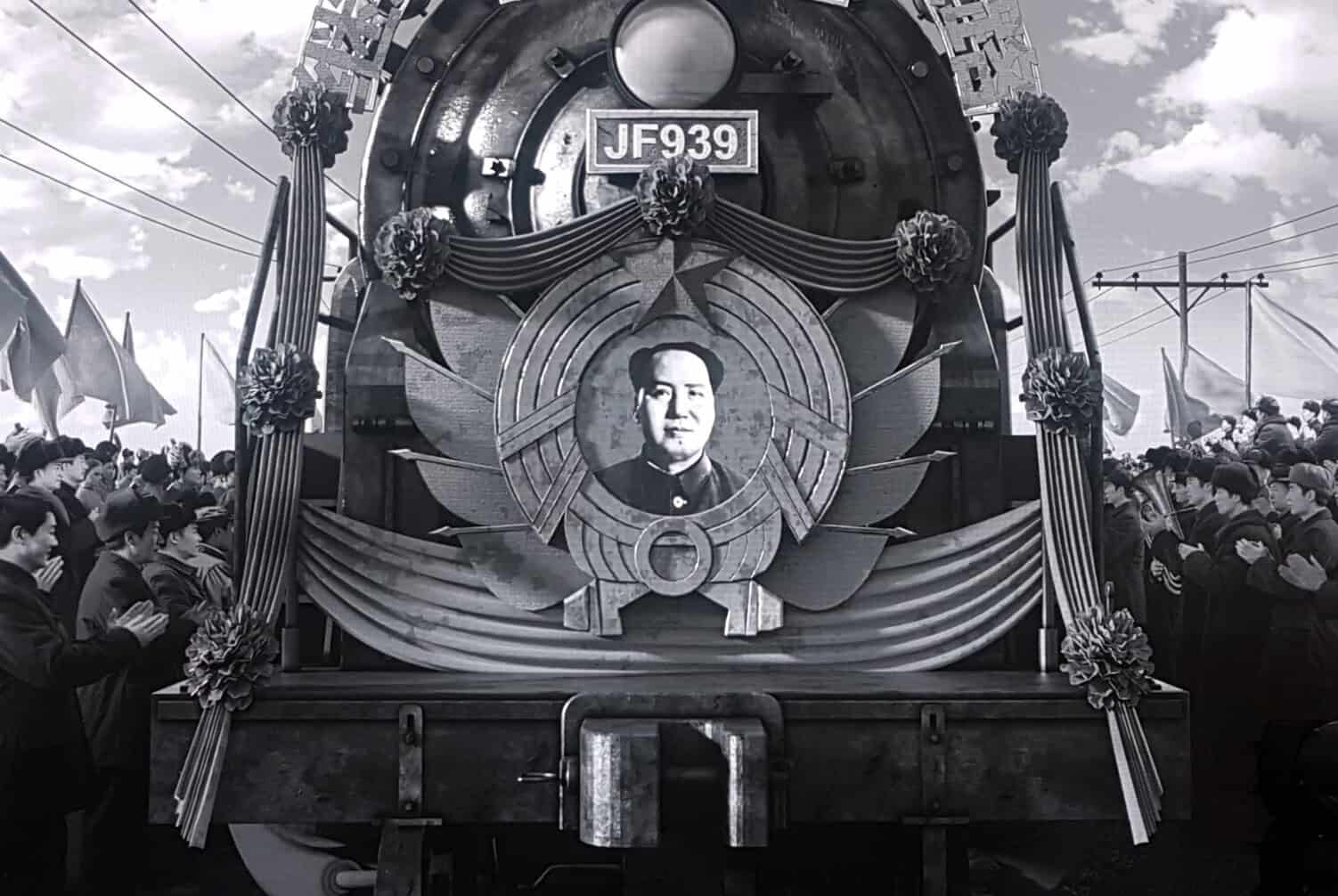
In the great global schism between the superpowers of the West and great red dragon spreading its wings in the East, ideology informs interpretation.
Sinophiles remain adamant that negative perceptions of the People’s Republic of China are driven by a lack of understanding, while the West clings to a distrust of communist and socialist leanings.
China’s recent development has been a colossal undertaking by a vast interconnected political machine, but it is the country’s past that opponents fixate on.
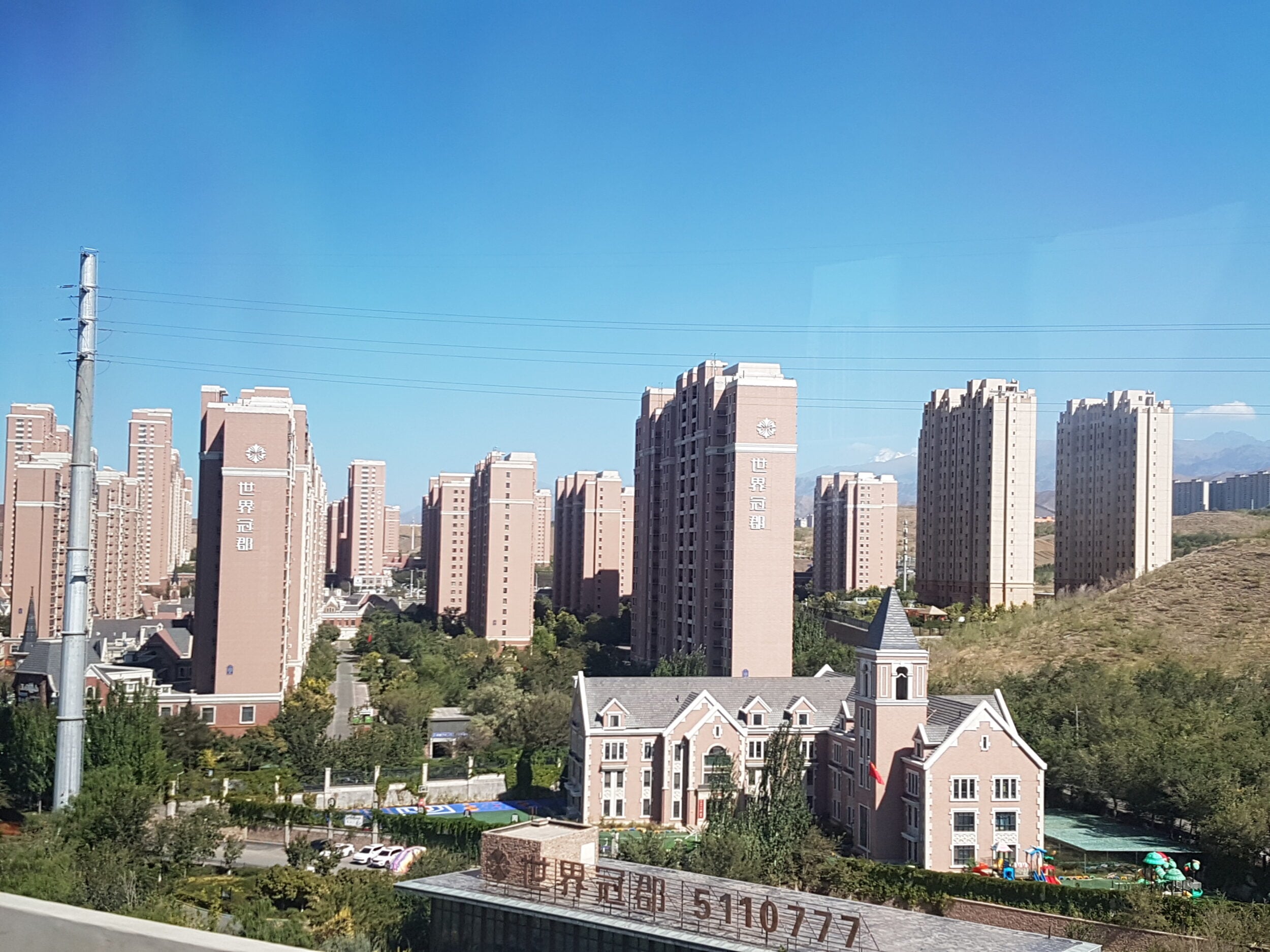
The province of Xinjiang, brought under Chinese rule in 1949 and declared an autonomous region in 1955, last week held a friendship and exchange conference in the region’s capital, Urumqi.
There, dignitaries celebrated the progress made in economic development and social cohesion, while academics elaborated on the barriers that still confine China in the minds of the unacquainted.
A theoretical focus on public welfare
German philosopher, sinologist, and writer Dr Ole Döring sat down with The Citizen last week on the fringes of the conference to elaborate on the perceptions of China.
Currently a professor at Hunan Normal University, Döring has spent three decades studying China and bridging the linguistic and perceptive gap between his native land and the country he now calls home.
The most glaring red flag for Westerners lies in the name of the ruling body, the Communist Party of China (CPC).
Döring explained that while the Chinese too used this phrase, the term communism in Chinese was better translated to an ancient concept of public welfare – an almost divine responsibility.
“Public welfare has always been the condition of the mandate of heaven that legitimised any ruler.
“This is an ancient insight into how politics can work for the common good and should work for the common good,” Döring said.
He added that the communist moniker reflected language that “symbolised modernity, success, military power and intellectual superiority of the West” when the CPC was founded in 1921.
Chinese scholars had travelled to Europe in the late 19th century to study what had made the continent successful, bringing back a wealth of new thought.
“This is why it had some credibility at the time. The Chinese then, where ardent students of these Western thinkers, including [Karl] Marx,” said Döring.
The professor stated that the Chinese word dâng was better translated to association, and not party.
“It is actually an organisation that is meant to produce the group of people that are able to bear the responsibility for making politics.
“Even if you look superficially at it, it’s not a party, because its mandate, its self-given mandate, its constitutional mandate, is to organise all parties, or particularities, overcome partisanship, negotiate partisanship, using partisanship as a learning exercise to approach an understanding of what it means to have public welfare in mind,” he explained.
‘Subtle’ criticisms of government accepted
Döring admitted that this premise was a theoretical objective, and that the CPC is not without its shortcomings.
“They feel that they need to portray themselves as [role] models, and [role] models can’t admit failure.”
Döring said general criticism of the government among the citizenry was tolerated, and best expressed by intellectuals who understood the intricacies of Chinese public life.
“[The intellectuals] don’t mince words, they are very clear. But they are also very educated, so they know how to criticise the government.
“Now, they do this in subtle and clear ways, but subtle and clear for the Chinese. Now, if we as foreigners who don’t speak the language fluently and we don’t see the nuances in their statements, we just don’t get it,” said Döring.
He dismissed suggestions that the CPC is authoritarian, saying that a dictatorship-style oppression of such a large population was almost impossible, but that a hierarchical structure of respect existed.
“If you look at an onion with its peels, it has so many different layers. The closer you get to the spaces that are perceived as formulating or expressing the real political agenda of the Chinese government, the stricter it gets.”
The long shadow of Chairman Mao Zedong
As with all countries with histories of violence and oppression, China still lives with the spectre of Chairman Mao Zedong’s Great Leap Forward which led to the death of tens of millions of Chinese.
Döring explained the idea of Mao in the Chinese consciousness was two-fold, with neither being particularly negative.
He stated that the use of the term “Chairman Mao” was designated for the public figure associated with “the unification, peace and protection of the integrity of China” in the post-World War II era.
“This is about the foundation and the spirit of dignity and integrity, laying the pillars for the bridge connecting China’s past with its present challenges and future prospects,” said the professor.
He explained the injustices and violence perpetrated during Mao’s era were reflected on as “forgivable misjudgements” in line with the motto; 70% good and 30% not good.
“The perceived Western assessment is regarded as uninformed and unfair, provoking solidarity with the statesman against the ‘ignorant and slandering West’,” he said.
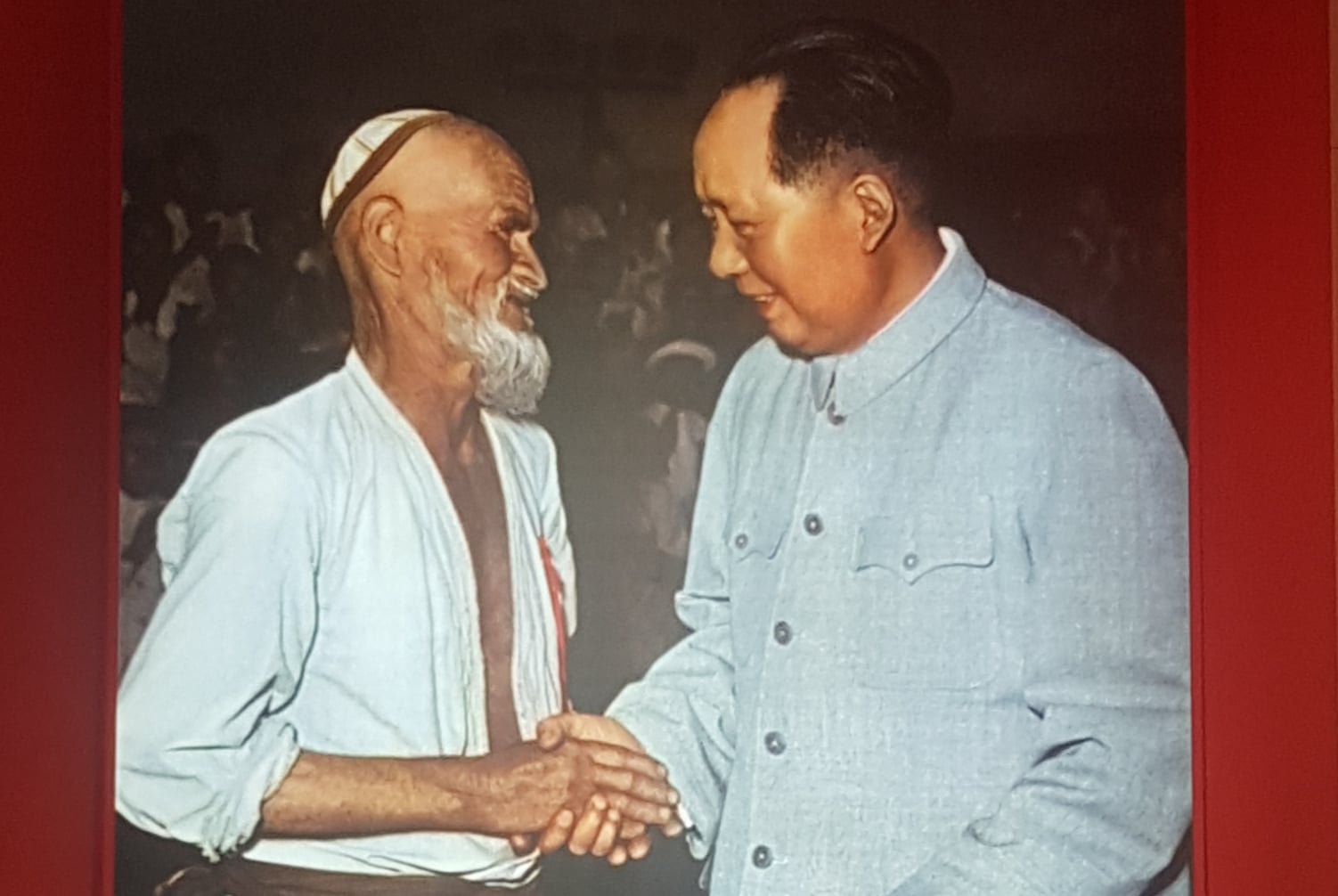
The other side of the coin is the use of “Mao Zedong” to depict “the father of the nation, a Buddha-like protector” in the eyes of supporters.
“He is seen as the educator, the loving spouse who lost his first wife as a martyr and later his siblings and all his children to the wars.
“He is depicted as the cultural hero who marshals military, economic and human powers under the shield of idealistic leadership, sharing hardships of the Long March with his troops and wisely developing a unique ideological underpinning of the new China,” Döring explains.
Year-round, supporters flock to a statue in Mao’s home province of Hunan to express their admiration for him.
“This pilgrimage confirms that the quality of Mao Zedong’s image today is religious, much more than political,” said Döring.
‘A pragmatic calculus’
The deadly crackdown following the Tiananmen Square protests resulted in hundreds or several thousand deaths, depending on which sources are cited.
Dörling believes a repeat of such a brutal government response would be unlikely as the nation had come a long way since 1989.
“I think they understand now that this is just a heavy hand that destroys more than it helps.
“And that is not a moral consideration; it is astutely pragmatic, utilitarian calculus that goes along with a moral calculation,” said Döring.
The professor summed up Europe’s “metaphysical uneasiness about the East” as being due to its rapid growth, perpetuated by a European business community that related to China in simple profit-loss terms.
“The hostility is based on ignorance and confusion and fear. We can’t cope with what is happening, so we put our heads in the sand.”
Despite the “constant provocation”, Döring said the Chinese viewed the outside world with “curiosity and open-mindedness”, if only to take the best lessons possible from other nations.
“The Chinese have a very pragmatic sense. The Germans have a very romantic sense where they want to embrace the real nature of the other.
“For the Chinese, this is not that interesting, theý want to find out how to milk the cow, how to get into business, how to understand what is valuable in the other culture.”
He urged others to adopt the same approach, while shedding the preconceived narratives about the Eastern giant.
“Give yourself a chance to see China as a normal thing. It is not extreme in any way. It is maybe overwhelming, but look at the nuances,” Döring concluded.
*The Citizen’s trip to China was sponsored by the Xinjiang Foreign Affairs Office