Violated: The right to safe, clean water
Access to safe and clean water is a human right. The United Nations General Assembly historically adopted it on July 28 2010, with the resolution passing with 122 countries in its favour, and none against it. A woman fetches water from a tap at Mzokoto in Rumphi Sadly, for many, this right is often violated … The post Violated: The right to safe, clean water appeared first on Nation Online.
 Black News
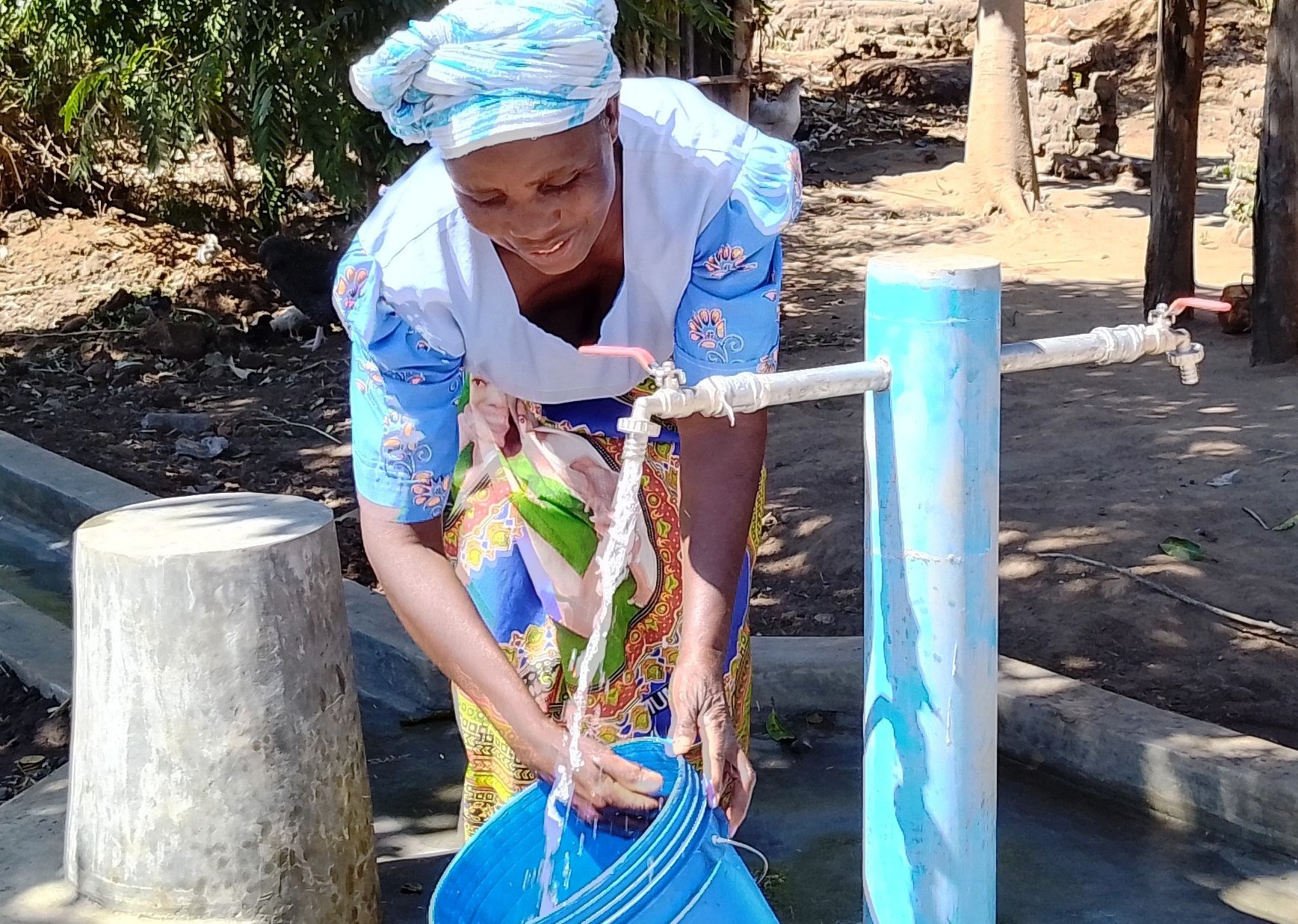
Access to safe and clean water is a human right.
The United Nations General Assembly historically adopted it on July 28 2010, with the resolution passing with 122 countries in its favour, and none against it.
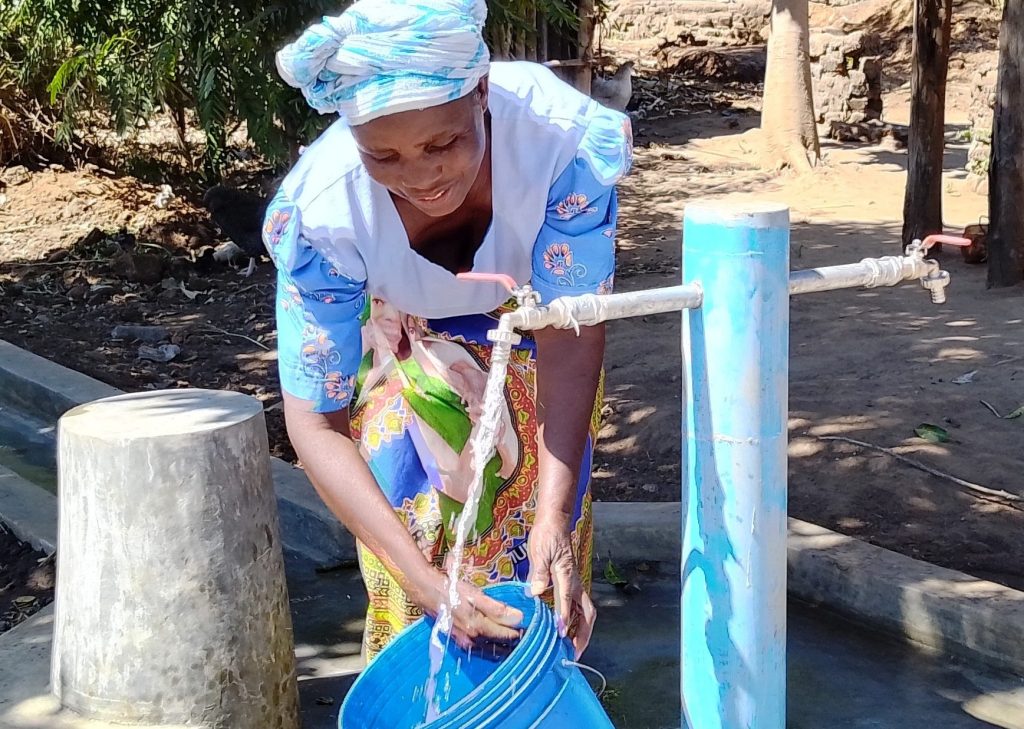
Sadly, for many, this right is often violated despite paying service providers to access uninterrupted clean and safe water in the comfort of their homes.
“A month never fully passes by without supply interruptions,” said Elizabeth Tembo, a resident of Chatha, Chileka, which is on the outskirts of Blantyre City.
“We are often told pipes have been vandalised, they have burst or that electricity blackouts have affected pumping. Sometimes we get no communication at all,” she added in an interview.
Elizabeth honours her monthly water bills to access water freely. But, she says, she spends additional costs in purchasing water from supermarkets.
“The amounts vary,” she said. “Some supermarkets sell a five litre bottle at K4 000, some K6 000. So, if I have to buy bottled water all week, it means spending roughly K40 000.”
The bottled water Elizabeth buys is for drinking. Within her community, there is a borehole where residents draw water from, especially when there is supply disruption.
However, to access the borehole’s water, she has to use part-time piece workers who charge between K700 and K1 000 per bucket.
This means further expenditure for Elizabeth, who is a single mother of two.
“When I don’t have money, I use the borehole water for drinking,” she says. “Sometimes it upsets my stomach.”
This worries Elizabeth, fearing that herself, or her children, who are under the age of 15, could easily contract waterborne diseases, including cholera.
“What frustrates me most is that our service providers give us a raw deal,” she said. “When I settle my bills, I expect easy service from them.”
Elizabeth’s situation mirrors the frustration of hundreds of others who pay for the commodity, yet access is often interrupted. As a result, they are exposed to waterborne diseases that come with access to unsafe and uncertified clean water.
With a population of about 22.7 million, information published on Water for People shows that only 18 percent Malawians have access to safely managed drinking water services.
This means a fewer part of the population has access to water that is perceived free from contamination and for human consumption.
According to the United Nations (UN), safe water, including sanitation and hygiene, is the most basic human need for health and wellbeing. The UN’s Sustainable Development Goal (SDG) 6 targets to ensure availability and sustainable management of water and sanitation for everyone by the year 2030.
“To ensure universal access to safe and affordable drinking water by 2030, we must invest in infrastructure, protect water-related ecosystems, and promote hygiene education,” states the UN.
Tough access for consumers
Consumers Association of Malawi executive director John Kapito describes challenges faced by consumers in accessing piped water as appalling, considering they pay for the service yet they face constant disruptions.
What is further frustrating, according to Kapito, is the lack of a clear strategy by the country’s water boards to address the persistent water scarcity, especially where vandalism is involved.
“The water boards need strategic thinking capacity to address this challenge other than just blaming people,” he said in an interview. “They need a complete overhaul on their operations and be able to protect their infrastructure.”
Public health threat
Beyond people’s frustrations, the situation remains a threat to public health.
Health and Rights Education Programme executive director Maziko Matemba says the threat is compounded by the systematic failure by service providers to protect water infrastructure, which has always been prone to vandalism.
He said: “We all know that when water systems are vandalised, the consequences ripple immediately into our communities and healthcare facilities, creating preventable health crises.
“When pipe pressure drops, a vacuum is created. Mud, sewage, and agricultural runoff from the surrounding soil are sucked into the damaged pipes through cracks or loose joints. When supply resumes, consumers receive highly contaminated water.”
With some residents relying on unsafe water sources, Matemba says it often triggers spikes in waterborne diseases like cholera, typhoid, and dysentery.
He added: “In Malawi, where cholera has historically taken a heavy toll, disrupting treated water supply is akin to opening the floodgates to an epidemic.”
In addition, Matemba says water supply disruptions also affect service delivery. He said a hospital or health centre simply cannot function without clean, running water.
“When vandalism cuts off a facility’s supply, it triggers a catastrophic breakdown in healthcare delivery. Healthcare workers cannot wash their hands between patients, and surgical instruments cannot be properly sterilised,” he said. “This leads to a dangerous rise in hospital-acquired infections, putting already vulnerable patients at higher risk.”
He said water supply disruptions further cripple critical departments such as maternity wings, neonatal units, operating theatres and renal dialysis units.
“Without it, surgeries are postponed, and deliveries become highly dangerous for both mothers and newborns,” said Matemba, adding that water also offers dignity to patients.
Information published on Water for People’s website states that increasing frequent and severe climate-related disasters compounds the threat.
Part of the information reads: “Cyclones, flooding and droughts damage water and sanitation systems and threaten public health through outbreaks like cholera.”
Prisons equally affected
The intermittent water supply disruptions are also adversely impacting the country’s prisons, whose establishments have always been overcrowded.
Malawi Prisons Service spokesperson Charles Steve Meke said, in an interview, that effects of the persistent water supply challenges go beyond sanitation and health issues.
Meke said when there are water shortages, inmates often go out of the prisons to fetch water from unsafe sources. This, he said, creates an enormous security risk.
“Unplanned movement of inmates outside the prison premises in search of water is a huge risk, and this can lead to escapes; hence, compromising national security,” he said.
But Meke said the prisons service is exploring the use of solar-powered boreholes, including water bowsers and buckets for storage.
Human rights advocate Victor Mhango described the situation as a serious concern considering the congested spaces inmates live in.
Mhango, who is executive director for the Centre for Human Rights Education Advice and Assistance, said the recurring water supply challenges not only affects inmates’ sanitation and health, but their dignity, and fundamental rights while they remain in a vulnerable situation.
“These conditions become even more concerning in overcrowded facilities, where the available water must serve a large population and sanitation systems are already under pressure,” he said.
Mhango said from a human rights perspective, the State has a duty to ensure people deprived of their liberty are treated humanely and with dignity, adding that inmates do not lose their fundamental rights simply because they are in prison.
He said: “The deprivation of liberty should not translate into deprivation of basic necessities such as clean water, adequate sanitation and healthcare. Where water shortages result in conditions that undermine these essentials, the situation raises serious questions about the protection of inmates’ rights and the State’s obligations.
“The problem is particularly acute in overcrowded prisons because water shortages can quickly escalate into a public health emergency. Inadequate sanitation can facilitate the spread of infectious diseases, while insufficient water for washing, cleaning and maintaining toilets can create unhygienic living conditions.”
Consequently, Mhango said, such circumstances may amount to cruel, inhuman or degrading treatment, depending on the severity, duration and overall conditions experienced by the inmates.
Water boards mute
On October 28 2026, we sent questionnaires to spokespersons of the five water boards, namely; Blantyre Water Board (BWB), Southern Region Water Board (SRWB), Lilongwe Water Board (LWB), Central Region Water Board (CRWB) and Northern Region Water Board (NRWB).
We made a follow-up on November 4 2026 but our efforts proved futile and, by press time, the water boards were yet to revert with their responses.
In June this year, BWB and CRW reportedly submitted proposals to government, seeking tariff increases to help meet operational costs and improve their financial sustainability.
CRWB sought a 106 percent increase with BWB pushing for 45 percent.
Ministry of Agriculture Principal Secretary Erica Maganga is on record as saying the focus is on water boards reducing their inefficiencies first before any tariff hikes.
When implementing tariff adjustments in 2023, the water boards said the increases were justified by the 25 percent devaluation of the Malawi kwacha in May 2022, and the government’s failure to implement proposed tariff hikes in the previous fiscal year despite Cabinet approval.
The post Violated: The right to safe, clean water appeared first on Nation Online.