War-torn Sudan sees gold revenues hit 113% as government urges foreign investors to reconsider the country
Sudan’s gold sector is becoming the government’s main source of income as the civil war enters its fourth year, with artisanal mining revenues beating first-quarter targets and authorities increasing efforts to attract foreign investors into the country’s mining industry.
 Black News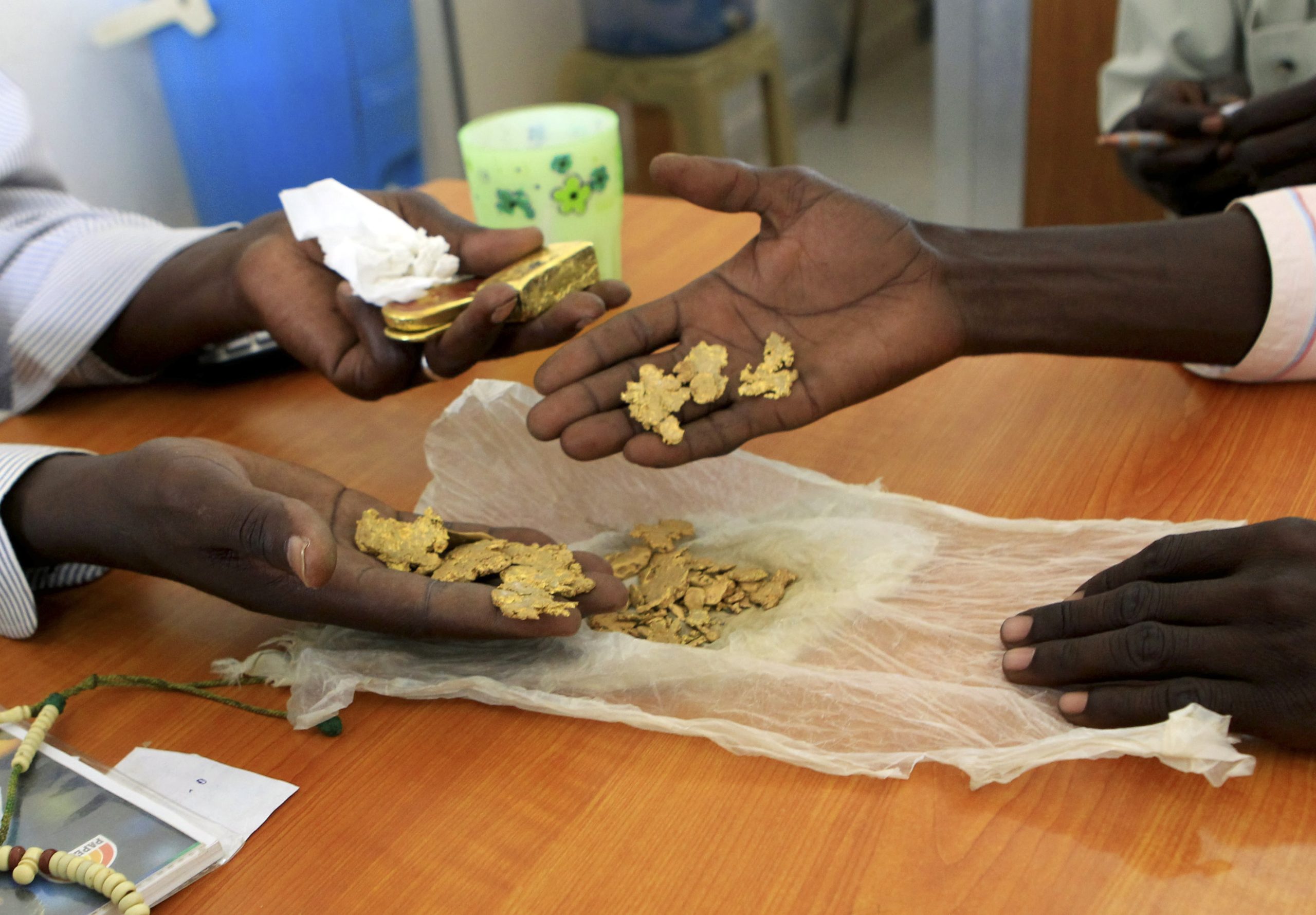

Sudan’s gold sector is becoming the government’s main source of income as the civil war enters its fourth year, with artisanal mining revenues beating first-quarter targets and authorities increasing efforts to attract foreign investors into the country’s mining industry.
- Gold has become Sudan's main economic lifeline as war disrupts traditional revenue sources, with artisanal mining revenues surpassing targets in early 2026.
- Artisanal miners produce about 80% of Sudan’s gold, operating mostly outside formal regulation, which leads to extensive smuggling and limits state revenue.
- The UAE has been the dominant purchaser of Sudan's gold, but Saudi Arabia is emerging as a significant new buyer amid rising tensions and competition in the Gulf.
- Despite increased legal exports and output, large volumes of gold are smuggled each year, prompting Sudan to seek stronger export controls and a broader base of official trading partners.
The Sudanese Mineral Resources Company (SMRC) said revenues from artisanal mining reached 113% of projected targets in the first quarter of 2026, while overall gold production reached 89% of planned output.
The figures underscore gold’s growing importance as Sudan’s main economic lifeline as fighting between the Sudanese army and the paramilitary Rapid Support Forces (RSF) enters its fourth year, disrupting agriculture, trade and other sources of government revenue.
Since conflict broke out in 2023, control of gold mines and trade routes has become a major source of financing for both the Sudanese army and the paramilitary Rapid Support Forces (RSF), reinforcing gold’s position at the centre of the country’s war economy.
Gold now accounts for more than 58% of Sudan’s total export value, making it the country’s largest source of foreign exchange.
In 2023, Sudan’s total exports stood at $5.09 billion, with gold contributing $1.03 billion, second only to crude oil at $1.13 billion.
Finance Minister Gibril Ibrahim said Sudan produced about 70 tonnes of gold in 2025, exceeding its national target by 13%, but official exports did not exceed 20 tonnes, highlighting the scale of smuggling and informal trade.
Central Bank data showed only 14.7 tonnes were exported through official channels in 2025, generating $1.536 billion.
Artisanal miners dominate production
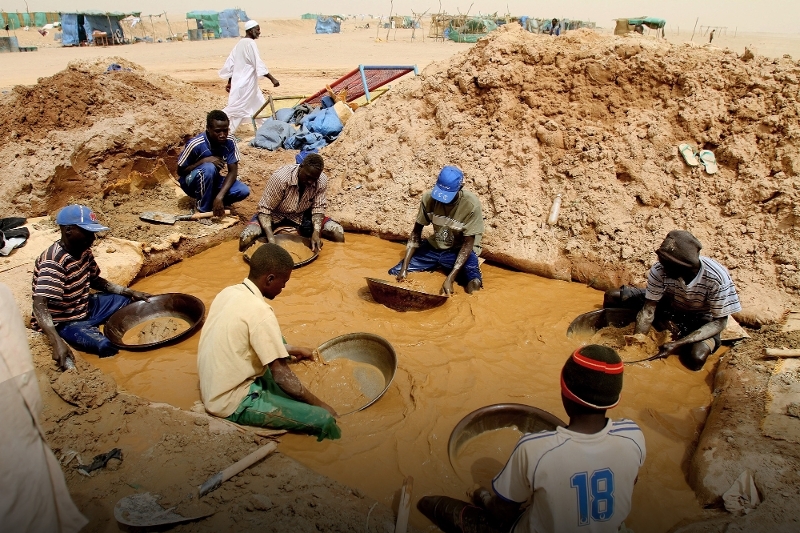
Artisanal and small-scale mining accounts for about 80% of Sudan’s total gold output, mainly in River Nile, Northern and Red Sea states, while the organised corporate sector contributes the remaining 20%.
The sector employs hundreds of thousands of people but largely operates outside formal regulation, limiting state revenue collection and weakening export controls.
Sudanese Mineral Resources Company (SMRC) General Manager Mohamed Taher Omer said during an executive meeting in Khartoum that the strong quarterly performance reflected improved field operations and stronger revenue collection systems.
He urged staff to maximise production to support the national treasury, adding that the company had also improved environmental safety standards and expanded digital governance.
Planning Director Al-Sadiq Al-Haj Taha said surplus revenues had been channelled into health, water and education projects in mining communities.
Foreign miners and conflict-driven trade shifts
Sudan’s organised mining sector continues to attract foreign players, particularly from Russia, China, Canada and Gulf states, although the conflict has also led to withdrawals and hesitation from other investors, particularly from the United States.
As of 2026, the Sudanese Armed Forces (SAF) control most eastern gold deposits, while the paramilitary Rapid Support Forces (RSF) dominate central and southwestern goldfields, making access to gold reserves a strategic part of the conflict.
Russia-linked firms, including operators previously linked to the Wagner network such as Meroe Gold, have drawn international attention over allegations of unofficial gold exports and conflict financing.
However, in March 2026, Perseus Mining, headquartered in Australia, completed the sale of its 70% stake in the Meyas Sand Gold Project for $260 million, citing the “protracted armed conflict” as the primary reason for its exit from Sudan.
Meanwhile, several Chinese-backed operators continue to maintain a presence in Sudan’s organised mining sector despite the ongoing instability.
U.S. sanctions previously made it difficult for American companies to invest in Sudan’s mining sector, but the lifting of those restrictions at the end of 2021 improved prospects for foreign investment and widened access for international players.
UAE dominance, Saudi entry and smuggling concerns
In 2023, the United Arab Emirates was Sudan’s largest trading partner, importing $1.09 billion worth of goods, almost entirely gold.
Trade data showed the UAE accounted for more than 99% of Sudan’s officially recorded gold exports that year, making it Sudan’s dominant external gold buyer.
However, relations between Khartoum and Abu Dhabi have become strained after Sudan accused the UAE of supporting the paramilitary Rapid Support Forces.
This has accelerated Sudan’s search for alternative Gulf buyers. In early January, Saudi Arabia said it was ready to begin purchasing Sudanese gold immediately, offering Khartoum a strategic alternative.
The move was also linked to a reported $1.5 billion weapons arrangement involving Pakistan, through which Riyadh was expected to support Sudan’s military, giving Khartoum stronger returns for its gold exports through both revenue and military backing.
Smuggling continues to drain revenues
At the same time, smuggling continues to undermine the country's official export revenues. According to a 2024 study by SWISSAID, between 321 and 474 tonnes of African gold are smuggled annually, valued at between $24 billion and $35 billion, with much of it moving through Gulf markets before being re-exported.
The scale of illicit trade has intensified pressure on Sudan to tighten export controls, improve traceability and reduce its dependence on a single dominant buyer.